IMDb RATING
7.7/10
1.2K
YOUR RATING


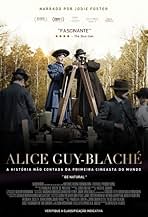
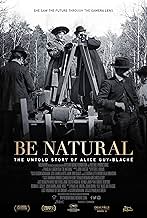
Pamela B. Green's energetic film about pioneer filmmaker Alice Guy-Blaché is both a tribute and a detective story, tracing the circumstances by which this extraordinary artist faded from mem... Read allPamela B. Green's energetic film about pioneer filmmaker Alice Guy-Blaché is both a tribute and a detective story, tracing the circumstances by which this extraordinary artist faded from memory and the path toward her reclamation.Pamela B. Green's energetic film about pioneer filmmaker Alice Guy-Blaché is both a tribute and a detective story, tracing the circumstances by which this extraordinary artist faded from memory and the path toward her reclamation.
- Awards
- 11 wins & 11 nominations total


Jodie Foster
- Self - Narrator
- (voice)


Jon M. Chu
- Self
- (as Jon Chu)


- Director
- Writers
- All cast & crew
- Production, box office & more at IMDbPro
7.71.2K
1
2
3
4
5
6
7
8
9
10
Featured reviews
a pioneer gets her due
Greetings again from the darkness. History can easily be distorted by those who tell it. But the work and deeds of those who make history stands the test of time, and research can often right a wrong ... or at least provide credit where it's due. Such is the case with Pamela B Greene's project to uncover the truth, and finally give pioneer filmmaker Alice Guy-Blache her rightful place in the history of cinema.
Numerous familiar faces from the movie industry flash across the screen, and most admit they have never heard of Alice Guy-Blache. Even the few that recognize the name, don't know her story. This is how the movie starts ... letting off the hook those of us who pride ourselves on knowing the basics of cinema's origins. In 1895, the Lumiere Brothers presented the first short films on their newly developed Cinematographe. In the audience that day were Leon Gaumont and his assistant, Alice Guy.
Young Ms. Guy had a creative vision for this fascinating new technology. Rather than filming "real life", she would tell stories. And telling stories through moving pictures is exactly what she did more than 1000 times across two decades and two countries. In 1896, she directed THE CABBAGE FAIRY, one of the first narrative films ... and it was only the beginning for her. Director Greene explains that so many of those early films are lost, despite being described as sophisticated, emotional, and engaging works. As she moved from France to the United States (New Jersey), Alice founded Solax with her husband, and began experimenting with sound, special effects, gender roles, and story structure.
It's truly fascinating to see the clips from many of her films, along with snippets from interviews she sat for in 1964 (before passing away in 1968). Director Greene also includes interviews from Alice's daughter Simone, while I believe are from the 1980's. Simone is able to fill in some of the gaps in the historical timeline ... a timeline that includes many familiar names. It's also a timeline that results in an abrupt end to Alice's filmmaking when she relocates back to France after the war.
How did Alice Guy-Blache get lost in history? She was a contemporary of Melies, Lumiere and the Pathe brothers. She was not just the first woman director, she was also one of the first film directors, period. Though the search continues for many of her films, Oscar winning actress Jodie Foster narrates the mission of filmmaker Pamela B Greene to right a wrong ... Alice must no longer be forgotten by the industry she helped create.
Numerous familiar faces from the movie industry flash across the screen, and most admit they have never heard of Alice Guy-Blache. Even the few that recognize the name, don't know her story. This is how the movie starts ... letting off the hook those of us who pride ourselves on knowing the basics of cinema's origins. In 1895, the Lumiere Brothers presented the first short films on their newly developed Cinematographe. In the audience that day were Leon Gaumont and his assistant, Alice Guy.
Young Ms. Guy had a creative vision for this fascinating new technology. Rather than filming "real life", she would tell stories. And telling stories through moving pictures is exactly what she did more than 1000 times across two decades and two countries. In 1896, she directed THE CABBAGE FAIRY, one of the first narrative films ... and it was only the beginning for her. Director Greene explains that so many of those early films are lost, despite being described as sophisticated, emotional, and engaging works. As she moved from France to the United States (New Jersey), Alice founded Solax with her husband, and began experimenting with sound, special effects, gender roles, and story structure.
It's truly fascinating to see the clips from many of her films, along with snippets from interviews she sat for in 1964 (before passing away in 1968). Director Greene also includes interviews from Alice's daughter Simone, while I believe are from the 1980's. Simone is able to fill in some of the gaps in the historical timeline ... a timeline that includes many familiar names. It's also a timeline that results in an abrupt end to Alice's filmmaking when she relocates back to France after the war.
How did Alice Guy-Blache get lost in history? She was a contemporary of Melies, Lumiere and the Pathe brothers. She was not just the first woman director, she was also one of the first film directors, period. Though the search continues for many of her films, Oscar winning actress Jodie Foster narrates the mission of filmmaker Pamela B Greene to right a wrong ... Alice must no longer be forgotten by the industry she helped create.
anyone who knows Hollywood patriarchy needs to see this
There is so much talk of the Hollywood Boys' Club and the lack of diversity right now. Anyone who cares should see this movie, about an early pioneer in the movies. A great untold story.
Mother of Movies
From the excellent opening collage to the concluding remaking of her films, this is a fine documentary introduction to the career and life of the first female director (and writer, producer and studio head, etc.) and one of the first important filmmakers in general in history, Alice Guy--responsible for the earliest films of one of the biggest studio's in early cinema, Gaumont, including their early sound pictures, the founding of Solax productions at Fort Lee, New Jersey, and becoming an independent filmmaker in Hollywood after the Edison Trust monopolized the business on the East Coast. Through her memoir, interviews and other work, she was also responsible for the telling of her own story and significance in cinema history. This last aspect is especially well rendered in "Be Natural: The Untold Story of Alice Guy-Blaché," which takes an investigatory approach to the piecing together of her narrative. Even the genealogical stuff fits well here and adds to the picture, and the filmmakers wisely didn't conceal the imprint of modern technology on the documentary, including work and communication via computers and the web--the sketch style, or "cinema of attractions" mode, of early cinema is even compared at one point to the infancy of YouTube videos. After all, Guy got her start in the business--rising from the ranks of secretary--because of her and the company's dealings with and fascination for technological innovation.
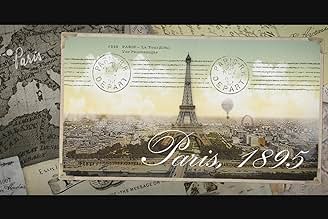
The story of her filmmaking career begins with the Lumière Brothers' demonstration of their Cinématographe to others in the photographic industry, including Léon Gaumont and Guy, on 22 March 1895, as opposed to the more-celebrated public screening 28 December 1895. The opening collage does a wonderful job of leading up to this moment, by moving back in time--representing the history of Hollywood movies, back through Fort Lee and Paris and with a brief overview of other pre-cinema and early cinema pioneers. I find it easy to overlook any deficiencies in the history here, consequently, because this collage does so well to indicate that Guy, or Gaumont or the Lumières and anyone else, for that matter, is a part of this long tapestry.
I'm beginning to retrace my own investigation of Guy's career, so I found this documentary an especially nice refresher on the subject. Among the new things I learned (or re-learned) was the Kinora footage dated to 1895 by the Lumières featuring Guy self-reflexively playing with the flip-book-like, motion-picture contraption. It's a fascinating bit of footage that complements nicely "Alice Guy Films a 'Phonoscène'" (1905). There's also the extension of Guy's influence to the likes of Alfred Hitchcock and Sergei Eisenstein, the latter who wrote specifically about Guy's "The Consequences of Feminism" (1906). I also don't recall having heard that besides Guy and her husband, Herbert Blaché, hiring America's first female director, Lois Weber, that "Mrs. Smalley" was allegedly also one of Herbert's mistresses. Make of that rumor regarding the evangelist filmmaker of such films as "Hypocrites" (1915) what you will, I suppose. A more amusing anecdote details how Guy checked for fingerprints on her scripts to catch the thief giving them to competing studios. Indeed, early cinema was rife with imitation, including by Guy (and Georges Méliès, Edwin S. Porter, Ferdinand Zecca, etc.), and flat-out plagiarism and bootlegging. Some were probably worse than others, though. Pathé could especially be notoriously successful at this, and, here, their "The Policemen's Little Run" is cited as a copy of Gaumont's "The Race for the Sausage" (both from 1907).
Guy is also credited with making one of the first films to feature an all African-American cast, "A Fool and His Money" (1912), although I would think claims of its primacy would need to contend with similar claims for the now-lost "The Railroad Porter" (1912), which also was directed by an African American, let alone "Something Good - Negro Kiss" (1898). Certainly, however, Guy is among the first, if not the very first, in accomplishing a great deal in film history. The most contentious of which, and to bring up the biggest of my slight problems with the documentary, is her claim of making the first story film, that of the cabbage patch.
Despite claiming to be based on Alison McMahan's book on Alice Guy-Blaché, the movie doesn't do justice to the uncertainty surrounding this film, or, rather, films. The earliest Cabbage-Patch Fairy film we have today is usually dated to c.1900 (except for on the web, where, frankly, many don't know what they're talking about) and credited to the Gaumont studio, but it's not known with certainty whether Guy made it (although I would guess she did, given the film's similarity to the rest of her oeuvre and her predominance at Gaumont) or whether it could be a copy of a 58mm film dating back to 1896. McMahan suggests it could be a remake, whether based on a hypothetical 1896 film or not, or the original film that Guy spoke of in interviews and her memoir. Meanwhile, Jane M. Gaines in her book "Pink-Slipped: What Happened to Women in the Silent Film Industries?" does well to cast doubt on it being a film from 1896. The documentary contesting (and by Wikipedia, among other sites, following suit), without offering evidence, that the earliest Cabbage-Patch Fairy film we have today is a remake of an 1896 production seems a simplification of the issue, at the least.
Complicating this further, as Gaines, McMahan and others have pointed out, is that Guy's descriptions actually better match her 1902 Cabbage-Patch Fairy film, "Midwife to the Upper Class" (although Guy, in an interview, disputed the "midwife" part of that title), which is a two-scene narrative film as she described, as opposed to the one shot-scene "cinema of attractions" mode of the c.1900 film. The photograph shown in the documentary of Guy next to a couple actors, while in the past attributed to the alleged 1896 production and dated rather confusingly in the movie, seems to clearly be from the 1902 film, too. Never mind, either, that there were similarly fictional productions before 1896, including the Lumière Brothers' "The Sprayer Sprayed" (1895). As mentioned in the documentary, the cabbage-patch plot also returned in Guy's "Madame's Cravings" (1907), so the director returned to this scenario based in a fable on childbirth multiple times, for sure, if not known precisely how many times she returned to it or always when. None of which takes away from the other qualities of the films, but the confusion and mystery is a good reminder that much of the history of early cinema has been lost and that, to an extent, the story of Alice Guy-Blaché remains untold.
The story of her filmmaking career begins with the Lumière Brothers' demonstration of their Cinématographe to others in the photographic industry, including Léon Gaumont and Guy, on 22 March 1895, as opposed to the more-celebrated public screening 28 December 1895. The opening collage does a wonderful job of leading up to this moment, by moving back in time--representing the history of Hollywood movies, back through Fort Lee and Paris and with a brief overview of other pre-cinema and early cinema pioneers. I find it easy to overlook any deficiencies in the history here, consequently, because this collage does so well to indicate that Guy, or Gaumont or the Lumières and anyone else, for that matter, is a part of this long tapestry.
I'm beginning to retrace my own investigation of Guy's career, so I found this documentary an especially nice refresher on the subject. Among the new things I learned (or re-learned) was the Kinora footage dated to 1895 by the Lumières featuring Guy self-reflexively playing with the flip-book-like, motion-picture contraption. It's a fascinating bit of footage that complements nicely "Alice Guy Films a 'Phonoscène'" (1905). There's also the extension of Guy's influence to the likes of Alfred Hitchcock and Sergei Eisenstein, the latter who wrote specifically about Guy's "The Consequences of Feminism" (1906). I also don't recall having heard that besides Guy and her husband, Herbert Blaché, hiring America's first female director, Lois Weber, that "Mrs. Smalley" was allegedly also one of Herbert's mistresses. Make of that rumor regarding the evangelist filmmaker of such films as "Hypocrites" (1915) what you will, I suppose. A more amusing anecdote details how Guy checked for fingerprints on her scripts to catch the thief giving them to competing studios. Indeed, early cinema was rife with imitation, including by Guy (and Georges Méliès, Edwin S. Porter, Ferdinand Zecca, etc.), and flat-out plagiarism and bootlegging. Some were probably worse than others, though. Pathé could especially be notoriously successful at this, and, here, their "The Policemen's Little Run" is cited as a copy of Gaumont's "The Race for the Sausage" (both from 1907).
Guy is also credited with making one of the first films to feature an all African-American cast, "A Fool and His Money" (1912), although I would think claims of its primacy would need to contend with similar claims for the now-lost "The Railroad Porter" (1912), which also was directed by an African American, let alone "Something Good - Negro Kiss" (1898). Certainly, however, Guy is among the first, if not the very first, in accomplishing a great deal in film history. The most contentious of which, and to bring up the biggest of my slight problems with the documentary, is her claim of making the first story film, that of the cabbage patch.
Despite claiming to be based on Alison McMahan's book on Alice Guy-Blaché, the movie doesn't do justice to the uncertainty surrounding this film, or, rather, films. The earliest Cabbage-Patch Fairy film we have today is usually dated to c.1900 (except for on the web, where, frankly, many don't know what they're talking about) and credited to the Gaumont studio, but it's not known with certainty whether Guy made it (although I would guess she did, given the film's similarity to the rest of her oeuvre and her predominance at Gaumont) or whether it could be a copy of a 58mm film dating back to 1896. McMahan suggests it could be a remake, whether based on a hypothetical 1896 film or not, or the original film that Guy spoke of in interviews and her memoir. Meanwhile, Jane M. Gaines in her book "Pink-Slipped: What Happened to Women in the Silent Film Industries?" does well to cast doubt on it being a film from 1896. The documentary contesting (and by Wikipedia, among other sites, following suit), without offering evidence, that the earliest Cabbage-Patch Fairy film we have today is a remake of an 1896 production seems a simplification of the issue, at the least.
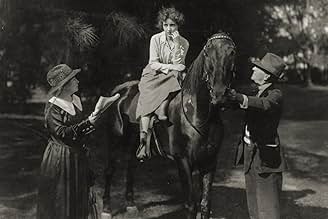
Complicating this further, as Gaines, McMahan and others have pointed out, is that Guy's descriptions actually better match her 1902 Cabbage-Patch Fairy film, "Midwife to the Upper Class" (although Guy, in an interview, disputed the "midwife" part of that title), which is a two-scene narrative film as she described, as opposed to the one shot-scene "cinema of attractions" mode of the c.1900 film. The photograph shown in the documentary of Guy next to a couple actors, while in the past attributed to the alleged 1896 production and dated rather confusingly in the movie, seems to clearly be from the 1902 film, too. Never mind, either, that there were similarly fictional productions before 1896, including the Lumière Brothers' "The Sprayer Sprayed" (1895). As mentioned in the documentary, the cabbage-patch plot also returned in Guy's "Madame's Cravings" (1907), so the director returned to this scenario based in a fable on childbirth multiple times, for sure, if not known precisely how many times she returned to it or always when. None of which takes away from the other qualities of the films, but the confusion and mystery is a good reminder that much of the history of early cinema has been lost and that, to an extent, the story of Alice Guy-Blaché remains untold.
10puckamo
Reclaiming an important legacy
The director spent a decade of her life gathering evidence that Alice Guy-Blache was one of the founders of cinema, on the same level as the Lumiere Brothers, Georges Melies and Thomas Edison, and the case she makes is completely convincing. This film should be seen by everyone interested in movie history.
Insightful & highly surprising story of Ms Guy-Bache
I watched that film during the BFI film festival and the director Pamela B Green graced us with a Q&A at the end. This documentary is a formidable labour of love, extraordinarily documented and thorough, on the life and career of the first film director who ... happened to be a woman! Alice Guy-Bache! Terrific documentary, although it was so fast-paced that I felt dizzy at times! A must watch!


Did you know
- TriviaOriginal written source: "Alice Guy Blaché: Lost Visionary of the Cinema", book by Alison McMahan, Bloomsbury Publishing, London, 2002, 408 p., ISBN: 978-0826451576.
- Quotes
Bob Channing: If it wasn't for people like you, she'd just remain buried.
- ConnectionsFeatures Dickson Experimental Sound Film (1894)
- How long is Be Natural: The Untold Story of Alice Guy-Blaché?Powered by Alexa
Details
- Release date
- Country of origin
- Official sites
- Languages
- Also known as
- Природна: невідома історія Аліс Ґі-Блаше
- Filming locations
- Production companies
- See more company credits at IMDbPro
Box office
- Gross US & Canada
- $117,511
- Opening weekend US & Canada
- $3,237
- Apr 21, 2019
- Gross worldwide
- $210,247
- Runtime
- 1h 43m(103 min)
- Color
Contribute to this page
Suggest an edit or add missing content