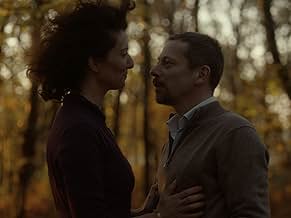
In their blue hotel room, a clandestine couple of two married lovers plan an impossible future, as death shutters their already frail tranquillity. Now, the noose tightens more and more arou... Read allIn their blue hotel room, a clandestine couple of two married lovers plan an impossible future, as death shutters their already frail tranquillity. Now, the noose tightens more and more around innocents and sinners; but, was there a crime?In their blue hotel room, a clandestine couple of two married lovers plan an impossible future, as death shutters their already frail tranquillity. Now, the noose tightens more and more around innocents and sinners; but, was there a crime?
- Director
- Writers
- Stars
- Awards
- 1 win & 5 nominations total
- Director
- Writers
- All cast & crew
- Production, box office & more at IMDbPro
6.33.9K
1
2
3
4
5
6
7
8
9
10
Featured reviews
a parable
about desire. about the role of the other. about flesh and love and hidden by yourself sins, about the search of yourself and about the fall of a night.about justice. a film who mix, in wise manner, the seduction with fascination. a work of beauty and dark secrets and images of victims and fragile intentions. it could be the film of Mathieu Amalric. like many of his films because he has the science and the gift to propose the right solution for the tone of story. because it is a film of details, about a not special event, in which the states of characters remains the only significant thing. so, a film who must see. for the acting first. then, for atmosphere.
Circumstantial Evidence
This is really quite a simple story. Man has affair with other man's wife. Has wife and family but re-unites with woman he met before his marriage. They have a series of trysts. She has a husband who has a serious medical condition and one day he dies. Unfortunately, the woman is a pharmacist and it appears that they have done a "Postman Always Rings Twice" murder. The whole thing focuses on a bewildered man who realizes that his actions have a consequence. He's not even sure what has happened as he sits in a courtroom. Sometimes justice is less about criminal justice and more about moral justice. A slow moving psychological drama based on a George Simenon novel.
Too much backstory gets thrown out with the bathwater?
Mathieu Amalric isn't one to shy away from a risky project—has anybody seen the film where he plays a shrink and Benicio Del Toro's a Blackfoot WWII vet with PTSD? Here he and his real-life partner, Stéphanie Cléau, co-star in a stripped-down 75' adaptation of a Simenon story of erotic obsession and justice gone awry. The fine performances and the film's time-shuffling structure help maintain a high level of suspense at least past the halfway mark, though it seems to me that Amalric and Cléau, who also wrote the script, might have thrown a little too much of Simenon's backstory out with the bathwater.
The plodding inquiry that begins even before we know a crime has been committed certainly explains Julien's (MA's character's) air of glum fatalism through the second half of the film, but the script's intense focus on the two lovers doesn't prepare us for the final courtroom scene, in which a character we've barely seen before steps into the spotlight. (I'm planning to watch again to test the hypothesis, suggested by some online reviewers, that the crime the protags are charged with was committed by someone else )
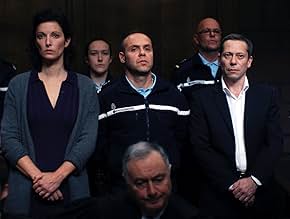
The courtroom scene has a nightmarish quality, like one of Hitchcock's "wrong man" films; the trial itself seems like an open-mic session where gossipy townsfolk step up to air their gripes about the defendants—one witness dismisses Julien's stylish modernist house as a "crappy little shack." There's certainly a disconnect between Simenon's view of blind, blundering justice and our own no doubt idealized police procedurals and courtroom dramas; I agree with other reviewers that Julien would have excellent grounds for appeal on the basis of blatant judicial bias and ineffective counsel.
The plodding inquiry that begins even before we know a crime has been committed certainly explains Julien's (MA's character's) air of glum fatalism through the second half of the film, but the script's intense focus on the two lovers doesn't prepare us for the final courtroom scene, in which a character we've barely seen before steps into the spotlight. (I'm planning to watch again to test the hypothesis, suggested by some online reviewers, that the crime the protags are charged with was committed by someone else )
The courtroom scene has a nightmarish quality, like one of Hitchcock's "wrong man" films; the trial itself seems like an open-mic session where gossipy townsfolk step up to air their gripes about the defendants—one witness dismisses Julien's stylish modernist house as a "crappy little shack." There's certainly a disconnect between Simenon's view of blind, blundering justice and our own no doubt idealized police procedurals and courtroom dramas; I agree with other reviewers that Julien would have excellent grounds for appeal on the basis of blatant judicial bias and ineffective counsel.
Average Court Days
The Blue Room is a French crime drama based on a novel of the same name by Georges Simenon and is directed by the lead actor, Mathieu Amalric. The film opens up in what is later revealed to be a flashback where the main character, Julien (played by Amalric), a married man, recalls his sexual experience with a woman (played by Stephanie Cleau) in a hotel room to the police. Julien is being accused of a crime that he doesn't apparently know anything about. As the film continues, and we go further and further into the story, we find out what actually did happen between this man and woman, as well as, the relationship between this man and his wife, eventually leading to a court case.
The movie's most interesting elements are its story structure, told in flashback, and its use of its musical score. One of my favorite scenes concerns Julien trying to burn some papers and they slowly vanish into the darkness of the ocean. The way this scene is filmed and framed, being intentionally slow, made it very interesting from a filmmaking standpoint.
The musical score is often bombastic, and scenes that aren't really meant to be dramatic carried a melodramatic theme. The score itself goes through different phases, from the very dramatic, to the mysterious, scary and even intimidating. The best use of the score in the film is during a court scene where we see people doing various things all at once. The background piano music fits the theme of this scene particularly well.
This film has good acting from its lead actors and lovely cinematography. If you like stories of adultery and crime, you will not be disappointed, however I found that the film wasn't particularly memorable or anything special overall.
The movie's most interesting elements are its story structure, told in flashback, and its use of its musical score. One of my favorite scenes concerns Julien trying to burn some papers and they slowly vanish into the darkness of the ocean. The way this scene is filmed and framed, being intentionally slow, made it very interesting from a filmmaking standpoint.
The musical score is often bombastic, and scenes that aren't really meant to be dramatic carried a melodramatic theme. The score itself goes through different phases, from the very dramatic, to the mysterious, scary and even intimidating. The best use of the score in the film is during a court scene where we see people doing various things all at once. The background piano music fits the theme of this scene particularly well.
This film has good acting from its lead actors and lovely cinematography. If you like stories of adultery and crime, you will not be disappointed, however I found that the film wasn't particularly memorable or anything special overall.
cold
not an ordinary adaptation. the spirit of many contemporary French films. Mathieu Amalric using same tools to build his character. a Simenon in different manner. a cold film about relationship and decisions, about guilty and events who has a strange touching manner to surprise the viewer not for evolution of events but for the attitudes of characters. a film of silence and guilty out of facts. because it preserves the Greek mark of destiny, the poetry of things, the emotions as a kind of fog. nothing clear, each detail as part of a sort of ambiguity and slow rhythm of events. a film with a specific target who could seems be boring for many. but useful with few drops of patience. and with a crumb of interest for Simenon universe.
Did you know
- TriviaFirst and, as of 2023, only film appearance for Mona Jaffart.
- Alternate versionsRemake of the Spanish-language film "The Blue Room" (original title: La habitación azul), 2002.
- ConnectionsReferences Pacific Rim (2013)
- SoundtracksChaconne - Partita for Violin No.2 (BWV 1004)
Written by Johann Sebastian Bach (as Bach)
Transcribed for piano by Ferruccio Busoni (as Busoni)
Performed by Itamar Golan
- How long is The Blue Room?Powered by Alexa
Details
- Release date
- Country of origin
- Official sites
- Language
- Also known as
- El cuarto azul
- Filming locations
- Les Sables-d'Olonne, Vendée, France(vacations by the sea)
- Production companies
- See more company credits at IMDbPro
Box office
- Gross US & Canada
- $254,666
- Opening weekend US & Canada
- $21,809
- Oct 5, 2014
- Gross worldwide
- $1,232,900
- Runtime
- 1h 16m(76 min)
- Color
- Sound mix
- Aspect ratio
- 1.33 : 1
Contribute to this page
Suggest an edit or add missing content