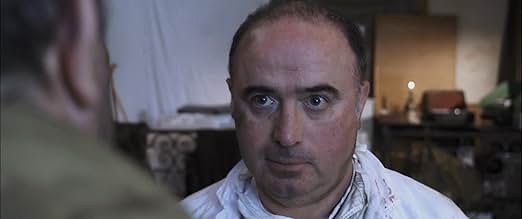
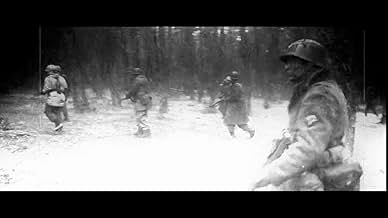
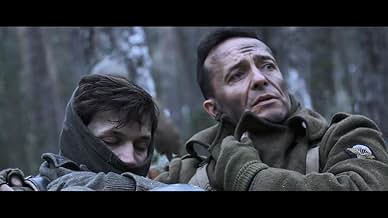
January 1945. The first French regiment of paratroopers to fight with an American unit prepares to liberate Alsace in France during World War II.January 1945. The first French regiment of paratroopers to fight with an American unit prepares to liberate Alsace in France during World War II.January 1945. The first French regiment of paratroopers to fight with an American unit prepares to liberate Alsace in France during World War II.
- Awards
- 5 nominations total
Tommy-Lee Baïk
- Melbarte
- (as Tommy Lee Baïk)
Natale Naccari
- Moretti
- (as Naccari Natale)
James Larabee
- Franois Henaq
- (voice)
- Director
- Writer
- All cast & crew
- Production, box office & more at IMDbPro
3.9329
1
2
3
4
5
6
7
8
9
10
Featured reviews
The Franco-American Allies who fought Germans in the forests of Alsace, France, during the winter of '45
Seven months after D-Day, French and American soldiers team-up in the woods outside Jebsheim to liberate northeast France from the German invasion (Jebsheim is located 5-6 miles west of the German border).
"The Frozen Front" (2017), originally titled "Winter War," is a French Indie that pays tribute to the Franco-American allies who secured the forests bordering Jebsheim in preparation for The Battle of Jebsheim that was fought from January 24 to February 2, 1945. The low-budget filmmaking is akin to "Straight into Darkness" (2004), but more straightforward and less surrealistic, although this one isn't as good. It's akin to a more dramatic "When Trumpets Fade" (1998) dubbed in English (from the original French), but made on a much lower budget and less compelling story-wise.
Armchair critics lambaste the movie mainly because of the English dubbing that doesn't match the lips with some lines not dubbed at all wherein you'll see lips move, but no sound. If you can ignore this issue, "The Frozen Front" is effective in showing what it was like for the tough soldiers who took the forests outside the village in January, 1945. The acting is surprisingly convincing despite what critics claim and the English speaking fits the characters despite the dubbing not matching the lips.
The challenges and horrors of war in a winter wilderness setting are chronicled: The cold, the sparse sustenance, living in foxholes, sudden violence, horrific wounds, buddies dying, ramshackle medical care, despair, perseverance, chaplains, brother vs. brother and hope for victory.
The writer/director confidently takes his time in telling his commemorative tale, which I can't help respect. This is a movie solely about men fighting in the wintery woods during WW2, which might be too one-dimensional for many viewers, not to mention overlong by about an hour. Then there's the problematic dubbing.
The film runs 2 hours, 22 minutes, and was presumably shot in France (it was definitely shot in mainland Europe, but I can't find specific data).
GRADE: C
"The Frozen Front" (2017), originally titled "Winter War," is a French Indie that pays tribute to the Franco-American allies who secured the forests bordering Jebsheim in preparation for The Battle of Jebsheim that was fought from January 24 to February 2, 1945. The low-budget filmmaking is akin to "Straight into Darkness" (2004), but more straightforward and less surrealistic, although this one isn't as good. It's akin to a more dramatic "When Trumpets Fade" (1998) dubbed in English (from the original French), but made on a much lower budget and less compelling story-wise.
Armchair critics lambaste the movie mainly because of the English dubbing that doesn't match the lips with some lines not dubbed at all wherein you'll see lips move, but no sound. If you can ignore this issue, "The Frozen Front" is effective in showing what it was like for the tough soldiers who took the forests outside the village in January, 1945. The acting is surprisingly convincing despite what critics claim and the English speaking fits the characters despite the dubbing not matching the lips.
The challenges and horrors of war in a winter wilderness setting are chronicled: The cold, the sparse sustenance, living in foxholes, sudden violence, horrific wounds, buddies dying, ramshackle medical care, despair, perseverance, chaplains, brother vs. brother and hope for victory.
The writer/director confidently takes his time in telling his commemorative tale, which I can't help respect. This is a movie solely about men fighting in the wintery woods during WW2, which might be too one-dimensional for many viewers, not to mention overlong by about an hour. Then there's the problematic dubbing.
The film runs 2 hours, 22 minutes, and was presumably shot in France (it was definitely shot in mainland Europe, but I can't find specific data).
GRADE: C
If Truth be Told
The title of this movie in ROKU was Winter War. The title I needed to use to find it in IMDB was The Frozen Front. The title used in this review's window is Winter War. Then when it was published, The Frozen Front. Go figure.
I immediately recognized the format of this movie. It was French. French cinematography relies heavily on this monolog philosophical rant about the topic at hand. Each character will have their time in expressing their position on the topic, and usually its noir. It isn't something I like personally, but the French (France) love it. The Italians to a lesser degree.
And there are times when the plot justifies it for my enjoyment. There aren't too many American films that do this. However, one that come close to mind is Taxi Driver. To a much lesser degree, Mike Hammer detective stories.
What rubbed me the wrong way was the script's attempt to paint the harsh and deadly reality of war this French unit had to endure. It gave the impression that they were the only ones, and this was the ultimate hell on earth. To an individual in any theatre of war, it is true, however, the script spent way too much time on it, and it was too simplistic riddled with American cliches. Those of us who have knowledge of harsher conditions, we may begin to feel annoyed as the dialog carries on. One military unit that dealt successfully with hardships and death and were quite successful in WWII was the First Special Service Force. A combination of American and Canadian commandos.
Which leads me to think that maybe it was the translation form French to English. Often, a cliche in one language has no direct corresponding cliché in the other. I notice this quite often in Italian cinematography. When dealing with light humour, this isn't a big deal. When dealing with a serous plot/dialog, this may become torture. A cliche will summarize the emotions and ideas in few words for that language and culture. That is its strength and popularity. Another similar cliche in another language will not convey the same qualities, hence, the script dialog is broken, and the thought process limps and struggles resulting in very negative reviews from Anglophones and positive reviews for Francophones.
As an Anglophone and Italophone, I'm torn between a low rating or higher. I decided to give it three because it was presented in English and the more care should have been given in the English dubbing. But given that the script relied enormously on the style mentioned above, I can't see how it could have been done.
In closing.... it's a war movie focussed on the hardships a small group of men had to endure, both psychologically and physically, in the last days of WWII.
I immediately recognized the format of this movie. It was French. French cinematography relies heavily on this monolog philosophical rant about the topic at hand. Each character will have their time in expressing their position on the topic, and usually its noir. It isn't something I like personally, but the French (France) love it. The Italians to a lesser degree.
And there are times when the plot justifies it for my enjoyment. There aren't too many American films that do this. However, one that come close to mind is Taxi Driver. To a much lesser degree, Mike Hammer detective stories.
What rubbed me the wrong way was the script's attempt to paint the harsh and deadly reality of war this French unit had to endure. It gave the impression that they were the only ones, and this was the ultimate hell on earth. To an individual in any theatre of war, it is true, however, the script spent way too much time on it, and it was too simplistic riddled with American cliches. Those of us who have knowledge of harsher conditions, we may begin to feel annoyed as the dialog carries on. One military unit that dealt successfully with hardships and death and were quite successful in WWII was the First Special Service Force. A combination of American and Canadian commandos.
Which leads me to think that maybe it was the translation form French to English. Often, a cliche in one language has no direct corresponding cliché in the other. I notice this quite often in Italian cinematography. When dealing with light humour, this isn't a big deal. When dealing with a serous plot/dialog, this may become torture. A cliche will summarize the emotions and ideas in few words for that language and culture. That is its strength and popularity. Another similar cliche in another language will not convey the same qualities, hence, the script dialog is broken, and the thought process limps and struggles resulting in very negative reviews from Anglophones and positive reviews for Francophones.
As an Anglophone and Italophone, I'm torn between a low rating or higher. I decided to give it three because it was presented in English and the more care should have been given in the English dubbing. But given that the script relied enormously on the style mentioned above, I can't see how it could have been done.
In closing.... it's a war movie focussed on the hardships a small group of men had to endure, both psychologically and physically, in the last days of WWII.
Appalling Direction Poor Acting Hackneyed Storyline
With a storyline that owes more than a little to "The Big Red One" this is predictable and, to be honest, boring.
The direction is amateurish and the overuse of a single hand-held camera detracts from whatever is happening as well as giving the movie the feeling of being incredibly low budget.
The action/battle sequences suggest that the director had absolutely no idea of how men react in battle and (again the mini-budget?) there was no advisor to tell him, but (just to stress one point out of very many) it shouldn't take a genius to figure out that men tend to go for cover when someone is trying to kill them.
All in all a terrible movie which fails on every level and in which you don't even care about the protagonists.
(PS I saw the French Language version with subtitles, which often read as absolute gibberish!)
Way better than a Russian made WW2 film
Ivan has nothing on this, historically accurate I paid 5 dollars to rent it on iTunes and enjoyed it
Maybe It Was Better in French
The dubbed-in English dialogue is so cliche-ridden, it's hard to believe that it was an accurate translation from the French. Can a screenwriter really be that bad in two different languages? Plus, the voiceover actors are so bad, it just calls further attention to the awful dialogue. On the plus side, the historically inaccurate large white parachute emblems on the front of many of the helmets--the ones that blared out to the Germans, "Shoot here! It's where my forehead is."--was a creative touch.
- How long is The Frozen Front?Powered by Alexa
Details
- Release date
- Country of origin
- Language
- Also known as
- Winter War
- See more company credits at IMDbPro
- Runtime
- 2h 20m(140 min)
- Color
- Aspect ratio
- 2.35 : 1
Contribute to this page
Suggest an edit or add missing content