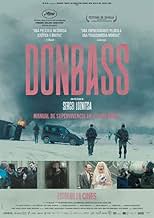
Donbass
- 2018
- 2h 2m
IMDb RATING
6.6/10
5.2K
YOUR RATING
In eastern Ukraine, society begins to degrade as the effects of propaganda and manipulation begin to surface in this post-truth era.In eastern Ukraine, society begins to degrade as the effects of propaganda and manipulation begin to surface in this post-truth era.In eastern Ukraine, society begins to degrade as the effects of propaganda and manipulation begin to surface in this post-truth era.
- Awards
- 9 wins & 14 nominations total
Olesya Zhurakivska
- Girl with bucket
- (as Olesya Zhurakovskaya)
- Director
- Writer
- All cast & crew
- Production, box office & more at IMDbPro
6.65.1K
1
2
3
4
5
6
7
8
9
10
Featured reviews
From East
A mix of Kusturica and Fellini, describing the East Ukraine in dark, cold, ironic, cruel, carnaval - like colors. A film about cynismus, propaganda, manipulation, terror, nationalism, cruelty and apparences but, more important, about people as victima of whole situation. Maybe, a manifesto.
it is no laughing matter
I was stunned for most of this. I knew about a plane being shot down and Crimea being taken by the Russians and that there was some sort of ongoing conflict but I was not prepared for this. Described somewhere as a black comedy but I didn't find myself even smiling. There may be a ridiculous element to the Kafkaesque madness depicted here but it is no laughing matter. I note that the director is mainly known for documentaries and this certainly plays like one as we are thrust amidst the craziness as good is described as bad, theft as a donation and killing and maiming for fun as loyalty and an expression of love for the motherland, or fatherland or whatever horrible nastiness underlies these crimes. I think I maybe gained a little more awareness of what might be going on as Russians and Ukrainians and Ukrainians who speak Russian and perhaps prefer Russia to Ukraine prefer to play war games than live their life. This may not have particularly clarified everything for me but I was immensely impressed by the way the film had been made and constructed and how a busy, even chaotic scene one minute could lead to a prolonged and static shot the next, leaving to ponder just what was happening and for goodness sake why!
Loosely coupled scenes showing lawlessness in a country at war, based on real events published on social media. We see facts grossly ignored and they/us differences overblown
Saw this at the Rotterdam film festival 2019. If this movie wanted to showcase chaos and lawlessness in a warzone annex newly born country, they did it very well. On the other hand, we did not get a chance to feel involved with the local people as we hardly know enough about the circumstances and the differences that kept those people apart. The division in loosely coupled chapters did not help either. There is nothing to bind the chapters together, merely leading to several (and now for something completely different) sketches. All of them interesting in their own way, but we are left to our own devices to arrive at a common morale or a message.
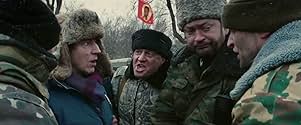
We often heard the word "fascist" used, more as a general word to denote something negative, rather than having to do with the real meaning of fascism (just like the word "communist" in the Mccarthyism era in the USA was used for everything beyond the norm). I got the impression that the soldiers at the road blocks also did not know exactly what was going on and in which battle(s) they were involved. Similarly, the man tied to a lantern pole and exposed to the whims of the public, was also often accused of being one of the fascists over there, leaving us to assume that the people "over there" also used some label for the opposite side. As a side note, the German journalist held up at one of the road blocks was indirectly labelled as a fascist, because he may not be a fascist himself, but his father and grandfather surely had been one (I quote).
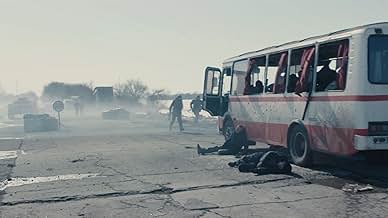
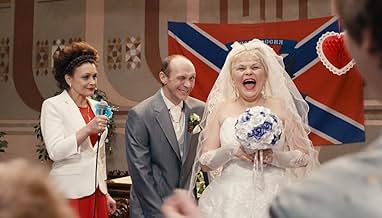
The movie consists of a series of separate chapters, on very different locations and in even more different settings, among which a road block and a wedding. Only the first and last chapter were connected by showing the same persons and location, having their make up ready in preparation of a "real live" scene. The ending of the second instance was a bit unexpected, however, but fitted very well in the "fake news" theme of the movie. We hear, for instance, a witness who saw a mass killing from her balcony, give her "testimony" two times in front of a camera crew, seemingly spontaneous including tears and being unable to speak further. We know better while watching how the scene was created twice (a second take was needed for a wider shot, but the "spontaneous" elements were identical).
All in all, the movie kept me at a distance and did not involve me. Even worse, I saw the well-known problems of former Sovjet-countries also manifest here, like corruption, unability to depend on the law, and self-serving civil servants. (Is this a pun? It sounds like one but not intended.)
The emphasis on fake news as the central theme of this movie, escaped me. But I see it in any synopsis or review, so I may have missed something important. Or was it intended to suggest a contemporary theme, something we should be concerned about?? I've read somewhere that the stories we see were all based on previous "fake news" clips on social media. In hindsight, this may explain the assortment of loosely coupled "sketches" without a common central theme.
We often heard the word "fascist" used, more as a general word to denote something negative, rather than having to do with the real meaning of fascism (just like the word "communist" in the Mccarthyism era in the USA was used for everything beyond the norm). I got the impression that the soldiers at the road blocks also did not know exactly what was going on and in which battle(s) they were involved. Similarly, the man tied to a lantern pole and exposed to the whims of the public, was also often accused of being one of the fascists over there, leaving us to assume that the people "over there" also used some label for the opposite side. As a side note, the German journalist held up at one of the road blocks was indirectly labelled as a fascist, because he may not be a fascist himself, but his father and grandfather surely had been one (I quote).
The movie consists of a series of separate chapters, on very different locations and in even more different settings, among which a road block and a wedding. Only the first and last chapter were connected by showing the same persons and location, having their make up ready in preparation of a "real live" scene. The ending of the second instance was a bit unexpected, however, but fitted very well in the "fake news" theme of the movie. We hear, for instance, a witness who saw a mass killing from her balcony, give her "testimony" two times in front of a camera crew, seemingly spontaneous including tears and being unable to speak further. We know better while watching how the scene was created twice (a second take was needed for a wider shot, but the "spontaneous" elements were identical).
All in all, the movie kept me at a distance and did not involve me. Even worse, I saw the well-known problems of former Sovjet-countries also manifest here, like corruption, unability to depend on the law, and self-serving civil servants. (Is this a pun? It sounds like one but not intended.)
The emphasis on fake news as the central theme of this movie, escaped me. But I see it in any synopsis or review, so I may have missed something important. Or was it intended to suggest a contemporary theme, something we should be concerned about?? I've read somewhere that the stories we see were all based on previous "fake news" clips on social media. In hindsight, this may explain the assortment of loosely coupled "sketches" without a common central theme.
Grotesque yet so very true to life
This movie is a sequence of barely connected vignettes about life in Russian-occupied east of Ukraine, and just how horrific and grotesque it is to live there at the moment. It captures all of the details flawlessly - it sometimes is shot for shot live-action version of existing videos on Youtube, but with real actors. Donbass is depressing as hell but so is the existence in that region, so it is well deserving of many awards that this movie received.
The bleak reality of every day life in occupied territory.
This film was made four years ago, but the war in Ukraine has given it a new urgency. At the time of its original release, the conflict in eastern Ukraine was not high on the world's priority list. Because of the Russian agression, this film has been released again. A good thing, because not only the current affairs are a reason to go see this movie. It is a very good film in its own right.
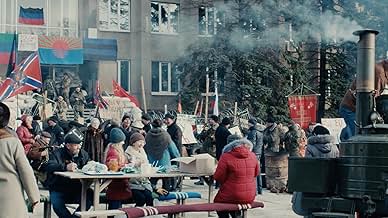
It consists of short vignettes, loosely related, some surreal, some very shocking, and some even funny. The central theme in each of them is the absurdity of the situation in the Donbass region. I write situation, because what the film shows is not an outright war. Corruption, abuse of power and lawlessness are as much a problem as violence.
Sometimes the scenes are reminiscent of the films by Roy Andersson, the Swedish master of minimalist absurdism. But there are also Fellini-like situations, with over-the-top characters contrasting the bleak reality of every day life in an occupied territory. Apart from the originality, two other things really stand out: the acting and the cinematography. Some of the scenes look like mini-documentaries, not at all like scripted movie scenes. Romanian cinematographer Oleg Mutu shows how effective very long takes can be, sometimes with a camera on the shoulder, sometimes without any camera movement. The very last scene consists of one single, extended shot. It is a master class in understated film making.
It consists of short vignettes, loosely related, some surreal, some very shocking, and some even funny. The central theme in each of them is the absurdity of the situation in the Donbass region. I write situation, because what the film shows is not an outright war. Corruption, abuse of power and lawlessness are as much a problem as violence.
Sometimes the scenes are reminiscent of the films by Roy Andersson, the Swedish master of minimalist absurdism. But there are also Fellini-like situations, with over-the-top characters contrasting the bleak reality of every day life in an occupied territory. Apart from the originality, two other things really stand out: the acting and the cinematography. Some of the scenes look like mini-documentaries, not at all like scripted movie scenes. Romanian cinematographer Oleg Mutu shows how effective very long takes can be, sometimes with a camera on the shoulder, sometimes without any camera movement. The very last scene consists of one single, extended shot. It is a master class in understated film making.
Did you know
- TriviaOfficial submission of Ukraine for the 'Best Foreign Language Film' category of the 91st Academy Awards in 2019.
- ConnectionsReferenced in Radio Dolin: Sergei Loznitsa (2022)
- SoundtracksThe National Anthem of Ukraine
Lyrics by Pavlo Chubynsky
Music by Mikhailo Verbytsky
Performed by The Veryovka National Academic Ukrainian Folk Choir
- How long is Donbass?Powered by Alexa
Details
- Release date
- Countries of origin
- Official site
- Languages
- Also known as
- Донбас
- Filming locations
- Production companies
- See more company credits at IMDbPro
Box office
- Gross worldwide
- $141,067
- Runtime
- 2h 2m(122 min)
- Color
- Aspect ratio
- 2.35 : 1
Contribute to this page
Suggest an edit or add missing content