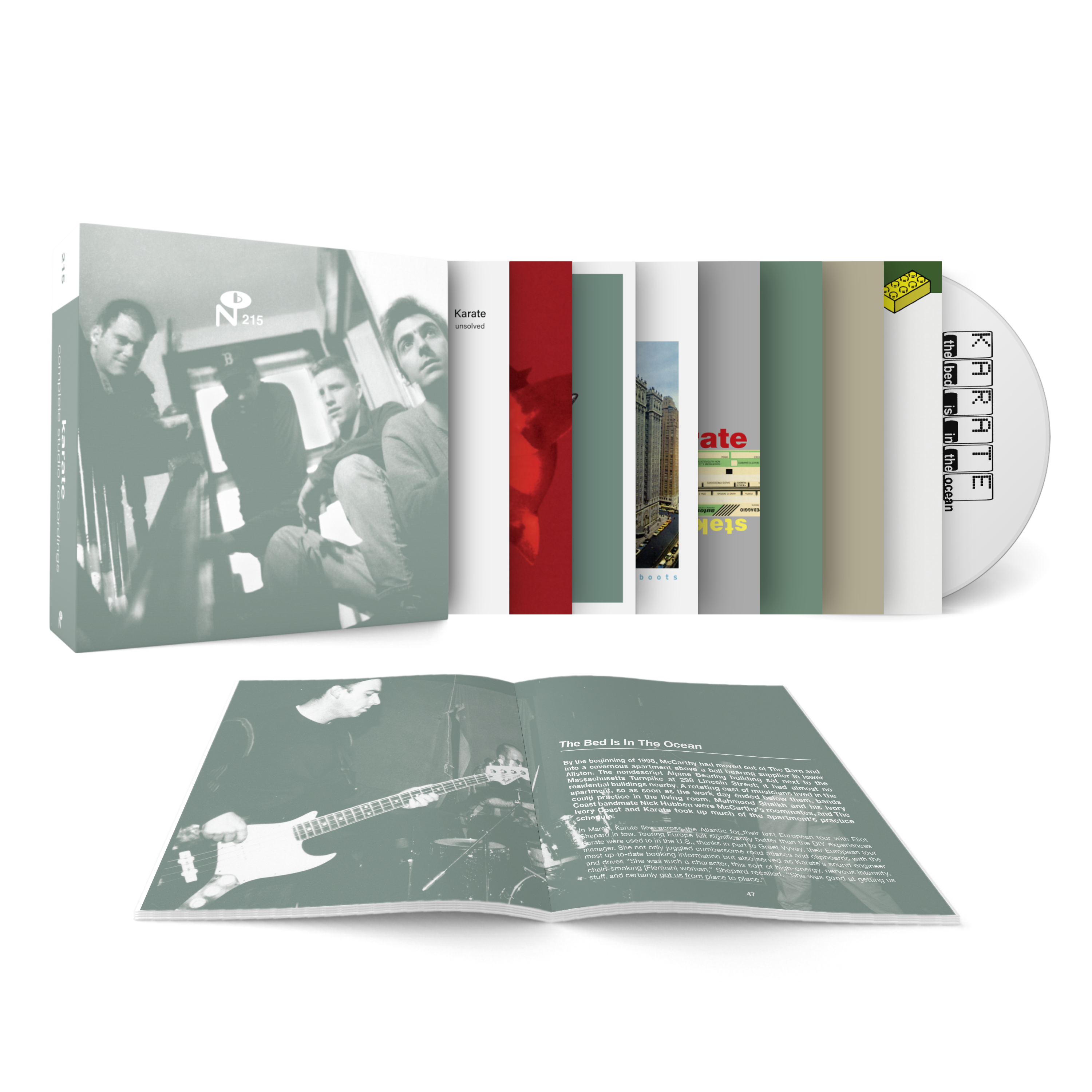
When Numero began its quest of reissuing Karate’s discography back in 2021, their decade-plus run of records had been sitting in out-of-print limbo for twelve years, gradually garnering clicks in back corners of YouTube and MediaFire links passed around blogs and hard drives like notes passed in class. Six LP reissues, two seven-inches, two boxsets, a reunion album and a nine-CD complete collection later, and it feels like we’re finally starting to re-familiarize ourselves with how the band's expansive catalog came to be.
From their inception, Karate defied the very axiom of what was “punk,” emerging from a confluence of influences that valued variety, subversion of form and seasoned, literate lyricism. Forming in Boston in 1993, the collegiate trio of Geoff Farina, Gavin McCarthy and Eamon Vitt first assembled their scrappy demo in Farina’s basement over the Fall. The tape’s utility was more of a tool to declare existence and book shows than a complete artistic declaration, though it fulfilled its purpose, and by 1994 the burgeoning Karate had set out on their first tour.
The two month, coast-to-coast expedition was cut short on the return journey when the van broke down for the third and final time in Lincoln, Nebraska, 1,500 miles from Boston.
Despite the brief lull that followed the first tour, Karate was able to make their wax debut in early 1995 through the recently christened DIY label The Self Starter Foundation.
The sound on the Death Kit EP was a step up from the lo-fi basement demo, and a heavy indicator of the places the band would go on to explore—sparse-yet-intricate instrumentals, pensive vocals and a sound that challenged the heavy conventions of punk, emo, or indie being declared by the era’s haughty scene policies and zine dictatorships.
Two splits, a single, and a tour later, the band had signed with Southern Records, a veteran UK punk label (and one-time employer of Numero-cofounder Ken Shipley), that had recently opened a U.S. office. With just enough money from the contract to cover its cost, they began breaking ground back in Boston on their self-titled debut LP.
Karate was released later that year on Southern, and the band spent the following year touring the material and testing out a new lineup, featuring longtime friend and collaborator Jeff Goddard on bass, with Vitt switching to guitar.
With the added decibels that came with being a four-piece, the band wrote and recorded their sophomore album, In Place of Real Insight, attacking Dischord-style stop-start dynamics with fresh vigor and immediacy.
The record earned the band some buzz and additional punk cred amongst even the stuffiest of hardcore magazine tastemakers, and might have propelled them more in that direction, had Vitt not decided to leave the band to pursue medical school, reducing the band back to a trio.
Karate would return to center from their transient four-man operation to record the stripped-back Operation Sand / Empty There seven-inch, and in 1998, got to work on their first overseas tour. Whilst careening down European highways, Farina penned material for their next album, The Bed Is In The Ocean. Stepping back into the sparse, patient stylings of the band’s first statements while incorporating their intense love for jazz, Karate’s third album saw them rediscovering themselves as they worked towards a new sound.
With McCarthy returning to music school to hone his skills as a percussionist and Farina and Goddard lodging themselves further into the study of jazz idols like Kenny Burrell, Grant Green and Nina Simone, the band creeped towards the new millennia and their most mature artistic statement yet. 2000’s Unsolved was a sprawling double LP that encompassed everything that Karate had been working towards, though with the sharpened definitions that came about when an already tight unit completely deconstructed their sound and built it back up.
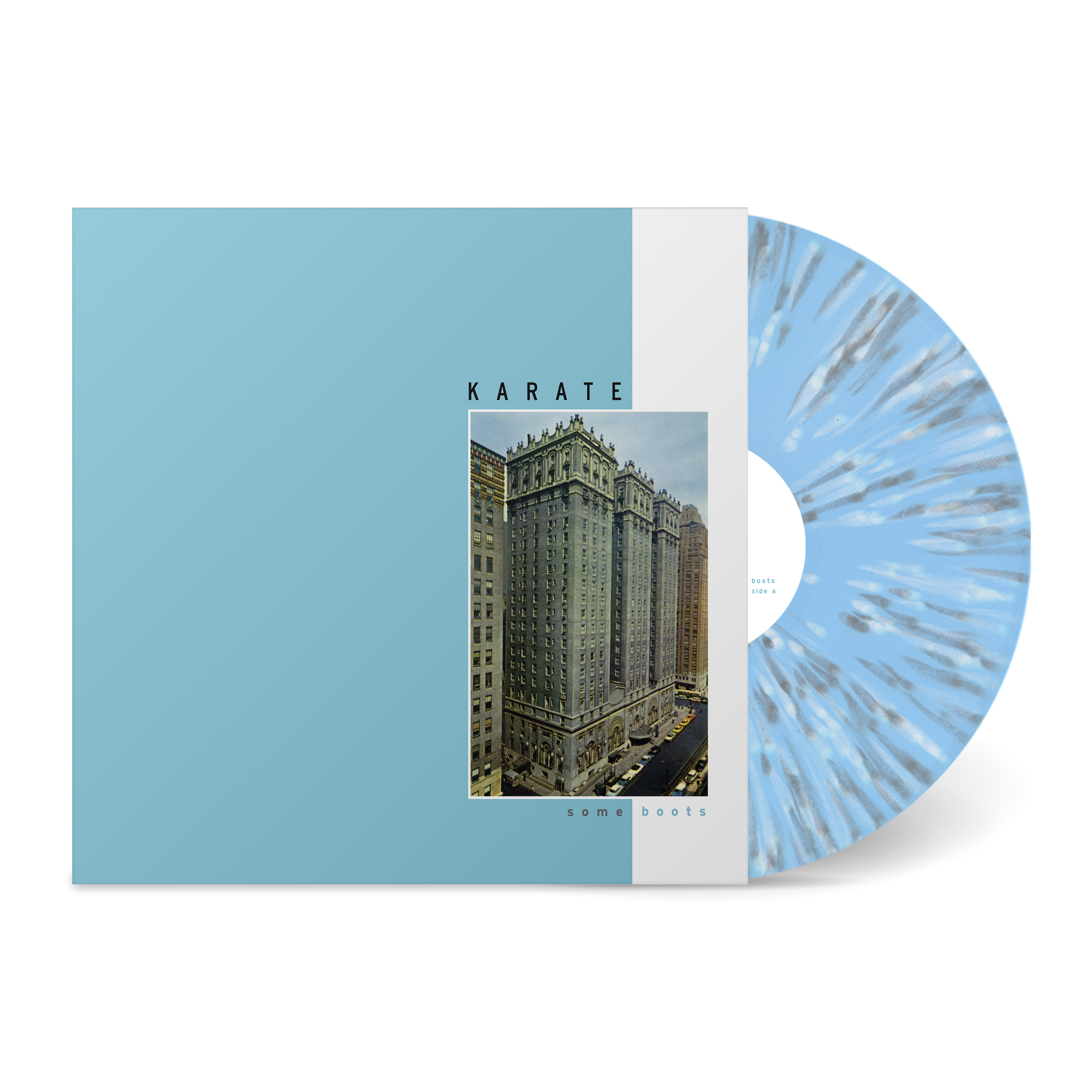
What came after was the transitive Cancel / Sing EP, which rode the newfound energy of Unsolved to new technical heights, and found the band arriving in 2002 with Some Boots, their favorite record to date. The writing process, now more intentional than ever before, relied on sheet music transcriptions and an interplay of influences between rock and jazz, all fit between a rigorous touring schedule.
The band would release two more records before hanging up the hat in 2005, Pockets, which featured Codeine’s Chris Brokaw on guitar, and Dutch label/distributor Konkurrent’s covers record, In The Fishtank 12, which saw the band pay homage to several idols.
Two decades removed and Karate would seem to be more alive than ever, returning to both stage and studio for a number of tours and a new album, Make It Fit. With the Pockets reissue hitting stores this Spring, the near entirety of their discography is now back in print through Numero. And it may be, thirty years removed, that the world has finally caught up to the noise Karate was making.
Albums:
- NUM903: Karate (LP / Cassette)
- NUM904: In Place of Real Insight (LP / Cassette)
- NUM905: The Bed Is In The Ocean (LP / Cassette)
- NUM906: Unsolved (LP / Cassette)
- NUM907: Some Boots (LP)
- NUM908: Pockets
- NUM305: Make It Fit (LP / CD / Cassette)
- NUM215.1: If You Can Hold Your Breath (5xLP)
-
NUM215.2: Time Expired (5xLP)
- NUM215 Complete Studio Recordings (9xCD)