Showing posts with label Belgium. Show all posts

30/04/2010

Urban Trad - Erbalunga (2007)

«Une rencontre entre musique traditionnelle et arrangements contemporains, folk ancré dans le XXI e siècle... C'est ce que propose le groupe Urban Trad […]. Composé de six musiciens et de deux chanteuses, Urban Trad est né avec le nouveau millénaire en Belgique, lorsqu'un folkeux, Yves Barbieux, rassembla autour de lui, pour un premier CD, une vingtaine de musiciens de la scène belge.

Huit ans et quelques albums plus tard, le groupe s'est taillé une solide réputation sur de nombreuses scènes d'Europe, sillonnant les festivals de l'Espagne au Danemark, en passant par la République tchèque, la France, l'Italie ou le Royaume-uni. Rejetant l'idée de frontière et de barrières culturelles, Urban Trad mêle les langues, chantant tant en français et en néerlandais qu'en castillan, en galicien, en suédois, ou même en un langage imaginaire qui avait fait leur succès en 2003, pour leur single "Sanomi". Des barrières qu'ils font également tomber à travers leur musique, qui fut un temps fortement inspirée par le trad’ celtique, mais qui s'est depuis élargie à toute l'Europe.» (Le Télégramme)

Official site here: Français, Nederlands English Español

Link in comments

23/10/2008

Zap Mama - Adventures in Afropea, Vol. 1 (1993)

«Zap Mama is an all-female a cappella quintet founded by Zaire native Marie Daulne. Daulne's father was killed during the revolution of 1960 while her mother was pregnant with her, so the remainder of the family fled to the forests and found refuge with a tribe of pygmies. Daulne was raised primarily in Europe, but when she heard a recording of traditional pygmy music at age 20, she decided to return to Africa to learn about her heritage. She was trained in pygmy onomatopoeic vocal techniques before returning to the West to found Zap Mama. Her group blends world music styles from all over the globe with little, if any, instrumental or percussive backup other than what group members can do with their voices and bodies. Their 1993 debut, Adventures in Afropea, became the biggest-selling non-compilation album in the history of Luaka Bop Records, helped in part by an opening slot on that summer's 10,000 Maniacs tour. A year later they released a follow-up, Sabsylma; 7 followed in 1997. A Ma Zone appeared in 1999. Zap Mama returned to Luaka Bop for 2004's Ancestry in Progress. Supermoon was issued by Heads Up in 2007.» (AMG)

Interview: http://www.zapmama.com/

URL MySpace: http://www.myspace.com/zapmama

Link in comments

02/09/2007

Ghalia Benali & Timnaa - Wild Harissa (2001)

«Ghalia Benali from Tunisia is one of the musical surprises to emerge from the Arab world at the turn of the millennium. A successful actress, she played a leading role in the film "La saison des hommes". Her highly acclaimed concerts in Tunis, Paris and Brussels had the record companies queuing to sign her up, but she preferred to wait until she had found her dream line-up. And now she has - Timnaa is an international ensemble whose virtuoso fiddles, flamenco guitars and Arab percussion carry her expressively smoky and profoundly emotional voice from Tunisia to Andalusia and back again, via the Balkans and Brazil. Ghalia herself describes her new project as "Arab music in new forms, sometimes festive but never profane, occasionally romantic and elegiac, or even classical and medieval, and sometimes wild and over the top – a passport to many cultures, a microcosm that merges the centuries into some-thing new".» (Network)

«Ghalia Benali jest arabską śpiewaczką i tancerką, która rozwinęła skrzydła w Brukseli, gdzie przyjechała studiować sztuki plastyczne. Tam poznała muzyków z grupy Yoda, której koloryt tworzyły instrumenty z różnych stron świata: australijskie didgeridoo, orientalne perkusjonalia, andaluzyjska gitara, afrykańskie djembe. Ta różnorodność to także cecha albumu "Wild Harissa". Słychać tu m.in. echa gitarowego flamenco, łkające skrzypce, a przede wszystkim głos Ghalii Benali - dźwięczny, zalotny i zmysłowy, egzotyczny. Muzyka jest żywa, oparta głównie na arabskich skalach i rytmach, ale słychać też dziedzictwo Europy; są nawet nawiązania do muzyki dawnej. Koncertom towarzyszy taniec, nam musi wystarczyć muzyka. Zapewniam jednak - i tak gra jest warta świeczki.» (Gazeta Wyborcza)

Link in comments

13/06/2007

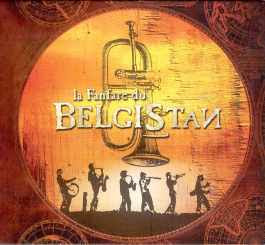
La Fanfare du Belgistan - La Fanfare du Belgistan (2004)

«Le Belgistan, petit état autonome de la Belgique orientale (le seul pays qui se déplace à domicile) vous présente sa fanfare. Après avoir connu un triomphe national, cet orchestre de cinq cuivres et deux percussions veut vous faire découvrir la fabuleuse musique belgistanaise… Danses endiablées, rythmes sauvages et mystérieux, mélodies hypnotiques... le folklore du Belgistan ravira autant les amateurs de musique balkanique et arabe que les inconditionnels du jazz. Genre: moezik afro-boelgare. Ces sept musiciens, membres d'un collectif d'improvisation et d'un groupe de rock (Orange Kazoo), trouvent un centre d'intérêt commun autour des musiques cuivrées et rythmées. Leur pléthore d'instruments (sax soprano, alto, baryton, trompette, euphonium, derbouka, karkabas, guembri, tapan…) leur permet les évasions les plus excentriques: de morceaux traditionnels gitans en compositions ivres d'euphorie tzigane ou orientale, le ton est festif, virevoltant, la transe invite la danse dans ses pas effrénés… De la musique acrobatique à laquelle même Kusturica ne résisterait pas!» (http://www.myspace.com/belgistan)

«Il Belgistan, piccolo stato autonomo del Belgio orientale (l’unico paese che si sposta a domicilio) vi presenta la sua fanfara. Dopo aver conosciuto un trionfo nazionale, quest’orchestra di cinque ottoni e due percussioni vuole farvi scoprire la favolosa musica belgistanese… Balli frenetici, ritmi selvaggi e misteriosi, melodie ipnotiche…il folklore del belgistan piacerà sia agli amanti di musica balcanica e araba che agli incondizionali del jazz. Genere : moezik afro-boelgare. Formata nel 2001 La Fanfare du Belgistan suona principalmente nella strada, nelle feste e nei matrimoni del Belgio, della Francia e della Spagna e da due anni accompagna i concerti de Les Ogres de Barback, famosa band della scene alternative francese. Questi sette musicisti, membri di un collettivo d’improvvisazione e di un gruppo rock (Orange Kazoo), si trovano una passione in comune per le musiche ritmate con ottoni. I loro numerosi strumenti (sax soprano, sax alto e baritono, tromba, euphonium, derbouka, karkabas, guembri, tapan…) permettono le evasioni più eccentriche: dai pezzi tradizionali zigani alle composizioni euforiche orientali, il suono è festivo, la transe invita la musica nei suoi passi frenetici… Musica acrobatica alla quale neanche Kusturica resisterebbe!» (LucaniaBuskersFestival)

Link in comments

10/04/2007

Think of One - Chuva Em Po (2004)

«Winning the “boundary crossing” category in the 2004 BBC Radio 3 Awards for World Music has done this group of Antwerp bohemians no end of good in terms of publicity. Despite this being their sixth album, before the awards they were relatively unheard of outside Belgium.

Theirs is a diverse and unlikely mix of influences, including jazz, funk, reggae and punk rock, along with Belgian brass band music, which they combine with various world music elements. So far, this has meant a strong focus on Moroccan trance music, expressed over three CDs made in collaboration with a number of Marrakech-based musicians.

Chuva em Po is the result of a trip to Recife, Brazil, where the band hung out with local musicians and absorbed the rhythms of Brazil's musically rich North East, attempting a marriage between Latin and European carnival music. The result is a mixture of efforts by songwriter David Bovée and adaptations of traditional songs in local styles such as afoxé, frevo, maracatú and côco as well as more familiar samba and bossa nova – given a weird 7/4 twist on "Sideways Swimming".

Local singer Dona Sila do Côco and percussionist Carranca, (on loan from Nana Vasconcelos), are the stars of the album but Think Of One certainly deserve the recognition they're finally getting for their audacity and open-minded approach.» (Jon Lusk, BBC)

Link in comments