Tuesday, November 11, 2025
The 3 Waves of the RPG Moral Panic
Wednesday, November 5, 2025
Retrospective: Conquest of the Empire
Stop me if you've heard this before: I was never a wargamer, but I liked the idea of wargames, specifically simulating a military or other conflict through the use of a board, tokens, and dice. There's just something inherently appealing to me about this, which probably explains why I've spent more than four decades trying but rarely succeeding at finding a wargame that really clicked with me. I owned and played a number of Avalon Hill and SPI games in my youth, but, with the exception of Diplomacy, I was never very good at them (and even there I was hampered by my inexplicable tendency to play Austria-Hungary).
However, in 1984, Milton Bradley released a line of games under the banner of the "Gamemaster Series" that caught my attention. The series was an experiment in bringing wargames to the mass market. Each entry in the series came in a massive, shelf-dominating box filled with lavish components and a rulebook that looked intimidating compared to more traditional boardgames like Monopoly or Risk. The series began with Axis & Allies, designed by Larry Harris, and followed swiftly with another of his creations, Conquest of the Empire.
While Axis & Allies presented World War II in game form, Conquest of the Empire did the same thing for the Roman Empire's Crisis of the Third Century. The game was a grand-scale battle for supremacy across the Mediterranean world after the death of Marcus Aurelius. It was, in every sense, a spectacle, a game whose physical components alone promised an epic experience before a single die was rolled. As a young history buff with a particular affection for Greco-Roman history, this was the game I'd been waiting for.
To appreciate Conquest of the Empire, it helps to recall what the gaming landscape looked like in the mid-1980s. The boundary between “mainstream” and “hobby” games was much starker than it is today. Wargames were, as I noted above, largely the province of companies like Avalon Hill or SPI. They were sold in specialty stores to an audience comfortable with long rulebooks and hex maps. By contrast, the Gamemaster Series was an attempt to bridge that gap by combining high production values, streamlined rules, and compelling subjects to attract both traditional hobbyists and curious outsiders like myself.
Axis & Allies was, I gather, very successful. Certainly my friends and I enjoyed playing it and we did so often. Of course, even in the 1980s, World War II was a staple of wargames. Conquest of the Empire thus deviated just enough to be considered daring. Furthermore, its subject, the period of the Military Anarchy, was less familiar and its map of the Mediterranean world, divided into provinces and trade routes, hinted at something more intricate than the average family game. Of course, that's precisely why I loved it.
Opening Conquest of the Empire for the first time is something I cannot forget. To start, the box was enormous. Inside lay nearly four hundred molded plastic miniatures, such as legionnaires with raised shields, catapults, coins, and galleys to patrol the Mare Nostrum. There were also cities to build, roads to lay down, and an oversized, vividly illustrated board depicting the known world from Britannia in the northwest to Aegyptus in the southeast. Following the death of Marcus Aurelius, the empire teeters on the brink of chaos. Each player takes the role of a would-be emperor, commanding armies, building cities, taxing provinces, and waging war until one emerges victorious. It's a straightforward and appealing premise – especially to my teenage self.
Like Axis & Allies, the game was structured around economic management and military conquest. Provinces provided income, which could be spent to raise legions, fleets, and fortifications. Armies moved along roads or across the sea, engaging in battles resolved by simple dice rolls. Catapults were useful in sieges and galleys could ferry troops to distant shores. Victory went to the player who amassed the most wealth and territory, though, in practice, the game often ended in exhaustion or mutual ruin long before an emperor was crowned.
That said, the game was not without its flaws. Its economy could snowball rapidly, favoring whoever secured a few prosperous provinces early on. Combat could be pretty random, with legions sometimes crushed or exalted on a handful of dice. The rules for roads and taxation added an appealing Roman flavor but little in the way of meaningful choice. Players spent much of the game counting coins, rebuilding destroyed forces, and waiting for their next chance to strike. One might argue that some of this is, in fact, realistic or at least true to history, but it didn't always make for a satisfying game.
Even so, Conquest of the Empire often felt epic. Setting up the board, arranging your legions, and surveying the Mediterranean was a ritual of grandeur. It was easy to imagine oneself as a latter-day Caesar, eyeing the spoils of empire. The game rewarded patience more than finesse and spectacle more than subtlety, but it delivered a sense of scale that my friends and I found incredibly alluring. It's little wonder that I still think about this game decades later.
From what I have read, it seems that Milton Bradley’s Gamemaster Series never achieved the mainstream success the company had hoped. Axis & Allies became a perennial favorite and spawned multiple editions and spin-offs, but Conquest of the Empire eventually vanished from store shelves, remembered fondly by those of us who had the chance to play it back in the day. I suspect part of the reason was that its theme was less immediately engaging to American audiences and its rules required a level of commitment somewhat closer to Avalon Hill than to Parker Brothers.
Monday, October 6, 2025
Belated
Arneson, as everyone reading this surely knows, was one of the two men without whom Dungeons & Dragons (and, by extension, the entire hobby of roleplaying) would never have come to be. Yet, despite that foundational role, his name and his contributions are too often overlooked, overshadowed, or, worse still, treated as footnotes to someone else’s story. It’s as though we remember him only when we’re reminded to, rather than as a matter of course.
As this year shows, I’m as guilty of this as anyone. I should have remembered October 1 instinctively, the way I do July 27, Gary Gygax’s birthday. The fact that I didn’t speaks volumes, not about Arneson himself, but about how unevenly we remember our own history. Arneson’s legacy is not just that he co-created a game; it’s that he opened the door to an entirely new form of play, one that invited imagination, collaboration, and improvisation in ways no game had before.
His Blackmoor campaign remains one of the great, underappreciated achievements in the history of the hobby. It was the first sustained experiment in what we now take for granted: a shared world, evolving through the choices of its players. So much of what defines roleplaying today, like the open-ended campaign, the emphasis on character, the freedom to explore an imagined world rather than simply play through a fixed scenario, traces back to the quiet, curious mind of a young man running games in Minnesota in the early 1970s.
Forgetting Arneson is easy precisely because his influence is everywhere. It has become invisible through ubiquity. Every time we sit down at a table together (real or virtual), describe what our characters do, and ask, “What happens next?," we are living in the world he imagined. We rarely stop to think about that, not because we’re ungrateful, but because the roots of the hobby have sunk so deep we no longer see them.
Perhaps that’s the real issue. Arneson’s case is just the most visible example of how the contributions of countless others – designers, artists, playtesters, editors, and even just fans – have been forgotten. The history of roleplaying is not just the story of a few Great Men, but of a community of experimenters and dreamers, most of whose names never made it onto any game’s credits page. Our hobby, like any living thing, was nurtured by many unseen hands.
So, while this post began as an apology for my forgetting Dave Arneson’s birthday, perhaps it should instead serve as a reminder simply to remember. To remember Arneson, certainly, but also to remember all those who came after him – and before him – who helped shape the peculiar, beautiful pastime that continues to inspire all of us more than fifty years on.
Friday, August 29, 2025
What If Lovecraft Had Lived into the '60s?
In our reality, H.P. Lovecraft died on March 15, 1937 at the age of 46. While it would be a stretch to say that he died "young," he certainly died younger than most men of his era. For example, Clark Ashton Smith, who was born less than three years after Lovecraft, died in 1961 at the age of 68. With a better diet and better access to medical care, it's not at all improbable to imagine HPL living into his 60s or even 70s – long enough for him to see World War II, the end of the Great Depression, and the monumental technological and social changes of the ensuing decades. If he had lived, what might Lovecraft have written and what impact might it have had?
I have no answers of my own to this question, but, back in 1978, at the 38th World Science Fiction Convention in Phoenix, Arizona, several notable science fiction and fantasy writers and commentators held a panel on the very topic. Led by Dirk W. Mosig, the panel also included Donald R. Burleson, J. Vernon Shea, Fritz Leiber, and S.T. Joshi. If you're interested and have the time, you can listen to the panel, which consists of six half-hour audio files.
Monday, August 25, 2025
Lovecraft the Blogger
What makes this paradox even more striking is the sheer volume of his correspondence. Lovecraft is estimated to have written somewhere between 60,000 and 100,000 letters. The exact number is impossible to know, since fewer than 10% survive today. Even if we take the lower estimate, it still makes him one of the most prolific epistolarians of the 20th century. These were not perfunctory notes dashed off in haste. Many ran to dozens of pages, dense with his thoughts on history, politics, philosophy, architecture, literature, science, and, of course, his own dreams and nightmares. For many of his correspondents, a letter from Lovecraft was less a personal communiqué than a miniature essay.
It was in these letters, more than in his published tales, that Lovecraft revealed himself most fully. Through them we glimpse the breadth of his interests, the peculiarities of his mind, his recurring dreams, his everyday concerns, and, inevitably, his darker and less creditable opinions. If his fiction shows us his esthetic vision, his correspondence shows us the man behind it.
Perhaps I am biased because of my own proclivities, but Lovecraft’s letters remind me of blogging. He had no blog, of course, but his endless correspondence functioned in much the same way. The letter was his medium of self-expression, his way of thinking aloud to an audience that was at once personal and diffuse. Many of his letters were, in fact, shared among friends or passed from hand to hand, much as a blog post today might be reposted, linked, or shared across social media.
Nor was this his first experiment with a pre-digital mode of communication. Before his vast correspondence, Lovecraft had already been active in something that feels strikingly like a low-tech precursor to blogging, namely, the world of amateur journalism and the Amateur Press Associations (APAs). In the 1910s, he was deeply involved with the United Amateur Press Association (UAPA), editing its official organ, The United Amateur, and publishing some of his earliest fiction and essays there. As anyone familiar with the early history of roleplaying games knows, an APA is a kind of distributed network. Members submit their work, which is then collated, printed, and mailed out as a collective periodical. In the pre-digital age, this was often how people with literary ambitions, eccentric opinions, or obscure interests found one another and shared their work. For Lovecraft, the UAPA provided a forum, an audience, and, most importantly, a community.
It’s not hard to see the connection. To be anachronistic, the UAPA was Lovecraft’s early “platform,” while his letters became his lifelong “feed.” Both offered him a way to connect, exchange ideas, and keep writing, whether or not the commercial magazines accepted his fiction. That’s one of the reasons we know Lovecraft better than we know most of his contemporaries. His fiction reveals his artistic ideals, but his correspondence and amateur journalism reveal his mind. Just as blogs today offer insight into their authors’ lives, passions, and obsessions, so too do Lovecraft’s letters and UAPA writings.
Monday, August 11, 2025
Of Periwigs and Pallid Masks
| Virgil Finlay's depiction of Lovecraft as an 18th century gentleman |
"I know always that I am an outsider; a stranger in this century and among those who are still men. ... Everything I loved had been dead for two centuries
“When my grandfather told me of the American Revolution, I shocked everyone by adopting a dissenting view ... Grover Cleveland was grandpa's ruler, but Her Majesty, Victoria, Queen of Great Britain & Ireland & Empress of India commanded my allegiance. 'God Save the Queen!' was a stock phrase of mine.”
Pulp Fantasy Library: The Case of Charles Dexter Ward
Of all the stories H.P. Lovecraft ever wrote, only one can rightly be called a novel, The Case of Charles Dexter Ward. Completed in 1927 in a burst of activity following his return to Providence after having lived in New York, the manuscript remained unpublished until 1941 (four years after Lovecraft’s death) when it appeared in Weird Tales in an abridged form over two issues. (The full version would appear two years later in 1943.) Lovecraft never revised it and in letters he dismissed it as “a cumbrous, creaking bit of self-conscious antiquarianism”
Yet, as is often the case with Lovecraft’s self-criticisms, his judgment was harsher than that of his readers. The very traits he found embarrassing, such as the novel's patient accumulation of historical detail, its period flavor, and its deeply rooted New England setting, are precisely what give it lasting appeal. A rare hybrid of Gothic horror and weird fiction, The Case of Charles Dexter Ward seems to me to owe as much to Poe and the 19th-century ghost story as to the cosmicism of Lovecraft’s later Mythos yarns. Indeed, no less a critic than S.T. Joshi considers The Case of Charles Dexter Ward "among the most carefully wrought fictions in Lovecraft's entire corpus."
The story opens with the puzzling disappearance of the titular character, who is a studious young man from Providence, Rhode Island. Ward is in an asylum to which he'd been committed after a disturbing change in his personality. Once merely eccentric in his love for history, he has recently become withdrawn, secretive, and obsessed with the occult, especially the life of his great-great-great grandfather, Joseph Curwen, a wealthy 18th-century merchant rumored to have been a necromancer. Curwen’s shadowy history of graverobbing, alchemical experiments, and whispered dealings with otherworldly beings ended, at least in official accounts, when Providence citizens raided his estate in 1771. However, no body was ever conclusively identified.
As Ward’s historical research deepens, he discovers Curwen’s letters, records, and formulas. He then begins retracing his ancestor’s steps. His studies turn to experimentation and strange lights, voices, and even disappearances unsettle Providence. Ward’s physical appearance subtly shifts, while his speech adopts 18th-century patterns and his manner grows cold and predatory. Those close to him, most notably his family doctor, Marinus Bicknell Willett, suspect that Ward is no longer entirely himself.
Their fears prove justified. In a hidden laboratory and a network of tunnels beneath the city, Ward revives the dead to extract ancient knowledge, making use of the “essential saltes [sic]” of long-buried figures. The truth then emerges that, through these same rites, Curwen himself has returned and assumed the identity of his descendant, whom he murders. Thus, it is not Ward but a reborn Joseph Curwen who is responsible for recent events.In the end, Willett confronts the necromancer masquerading as Ward in the asylum. Using an incantation from Curwen’s own notes, Willett defeats him, reducing him to a "thin coating of fine bluish-grey dust." This is the Call of Cthulhu RPG's spell, resurrection, employed in reverse. Willett then shields the family from the full truth, calling it a case of madness, but the evidence of Curwen’s return and the scale of his occult dealings, suggest something far older and more terrible than mere insanity.
Lovecraft frames The Case of Charles Dexter Ward as a tale of the gradual unearthing of secrets, rich with colonial history and a sense that the past is never truly gone. It is not only a story of necromancy, but also a meditation on ancestral legacy. Consequently, the narrative builds slowly through. old letters, newspaper clippings, genealogical charts, and the reasoned observations of Willett, a man of science forced to confront the unscientific. As the pieces fall into place, the reader shares Willett’s growing conviction that the past is not inert but a living, active, and indeed malevolent presence.
I find it tempting to wonder if the novel isn’t, in some oblique way, Lovecraft turning his gaze inward. Ward is, after all, an antiquarian from Providence, enamored of the past to the point of losing himself in it, a description that could fit Lovecraft himself. Ward’s fate, consumed and supplanted by his own ancestor, reads almost like a dark warning about what happens when one’s obsession with bygone ages ceases to be an intellectual pursuit and becomes an act of resurrection. Perhaps Lovecraft, consciously or not, was toying with the idea that his own retreat into colonial history and musty archives carried, if not such lurid dangers, at least the risk of being overwhelmed by the very past he adored.Sunday, July 27, 2025
Architect of the Modern Imagination
E. Gary Gygax died on March 4, 2008, at the age of 69. Just over three weeks later, this blog published its first post. That was no coincidence.
Though I’d begun reflecting seriously on old school Dungeons & Dragons in late 2007, shortly before I joined the ODD74 forums, it was Gygax’s death that galvanized me. His demise marked the end of an era and, for me, the beginning of a personal project to explore, celebrate, and better understand the legacy of the game he helped bring into the world.
Today would have been his eighty-seventh birthday. In light of that, I want to pause and remember the life of a man who, though I never met him, profoundly shaped my own. More than that, he shaped the lives of millions, often in ways so pervasive we no longer recognize their origin.
Volumes have been written about Gygax's career, his eccentricities, his talents, and his failings. Seventeen years later and more than half a century since the release of Dungeons & Dragons, it’s time to say something both bold and, I believe, undeniably true: Gary Gygax was one of the most consequential cultural figures of the 20th century.
That may sound hyperbolic, even to readers of this blog. Gygax didn’t lead a nation, win a war, or cure a disease. What he did do was co-create a game that fundamentally reshaped the imaginative landscape of the modern world. Just as significantly, he popularized it. Through passion, persistence, and a gift for theatrical self-promotion, he took a niche idea, half rooted in wargaming, half in pulp fantasy, and gave it structure, rules, and language. He turned it into something accessible, repeatable, and endlessly expandable. He turned it into Dungeons & Dragons.
In this, Gygax's closest analog is probably Walt Disney. Neither man invented his medium. Animated film predates Disney, just as fantasy games predate D&D. However, both men synthesized their influences into a new form and then made it a fixture of mainstream culture. Disney did it with cartoons. Gygax did it with dungeons, dragons, and rulebooks put together in his kitchen.
From that small seed, a global phenomenon grew.
If that seems overstated, consider where we are in 2025. Playing Dungeons & Dragons is no longer a fringe entertainment. It is a cornerstone of pop culture. It’s referenced in popular films and prestige television. It inspires bestselling novels, hit video games, and streaming series. Its influence is everywhere, from the language of "hit points" and "levels" to the way we talk about our personalities in the shorthand of alignment. "I'm a chaotic good introvert," someone might say, without either irony or the need for explanation.
None of that was inevitable. Without Gygax, it’s possible that some form of roleplaying game would have come into being, but would it have appeared in 1974? Would it have spread as quickly or inspired so many imitators? Would the worlds of gaming and fantasy fiction look anything like they do today?
Gary Gygax’s true legacy is more than a single game. It’s a mode of thinking, a grammar of imagination. It’s the idea that you don't have to be content with simply reading about fantasy adventures; you can go on one yourself. He gave us the tools to build our own worlds, to share them with friends, and to lose ourselves in collective acts of creativity.
That’s not a footnote to cultural history. That is cultural history.
So yes, Gary Gygax deserves to be remembered and indeed celebrated as a visionary, a pioneer, and one of the key figures in shaping how we imagine and play in the modern age.
Thursday, July 17, 2025
Memories of Game Stores Past (Part III)
I'm old, old enough to remember a time when the local game store was not merely a place to buy things. It was a crossroads, a hub for roleplayers, wargamers, and fans of genre fiction of all stripes. In those days, game stores felt weird in the best possible way: crammed with strange titles, eccentric proprietors, and regulars who treated the place like a second home. They were cluttered, often a bit dingy, and absolutely magical.
I spent countless hours in such stores. I remember walking through their doors and being hit by the smell of old cardboard and newsprint and the sight of wooden shelves bowed under the weight of too many Avalon Hill and SPI boxed wargames. You could browse freely, picking up games you’d never heard of, flipping through rulebooks that transported you to strange new worlds. If you were lucky, someone might be running a game in the back room – and if you hung around long enough, you might even get asked to join.
That’s how I discovered many of the games that shaped my tastes and interests. This was long before carefully curated social media feeds or electronic publisher newsletters, when sheer chance might introduce you to a captivating cover, a staff recommendation, or a game in progress that caught your attention. The old game store was a vehicle for discovery. It introduced me to lots of games I might never have found otherwise.
That kind of store, the kind I knew in my youth, is largely gone.
Certainly, there are still game stores out there, some of them excellent in their own way – but they’re not the same. Most of them survive today by focusing on collectible card games, miniatures wargaming like Warhammer, and modern boardgames. Roleplaying games, if present at all, are often confined to a few shelves of familiar titles from major publishers. The walls of obscure and idiosyncratic RPGs I once browsed for hours have mostly vanished.
The reasons aren’t mysterious. The Internet changed everything. Online retailers offer discounts and immediate availability that physical stores can’t hope to match. Digital publishing has displaced print in many cases. Perhaps most significantly, online play, something I myself participate in weekly, has made many of the accessories that once sustained game stores obsolete. Why buy dice, for example, when a VTT takes care of it?
None of this is inherently bad. In fact, I think it's great that it’s never been easier to find people with whom to play, no matter where you live. As regular readers know, I referee or play in several weekly online campaigns with friends scattered across the world. Likewise, the indie RPG scene is thriving in ways that would been nigh impossible back in the 1980s. Yet, despite all this richness, I can’t shake the feeling that something important has been lost.
Serendipity. That’s what’s missing.
In my experience, the Internet is great at showing us more of what we already like. It’s less good at surprising us. In the absence of physical spaces where different genres, systems, and subcultures once collided, the RPG hobby has become more siloed. It’s entirely possible now to spend years playing RPGs and never stray beyond a handful of familiar games. That wasn’t the case when every trip to the store might reveal something you’d never seen before.
Back then, I had a much more eclectic gaming diet and not just because I was young and had more free time, though that’s certainly part of it. No, the environment encouraged it. Game stores were chaos. They were cluttered with possibilities and they invited you to take risks, to try something new. They were social, too, places where you talked with strangers, traded recommendations, maybe even rolled some dice together.
Today, many of the stores that still exist feel lonelier, at least to me. They’re quieter, more sterile, less open to chance. They sell games, but they rarely feel like places to do anything else.
I don’t say this to complain about change for its own sake. Much as I dislike it, change is inevitable and not all of it is unwelcome. However, I do think we’ve lost something intangible but important. The video rental store analogy fits here. It's true that streaming services offer more movies than any Blockbuster ever did, but no algorithm has ever replicated the joy of stumbling across something unexpected on the shelf or the spontaneous conversation with a fellow customer that convinced you to give it a try.
Monday, July 14, 2025
If a Game Falls in the Forest
In discussing the possibility of roleplaying games being invented in another era, I soon found myself thinking more and more about the actual history of the hobby, particularly its beginnings. That’s because every so often, someone unearths an obscure set of notes or recalls the private campaign of a long-forgotten hobbyist and claims that roleplaying games were created before Dungeons & Dragons, sometimes long before. According to these accounts, Gary Gygax and Dave Arneson merely popularized the form, while others were its “true” inventors.
I understand the impulse. Recorded history often overlooks lesser-known figures and it's right to acknowledge the contributions of pioneers who laid the groundwork for later developments. That said, I have difficulty crediting anyone as the “father” of a hobby unless he shared his creation in a way that made it accessible, intelligible, and, most importantly, replicable by people outside his immediate circle.
This may seem a narrow definition of invention, but I believe it’s essential, especially in the case of roleplaying games. A private amusement, even if it includes characters, rules, and imaginative scenarios, does not a new hobby make. Countless clever diversions have lived and died in obscurity, forgotten or never known at all. If no one beyond its creators can play, understand, or build upon it, then its significance is limited at best. To put it bluntly, if a roleplaying game existed in, say, 1958 but was never published, never disseminated, and never expanded beyond its original group, it may as well have never existed.
To put it somewhat flippantly, this is the creative equivalent of the old philosophical question, "If a tree falls in the forest and no one hears it, does it make a sound?" Did a roleplaying game “exist” in any meaningful way before D&D if no one else could participate in or reproduce it? My answer is: not really.
To invent something isn’t simply to stumble upon a novel idea. It’s to realize that idea in such a way that others can use, learn from, and transform it. That’s the true achievement of Dave Arneson and Gary Gygax, an achievement no one else can claim. They didn’t just play a new kind of game. They wrote down its rules, organized them, and, however clumsily at first, published them so that others could do the same. No one else had done that before. Here, I think we must be honest: it was Gygax who did the lion’s share of this work. Arneson brought his imaginative brilliance and the experience of his Blackmoor campaign, without which roleplaying games as we now know them would have been impossible, but it was Gygax who hammered the concept into something others could use and got it into print.
With Gygax's efforts in this respect, Dungeons & Dragons would probably never have been published. Instead, we might still be sifting through the remnants of the Twin Cities wargaming scene, piecing together anecdotes about some curious experiment in fantasy miniatures Arneson and his friends played in the early '70s. Because of Gygax, we got three little brown books that any reasonably curious teenager could pick up, read, and use as a blueprint to build worlds of his own. That’s invention in the fullest sense.
None of this is to diminish the role of earlier innovators like Dave Wesely, creator of Braunstein, or others whose names have been lost to time. They’re worthy of celebration. Each, in his own way, added ideas to a growing stew of influences out of which roleplaying coalesced. However, none of these predecessors synthesized those ideas into a coherent, replicable form, let alone shared them widely. They didn’t transmit the concept.
I think that's a distinction that matters. Creativity is common; invention is rare.
The history of games is full of apocrypha and alternate claimants. Perhaps someone did play something like D&D in the 1940s. Maybe there’s a letter buried in an archive describing a fantasy parlor game with a referee and evolving characters. If so, that’s fascinating, but it’s not the same as creating the roleplaying game as we know it today.
Friday, July 11, 2025
From the Brontës to Braunstein
The history of roleplaying games is, by now, well known, at least in broad outline. In the early 1970s, a handful of imaginative wargamers, drawing on a variety of inspirations, both literary and ludic – I hate jargon like that but I can think of no better word – devised a new kind of game. What began as an offshoot of miniatures wargaming blossomed into something wholly novel: Dungeons & Dragons, the first roleplaying game and the start of an entirely new hobby. What’s less often asked is whether something like D&D could have arisen earlier. Could roleplaying games have been invented, not merely in embryonic form, but recognizably so, decades before their actual debut?
It’s a question I was recently asked by a reader via email, though, as I told him in my reply, it's also one I've mulled over many times myself. On the one hand, it seems completely plausible. Human beings have always told stories, assumed roles, and imagined themselves as other people. On the other hand, roleplaying games, as we understand them today, require more than just imagination. They require rules, structure, and a framework for shared storytelling that’s open-ended but repeatable, not to mention playable by groups of people. That’s a tall order and one, I suspect, that might not have been fulfillable much earlier than it actually was.
Even so, I think it's a question worth exploring, as I told my correspondent. That's why I decided to devote this post to the topic, including some brief speculation about just what a roleplaying game produced prior to 1974, had it been created, could have looked like.
Before doing that, though, I wanted to offer a rough definition of what I mean by a "roleplaying game." To my mind, a roleplaying game is not just a game with characters or a narrative, but one in which players assume the roles of imaginary personas within a shared, evolving, fictional world. There must also be open-ended interaction with that world, adjudicated by a set of rules or by a human referee (probably both). In other words, the game must provide a mechanism for ongoing collaborative storytelling that can generate new situations, rather than merely following a pre-written script.We can quibble about my definition and, truth be told, I'm not entirely happy with it, but I think it's good enough for my present purposes. Given the parameters, then, under what conditions could such a thing even arise?
To start, there must be a culture of play – not just childhood play, but adult leisure time devoted to structured, often abstract, pastimes. This criterion, I think, narrows the field considerably. While games of all kinds are ancient, hobby gaming of the kind that leads to things like miniatures battles, science fiction conventions, or fanzine communities is a fairly recent phenomenon. Prior to the mid-20th century, hobbies tended to be solitary (e.g. collecting stamps, building model trains) or social but formal (e.g. cards, chess, sports). The idea of imaginative, improvisational group play as a serious adult pursuit was likely a bridge too far for most societies until not all that long ago.
Then there is the economic component. RPGs are, by their nature, complex. They typically involve rulebooks, paper, dice, pencils, maybe miniatures, and a steady stream of new materials to read and incorporate. All of this presupposes access to affordable printing, widespread literacy, and sufficient disposable income to indulge in what is, quite frankly, a non-essential pastime.
Add to this the influence of fantasy literature, particularly the kind that fosters immersion in imaginary worlds. While such literature absolutely existed prior to the 20th century – my Pulp Fantasy Library series includes multiple examples of what I'm talking about – the genre had not yet reached the critical mass needed to inspire a broader movement of readers-turned-creators. That wouldn't come until the rise of the pulps and, later, the mass popularity of J.R.R. Tolkien.
All of which is to say: I don’t believe roleplaying games were inevitable. Nor do I believe they could have arisen all that much earlier than they did. Nevertheless, there are a few intriguing possibilities worth considering.
Of all the earlier eras that might have given rise to something resembling a roleplaying game, the Victorian period is perhaps the most plausible. The Victorians were inveterate hobbyists, fond of catalogs, elaborate parlor games, and gentlemanly pastimes pursued with a zeal that often bordered on the obsessive. More significantly, they were among the first to develop formal wargames, none more famous than H.G. Wells’s Little Wars, published in 1913 (technically, post-Victorian, but I'm OK with that).While Little Wars lacks the improvisational openness and character-centered focus of a true roleplaying game, it nevertheless offers tantalizing glimpses of the path not taken. For example, it encourages the invention of fictional armies and, by implication, fictional countries to support them. Wells himself recounts some of his battles in narrative terms, portraying himself and his opponents as imaginary generals leading imaginary forces, complete with strategic dilemmas and dramatic turns of fate. In this, one can detect the germ of roleplaying. With a slight cultural shift and a bit more emphasis on character over campaign, one can almost imagine Little Wars evolving into something more like a roleplaying game.
One might also consider the games of the Brontë children, consisting of invented worlds, described through stories, poems, and letters. Inspired by a set of toy soldiers given to Branwell Brontë in December 1827, the siblings each created an imaginary kingdom, complete with its own geography, history, and cast of recurring characters. These were private amusements rather than games in any formal sense. There were, for instance, no rules or adjudication, but they demonstrate that the impulse for immersive, serialized storytelling existed, even among children raised in relative isolation. The Brontës' creations are reminiscent in some ways to a referee’s campaign setting, continuously expanded and revised over time and in response to changing events within it.
What’s striking about these two examples is how each contains one half of what roleplaying games would eventually become. Wells provided rules and structured play, but his battles lacked characters in the personal, individual sense and unfolded largely without narrative continuity beyond what the players themselves imposed. The Brontës, by contrast, created intricate, evolving worlds filled with characters and stories, but they did so without any formal rules or mechanisms for shared adjudication. In both cases, the essential components were present but disconnected: storytelling without structure and structure without storytelling. What was lacking was a bridge between these imaginative impulses and the domain of systematized, collaborative play, a framework that could make private fantasy into a repeatable, transmissible experience shared by many. The alchemy of open-ended narrative bound to procedure – the heart of roleplaying games in my opinion – had not yet been discovered.
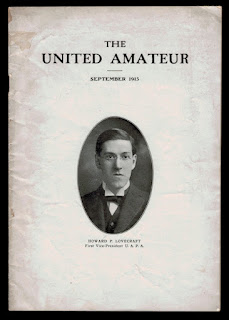
It was not until the interwar period that some of these conditions began to change. The rise of pulp magazines introduced vast new audiences to tales of fantasy, science fiction, and weird horror. These stories, though often formulaic, laid the groundwork for shared genres and tropes. Even more important were the fandoms that grew up around them, through letters columns, conventions, and amateur press associations. Consider, for example, that H.P. Lovecraft met some of his closest friends, many of whom went on to become influential writers of fantasy and science fiction themselves, through APAs to which he belonged.These fan communities did more than read. They created. They wrote fiction, debated continuity, argued over setting and character details, and occasionally even imagined themselves in the worlds they loved. This tendency only deepened after World War II, as mass printing and distribution became cheaper and more accessible and science fiction and fantasy matured as genres. Early versions of LARPing, the Society for Creative Anachronism, and the first fantasy board games all emerged from this stew of fannish creativity. It is no accident that Gygax and Arneson also came from this world. Without it, Dungeons & Dragons could never have been created or, if it had been created, would never have found a large audience.
Had someone in the 1930s or 1940s attempted to create a roleplaying game, I suspect it would have looked very different from what we know today. Possibly, it might have taken the form of an elaborate correspondence game, with players sending letters in-character to a central referee, who adjudicated events and mailed back results. Alternately, it might have resembled a parlor game with scripted outcomes. In any case, I suspect it would have remained confined to a small circle of friends, passed between them alone and never published. All of these are intriguing counterfactuals, of course, but they also highlight how contingent the birth of the RPG truly was. It required more than creative individuals. It required the right cultural, economic, technological, and especially social context.
Could roleplaying games have been invented earlier than they were?
In theory, yes. In practice, I highly doubt it. Too many of the prerequisites simply weren’t present until the 1960s and early ’70s: the widespread embrace of fantasy fiction, the do-it-yourself ethos of fandom, the democratization of leisure, and a new cultural openness to improvisation and play. It’s tempting to view RPGs as inevitable, as something that had to happen, but history rarely works that way. In another timeline, Gary Gygax might have remained an insurance underwriter and Dave Arneson a gifted but obscure tinkerer with wargames rules. The creation of Dungeons & Dragons was, in many ways, a happy historical accident.
Wednesday, July 2, 2025
Preserving Grognardia
I'm speaking of a long-simmering idea of assembling a collection of the "Best of Grognardia." Over the past sixteen years, this blog has published nearly 5,000 posts on a wide range of topics, such as old school RPGs, pulp fantasy, gaming history, interviews, reviews, nostalgia, and curmudgeonly digressions (or, as some prefer to call them, unhinged rants). Some of these posts still get linked and cited today, while others have quietly passed into the digital ether.
The question that keeps coming back to me is: Should I try to preserve some of this? The internet is ephemeral by nature. Blogger still functions – for now – but we’ve all seen Google abandon products without much warning (RIP Google+). If that happens to Blogger, what becomes of Grognardia? A properly edited and formatted anthology, whether print, PDF, or both, might serve as a small bulwark against that impermanence. It'd be a way to retain some of what made the blog meaningful to me and, I hope, to some of you as well.
Would a project like this be worth doing? More to the point, would it be of interest to readers? What would you want to see in a Grognardia collection, if I pursued this seriously? The most widely read posts? The most obscure? The ones that sparked discussion (or controversy)? Should it be organized chronologically, thematically, or by some other criterion?
To be clear: I don’t yet know if this is a project I’ll take up in earnest. A lot depends on the response it receives and whether there’s real interest in such a thing. So, consider this post a bit of informal market research, but also a chance for me to gauge how much of Grognardia's legacy still resonates with its readers.
If this project does move forward, I’ll likely be discussing it in more detail over at Grognardia Games Direct. My intention is to keep the newsletter focused on my writing specifically for publication, while Grognardia remains a space for broader reflection and commentary. So, if you’re curious to follow the development of this or other projects I’ve mentioned in passing over the years, you might consider subscribing.
Thursday, June 12, 2025
The Hidden Masters of Pulp Fantasy
From the vantage point of the first quarter (!) of the twenty-first century, it’s all too easy to forget just how strange fantasy and science fiction once were – not merely in their imaginative content but in the intellectual and spiritual traditions from which they drew. We tend to think of early speculative fiction as arising primarily from a matrix of adventure tales, scientific romances, and classical mythology. However, another powerful and often overlooked influence is the world of Spiritualism, Theosophy, and other esoteric traditions. These weren’t mere fads in the late 19th and early 20th centuries; they were serious systems of belief for many, including a surprising number of the authors who helped lay the foundations of what we now call genre fiction.
Even more fascinating is how many once-occult concepts have since become commonplaces of fantasy and science fiction, like astral projection, past lives, lost advanced civilizations, invisible planes of existence, and cosmic cycles of spiritual evolution, to name just a few obvious ones. These weren’t originally the products of scientific or rationalist speculation. They were occult doctrines, often articulated with the structure and certainty of any other religion. Early speculative fiction served as a powerful conduit for these ideas, transmitting them into the cultural imagination.
Take, for instance, astral projection, which recurs throughout pulp fantasy and science fiction. In Theosophy, this is the “etheric body” or “etheric double” leaving the physical body to traverse the astral plane. In fiction, this idea becomes John Carter’s unexplained voyage to Barsoom in A Princess of Mars, where his body remains behind on Earth while his spirit is transported to another world by sheer force of will. Burroughs never offers a scientific explanation for the phenomenon nor did he need to do so. His readers would likely have recognized the trope from already extant popular occult literature.Similarly, reincarnation and karma, central tenets of Theosophy and many forms of Eastern-influenced Spiritualism, appear in the works of authors like Talbot Mundy, whose protagonists sometimes recall past lives in ancient empires. The same is true of many tales penned by Abraham Merritt. In The Star Rover, Jack London tells the story of a prisoner who escapes his unjust physical confinement by entering trance states that allow him to access a series of former incarnations. This isn’t merely a fictional conceit; it reflects a specific metaphysical worldview in which human identity unfolds across many lifetimes, a view that gained traction during the late 19th and early 20th centuries. Even readers who didn’t share this worldview would nevertheless have been familiar with it.
William Hope Hodgson is another fascinating case. He blends arcane science with mystical speculation in his "Carnacki the Ghost-Finder" stories, which feature protective sigils, vibrational zones, and references to the "Outer Circle," a realm inhabited by malevolent entities existing just beyond human perception. All of these ideas draw heavily on contemporary occultism. His novel The Night Land, a work of science fantasy more than horror, is set on a dying Earth haunted by monstrous spiritual forces and saturated with the oppressive weight of cosmic time. It echoes Theosophical doctrines of vast evolutionary cycles and the occult preoccupation with psychic resistance to spiritual evil.Marie Corelli (born Mary Mackay), once one of the most popular authors in the English-speaking world, is now rarely read. Her novel, A Romance of Two Worlds, for example, blends Spiritualist belief with melodrama and science fictional concepts, such as portraying electricity as a bridge between the material and spiritual realms. She directly influenced writers like H. Rider Haggard and even Arthur Machen, both of whom in turn shaped the subsequent development of fantasy. Even Edward Bulwer-Lytton, now best known for the infamous incipit “It was a dark and stormy night,” was a serious student of esoteric lore. His novel Zanoni depicts an immortal Chaldean adept who achieves transcendence through secret knowledge, an early example of the “hidden masters” who would later become a staple of Theosophy.
Which, of course, brings us to Theosophy itself, which had perhaps the most lasting and far-reaching impact on the development of both esoteric thought and fantasy. Founded in the 1870s by the Russian-born mystic, Helena Blavatsky, Theosophy combined elements of Hinduism, Buddhism, Neoplatonism, and esoteric Christianity into a vast occult cosmology. Through books, journals, and lectures, it promoted a view of the universe in which mankind was but one phase in an immense spiritual drama, involving lost continents, ascended masters, and ancient wisdom. These ideas found fertile ground in genre fiction. The controversial “Shaver Mystery” stories published in Amazing Stories in the mid to late 1940s and purportedly based on true events involve ancient subterranean races like the evil Deros (which itself served as an inspiration to Gary Gygax). Shaver's stories read like Theosophy blended with pulp sensationalism.Even Clark Ashton Smith, whom regular readers will know is my favorite of the Weird Tales trio, drew on esoteric themes. Ideas like cyclical time, forgotten civilizations, and arcane knowledge recur throughout his work. His Zothique cycle, set on the last continent of a dying Earth, reflects the Theosophical notion of a future “seventh root race” and the eventual exhaustion of history.
Against this background, H.P. Lovecraft stands out, not because he rejected religion in general (though he did), but because he specifically targeted Spiritualism and occultism. He was deeply familiar with the claims of mediums, astrologers, and Theosophists and dismissed them with open contempt. In his correspondence, he regularly mocks the “credulous” who place faith in séances, reincarnation, and similar beliefs. At the behest of Harry Houdini, Lovecraft even collaborated on a book titled The Cancer of Superstition, intended as a wholesale debunking of Spiritualist claims. The book was never completed due to Houdini’s sudden death in 1926.Despite this, Lovecraft’s stories are filled with forbidden books, lost knowledge, and ancient alien races whose truths are too terrible for the human mind to bear. In this way, Lovecraft doesn’t discard the tropes of occult literature – he inverts them. Where Theosophy promised spiritual enlightenment and cosmic unity, Lovecraft offers only madness, degeneration, and a universe that is not merely indifferent but actively hostile to notions of human significance. His “gods” are not hidden masters but incomprehensible and uncaring forces. Structurally, however, he preserves much of the occult worldview: a hidden reality lurks behind the surface of things, accessible only to initiates – scholars, madmen, and cultists. Lovecraft didn’t reject that structure; he twisted it and filled it with dread.
All of this makes it remarkable just how thoroughly modern fantasy and science fiction still bear the imprint of these early occult influences. Astral travel, alternate planes, soul transference, hidden masters, and cosmic cycles remain staples of the genres. They’re treated today as neutral, even secular, tropes of worldbuilding, even though their origins are anything but secular. They are spiritual, mystical, and often explicitly religious in intent.
Wednesday, March 5, 2025
Retrospective: Valley of the Pharaohs
I've said before that I have very little direct experience with Palladium Books or its roleplaying games. With the exception of my old college roommate, I never knew anyone who played any of their games, despite the fact that there seem to be a huge number of them. Even so, I was aware of the existence of Palladium and its products through the advertisements that regularly appeared in the pages of Dragon. One that particularly fascinated me was The Valley of the Pharaohs, which first appeared in 1983. Recently, a friend of mine pointed out to me that the game was available as an inexpensive PDF from DriveThruRPG, so I grabbed a copy and finally had a chance to look at it after all these years.
In its original form, The Valley of the Pharaohs was a boxed set, consisting of a rulebook, a colored map of Egypt, and about a dozen other maps and diagrams. The rulebook is only 64 pages – short by contemporary standards perhaps but very much in keeping with many RPGs of its time. Written by Matthew Balent, who worked on a number of other early Palladium products, it's designed for adventuring in the political, religious, and mythological world of New Kingdom Egypt. Unlike Palladium’s more well-known roleplaying games, with their kitchen sink approaches to setting design, The Valley of the Pharaohs focuses on a rather more grounded, historically-informed presentation of ancient Egypt, though it does allow for supernatural elements such as magic (or magick, as the book styles it), the intervention of gods, and a handful of fantastic monsters.
In The Valley of the Pharaohs characters are built around occupations appropriate to the ancient Egyptian setting, like scribes, priests, soldiers, merchants, artisans, and so on. Occupations are largely distinguished from one another by the skills they provide the character. The game places some emphasis on social standing (or caste), as ancient Egyptian society was hierarchical, like most pre-modern societies. Caste determines which occupations a character can enter, as well as providing a bonus to a particular attribute. In a certain sense, caste is a replacement for race, since there are no playable non-humans in The Valley of the Pharaohs.
Combat is fairly straightforward and leans toward the lethal, in keeping with the idea that violence is not always the best option in a world where political maneuvering and religious influence are just as important as swordplay. Players are encouraged to use guile, diplomacy, and careful planning to navigate ancient Egyptian society, since there are strictures in place that against as stops against typical "adventuring" behavior. The order and stability of the New Kingdom is repeatedly emphasized, as are the potential problems that come with the characters acting without sanction in a way that could potentially upend that order.
The game's commitment to presenting ancient Egypt as a real place rather than simply a backdrop for fantasy adventure is readily apparent. The Valley of the Pharaohs provides details on daily life, religion, politics, and the role of different social classes. The gods of Egypt are an active presence, but they do not overshadow human action, nor do the limited kinds of spells available to player characters. Reading the rulebook, I couldn't shake the feeling that Balent was actually more interested in writing a sourcebook about ancient Egypt than he was in making a roleplaying game set in that time and place. This dedication to historical authenticity is a strength, as is its attempt to make social and political dynamics just as important as combat. At the same time, I can't help but wonder if this is what it's potential audience would have wanted from a game like this.
There is little in the way of extended campaign guidance and the adventure hooks provided are limited to the point of being skeletal. This would almost certainly make it difficult for a referee unfamiliar with ancient Egypt to know where to begin. It's too bad, because Balent packed a lot of genuinely interesting details in this short volume, but most of it tends toward the encyclopedic rather than the practical. When combined with the fact that The Valley of the Pharaohs has given only a limited amount of attention to fantastical or supernatural topics, its utility strikes me as limited. Who is this game for and what would they do with it?
On the plus side, The Valley of the Pharaohs is amply illustrated throughout, both in the form of black and white line drawings throughout the rulebook and separate maps. I really like the artwork, as it depicts lots of mundane aspects of ancient Egypt, such as clothing and wigs, that are important to both players and referees in establishing the setting. The maps and diagrams are similarly well done and useful for gameplay, particularly when exploring tombs and temples. In many ways, these are among the most important parts of Valley of Pharaohs, since gamers often need good visual guides of settings that deviate from the tropes of vanilla fantasy.
Wednesday, January 22, 2025
REPOST: Conan of Cross Plains
It may sound fantastic to link the term "realism" with Conan; but as a matter of fact - his supernatural adventures aside - he is the most realistic character I ever evolved. He is simply a combination of a number of men I have known, and I think that's why he seemed to step full-grown into my consciousness when I wrote the first yarn of the series. Some mechanism in my sub-consciousness took the dominant characteristics of various prize-fighters, gunmen, bootleggers, oil field bullies, gamblers, and honest workmen I had come in contact with, and combining them all, produced the amalgamation I call Conan the Cimmerian.It's a pity that this character, this amalgamation of so many real people Howard met in Depression era Texas, isn't the one with which so many are familiar today. He is, for my money, vastly more interesting than the dim, loincloth-wearing, stuffed mattress to be found in so many popular portrayals of the Cimmerian.
--Robert E. Howard to Clark Ashton Smith (July 23, 1935)
Of course, Howard himself has fared little better in the popular imagination than has his most famous creation. To the extent that anyone even knows any facts about the author's life, they're likely based on distortions, misrepresentations, and outright lies, such as those L. Sprague de Camp peddled in Dark Valley Destiny. Fortunately, the last three decades have seen the rise of a critical re-evaluation of both REH and his literary output, finally allowing both to be judged on their own merits rather than through the lenses of men with axes to grind.
This is as it should be. Robert E. Howard was a man like any other. He had his vices as well as his virtues; there is no need more need to reduce discussions of him to mere hagiography than there is to ill-informed criticisms. But men, particularly artists, need to be understood in their proper context, historical as well as cultural. Until comparatively recently, Howard hasn't been given that chance. Like Conan, he's been reduced to a caricature, a laughable shadow of his full depth and complexity that illuminates little about either his life or his legacy.
As the quote above makes clear, Conan may have been a man of the Hyborian Age but he was born in Depression era Texas and, I think, is most fully understood within that context. This is equally true of Howard himself, as Mark Finn noted in Blood and Thunder, a much-needed biographical corrective to De Camp:
One cannot write about Robert E. Howard without writing about Texas. This is inevitable, and particularly so when discussing any aspect of Howard's biography. To ignore the presence of the Lone Star State in Robert E. Howard's life and writing invites, at the very least, a few wrongheaded conclusions, and at worst, abject character assassination. This doesn't keep people from plunging right in and getting it wrong every time.It's often claimed that Howard led a tragic life but I'm not so sure that's true. If anything, he's had a far more tragic afterlife, for, despite of all the Herculean efforts made to elucidate his life and art, he is still so often remembered as "that writer who killed himself because he was upset about his mother's death." Couple that with the disservice done to his creations and it's a recipe for the frustration of anyone who reveres his memory, warts and all.
Yet, there is reason to hope the tide may eventually turn. Del Rey has done terrific work in bringing Howard's writings – and not just his tales of Conan – back into print. Better still, these are all Howard's writings, not the hackwork pastichery of others. In fact, it's becoming increasingly difficult to find those faux Conan stories on bookstore shelves. It's my hope that, at the very least, this will ensure that future readers will have a better chance to encounter the genuine articles than I did when I first sought out stories of the Cimmerian as a young man. Likewise, the facts of Howard's own life are also becoming more well known, at least among scholars and dedicated enthusiasts of fantasy. It may be some time before past falsehoods are cast aside for good but it's at least possible to imagine that now, whereas it was not even a few years ago.
Like the 119th birthday of Robert E. Howard, that's something worth celebrating.
Monday, January 20, 2025
REPOST: Forgotten Father
I was extremely glad to meet Merritt in person, for I have admired his work for 15 years. He has certain defects — caused by catering to a popular audience — but for all that he is the most poignant and distinctive fantaïsiste now contributing to the pulps. As I mentioned some time ago — when you lent me the Mirage installment — he has a peculiar power of working up an atmosphere and investing a region with an aura of unholy dread.HPL would later, along with Robert E. Howard, collaborate with Merritt on a round-robin story called "The Challenge from Beyond." It's not a particularly noteworthy piece, for any of the writers involved, but it's evidence that, once upon a time, Merritt was at least as highly esteemed as Lovecraft and Howard, two writers whose literary stars have risen since their lifetimes, in contrast to their older colleague.
Today, almost no one, including aficionados of fantasy and science fiction -- genres he helped to develop -- talks much about Merritt. I knew his name, of course, since Gary Gygax included him in Appendix N and often noted that he was one of his favorite fantasy authors. Despite this knowledge, I hadn't read much by Merritt until comparatively recently. Part of it is that his stories are frequently out of print. At least some of them are in the public domain, but, being a stodgy old traditionalist, I like books, meaning that, if I can't find a physical volume of an author's works, I often don't read them. Many older authors, such as H. Rider Haggard, for example, are readily available in inexpensive paperbacks, making them much easier to obtain by those uninterested in trolling used bookstores for obscure novels.
Even so, I don't think that fully explains why Merritt is so poorly known and appreciated in the 21st century. The real answer, I think, lies in his stories, which don't fall into neat, easily marketable categories. Whereas Lovecraft can be crudely called a "horror" writer and Howard a "fantasy" one, Merritt defies such facile classification. More often than not, his stories feature recognizably "pulp" heroes -- men of action and intelligence equally adept at problem-solving and fisticuffs -- but Merritt's style is ornate, even florid, marshaling a veritable army of adjectives, adverbs, and archaisms to describe scenes of remarkable power. Here's just one example from his Creep, Shadow, Creep in which he describes a sorcerer:
I saw that he was clothed in the same white robes. There was a broad belt either of black metal or ancient wood around his middle. There was a similar cincture around his breast. They were inlaid with symbolings of silver ... but who ever saw silver shift and change outline ... melt from this rune into another ... as these did? ... The servants had quenched their torches, for now the corposants had begun to glimmer over the standing stones. The witch lights, the lamps of the dead ... Glimmering, shifting orbs of gray phosphorescence of the grayness of the dead ... Now the buzzing began within the Cairn, rising higher and higher until it became a faint, sustained whispering.It's not hard to see why Lovecraft was so enamored of Merritt's prose -- or why he accused him of "catering to a popular audience." Merritt's style is neither fish nor fowl, mixing many aspects of pulp literature into a unique elixir that's remarkably intoxicating. As Lovecraft notes above and, as I stated in my review of The Ship of Ishtar, Merritt is a master of atmosphere and setting a scene. He takes the time to describe the environment in which his fantastic tales of lost races and eldritch horrors occur and it's this tendency that truly set his stories apart from those of his contemporaries and successors. Moreso than most pulp writers, Merritt truly transports his readers into another world, using his prose to act as their eyes and ears.
I've still not read the entirety of Merritt's corpus and it may be some time before I do, but it's a project to which I am committed. Merritt's unusual style might not be for everyone. However, his ideas are without peer, which explains his great popularity in the years before World War II. I'm increasingly of the opinion that his stories could find an audience today if they were more readily available. I think he's no less accessible than Lovecraft and, given that his protagonists aren't bookish, mentally fragile antiquarians, they're probably more in line with popular tastes than those of the Old Gent. More than anything, what Merritt needs are some champions who'll do for him what others have done for Lovecraft and Howard: remind the current generation what past generations saw in these great artists.