Showing posts with label DVD Reviews. Show all posts

Thursday, March 11, 2010

Other People’s Money


Other People's Money on the surface seems like another throwaway early 90's comedy (it even has a musical score that is eerily reminiscent of comedies like Trading Places and films of that ilk); however, here is a film with two performances that standout as highlights in pretty established careers, and a satire that seems spot-on for the economic situation we find ourselves in today. The film is a mix of ideals: it's part Oliver Stone's Wall Street and part Frank Capra film. Both sides getting their say and both philosophies – thanks to the acting – sounding reasonable. Here's a film that surprised me mostly because I totally forgot about it. It's a film that has gone forgotten by most, but deserves a new audience in this decade of Capitalism run amok.

Tuesday, March 9, 2010

Three Films by Woody Allen (and Ingmar Bergman)

My HD Starz and MGM channels offered up numerous Woody Allen choices a few months back. I just got to them on the DVR, and of the three films I decided to record – Interiors, Husbands and Wives, and Deconstructing HarryInteriors was the only one I had seen. I was excited to fill in some gaps of my list of Allen films I have yet to see (there's still probably 10-15 on the list), and even though I didn't love all of the films, I was certainly glad that I experienced them. Coincidentally I recorded three films that share one thing in common: they're three examples of Allen paying homage to his master Ingmar Bergman (I swear I didn't plan this). One of these films is a brilliant tribute, the other a mediocre homage, and the third an uneven misfire that hangs loosely by a thread connecting it to Bergman.

Tuesday, March 2, 2010

DVD Review: Not Quite Hollywood


As an unabashed fan of exploitation cinema I have to say I feel pretty ashamed to admit that I had no idea there was an Australian subgenre out there that is like my favorite subgenre Italian horror. The documentary Not Quite Hollywood paints an interesting portrait of "ozploitation", and for fans of this particularly polarizing subgenre this documentary is a treat: a plethora of rental ideas of forgotten (or maybe never discovered) grindhouse cinema from down under. Quentin Tarantino is interviewed the most throughout the doc and his (usual) unbridled enthusiasm is infectious as he talks about how certain film like Patrick crossed over into pop culture (the Italians ripped it off, of course, and made one of their unofficial sequels to the film) and also influenced his films like Kill Bill. Various filmmakers from the Australian New Wave movement are interviewed (most prominently is Brian Trenchard-Smith of The Man from Hong Kong and Dead-End Drive-In "fame") and discuss the ways they made films that people wanted to see, influenced their respective genres with new, innovative ways to film the scenes, and began to affect a whole Australian subculture and industry where the only kinds of films being made were art films like Picnic at Hanging Rock. I found the history of Australian filmmaking to be fascinating, not to mention the various clips from from films that look surprisingly good (and innovative) for the budgets they had. Of course this should surprise no one if you're a fan of exploitation cinema as these types of films were sometimes the breeding ground for young filmmakers with ideas. 

One of the best moments of the doc comes when Quentin Tarantino is describing a scene from one of the films discussed when he says something to the extent of: (paraphrased) "the best thing about exploitation cinema is that initial reaction as your watching something and you're thinking, 'is this really happening…wait…it is…oh my God! How did they do that? What were they thinking? Why would the actors agree to that?' That uncertainty is what makes exploitation cinema so great." Because it's a pretty good bet that the clips from the movies profiled in this doc are the best parts of those movies (for as "fun" as these types of movies are...they're really boring if you aren't watching them with friends) this is a must see doc for fans of exploitation cinema. 

A question for exploitation fans after the jump...

Monday, February 22, 2010

Revisiting “John from Cincinnati”, Part One: His Visit Day One and Two

This summary is not available. Please click here to view the post.

Wednesday, February 3, 2010

DVD Review: Birth

There's a great scene in Birth where Nicole Kidman's character Anna is sitting at a symphony and director Jonathan Glazer (Sexy Beast) just keeps the camera on her, letting the audience watch Anna's eyes as she tries to process the ridiculous notion that a 10 year-old boy is the reincarnation of her dead husband. It's a powerful moment in a film that contains layers upon layers of odd metaphysical goings-on. It's just one example of where Glazer and his screenwriter Jean-Claude Carrière succeed in evoking the emotional slow burn that Kubrick did so brilliantly. Another aspect I liked about the film is that it didn't feel the need to talk these complicated themes to death. Instead Glazer's film is more an adult fairy tale about endless love with a heartbreakingly ironic coda. The use of a French screen writer and a French composer, Alexandre Desplat, proves that Glazer wanted to make an adult, French-like film – with its long takes of beneath-the-surface action and talky scenes – that teeters on the sexually absurd. The musical score is one of the highlights as the action always moves effortlessly (thanks to the fine editing) with the music. The film looks amazing, too, as DP Harris Savides (Zodiac) paints the film in drab, muted colors and sometimes appropriately drenches his characters in shadows.

Monday, December 28, 2009

DVD Review: Two Lovers


James Gray's Two Lovers may be the closest thing American movies have to a Dardenne Brothers film. Well, Kelly Reichardt may have something to say about that, but my point is this: finally we have an American film that is willing to be a melodrama and be serious all while being based in reality. It's rare for a film that portrays love in the same way a soap opera might to have the ability to pull me in and believe in the characters. Of course the acting has a lot to do with it, but Gray films his movie in a way that allows that feeling to seep under your skin; it's a slow process, and like a Dardenne film the first 20 minutes are used for the viewer to get their bearings, but once that happens you realize you're watching a film that has deep and heavy themes, but delivered in a stark and truthful way. I was completely enamored with this film. It's one of my favorite movies of 2009.


DVD Review: Breaking and Entering


Breaking and Entering is a very broad premise about how messing up makes you a better person. Philosophically it could have worked, as the late writer/director Anthony Minghella made one of my favorite films The Talented Mr. Ripley. But where that film was masterful at letting editing speak for the characters intentions, Breaking and Entering insists on spelling everything out with its absurd amount of heavy-handed dialogue.

Monday, December 21, 2009

DVD Review: Adventureland


What a breath of fresh air this movie is. Finally we have a movie about young people in their 20's who aren't obsessed with getting high, drinking, and having sex; these are things that just happen. Writer/Director Greg Mottola has created a love song to those summer nights where everything seems easier and more romanticized than the other three seasons. This is a rare film about young people who are more concerned about getting a summer job so they can save up for Graduate school than about saving money for a big party while their parents are out of town. Similar to last years surprising Nick and Nora's Infinite Playlist this is a film that is more about younger people who are more interested in what's inside someone's mind instead of someone's pants.

Wednesday, December 16, 2009

DVD Review: The Prowler (aka Rosemary’s Killer)


Joseph Zito's 1981 slasher The Prowler has a reputation as being one of the better offerings from the tired sub-genre. It boasts an impressive period look in its opening scenes (impressive for an 80's horror flick with little more than a million dollar budget), some of the best gore effects by Tom Savini, and one creepy looking killer. However, these minor pluses never materialize into a shocking or thrilling experience. Instead the film is nothing more than your average hack-and-slash film that offers up some visceral death scenes (thanks to Savini's gore effects), but doesn't succeed in actually thrilling the viewer in any way. 


Tuesday, December 15, 2009

DVD Review: Funny People


If you look hard enough while watching a Judd Apatow film you will find yourself amazed that there is material that exists – lurking beneath all the penis and fart jokes – that is capable of moving you. I don’t think there has been a writer who has been more polarizing or misunderstood since David Mamet decided to start making movies. Like Mamet, Apatow’s points are often lost on casual audiences who can’t seem to wade their way through the pervasiveness of the vulgarity. Mamet has his “eff bombs” and racial/homophobic slurs, and Apatow has a joke bin that consists of penis/male grooming and fart jokes. Why am I saying all of this? Because I think with Apatow’s language, like Mamet, has a certain rhythm to it, and either that music jives with you or it doesn’t. Mamet’s actors are often looked at as wooden and boring – one note if you will – but the music that is Mamet’s script calls for a certain delivery that, to someone who is not a fan, seems stilted…I find it hypnotic and infectious. The same goes for Apatow, and even though his latest endeavor, Funny People, has a horribly long and awkward third act it doesn’t make the film any less enjoyable. I like the music that the dialogue makes in an Apatow film…it’s a refreshing break from the usual mainstream comedies that Hollywood spits out every year, so even when Apatow fails, it’s a fantastically interesting failure.


Monday, November 9, 2009

DVD Review: Away We Go


Sam Mendes’ Away We Go feels like Jarmusch-lite…and I mean that as a compliment. The filmmakers invoke all the usual indie tropes (I have to admit when I popped the DVD in I was already groaning at the way the menu looked): folk musical score, chapters accompanied by title cards, John Krasiniski with a beard; however, beneath its seemingly rather annoying indie exterior lurks a whole other film filled with interesting meditations on parenting, being in love while having kids, and raising children altogether. This isn’t a film that condescends, as some critics have suggested, this is a film – that despite one grossly horrendous detour – evokes the whimsy of a Jarmusch film; particularly Stranger Than Paradise, another film about thirtysomethings who are geographically unattached looking for meaning in life…looking for home. I was all ready to hate on this movie, but it won me over, and it really is a smile-inducing, intelligent film.

Thursday, November 5, 2009

DVD Review: The Last Lullaby


Jeffrey Goodman’s The Last Lullaby is one of those rare debut films that is so assured in its style that it becomes clearer and clearer as we watch the film unfold that we’re dealing with a major up and coming talent. So rare is it these days to find a thriller that is willing to slow things down – to exist in silence and push aside all the needless noise that clutters modern thrillers. Here is a film that understands the essentials of filmmaking, and why we go to see movies like this. The Last Lullaby is a classic noir existing in a 21st century film – it may not be the most original story (but what noir claims to be wholly original?), but it’s a breath of fresh air; it reminded me of Paul Thomas Anderson’s first film Hard Eight…not in plot, but in how good of a debut film The Last Lullaby is.

Friday, October 16, 2009

“I will hate you for doing this, and I don’t want to…”


Ugly, messy, morally ambiguous, and philosophically complex Ben Affleck’s Gone Baby Gone is slowly becoming my favorite film of 2007. I missed its initial run in theaters, and I didn’t catch it until well after I had constructed my top 10 list for 2007 (with the bad ass trifecta of Zodiac, No Country for Old Men, and Eastern Promises as my top three), but I caught the film on DVD when it first came out and loved it, retroactively (in my mind) placed it in my top 5 for that year (because I’m kind of crazy and OCD like that). After watching the film again tonight on Starz I realize that we’re dealing with a masterpiece here. The film is gorgeous to look at (as gorgeous as the slums of Boston can be), and the elder Affleck shows a real command of filmmaking. He frames each shot perfectly, knows precisely when to cut, knows how to set up a scene, and when to change styles; and perhaps most importantly knows when to sit back and let his amazing ensemble cast do the heavy lifting.

More thoughts after the jump...


And heavy lifting it is…by the climax, the film is so interested in letting its two main characters, private investigators (who also happen to be dating) played by Casey Affleck (in a phenomenal performance…watch the way he out-acts Morgan Freeman at the end of this film) and Michelle Monaghan, discuss the moral repercussions of certain decisions, and allowing the audience to decide which side of the philosophical argument they sit, that we’ve pretty much forgotten the complexity of the police procedural that comes before the final moments of the film. The dichotomy that Affleck the director sets up at the end of the film is so much more interesting and taut than a shoot out, or any kind of big “crack-in-the-case” type moment. That’s not a knock on the writing, because the film does a great job of laying it all out there and not drawing attention to any of the clues (only do we know they’re clues when we re-visit the film)…the film respects its audiences intelligence level – and that’s rare for a mainstream thriller.
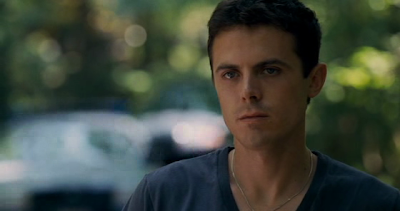

But that ending…damn I love that ending…executed perfectly by Affleck the director and little brother Casey who has a heart shattering moment with his girlfriend (Monaghan) where the two just don’t see eye to eye on an issue. Watch the way Monaghan poignantly pleas with her partner, stating her case through tears…then watch how Affleck rigidly sticks to his guns despite the pleas from the woman he loves. This is a bigger issue for him than what your significant other wants you to do…this is about what is morally right, and this wrestling with morality isn’t as cut and dry as most Hollywood dramas would have you think.

The issue in question (which I won’t spoil too much in case you haven’t seen the movie) changes the lives of four people, and whether it’s for better or worse Affleck and co. leave that for you to decide. Has there ever been a mainstream thriller that’s ended on such an ambiguous note? That final shot sticks with you long after you’ve seen the film (and the final line, too, where Affleck’s character realizes he made a mistake), and perhaps will lead to a heated post-film debate (like the one Affleck and Monaghan engage in at the end of the film) about the decision that is ultimately made, and the limits of morality we are willing to push (or not willing) in order to protect someone from what we may perceive as a bad situation. The film leaves you in a state of contemplation (that final shot is perfect)…contemplating things (and second guessing decisions) that may not be so sunny and neatly wrapped-up; things that may be ugly and ambiguous. Just like life.

Friday, September 25, 2009

DVD Review: Youth Without Youth


Francis Coppola’s Youth Without Youth (from the story by Mircea Eliade) is a deeply personal film for the filmmaker. He’s stated in numerous interviews that when he was made aware of the story about a 70 year old Romanian linguist who is struck by lighting and ages backwards, that he felt he was made to make this story into a movie. Sounds odd, right? Well Dominic (Tim Roth) is struggling to complete his life work, and considers suicide. However, things change when he is struck by lighting and begins to age backwards. He has another chance to finish his life work (a book about the origin of language). This second chance at finishing a close-to-the-heart project appealed to Coppola because he often stated that at 68 he felt like he had been successful with his business (wine maker), but still felt unfulfilled creatively. Youth Without Youth shows Coppola returning after a 10 year sabbatical with a vim that can only be found in his earlier work.


The last film of Coppola’s oeuvre where I felt this kind of visual exhilaration was his take on Bram Stoker’s Dracula. In fact that film reminded me a lot of Youth Without Youth (and a lot of other Coppola movies) where you could easily watch the film with sound off and get the same enjoyment. The problem, however, is that Dracula was based on a classic horror story and had the safety net of mythology for Coppola’s garish visuals to fall into.


In Youth Without Youth his screenplay is a murky mess of metaphysics, doppelgängers, and a failed love story; however, in spite of the written material the films star, Tim Roth (who spends a lot of the movie talking to himself), is fantastic as Dominic. The dilemma he faces towards the end of the film is an interesting one: he meets a German woman who resembles his lost love from his youth....she has also been struck by lighting, and in an interesting development has begun to linguistically age backwards as she begins speaking in ancient languages that help Dominic understand more clearly the elusive nature of his life’s work. The dilemma of course is that Dominic is in love with this woman and must decide if that’s more important than finishing his life work. It doesn’t help that Dominic’s evil doppelgänger is around whispering in his ear throughout the film. One again…sounds odd doesn’t it?


The film is a must see for its visuals alone. It appears this material has awoken a sleeping giant in Coppola. His film is interesting if nothing else because it shows us what kind of story a director can tell through nothing but beautifully framed and constructed visuals. Coppola has always been at the forefront of new ways to visually tell a story, and in Youth Without Youth it doesn’t appear that he’s all the way back (the film meanders despite its reverie-like mood and visual approach), but he’s pretty damn close considering the material he left us with 10 years ago. Youth Without Youth is one of the best looking films of 2007, and for that alone its worth seeking out and devouring beautiful scene after beautiful scene.

I realize I haven’t said much about the movie…well there’s not much to say because I was so damned confused by the story; however, I didn’t care, and I as I mentioned in this mini-review, the visuals move the story along. So, I figured I would let the visuals do all of the talking for me:


Saturday, September 19, 2009

DVD Review: Observe and Report


I have to admit: I love Jody Hill’s absurd and obscene television series Eastbound and Down. It creates one of the best alternate realities I’ve seen in any show. It is artistically grotesque and gratuitous. People say whatever they want in front of anyone…and it doesn’t seem to faze anyone. It’s walking a fine line, making this kind of comedy, but one only needs to watch Eastbound and Down and then take a look at something like Step Brothers (both are exec produced by Will Ferrel) to see how one does gratuitous comedy well. With Hill’s newest film Observe and Report I fall somewhere in the middle. There were moments in Observe and Report that reminded me of the failings of Step Brothers and the successes of Hill’s own Eastbound and Down.


The film is obviously indebted to Taxi Driver and The King of Comedy as head of mall security Ronnie Barnhardt (Seth Rogen) lives in his own alternate world. He feels like every person who enters the mall is his to protect from the evil of the world (there is a subtle commentary here on how Travis Bickel was protecting New York from the scum of the 70’s, and here Barnhardt is protecting his town from the consumer-minded mall crowd who mindlessly lap up all the new “stuff” that is pitched to them via ads). His narration is a lot like Travis Bickel’s – guiding us through moments of the story constantly reminding us that he’s keeping his world (the mall) safe for those that enter.

The story is thin on the surface (like I said there is some interesting stuff beneath the surface here) as a flasher running around the mall exposing him to every woman he sees. One in particular Ronnie is smitten with: Brandi (Anna Farris) who is a cosmetician at the mall. The flasher act as a catalyst for the downward spiral Ronnie goes down. He is so delusional there’s a great scene where he asks Brandi out on a date, she sees that he is taking pills for his bi-polar disorder. She says "I didn't know you partied like that...". Ronnie then gives her the bottle of pill and stumbles his way into having sex with her…oh, never mind she’s passed out and there is clearly vomit on her pillow. The scene is now infamous, but there is a key phrase uttered during the moment that makes it funny, and not just a date rape joke gone awry.

There are, however, many jokes that just kind of fall flat. The absurdist humor doesn’t always work as we see with the cameo of Hill stalwart (and Eastbound and Down star) Danny McBride as a crack dealer, Ray Liotta as a cop who doesn’t think much of Ronnie, and rivalry between Ronnie and a Middle Eastern booth merchant at the mall that leads to one of the weirder Dada-esque moments.

Another reason the film isn’t a total success is the casting of Rogen. Ronnie is both earnest and ugly, and Rogen can play the former, but it’s impossible for Rogen to be unlikable. His pudgy face doesn’t work for this role and his range as a comedian isn’t there yet. He just wasn’t right for Ronnie as he could only pull off the sympathetic part of Ronnie and not the insane part that makes us question our empathy towards the character. The aforementioned Danny McBride would have been perfect for Ronnie.

The stuff that works is great, though, and familiar if you’ve seen Hill’s television show (or other feature film The Foot Fist Way): Ronnie and his co-worker go on a drug induced rampage beating the living hell out of skateboarders, Ronnie happening upon Brandi and Liotta’s detective having sex in a car, and countless scenes that play like Rupert Pupkin greatest hits of uncomfortable moments – specifically a psychological exam Ronnie takes for the police department and a sit down with Ray Liotta where he learns he isn’t going to be on the force…at which point one of Liotta’s co-workers who is hiding in a closet comes out and says “I thought this was going to be funny…but it’s just kind of sad”. Exactly.

Hill has talent, and even though Observe and Report doesn’t always work there are countless moments in between the awkwardness that show you this is a one of a kind director. He films a showdown between Barnhardt and the police with the same kind of deranged energy found in Mean Streets. The final chase seen to the very appropriate Pixies song “Where is My Mind” is a nice touch, too, and he employs his North Carolina film school friend Tim Orr to shoot the picture. There’s nothing overt about the aesthetic letting us know the moments where Ronnie has lost his mind; rather, Hill just leaves it up to the viewer to understand that this is an unstable character who does bizarre things for the sake of the “law”, but really he’s just off in his own little world.

Hill came from the North Carolina film school where he met Danny McBride, Tim Orr, and David Gordon Green (who directed half of the first season of Eastbound and Down) and you can see the talent that is there. Hill isn’t interested in making traditional comedies. His tastes lean more towards the Dada-esque and the absurd, creating characters who say things in front of others that they could only get away with because they exist in their own alternate world. I didn’t think one way or the other about Observe and Report, but I have noticed that I can’t stop thinking about it. Certain scenes keep playing over in my head, and I keep thinking about Ronnie’s character and how we don’t see too many characters like that in comedy. So, despite its flaws I find myself still thinking about it, and that’s saying something for a comedy (which are usually memorable or so bad you can’t wait to get the taste out of your mouth). Fans of The King of Comedy, or just alternative, un-PC comedies will enjoy the allusions throughout Observe and Report and will find something humorous amidst the obscenities and absurdity.