With a sunshine-yellow belly and a loud, cheerful call, the Great Crested Flycatcher represents summer well. I don't get to see them often, though, because they like to hang out high in the canopy, so I was happy when one came into view along the boardwalk at Magee Marsh…
 |
| The famous lemon yellow belly of a Great Crested Flycatcher is always a welcome sight on a summer day. |
 |
| Great Crested Flycatchers don't have much of a crest when they are at rest! |
 |
The little "whiskers" around the base of the bill are called "rictal bristles." They have a sensory function to help flycatchers snatch insects from the air.
|
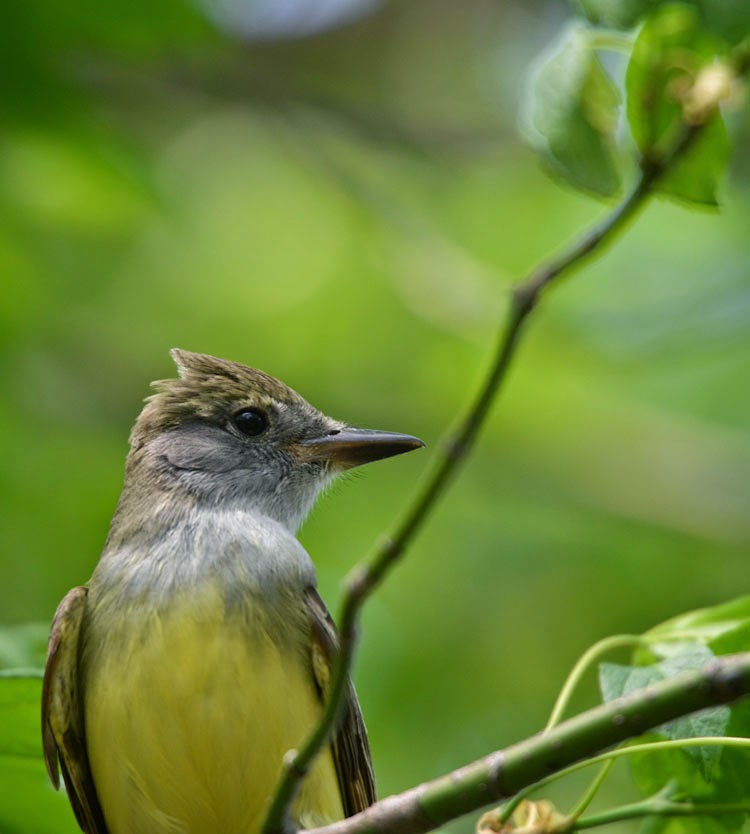 |
| ...there's the start of the crest! |
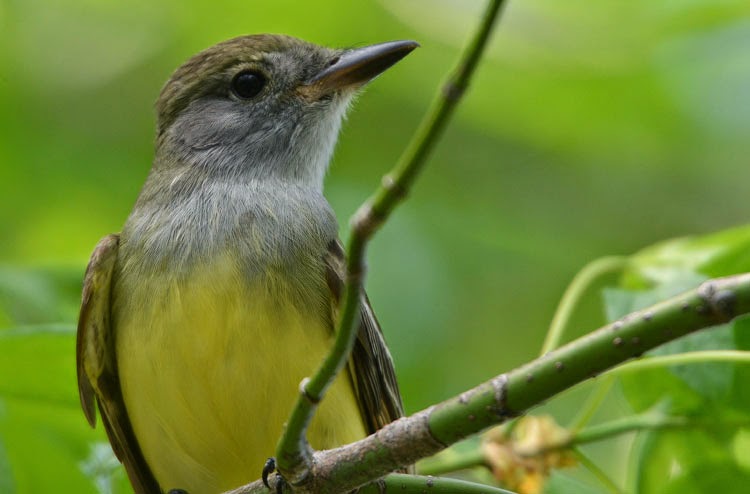 |
| ...and it's back down. |
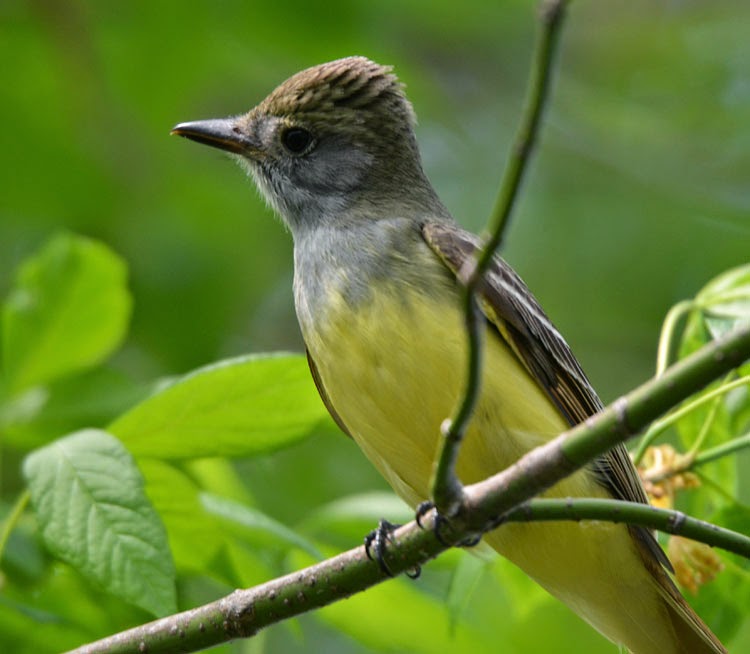 |
| ...and there we have it (not as "great" as a cardinal's crest, but pretty none-the-less). |
About rictal bristles...
Rictal bristles are modified contour feathers (the outer feathers you can see). Contour feathers have a central rachis (also called a shaft) from which the vanes (the feathery part) attach. A vane is made of individual barbs (filaments). A rictal bristle is a feather without the barbs…just the rachis.
Flycatchers have rictal bristles around their bills to help them sense flying insects, but rictal bristles can also be protective by helping to keep insects out of a bird's eyes, or in the case of woodpeckers, by helping to keep wood chips out of their eyes. If you want to learn more about feather structure,
click here for info on Cornell's "All About Birds" site.
I saw this bird at the
Biggest Week in American birding on the Magee Marsh boardwalk back in May.