Showing posts with label Louis Armstrong. Show all posts
Saturday, February 01, 2020
What Is This Thing Called Swing: Louis Armstrong and Black History Month Special Show # 813
Born in New Orleans in August of 1901, Louis Armstrong was a jazz trumpeter and an influential figure in jazz music. His career spanned five decades in which Armstrong would be part of different and important eras of jazz music. In addition to his musical abilities on trumpet, Louis Armstrong was also a vocalist, composer and actor. He was one of the first African American entertainers to cross the gap in racially divided America at the time, being accepted by both white and black audiences. Armstrong generally remained neutral when it came to politics, which often resulted in criticism, however, in 1957 he did speak out during a conflict in Little Rock, Arkansas over school desegregation.
Although Armstrong made his first recordings with King Oliver’s Creole Jazz Band in April of 1923, the first recordings that had Armstrong’s name in the title were in 1925 with his backing band, The Hot Five. The recordings were made in Chicago with The Hot Five and The Hot Seven backing him from 1925-1928. These important early works were not only inventive, but allowed for jazz solo opportunities within the song. He would emerge as the first great jazz soloist. Also nicknamed “Satchmo”, “Satch” and “Pops”, Armstrong had a very distinct voice. His voice was usually defined by its rich, gravelly tone. The vocal style that he used also incorporated skat singing, which he was skilled at. Armstrong had a very unique ability to bend lyrics and melody in song when singing. When recording vocals to the 1926 song "Heebie Jeebies", Armstrong put down the first example of skat singing on record. It is rumoured that he dropped his music sheet during the recording session and made up nonsensical syllables on the spot. Whether this is true or not about this song, it is an example of Armstrong’s inventiveness as a musician and can really be felt when listening to the song. One of his most well known songs is perhaps “What A Wonderful World”, in which it displays Armstrong’s gravelly, honeyed vocal style. Although recorded late in his career in 1967, the song was an international success in the UK where it topped the UK Singles charts at #1. The song initially did not sell well in the US, but would eventually reach #16 on the US Billboard singles charts. It has become an enduring song, still associated with Armstrong even to this day.
Louis Armstrong appeared in a large amount of films such as Pennies From Heaven (1936), in the 1956 musical High Society where he did a duet with Bing Crosby, The Five Pennies (1959) and Paris Blues in 1961, which also starred Paul Newman. He appeared in not only movies, but on radio and television. Some of the songs that he was known for were “What A Wonderful World”, “Hello Dolly”, “Jeepers Creepers”, “St. James Infirmary”, “Potato Head Blues”, “Gut Bucket Blues” and “When You’re Smiling”. Armstrong also collaborated with legendary pianist and bandleader Earl “Fatha” Hines, Ella Fitzgerald, Bing Crosby and Duke Ellington. Louis Armstrong’s influence went beyond jazz, resulting in fans calling him one of the first great jazz soloists. He was an influence on soloists in every genre of American popular music.
Black History Month Playlist:
1. Pure Hell - No Rules (Noise Addiction - Welfare Records - 2006)
2. Death - Freakin' Out (...For The Whole World To See - Drag City - 2009)
3. Andre Williams - Agile, Mobile, Hostile (Silky - In The Red - 1998)
4. Andre Williams & The Sadies - My Sister Stole My Woman (Red Dirt - Bloodshot Records - 1999)
5. Andre Williams - Bacon Fat (Mr. Rhythm Is Movin’! (The Original 1955-1960 Fortune Recordings) - Hoodoo Records - 2011)
6. Fats Domino - Let The Four Winds Blow (Let The Four Winds Blow - Imperial - 1961)
7. 8th Day - It's Instrumental to Be Free (You've Got To Crawl (Before You Walk) / It's Instrumental To Be Free - Invictus - 1971)
8. Chairman of the Board - Skin I'm In (Skin I'm In - Invictus - 1974)
9. Eddie Kendricks - My People Hold On (People...Hold On - Tamla Records - 1972)
10. Earth, Wind & Fire - Ain't No Harm To Moan (Slave Song) (Open Our Eyes - Columbia/Legacy - 2001)
11. Gil Scott-Heron - The Liberation Song (Red Black and Green) (The First Minute of a New Day (Midnight Band) - Arista - 1975)
12. Billy Preston - The Bus (I Wrote A Simple Song - A&M - 1972)
13. Louis Armstrong - Gut Bucket Blues (The Complete Hot Five & Hot Seven Recordings - Columbia/Legacy - 2000)
14. Louis Armstrong - Heebie Jeebies (The Complete Hot Five & Hot Seven Recordings - Columbia/Legacy - 2000)
15. Louis Armstrong - Potato Head Blues (The Complete Hot Five & Hot Seven Recordings - Columbia/Legacy - 2000)
16. Louis Armstrong - St. James Infirmary (The Complete Hot Five & Hot Seven Recordings - Columbia/Legacy - 2000)
17. Louis Armstrong & His Orchestra - Ain't Misbehavin' (Ain't Misbehavin'/(What Did I Do To Be) Black And Blue - OKeh - 1929)
18. Louis Armstrong & His Orchestra - Lazy River (Lazy River/Georgia On My Mind - Parlophone - 1931)
19. Duke Ellington - Creole Love Call (Creole Love Call / Black And Tan Fantasie - Victor - 1930)
20. Bo Diddley - Craw-Dad (Walkin' And Talkin'/Crawdad - Checker - 1960)
21. Fela Kuti & Roy Ayers - 2,000 Blacks Got To Be Free (Music of Many Colors - Phonodisk - 1980)
To download this weeks program, visit CJAM's schedule page for Revolution Rock and download the file for February 1st.
Wednesday, January 29, 2020
Coming Up on Revolution Rock in February 2020!
It’s February which means that throughout this month Revolution Rock will devote each episode that airs in February to theme based programming. Dave and co-host Adam have special programming lined up ranging from jazz, punk, post-punk, garage, country, folk and surf. This year’s themed month programming starts off on February 1st with a program focusing on Black History Month that will feature a mix of music from Louis Armstrong, Andre Williams and a variety of other artists from different genres. This episode will also feature a guest host, Graeme Sylvio of CJAM FM’s Sylvio & Soul program. Revolution Rock airs every Saturday from 7-9 PM on CJAM 99.1 FM in Windsor/Detroit. It can be streamed via cjam.ca and be downloaded via the very same website afterwards.
What Is This Thing Called Swing: Revolution Rock Celebrates Black History Month
Saturday February, 1st, 2020
7-9 PM EST
CJAM 99.1 FM (www.cjam.ca)
Born in New Orleans in August of 1901, Louis Armstrong was a jazz trumpeter and an influential figure in jazz music. His career spanned five decades in which Armstrong would be part of different and important eras of jazz music. In addition to his musical abilities on trumpet, Louis Armstrong was also a vocalist, composer and actor. He was one of the first African American entertainers to cross the gap in racially divided America at the time, being accepted by both white and black audiences. Armstrong generally remained neutral when it came to politics, which often resulted in criticism, however, in 1957 he did speak out during a conflict in Little Rock, Arkansas where he stood up for school desegregation. Also nicknamed “Satchmo”, “Satch” and “Pops”, Armstrong had a very distinct voice. His voice was usually defined by its rich, gravelly tone. The vocal style that he used also incorporated skat singing, which he was skilled at. Armstrong had a very unique ability to bend lyrics and melody in song when singing. Louis Armstrong appeared in a large amount of films such as Pennies From Heaven (1936), in the 1956 musical High Society where he did a duet with Bing Crosby, The Five Pennies (1959) and Paris Blues in 1961, which also starred Paul Newman. Some of the songs that he was known for were “What A Wonderful World”, “Hello Dolly”, “Jeepers Creepers” and “When You’re Smiling”. Armstrong also collaborated with legendary pianist and bandleader Earl “Fatha” Hines, Ella Fitzgerald, Bing Crosby and Duke Ellington. Louis Armstrong’s influence went beyond jazz, resulting in fans calling him one of the first great jazz soloists. He was an influence on soloists in every genre of American popular music. This episode will feature a set of music by Louis Armstrong, music from Andre Williams, Jimi Hendrix, Bo Diddley, Junior Wells and more artists in celebration of Black History Month. The program will also feature guest host Graeme Sylvio of CJAM FM’s Sylvio & Soul program.
Journey Through The Past: Selections from Neil Young's Discography
Saturday February, 8th, 2020
7-9 PM EST
CJAM 99.1 FM (www.cjam.ca)
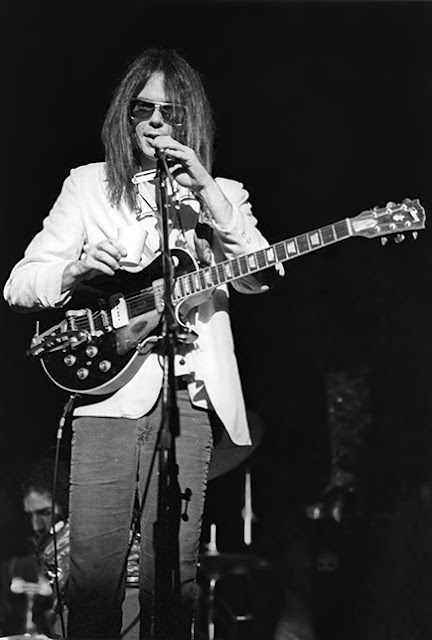
Neil Young is an influential musician/songwriter from Canada. He has played with Buffalo Springfield, Crosby, Stills, Nash & Young, his backing band Crazy Horse, The Stray Gators, Pearl Jam and numerous others. Young has been called the “Godfather of Grunge” by many, the music that he has created has ranged from folk and country to rock, hard rock and noise rock. He even put out rockabilly and synth rock album. His catalogue is vast and there are numerous live albums in addition to the music he created with others and as a solo artist. The Neil Young Archives Volume One was first released as a box set in 2009, but has since become available online as a streaming subscription service featuring a plethora of unreleased material. Some of his best known songs are “Cinnamon Girl”, “Down By The River”, “Old Man”, “Heart of Gold”, “The Needle and the Damage Done”, “Cortez The Killer”, “Rockin’ in the Free World”, there are too many to name. In 1972, Neil Young found critical and commercial success with Harvest. The albums that followed this (Time Fades Away (1973), On The Beach (1974), and Tonight’s The Night (1975)) are referred to as Young’s Ditch Trilogy. Neil Young released Everybody’s Rockin’ in 1983 a rockabilly album and Trans (1982), which explored music with synthesizers and electronic based sounds. In the 80s, Young experimented heavily with his sound. Young has also been involved in film, directing several films such as Journey Through The Past (1974), Human Highway (1982), Greendale (2003) and the documentary CSNY/Déjà Vu in 2008. Young continues to release music, most recently putting out the album Colorado with Crazy Horse. This episode will feature deep cuts and other selections from Neil Young's vast discography.
Rockin’ With Bloodshot Bill: The Music of Bloodshot Bill and Other Selections
Saturday February, 15th, 2020
7-9 PM EST
CJAM 99.1 FM (www.cjam.ca)
Bloodshot Bill emerged out of Montreal around 1998. Starting out as a drummer, Bloodshot Bill began performing with just a guitar and stomp board. Bloodshot Bill often tours and performs as a one man band featuring, guitar, a bass drum, hi-hat and reverb soaked vocals. Live as a one-man band he provides the audience with his own brand of rockabilly music that is unlike any other, while at the same time drawing on the past. He once said that his influences range from early country and rock and roll records to what he refers to as his “holy trinity” of influences "Hasil Adkins, Charlie Feathers, and Link Wray.” Since starting out, Bloodshot Bill has released numerous records on different labels, recorded and collaborated with artists such as King Khan (as The Tandoori Knights and The Bollywood Argyles), Mark Sultan (The Ding Dongs), Deke Dickerson, Shannon Shaw, Jon Spencer and many others. In 2019, he released Come Get Your Love Right Now via Goner Records, Hang Ten With Bloodshot Bill (a surf EP) on Hi-Tide Recordings, an EP of music with legendary rockabilly/roots rock musician Deke Dickerson called The Bad Biscuit EP, a single with The Tandoori Knights (featuring King Khan), and a single with Japan’s the 5.6.7.8’s called My Little Muck Muck. He has also performed all over the US, Canada and parts of Europe. In addition to all this, Bloodshot Bill has performed with the bands The Hubcaps, The Hick-Ups, The Televionaires and Reverend Horton Heat. This episode will feature an interview with Bloodshot Bill in addition to music from Bloodshot Bill’s ever expanding, still potent and prolific catalogue of music.
The Stooges Fun House 50th Anniversary
Saturday February 22nd, 2020
7-9 PM EST
CJAM 99.1 FM (www.cjam.ca)
When it was originally released in July of 1970, Fun House stood out as an album different from its predecessor and from other music at the time. It still does. Produced by Don Gallucci who played keyboards on The Kingsmen’s garage classic “Louie, Louie”, Fun House brought a new sense of groove and intensity to the music of The Stooges. As for influences, the sounds of Howlin’ Wolf and James Brown influenced part of the sound that the band was going for on this album. The band also added Saxophonist Steve MacKay to Fun House and he is found on the album’s second side as the band also pull in free Jazz influences into their dynamic, and especially during the chaotic sonic assault that ends the album “L.A. Blues”. Fun House was named after the band’s house and rehearsal space that they lived in back in Michigan, the album’s songs developed through being played live. Although he initially deemed the band “unrecordable”, Gallucci’s intention was to capture The Stooges live in the studio to try and get down the energy they projected live on tape. The feeling he went for was captured and resulted from having the band perform as if it were a live performance, removing all baffles and carpet from the studio and by having Iggy record with them with a handheld microphone, which was unconventional at the time. The music pushed forward and has been described as capturing a sense of instant mayhem. Other words used to describe this album have been apocalyptic, chaotic, destructive, punk blues, proto-punk and garage meltdown. The album would go on to influence punk and alternative music in the years that followed, setting a blueprint and growing in stature. It has a depth and influence that challenged rock conventions. For an album that was virtually ignored by the mainstream following its initial release, Fun House, now 50 years later is revered and identified as a cult classic. This episode will feature all of the songs from 1970’s Fun House album, plus selections from the 1970: The Complete Fun House Sessions box set and a few other surprises.
Revolution Surf 2020: Intergalactic Instrumentals
Saturday February 29th, 2020
7-9 PM EST
CJAM 99.1 FM (www.cjam.ca)
For the 14th annual Revolution Surf special, the program will focus on intergalactic instrumental themed songs, or in other words surf music with a space theme. One of the first surf/instrumental based songs to have a space or sci-fi theme was the song “Telstar” by The Tornados. Not to be confused with the US band of the same name (spelled “Tornadoes”), this band was from the UK and worked together with producer Joe Meek in the early 60s. Meek wrote and produced the song for The Tornados, utilizing new, pioneering production techniques that created distinctive, and “space age” futuristic sounds. With its use of keyboards and the Clavioline, “Telstar”, which was named after a telecommunications satellite that went into orbit on July 10th, 1962, became an immediate hit when released in August of 1962. In the UK the song was at #1 on the UK singles charts for 25 weeks and #1 in on the US Billboard Hot 100 singles chart. The Tornados were also the first British group to have a number one single in the US. Since then there has been a plethora songs and surf/instrumental bands that have named themselves based on space or sci-fi themes. In 1964, instrumental band The Ventures released their album Ventures in Space. The album explored more experimentation within the band’s classic sound and was influenced by Joe Meek’s space age production style. There has been countless bands with space inspired names such as Man or Astro-Man? who formed in the early 90s, The Metalunas in the 2000’s, and numerous bands with songs falling under this theme such as The Surfaris, The Marketts, Davie Allan & The Arrows, The Challengers, Messer Chups, Luau or Die, and so many others. On February 29th, take a journey into a world of intergalactic surf and instrumental music for Revolution Surf 2020. The show will also feature guest hosts Brady of CJAM FM’s Music From Planet Earth, Carley of CJAM FM’s Everything’s No Good and Derk Brigante of Surf Rock Radio’s The Surfphony of Derstruciton 2000.
What Is This Thing Called Swing: Revolution Rock Celebrates Black History Month
Saturday February, 1st, 2020
7-9 PM EST
CJAM 99.1 FM (www.cjam.ca)
Born in New Orleans in August of 1901, Louis Armstrong was a jazz trumpeter and an influential figure in jazz music. His career spanned five decades in which Armstrong would be part of different and important eras of jazz music. In addition to his musical abilities on trumpet, Louis Armstrong was also a vocalist, composer and actor. He was one of the first African American entertainers to cross the gap in racially divided America at the time, being accepted by both white and black audiences. Armstrong generally remained neutral when it came to politics, which often resulted in criticism, however, in 1957 he did speak out during a conflict in Little Rock, Arkansas where he stood up for school desegregation. Also nicknamed “Satchmo”, “Satch” and “Pops”, Armstrong had a very distinct voice. His voice was usually defined by its rich, gravelly tone. The vocal style that he used also incorporated skat singing, which he was skilled at. Armstrong had a very unique ability to bend lyrics and melody in song when singing. Louis Armstrong appeared in a large amount of films such as Pennies From Heaven (1936), in the 1956 musical High Society where he did a duet with Bing Crosby, The Five Pennies (1959) and Paris Blues in 1961, which also starred Paul Newman. Some of the songs that he was known for were “What A Wonderful World”, “Hello Dolly”, “Jeepers Creepers” and “When You’re Smiling”. Armstrong also collaborated with legendary pianist and bandleader Earl “Fatha” Hines, Ella Fitzgerald, Bing Crosby and Duke Ellington. Louis Armstrong’s influence went beyond jazz, resulting in fans calling him one of the first great jazz soloists. He was an influence on soloists in every genre of American popular music. This episode will feature a set of music by Louis Armstrong, music from Andre Williams, Jimi Hendrix, Bo Diddley, Junior Wells and more artists in celebration of Black History Month. The program will also feature guest host Graeme Sylvio of CJAM FM’s Sylvio & Soul program.
Journey Through The Past: Selections from Neil Young's Discography
Saturday February, 8th, 2020
7-9 PM EST
CJAM 99.1 FM (www.cjam.ca)
Neil Young is an influential musician/songwriter from Canada. He has played with Buffalo Springfield, Crosby, Stills, Nash & Young, his backing band Crazy Horse, The Stray Gators, Pearl Jam and numerous others. Young has been called the “Godfather of Grunge” by many, the music that he has created has ranged from folk and country to rock, hard rock and noise rock. He even put out rockabilly and synth rock album. His catalogue is vast and there are numerous live albums in addition to the music he created with others and as a solo artist. The Neil Young Archives Volume One was first released as a box set in 2009, but has since become available online as a streaming subscription service featuring a plethora of unreleased material. Some of his best known songs are “Cinnamon Girl”, “Down By The River”, “Old Man”, “Heart of Gold”, “The Needle and the Damage Done”, “Cortez The Killer”, “Rockin’ in the Free World”, there are too many to name. In 1972, Neil Young found critical and commercial success with Harvest. The albums that followed this (Time Fades Away (1973), On The Beach (1974), and Tonight’s The Night (1975)) are referred to as Young’s Ditch Trilogy. Neil Young released Everybody’s Rockin’ in 1983 a rockabilly album and Trans (1982), which explored music with synthesizers and electronic based sounds. In the 80s, Young experimented heavily with his sound. Young has also been involved in film, directing several films such as Journey Through The Past (1974), Human Highway (1982), Greendale (2003) and the documentary CSNY/Déjà Vu in 2008. Young continues to release music, most recently putting out the album Colorado with Crazy Horse. This episode will feature deep cuts and other selections from Neil Young's vast discography.
Rockin’ With Bloodshot Bill: The Music of Bloodshot Bill and Other Selections
Saturday February, 15th, 2020
7-9 PM EST
CJAM 99.1 FM (www.cjam.ca)
Bloodshot Bill emerged out of Montreal around 1998. Starting out as a drummer, Bloodshot Bill began performing with just a guitar and stomp board. Bloodshot Bill often tours and performs as a one man band featuring, guitar, a bass drum, hi-hat and reverb soaked vocals. Live as a one-man band he provides the audience with his own brand of rockabilly music that is unlike any other, while at the same time drawing on the past. He once said that his influences range from early country and rock and roll records to what he refers to as his “holy trinity” of influences "Hasil Adkins, Charlie Feathers, and Link Wray.” Since starting out, Bloodshot Bill has released numerous records on different labels, recorded and collaborated with artists such as King Khan (as The Tandoori Knights and The Bollywood Argyles), Mark Sultan (The Ding Dongs), Deke Dickerson, Shannon Shaw, Jon Spencer and many others. In 2019, he released Come Get Your Love Right Now via Goner Records, Hang Ten With Bloodshot Bill (a surf EP) on Hi-Tide Recordings, an EP of music with legendary rockabilly/roots rock musician Deke Dickerson called The Bad Biscuit EP, a single with The Tandoori Knights (featuring King Khan), and a single with Japan’s the 5.6.7.8’s called My Little Muck Muck. He has also performed all over the US, Canada and parts of Europe. In addition to all this, Bloodshot Bill has performed with the bands The Hubcaps, The Hick-Ups, The Televionaires and Reverend Horton Heat. This episode will feature an interview with Bloodshot Bill in addition to music from Bloodshot Bill’s ever expanding, still potent and prolific catalogue of music.
The Stooges Fun House 50th Anniversary
Saturday February 22nd, 2020
7-9 PM EST
CJAM 99.1 FM (www.cjam.ca)
When it was originally released in July of 1970, Fun House stood out as an album different from its predecessor and from other music at the time. It still does. Produced by Don Gallucci who played keyboards on The Kingsmen’s garage classic “Louie, Louie”, Fun House brought a new sense of groove and intensity to the music of The Stooges. As for influences, the sounds of Howlin’ Wolf and James Brown influenced part of the sound that the band was going for on this album. The band also added Saxophonist Steve MacKay to Fun House and he is found on the album’s second side as the band also pull in free Jazz influences into their dynamic, and especially during the chaotic sonic assault that ends the album “L.A. Blues”. Fun House was named after the band’s house and rehearsal space that they lived in back in Michigan, the album’s songs developed through being played live. Although he initially deemed the band “unrecordable”, Gallucci’s intention was to capture The Stooges live in the studio to try and get down the energy they projected live on tape. The feeling he went for was captured and resulted from having the band perform as if it were a live performance, removing all baffles and carpet from the studio and by having Iggy record with them with a handheld microphone, which was unconventional at the time. The music pushed forward and has been described as capturing a sense of instant mayhem. Other words used to describe this album have been apocalyptic, chaotic, destructive, punk blues, proto-punk and garage meltdown. The album would go on to influence punk and alternative music in the years that followed, setting a blueprint and growing in stature. It has a depth and influence that challenged rock conventions. For an album that was virtually ignored by the mainstream following its initial release, Fun House, now 50 years later is revered and identified as a cult classic. This episode will feature all of the songs from 1970’s Fun House album, plus selections from the 1970: The Complete Fun House Sessions box set and a few other surprises.
Revolution Surf 2020: Intergalactic Instrumentals
Saturday February 29th, 2020
7-9 PM EST
CJAM 99.1 FM (www.cjam.ca)
For the 14th annual Revolution Surf special, the program will focus on intergalactic instrumental themed songs, or in other words surf music with a space theme. One of the first surf/instrumental based songs to have a space or sci-fi theme was the song “Telstar” by The Tornados. Not to be confused with the US band of the same name (spelled “Tornadoes”), this band was from the UK and worked together with producer Joe Meek in the early 60s. Meek wrote and produced the song for The Tornados, utilizing new, pioneering production techniques that created distinctive, and “space age” futuristic sounds. With its use of keyboards and the Clavioline, “Telstar”, which was named after a telecommunications satellite that went into orbit on July 10th, 1962, became an immediate hit when released in August of 1962. In the UK the song was at #1 on the UK singles charts for 25 weeks and #1 in on the US Billboard Hot 100 singles chart. The Tornados were also the first British group to have a number one single in the US. Since then there has been a plethora songs and surf/instrumental bands that have named themselves based on space or sci-fi themes. In 1964, instrumental band The Ventures released their album Ventures in Space. The album explored more experimentation within the band’s classic sound and was influenced by Joe Meek’s space age production style. There has been countless bands with space inspired names such as Man or Astro-Man? who formed in the early 90s, The Metalunas in the 2000’s, and numerous bands with songs falling under this theme such as The Surfaris, The Marketts, Davie Allan & The Arrows, The Challengers, Messer Chups, Luau or Die, and so many others. On February 29th, take a journey into a world of intergalactic surf and instrumental music for Revolution Surf 2020. The show will also feature guest hosts Brady of CJAM FM’s Music From Planet Earth, Carley of CJAM FM’s Everything’s No Good and Derk Brigante of Surf Rock Radio’s The Surfphony of Derstruciton 2000.
Subscribe to:
Posts (Atom)