

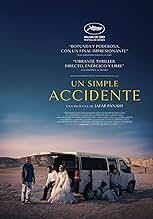
Un pequeño percance provoca una reacción en cadena de problemas cada vez mayores.Un pequeño percance provoca una reacción en cadena de problemas cada vez mayores.Un pequeño percance provoca una reacción en cadena de problemas cada vez mayores.
Próximamente
Se lanza el 4 de diciembre de 2025
- Premios
- 5 premios ganados y 15 nominaciones en total
- Dirección
- Escritura
- Todo el elenco y el equipo
- Producción, taquilla y más en IMDbPro
7.76.2K
1
2
3
4
5
6
7
8
9
10
Opiniones destacadas
Jafar Panahi and the Incomplete Narrative of a Collective Anger
It Was Just an Accident, directed by Jafar Panahi, has garnered global acclaim and was awarded the Palme d'Or at the 2025 Cannes Film Festival. With a minimalist and seemingly simple form, the film begins with a quiet roadside incident, but what unfolds is far more than a tale of revenge-it is a layered exploration of truth, illusion, repressed fury, and the echoes of collective trauma.
Panahi, as always, avoids overt exposition and invites the viewer into an internal journey, led by characters who are deeply wounded yet still burning with unrest-characters who, to his credit, are masterfully developed and each embody a fractured dimension of contemporary Iranian society. However, the viewing experience, especially in the first fifteen minutes, is far from easy. The film opens ambiguously, with minimal context and a slow rhythm that leaves the viewer disoriented. Even seasoned international audiences may find themselves unsure of why they should stay engaged-unless they rely on the prestige of the director's name or the film's award credentials.
Formally, the film carries a somewhat fresh structure, occasionally weaving in moments of dark humor. But the acting-particularly in emotionally intense scenes-lacks consistency and depth in places, sometimes undercutting the emotional weight the story strives to deliver. These execution flaws lead to missed emotional connections where the film clearly intends to strike.
While the film seemingly critiques violence and seeks justice and moral clarity, its focus on a singular "culprit"-rather than addressing the systemic, institutional apparatus of repression-renders its outlook surprisingly aligned with a refined version of reformist rhetoric. This softened, left-leaning moralism bypasses major political upheavals in Iran's recent history-most notably the 2022 "Woman, Life, Freedom" movement-and replaces structural critique with a narrowly personalized narrative. In doing so, it risks creating an unintended sense of appeasement with the status quo for international viewers.
What heightens this sense of ambiguity in a parallel world beyond cinema is the fact that the cast and crew of this "underground, unauthorized film" have returned to Iran without consequences-something that remains a distant dream for many independent artists, journalists, and political dissidents in exile. This contrast raises an unsettling question: is the film, knowingly or not, offering a palatable narrative of pain-tailored more for international festivals than for confronting the deeper truths of repression?
It Was Just an Accident is bold in form yet cautious in substance. It reveals fragments of truth with cinematic skill, yet avoids engaging with the roots of the trauma it depicts. For international audiences, it may feel emotionally powerful and thought-provoking. But for Iranian viewers, the film is less of a mirror than a carefully trimmed reflection-diluted, fragmented, and ultimately incomplete in its portrayal of wounds that are still very much alive.
Nousha Saidi France - May 2025.
Panahi, as always, avoids overt exposition and invites the viewer into an internal journey, led by characters who are deeply wounded yet still burning with unrest-characters who, to his credit, are masterfully developed and each embody a fractured dimension of contemporary Iranian society. However, the viewing experience, especially in the first fifteen minutes, is far from easy. The film opens ambiguously, with minimal context and a slow rhythm that leaves the viewer disoriented. Even seasoned international audiences may find themselves unsure of why they should stay engaged-unless they rely on the prestige of the director's name or the film's award credentials.
Formally, the film carries a somewhat fresh structure, occasionally weaving in moments of dark humor. But the acting-particularly in emotionally intense scenes-lacks consistency and depth in places, sometimes undercutting the emotional weight the story strives to deliver. These execution flaws lead to missed emotional connections where the film clearly intends to strike.
While the film seemingly critiques violence and seeks justice and moral clarity, its focus on a singular "culprit"-rather than addressing the systemic, institutional apparatus of repression-renders its outlook surprisingly aligned with a refined version of reformist rhetoric. This softened, left-leaning moralism bypasses major political upheavals in Iran's recent history-most notably the 2022 "Woman, Life, Freedom" movement-and replaces structural critique with a narrowly personalized narrative. In doing so, it risks creating an unintended sense of appeasement with the status quo for international viewers.
What heightens this sense of ambiguity in a parallel world beyond cinema is the fact that the cast and crew of this "underground, unauthorized film" have returned to Iran without consequences-something that remains a distant dream for many independent artists, journalists, and political dissidents in exile. This contrast raises an unsettling question: is the film, knowingly or not, offering a palatable narrative of pain-tailored more for international festivals than for confronting the deeper truths of repression?
It Was Just an Accident is bold in form yet cautious in substance. It reveals fragments of truth with cinematic skill, yet avoids engaging with the roots of the trauma it depicts. For international audiences, it may feel emotionally powerful and thought-provoking. But for Iranian viewers, the film is less of a mirror than a carefully trimmed reflection-diluted, fragmented, and ultimately incomplete in its portrayal of wounds that are still very much alive.
Nousha Saidi France - May 2025.
The movies asks a lot of questions
There's a lot to say about this film. If there's one thing Iranians share as a nation, it's intergenerational trauma, rage, and hatred toward the last two regimes - one, the other, or both - and the lingering question of what to do with all that, with or without the current regime. This masterpiece by Jafar Panahi captures it perfectly.
An Endless Dilemma
It Was Just an Accident, directed by Jafar Panahi, effectively challenges the audience through its evenly paced narration, drawing them into the moral dilemma of whether the victims should seek revenge - and, more importantly, whether they have the right to do so.
With its open ending, the film raises a powerful question: what happens if the cycle of crime and revenge never ends? This ambiguity keeps viewers engaged long after the credits roll.
However, the scenes in which the victims argue among themselves could have been more compelling if they didn't directly reference political divisions and concepts such as "tolerance" and the "cycle of violence." Those moments feel somewhat clichéd and shift the film's tone from metaphorical to allegorical.
It's also essential to remember that in Iran, every filmmaker must obtain permission from the autocratic regime before making a film. Jafar Panahi, however, created It Was Just an Accident without such approval - courageously defying censorship. By portraying the taboo subject of brutal interrogators, he demonstrates remarkable artistic bravery. For that, we should all admire and celebrate his courage.
With its open ending, the film raises a powerful question: what happens if the cycle of crime and revenge never ends? This ambiguity keeps viewers engaged long after the credits roll.
However, the scenes in which the victims argue among themselves could have been more compelling if they didn't directly reference political divisions and concepts such as "tolerance" and the "cycle of violence." Those moments feel somewhat clichéd and shift the film's tone from metaphorical to allegorical.
It's also essential to remember that in Iran, every filmmaker must obtain permission from the autocratic regime before making a film. Jafar Panahi, however, created It Was Just an Accident without such approval - courageously defying censorship. By portraying the taboo subject of brutal interrogators, he demonstrates remarkable artistic bravery. For that, we should all admire and celebrate his courage.
Emotional Political Revenge Thriller Cuts Deep
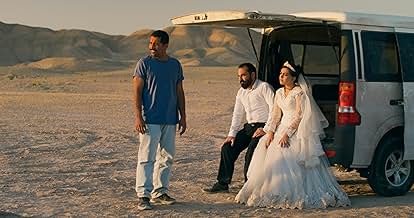
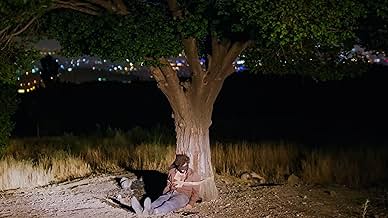
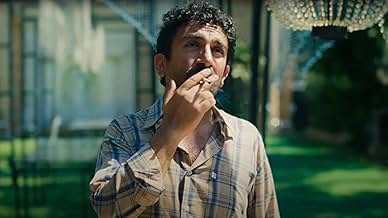
A pervasive, persistent wave of dread courses through this propulsive 2025 revenge thriller, but what impressed me even more was the courage director/screenwriter Jafar Panahi displays throughout this engrossing film. Imprisoned several times over for his ongoing criticism of the corrupt Iranian government, Panahi has crafted a character-driven plot that follows a motley group of former Iranian political prisoners, each one reacting viscerally when faced with a moral dilemma as they believe their tormentor Eghbal ("Peg Leg") has reentered their lives. First, there's Vahid, an auto mechanic who upon this discovery, starts to bury him alive, but then his conscience leads him to seek out other victims who could validate Eghbal's identity. That includes Shiva, a wedding photographer Vahid has never met before; Goli and Ali, a betrothed couple; and Shiva's hotheaded former business partner Hamid. The non-professional cast is uniformly strong with standout turns from Vahid Mobasseri with the fullest character arc as Vahid and Mohamad Ali Elyasmehr as Hamid whose out-of-control outbursts instill genuine fear. The film climaxes dramatically with a single shot held for 12 minutes uninterrupted. A most uniquely compelling story told with surprising compassion.
Incredible
The premise of this movie didn't grip me from the start. Instead I became more invested in this movie and these characters as Jafar peels back the layers of the history and lived environment of this movie. I was dragged through the same feelings of confusion, anger, sadness, compassion, and eventually forgiveness alongside the protagonists in this story of revenge. This is an extremely human movie taking place in a time where we need to hear these stories. It is one of the best of the year for sure.
The Big List of Fall Movies 2025
The Big List of Fall Movies 2025
See a full list of all the movies coming to theaters this fall.


¿Sabías que…?
- TriviaWith Un simple accidente (2025) winning the Palme d'Or at the 78th Cannes Film Festival, Jafar Panahi became the only filmmaker in history to win the highest honors at all four of the world's major international film festivals. He previously won the Caméra d'Or at Cannes for his debut film El globo blanco (1995), the Golden Leopard at the Locarno Film Festival for Ayneh (1997), the Golden Lion at the Venice Film Festival for Dayereh (2000) and the Golden Bear at the Berlin International Film Festival for Taxi Teherán (2015). This remarkable achievement places Panahi among the most awarded and respected auteurs in the history of world cinema.
Selecciones populares
Inicia sesión para calificar y agrega a la lista de videos para obtener recomendaciones personalizadas
2025 TIFF Festival Guide
2025 TIFF Festival Guide
See the current lineup for the 50th Toronto International Film Festival this September.

Detalles
Taquilla
- Total en EE. UU. y Canadá
- USD 1,396,556
- Fin de semana de estreno en EE. UU. y Canadá
- USD 68,294
- 19 oct 2025
- Total a nivel mundial
- USD 8,362,474
- Tiempo de ejecución
- 1h 43min(103 min)
- Color
- Mezcla de sonido
- Relación de aspecto
- 1.85 : 1
Contribuir a esta página
Sugiere una edición o agrega el contenido que falta