Showing posts with label psychic. Show all posts

Wednesday, September 7, 2016

Mothlight


In misty bogs and hazy swamps lie a cousin to the will o wisp, the mothlight. The mothlight is a glowing diaphanous orb of smokey light with gossamer tendrils that trail behind it as it dances in the moonlight. To many, they look like the colored blobs that appear when you close your eyes. Mothlights sway and flash hues of orange and blue to fascinate and entrance mortals that happen upon them. Despite their alien beauty, mothlights are existential predators. When a mortal gets too close to it, the mothlight drapes its tendrils around the creature and feeds on its thoughts and psychic energy. Mothlights will gorge on a creature's mental energy until it becomes braindead. The mothlight will then bloom and release smaller glowing polyps that will eventually move on and grow into full mothlights of their own.


Despite popular belief, the mothlight is not a creature, but mere a shadow of a creature from a higher dimension. Because our minds are three dimensional, we simply cannot fathom its true form, so we can only see the glowing shadow when it bleeds into our world. While in its dimension it is considered a mere animal, in our world the mothlight creature has a keen intellect that rivals most mortals. The creature will come into our realm through thin films between our world and the higher world, swimming through angles and hovering about through nature. It can't move much in our dimension, or perhaps it simply prefers to wait in ambush away from cities. Its shadow, the mothlight, attracts mortals through means unknown, where it can devour our thoughts. After you've seen the shadow, it's generally too late to run away. Even closing your eyes fail, as your own phosphenes betray you and guide you closer to the mothlight.

By Alexander Semenov
The only known way to escape the fascination effect is through over stimulation of your other senses. When going into an area infested with mothlights, it is best to bring smelling salts, gunpowder, or anything that can make loud noises or strong smells. Flash paper is also a good idea but rare and blinds you, which may not be preferable. After using any of those, run away. Only those with an intimate knowledge of higher order mathematics and physics can hope to kill the creature. Even third dimensional magic can't work. Only by mapping out the location with advances equations, or opening your mind to the higher dimensions through meditation, hallucinogens, and astral projection can give you a chance at attacking the creature. But that's a post for another time.


Mothlight:

Phototaxi: Make a Magic saving throw. On a failure, you must do a full movement towards the mothlight. You can do a single action if you succeed on another Magic saving throw. When you reach the tendrils, each turn you lose 1d6 intelligence. When you reach 0 INT, you become brain dead.

I like jellyfish. This also makes the third monster I've made inspired by the way a Pokemon looks.

The first two being Nincada and Mimikkyu


Tuesday, April 26, 2016

Of Bats, Moths, and Cicadas: Undeath in My Setting

In the island chain that calls itself Anacaona, death and undeath play a big part in the every day lives of the natives. There are two main ethnicities. The Sulano are a tawny island people and are the true locals of the islands, having been there for centuries. The Okulek are they darker neighbors from the southern continent, leaving behind their ancestral rain forests to raid and conquer the island folk. Years of warring, conquering, rebellion, and alliance against the incoming colonists have made cultural exchange and assimilation a big thing between these two people. And none has been greater than their similar ideas about death and undeath.

The world is steeped in magic and spirits, but the mortal soul is an interesting creature. It is a larvae, without the same power as an angel, a zemi, or a demon. But within it holds a great potential for growth and enlightenment, that which can awe and frighten the greatest of immortals. A soul that works hard to gain experiences gets closer and closer to reaching their full potential and ultimately reaching enlightenment. It's no wonder, then, that most souls reincarnate to truly know the human experience. Most simply aren't ready to move on.

There's your soul
The soul is a larvae, like a cicada nymph. It has layers around it called subtle bodies. These are vehicles of your soul and of the different energies that course throughout your body. When you die, your soul sheds its physical body like a cicada molting for the first time. As you rise through the higher planes of existence, you shed more and more of your subtle bodies until you have reached your afterlife. But, these spiritual molts don't simply just lie around. No, they can come back.

Your soul shedding its body to move on
Your physical body is the first vehicle to be shed when you die, and it lays rotting into the earth. The physical body is naturally a prison, so things can get trapped in there. Things like evil spirits or negative energy from outside of creation can reanimate the dead. Most of the time, they simply come to 'life' on their own, using negative energy as their replacement for vital energy (or ki), Zombies and skeletons are the most common ones. They don't have souls in them, though raising them before their soul has had a chance to be judged will pull the soul back into our world and trap them in their rotten husk of their former body. These creatures are mindless, save for an unending desire to spread oblivion. The soul that gets trapped in them becomes tortured by the curse of undeath until they too are mindless drones trapped in the world. These become the wraiths you see tormenting the living. What's curious to many shamans and philosophers in Anacaona is how the default actions of the mortal's body are always malicious and violent.

The undead molt
Ghosts share a lot of characteristics with spirits and undead. They are the souls trapped in the spirit world, unable to shed their etheric body and move on. They don't have the negative energy corruption like other undead, but do eventually become angry and highly volatile from being denied their place in paradise. Any number of things can keep a ghost trapped, from an improper burial to unfinished business to vengeance. The only thing that can free a ghost from its etheric body is finding peace with its death. Of course, even with them moving on, they leave behind their etheric body in the spirit world, which, like the physical body, can come to unlife on its own. It feeds off of negative energy and eventually creates a cocoon of ectoplasm. Its psychic chrysalis will hatch and reveal the end of its metamorphosis; the phantom.

Phantoms are the molts of a soul's ethereal vessel and like the physical body, is prone to violence. A phantom is more sinister and methodical in its hate, and many can extend their psychic powers into the environment around them. One must be wary when dealing with a haunting of a phantom, as they flutter towards mortal lives like moths to a flame, eventually snuffing the embers out and claiming a victim. In Anacaona, seeing a swarm of moths is a portent of a phantom in the area. It isn't uncommon for a phantom to take the form of a swarm of moths to surround and suffocate their victims after emotionally torturing them.

Witch moths are bad omens
The bats that flutter in the evening sky can be spirits. These creatures are hupia (oo-piya), souls of those that have reached the site of judgement, but instead of staying to be judged or reincarnated, they run away back to the lives. They are like ghosts, but they made it to the land of the dead and out of fear of their judgement, fled back to the world of the living. They have no belly button as they no longer have a human mother, and an hupia can take the shape of how they looked like in life (except for the lack of a navel). They can read the minds of a person, but only to extract imaged of loved ones in that person's life. Using their shape-shifting powers, an hupia can look like a person's loved one. An hupia can also shape-shift into a bat for the day time, which protects them from being destroyed by the sun. The hupia is closely associated with bats, as bats walk the twilight, a realm of both life and death in their religion. Bats also crave the guava, a symbol of life and health, while hunting moths, the symbol of phantoms. It is true that many hunt and devour these spiritual beings. And yet, like bats escaping the light of the morning sun, hupia are always trying to hide from their final judgement.

A ghost face bat has a very fitting name
Many try to go back to their everyday lives and a select few do eke out an existence with their loved ones. Others are shunned and forced to go back to the land of the dead. Those that are banished from their old towns make their own hupia villages or become hermits. Hermitage is dangerous though. An hupia is an actual soul that has molted almost all of its subtle bodies, so they have to be around mortal life to remain normal. Being away from life is a full corruption of the soul that cannot be reversed save by the most powerful magics. The hermits become naturally more violent as they succumb to the curse of undeath. The most interesting thing about this is that to the native Sulano, hupias are a stage in the life cycle of reincarnation. Instead of attacking the hupia, many try and console it, hoping to send them off to the land of the dead to be judged. A common method is to keep the hupia in the village and treating everything as normal, giving a psychopomp enough time to find the hupia and take them back.

Undeath is essentially a metaphysical disease that slowly turns the soul into a shell. A mortal soul and body uses the negative energies of oblivion, the abyss that lies outside of our world, as their vital energy. This energy naturally pools and bleeds into areas of death and destruction. It is a corrupting energy that curses its victims, but all that suffer from undeath aren't evil. A disciplined mind can live in relative peace for a time as an undead, but eventually they will succumb to the base, violent instincts of their brethren. Some say it's the corrupting energies of the abyss, while others say it's the denial of a proper afterlife that does it. But until the undead creature is freed, it remains forever tormented in a state of being a walking spiritual molt. At least until someone frees it. Casting a spell like raise dead or something similar will 'kill' an undead, breaking its curse and sending it off to the afterlife. With an hupia, casting a reincarnation spell will actually act as a judgement and bring the hupia back as a newborn child, furthering the theory that they are a part of the reincarnation cycle.

How people treat undead is something I'll get into in another blog post, but it is definitely going to be different than in other settings. I also do want to get more into how subtle bodies play a role in my setting in another blog post. I suppose the take away here is that human souls are pretty much the Pokemon Nincada and undead are Shedinja

I guess when you put it that way, it seems a lot less cool and spiritual

Tuesday, April 5, 2016

Thoughtform Part 2: Basic Thoughtform Disease

It is a bit weird, giving concrete rules to things that are made of the abstract. But I am interesting in seeing where this exercise goes. So here goes nothing. For anyone that may have missed it, here is the original post I made about thoughtforms.

With this, I know that people play all types of D&D games, from LotFP and Beyond the Wall to 5e. Pathfinder, and ACKS. So, I want to try and make it as simple and modular as I can so that anyone with any kind of D&D game can enjoy this. 

Basic Thoughtforms

Logists, Atavisms, and Archetypes are the most basic types of thoughtforms and are treated as a special type of disease. The incubation time is one day after you encounter someone talking about the thoughtform they are infected with. The save is a Magic saving throw once per day until cured by means in the previous blog post about thoughtforms. Success means you do not suffer additional effects of the disease. Failure means that it advances a stage.

Once per day, before the character makes an infected saving throw, they can make a Wisdom roll. On a 15 or higher, they are able to take their mind off of the thoughtform for the moment and stave off having to make the infection roll for that day. You gain a -2 penalty per stage you are in to your Wisdom roll after Stage 1. If you see or are reminded of the object of your desire though, you must immediately make that infection check for the day.

Below are the general stages of a thoughtform infection.

Stage 1: The seeds of obsession take root in your mind. You begin to talk about the idea or image in your head more at random and sometimes nonsensical times. Whenever you roll a Charisma check to interact with someone, or a Reaction roll is made for an NPC, you take a minus -2 penalty for bringing up your obsession in an inopportune time.

Stage 2: You are constantly talking and thinking about the idea or image, to the point where it becomes distracting. Whenever you make any roll that doesn't involve your obsession, you must roll it twice and take the worst result. Damage dice are exempt from this.

Stage 3: The idea consumes your everyday thoughts. You cannot stop talking or thinking about it. You have to have this object. You have to worship it, at any cost. You become aggressive about your obsession and must collect or worship it absolutely. If taken away from the object or concept of your desire, you erupt in violence until reunited with it. You gain +4 to Strength. but everyone is considered an enemy to you. You lose the penalties from the previous two stages. You only get along with other infected, though depending on the personality, even those with the same thoughtform infection can get competitive and violent with each other. This is more of a roleplaying issue, so get crazy with it.

Stage 4: Your obsession is absolute. You do not eat, drink, or sleep and take appropriate penalties for doing so. You are simply fixated on your obsession and waste away until death. At this point, people can 'see' the thoughtform, its shimmering and transparent mycelia erupting out of the host's mind like antenna towards the object of obsession. Moving you requires a great deal of strength as the thoughtform is feeding off of the psychic link between you and your object of obsession. Anyone that tries to move you must roll a Strength roll against a Difficulty Class of 20. If moved out of sight from your obsession, you die in three rounds.

Stage 5: There is no save to reach this. You only reach this phase when the thoughtform has enough people infected and clustered together. You become catatonic as the thoughtform uses yours and other hosts' psyche to bloom into a tulpa. You are brain dead and can only be restored with a wish or miracle. If left alone, you'll simply die quietly. 

Healing the infection requires hypnosis, forced amnesia, magic ritual, or dream delving like in the previous post. I do want to do a blog about dream delving for another time, but I want to figure out what I want to do with it first. Curing everyone infected means the thoughtform no longer exists, though the people infected shall forever be changed by it.

More on Hypnosis and Mental Blocks

Hypnosis and making mental barriers is a good way to quarantine the thoughtform until cured. Hypnosis is just a Diplomacy (or equivalent) check against the target's Wisdom, though if they are willing, you don't have to roll. Making a mental block against the thoughtform is just a Wisdom roll made by the person hypnotizing you (or yourself for self-hypnosis). Whatever you roll is the strength of the mental block. You no longer take any penalties from the infection and are essentially back to normal. This takes one hour per stage advanced and must be uninterrupted (a change from the previous post). A good hypnotist can do multiple people at once, often using the object of obsession as a focal point for Stage 4 victims. Stage 3 victims generally need to be restrained and forced to be hypnotized.

Whenever you see the object of obsession again or talk about it in game, the GM rolls a d20. It it meets or is under the mental block's score, it doesn't trigger a relapse. If it goes over or rolls a 20, the person relapses. It's usually best to avoid the thing that will trigger a relapse. You start at the stage you were on last. Depending on the thoughtform, this can be very difficult.

Example Thoughtform

The Undying Sun
Saving Throw: Magic once per day
Wisdom Throw: DC 15 (-2 penalty per stage past Stage 1)
Idea: The sun is glorious!

This logist is all about the sun and its glory. People infected with this thoughtform start thinking about how beautiful and amazing the sun is, constantly expressing their joy for it. As the infection progresses, people go to greater lengths (or in this case, heights) to be closer to the sun, climbing trees and buildings to get closer and closer. When the thoughtform begins to bloom, most are locked tightly onto where they climb, with the thoughtforms's feelers extending towards the sun. At night, the people grow violent and agitated until they reach Stage 4, when many will die. The Undying Sun rarely blooms, but if it can gather 50 infected people together on the same day that they all hit Stage 4, it can bloom into a mighty tulpa reflecting its attachment to the sun. Given the importance of the sun, many infected will see the thoughtform as a god and gather other infected like a congregation. 

It was a tiring weekend of work so that's all I've got in me today. Next post I want to have the more complex thoughtforms statted out. I think I know how I want to do them. Till next time!

Saturday, April 2, 2016

Thoughtforms

I like the occult, ever since I was a kid. That's why I loved Occult Adventures in Pathfinder, as well as more occult stuff in VtM and other occult books. That's why I put them into my settings and games all the time. 

The setting I run is called Anacaona and in it, magic infuses the lands. Not like Eberron, where magic is stable and industrialized. It's random and dangerous and requires a gifted and disciplined mind to wield. There are spirits that are disembodied creatures of ethereal matter that flow freely through our world and the world beyond. They are sapient like us and while they may have alien minds, capricious emotions, or unfathomable agenda, they are still existing creatures.

But then there are thoughtforms.

These are metaphysical elementals and psychic emanations. These are ideas, emotions, and thoughts that dance in the pale starlight of the Astral Plane, but have a pseudo-existence anywhere else. They are hallucinations that simply exist in the mind, more so than the creatures of the Plane of Dreams. If mortal beings acted like evolution, then thoughtforms could be everyone's microbial ancestors. They have the facsimile of life, like a virus or a prion, but on their own, they simply are. And like a virus, they can be dangerous to us mortals. More on that later down the line.
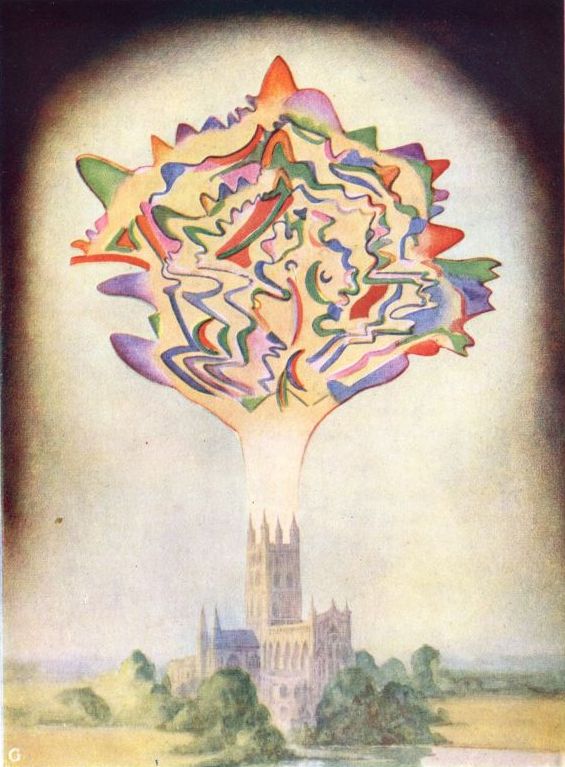

It's unknown what created what. Did thoughtforms give us mortals the ideas and inspiration we use every day, or did we create them with our minds? Or some combination of the two? What is true is that thoughtforms 'exist' on their own and can also be created by mortals. Occultists in Anacaona believe that some thoughtforms can manifest in our realm of existence, but can be dangerous if not controlled by a powerful, disciplined mind. Mystics and psychics seems to have the best ability to control them, but also suffer the worst effects when they lose control. Psychics in particular act as great vectors of thoughtform epidemics, which can be more dangerous than a simple disease.

Thoughts are infectious. A thoughtform that manifests into our plane begins seeking out intelligent and sapient minds to infect and grow. The more complex and intelligent the mind, the better the conditions for infection, growth, and reproduction. And they spread quickly once in a population, passing on to their future generations like a meme. Some thoughtforms are fairly benign. For all anyone knows, they could be infected and never know. Some occultists wonder if all mortals are essentially carriers and diseased, and that in itself creates different cultures and beliefs. There's a scary thought.
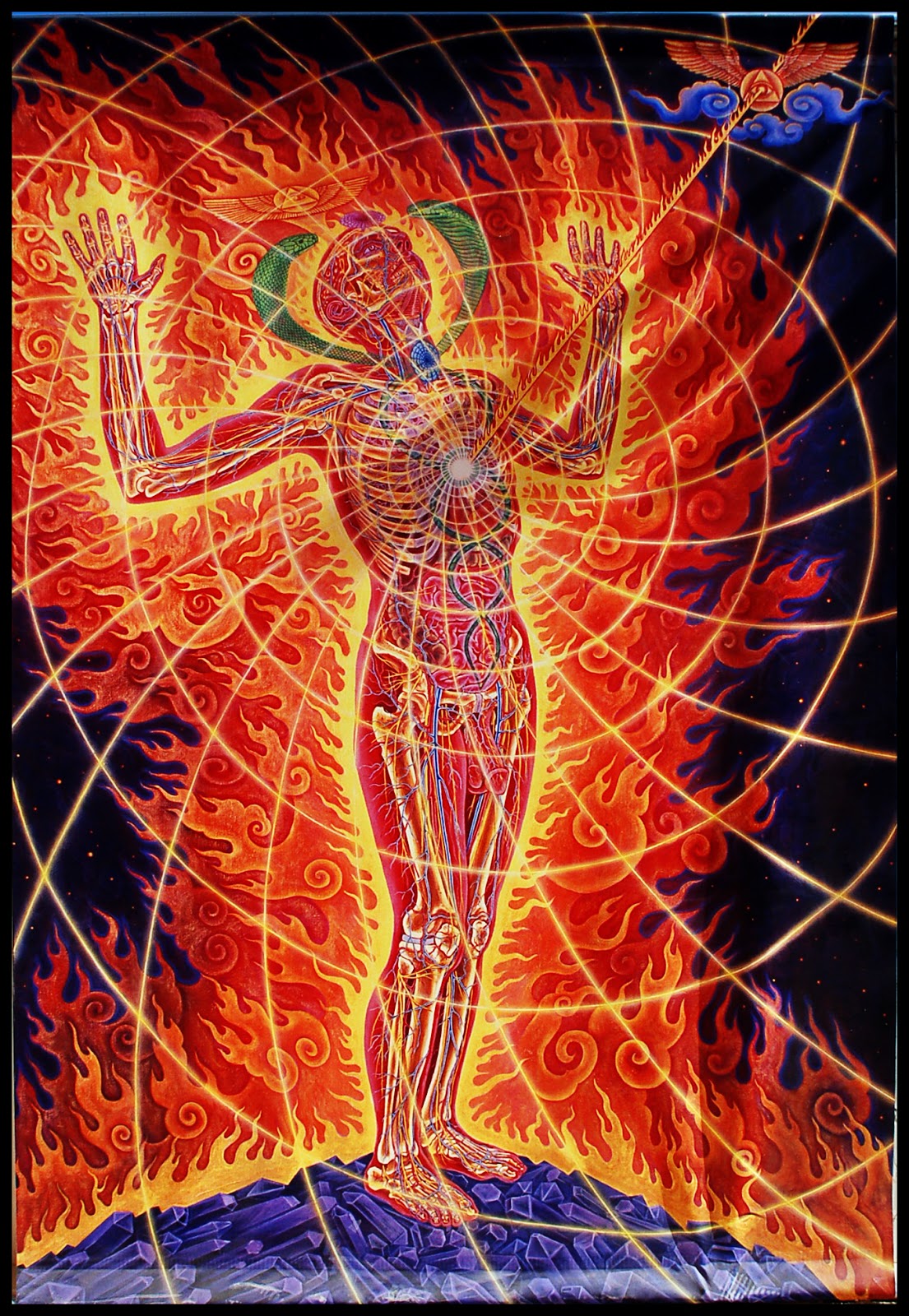
From Alex Gray
Some thoughtforms though are dangerous. They infect your mind and change you, slowly. Every thought you have begins to transform into the current thoughtform's thought, and you slowly become completely obsessed with that thought. A thoughtform about the color green would make its victims completely obsessed with green and do anything in their power to hoard green items. This is how many occultists know someone may be infected by a thoughtform; manic obsessive habits over a singular item at the cost of everything, including their own survival. And the difference between your standard insanity and a thoughtform infection is that it spreads.

It's spreads easily. All it takes is to think about it. If you're around a person infected, you are now infected. You start becoming puzzled as to why the person is obsessed with green, and eventually, you become obsessed with the color green. Suddenly, within weeks, your whole village is filled with green-obsessed people, killing each other over anything that is green. Which can actually be the inherent weakness to a thoughtform. Because people are prone to violence very quickly, it can't spread faster than it kills. A chilling relief I suppose.

Okay, I may be a little obsessed with Alex Gray and Tool
When a thoughtform does keep enough people alive and infested, it blooms. It saps all of their infecteds' mental energy, making them comatose, and becomes something more than an idea. It becomes an image, an icon, a hallucination. It becomes a tulpa. A disembodied sentient thought that can now interact meaningfully with people around it. It exists, and yet doesn't. It now has the reasoning capabilities of a spirit or mortal, but still cannot exist without someone thinking about it. And so it continues to infect people, hoping to become something more.

A tulpa works a little different than a normal thoughtform, since it is stronger and can be created by a powerful mind. Tulpas are less like viruses and more like parasites. They attach to one host as the primary host, then infect everyone else around them. Curing the main host destroys the tulpa, but unlike regular old thoughtforms, tulpas can exert powerful control over their infected and even their host. This works like possession in a game, but the host gets a bonus if they created the tulpa.

Most tulpas become sociopathic and insane, trying to become real at any cost. Some occultists believe that a powerful mind, like that of a psychic, can help the tulpa become real, and many tulpas seek a psychic to do such a thing. Perhaps it is true, or perhaps not. But be wary when helping a tulpa, because they are absolutely unstable and can turn on you if they think you aren't helping enough.

How does one defeat a thoughtform or cure an infection?

One of the best ways is simply forgetting about them. Induced amnesia is a common way, whether through magic (memory rewriting), surgery, or blunt force trauma. Mental training and discipline to fight them back is another one, but that only keeps them at bay and doesn't cure your memetic infection. Hypnotic suggestion and creating a mental block can quarantine the infection in your mind and you'll be safe until your next infection. Creating a mental block requires being hypnotised (a Diplomacy or Persuasion check against your Wisdom score) and at least three, one hour-long hypnosis sessions. Hallucinogens  can help amplify the process, but makes it a bit more risky. Delving into the dreams of a host infected by a tulpa is the best way to destroy the thoughtform or tulpa. With special magic and hallucinogens, you can become psychonauts and explore yours or your friend's mind and cure them. For curing a mob of people infected with a thoughtform, luring them back into the Astral Plane with rituals is surefire. Finding these rituals is a quest onto itself though.
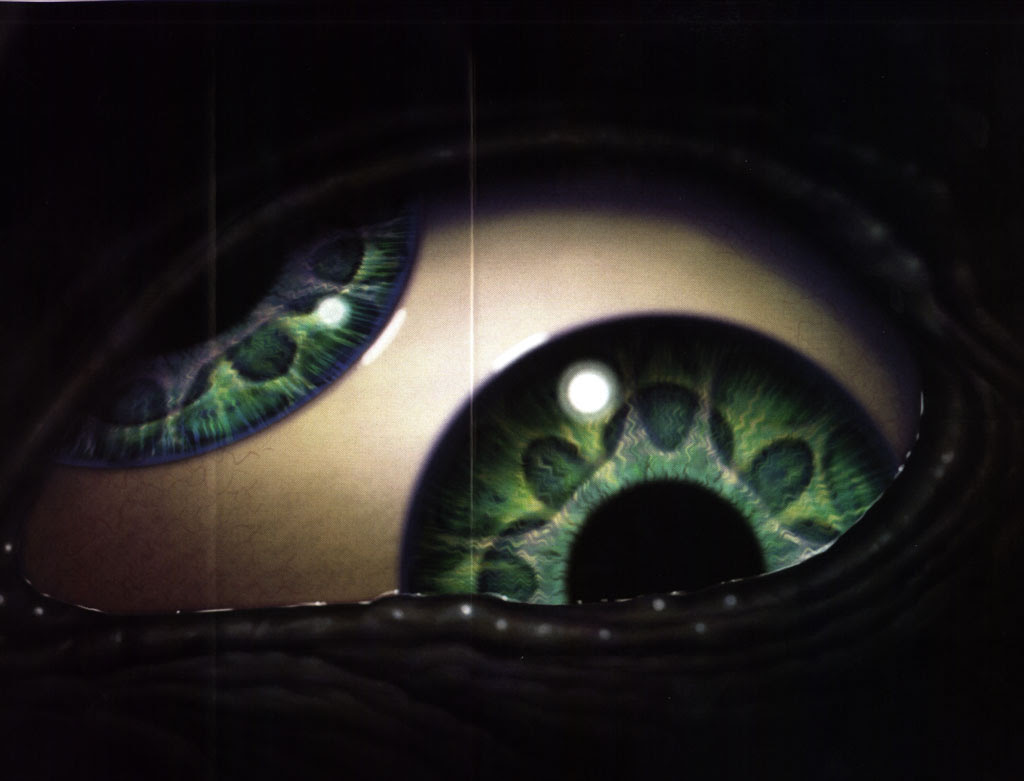


Types of Thoughtforms
Spells are a type of thoughtform, brought into existence by wielders of arcane magic. Wizards bring in a thought from the Astral Plane, nurture it with spellbook preparation, then release it as a spell to affect the Material Plane. Reading a spellbook is actually a way for the wizard or any arcane caster to prepare a spell without the thought taking over their mind. All arcane spells still have a chance to go haywire, but it is usually temporary and doesn't infect or destroy the caster. A prepared arcane caster that doesn't read their spellbook at the start of the day can still cast spells, but has a 50% chance of manifesting a living spell. This chance goes down 2% per level in your arcane class.

Atavisms are thoughtforms of raw emotion. Hate, love, sorrow, joy, etc. They are pure embodiments of that emotion and anyone that is infected by one acts upon it in the extreme. A hate atavism will drive people to extreme violence. A love atavism would probably be like the school dance episode of Rick and Morty. Not good.

Logists are simple thoughts and ideas that float in the Astral Plane. The most varied, they can really be of anything. The idea of a beautiful sunset. The thought of justice. The sounds of a lovely symphony. Any thought, rational or irrational, is a logist.

An archetype is a bit more complex than most thoughtforms. They are a combination of ideas and thoughts combined to form a pastiche of something. The archetypical cultural hero, kind princess, scoundrel with a heart of gold, or other urban legends and cultural heroes. While they may seem complex like a tulpa, archetypes still have no intelligence of their own. They simply change slightly because of a person's expectations of the archetype. So the archetypical cultural hero would look completely different to two people from two different kingdoms, but still be the same thoughtform.

Tulpas are advanced thoughtforms, given sentience. Whether they are created by a powerful and creative mind, or came about from a previous thoughtform pandemic, tulpas are smarter, stronger, and a bit more unhinged than their counterparts. They are now aware that their existence lies with people believing in them, and if everyone forgets them, then they cease to exist. All tulpas make a bond with a host or their creator. Some stay friendly with their host so that they can exist longer. Children make great hosts and this is where imaginary friends come from. Other continue their infectious ways and spread to others, using their host as a carrier. That way, if that host dies, the tulpa can simply move on to another infected. Some say there are rituals that can allow a tulpa to become truly real and mortal.

Dimyalos are thoughtforms created by two (though sometimes more) creatures that aren't sentient but have great psychic potential. When the creatures come together, they create this intelligence. A dimyalo doesn't infect other hosts because it is dependant on these specific creatures, but they become fiercely protective over their hosts. They spread their influence more by combining more creatures of those types that can make more dimyalos.

Egregores are powerful, almost like lords over other thoughtforms. These are usually created by occultists of similar minds, though it is rare for one to form from a group with similar mindset. A group must be synchronous with each other, mentally and spiritually, to create an egregore. The creature is similar to a hive mind, but is greater than the sum of its parts. It knows everything its creators know and has great psychic potential. Egregores don't need to infect other minds to stay alive, though many will try and get more converts to add to its collection. It exists as long as its creators are safe, and disrupting any of them can weaken the egregore. If an egregore gathers enough minds and exists for a long enough time, they can transcend the need of its creators and move on, leaving behind the occultists as mindless husks. Many form an egregore to attain enlightenment through each other, while other use it to gain greater psychic power.

How Thoughtforms Work
For the basic thoughtforms, I want it to be like a disease. I like the rules in Lamentations of the Flame Princess for disease. Simple and concise. For the dimyalo, tulpa, and egregore, these would be actual monsters, similar to ghosts, but focused on keeping people remembering them. I like that concept of a creature that only exists if you believe in them. It can be a bit scary if you think about it, and makes one think about their own mortality and how people will remember them after they are gone. Or even if they do remember them.

In a future blog post, I plan on doing this. Probably more doable on Tuesday because of my work schedule.