IMDb RATING
7.0/10
4.8K
YOUR RATING


Follow the story of a couple who goes to a small French fishing village to try to solve the problems of their deteriorating marriage.Follow the story of a couple who goes to a small French fishing village to try to solve the problems of their deteriorating marriage.Follow the story of a couple who goes to a small French fishing village to try to solve the problems of their deteriorating marriage.




- Director
- Writer
- All cast & crew
- Production, box office & more at IMDbPro
7.04.7K
1
2
3
4
5
6
7
8
9
10
Featured reviews
Not very deep
Agnès Varda began her career in 1954 as a feature film director with this movie that tells two separate stories in reciprocal counterpoint: daily life at a fishing village near Sète in France with its joys and dramatic moments and the relationship between husband and wife when she who is a Parisian returns to him after he had chosen to return to his birthplace where he feels now very happy but that doesn't seem to please her very much at first and puts their marriage in danger. This situation is given in a series of soft dialogues between them which don't reveal themselves deep and meaningful enough to make us feel the sentiments behind them. Varda has done much better later with such very good movies like "Le Bonheur" or "Cléo de 5 à 7". However this movie is also classified as a landmark in the New Wave of French cinema that began about that time with names like Truffaut, Godard and Chabrol. It's this historical value that mainly makes this movie worth to be seen.
Varda's debut and the beginnings of the French New Wave
Agnes Varda never got her just due for having made the first true film of the French New Wave. Part of it was because this picture didn't get much play at the time - even in France, but, a larger factor was that she wasn't as tight with the Truffuat and Godard Cahiers du Cinema clique who also got the first wide attention with films like 400 BLOWS and BREATHLESS. And, oh yes, she was a woman.
History aside, Varda's debut feature displays attributes associated with the Nouvelle Vague so prominently, that it is indeed a shame that she isn't properly credited.
The low budget shooting on the run, the elliptical dialogue between the lead couple (Philippe Noiret and Silvia Monfort) and the often off-kilter stylish compositions and editing. The score is largely a droning clarinet. It's all there in LA POINTE COURTE.
Varda's interest in photography which led to her career-long interest in Documentary filmmaking also marks the film, for the central romance shares time equally with a portrait of the tiny fishing community where it's set (the Noiret character's hometown). The ambitions of the film are small, but, it's still quite a low key delight. It should be better known and recognized as the true start of that famous French filmmaking Revolution.
Varda's First Feature
«La Pointe-Courte» was Agnès Varda's first feature film and the first film-manifesto of the "nouvelle vague". In it, Varda broke with some narrative traditions, following neorealist strategies, distancing Bertolt Brecht style and a "mise-en-caméra" close to direct cinema, which was gaining ground around the world at that time, including France where it was euphemistically called "cinéma vérité".
The different influences blend well in the same story, but not all ot them have the same appeal and, in the final analysis, my balance leans more towards the narrative of fiction of anthropological affiliation, than towards the aesthetic compositions of a couple in crisis with which Varda disguises melodrama, aurally reinforced by self-referential declamations of the man and the woman. In fact, in the synopsis that I have read (and in Varda's own words), the story of this couple is taken as the principal storyline, when, in fact, the neighborhood and its fishermen are the true "anti-stars".
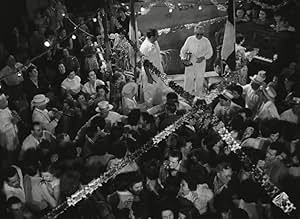
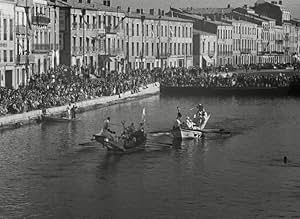
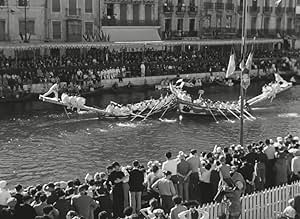
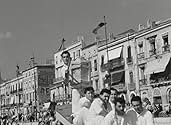
With natural actors (the inhabitants of the fishing neighborhood of La Pointe-Courte, in the South of France) Varda tells a story that serves as a unifying thread of the different influences, in which local men insist on fishing in a small contaminated maritime "lagoon" and are consequently persecuted by the Department of Health. At the same time, the filmmaker shows us events that animate their lives: the first love, the patriarchy confrontations, the sporting joust, the death of a child...
On the other hand, Varda, who always alluded to happiness or its absence in her filmography, takes us away from the neorealist liveliness and immerses us in long affective ramblings (which were common in the "nouvelle vague" works, especially in the films by Godard, Rohmer and Resnais), which are nothing more than the process of sentimental adjustment of one La Pointe-Courte native (Philippe Noiret) and his Parisian wife (Silvia Monfort).
As if sensing the strength of the La Pointe-Courte people and their lives, Varda opened and closed the film with images of the neighborhood and its faces: in the first sequence, morning breakfasts are interrupted by the appearance of officials from the Department of Health, and in the end, a popular dance is enlivened by a band that is frozen in the final shot. Without intending to, Agnès Varda left us a moment of film history, of a corner of France, of a popular culture on the coast, as a worthy preamble to her prestigious career.
The different influences blend well in the same story, but not all ot them have the same appeal and, in the final analysis, my balance leans more towards the narrative of fiction of anthropological affiliation, than towards the aesthetic compositions of a couple in crisis with which Varda disguises melodrama, aurally reinforced by self-referential declamations of the man and the woman. In fact, in the synopsis that I have read (and in Varda's own words), the story of this couple is taken as the principal storyline, when, in fact, the neighborhood and its fishermen are the true "anti-stars".
With natural actors (the inhabitants of the fishing neighborhood of La Pointe-Courte, in the South of France) Varda tells a story that serves as a unifying thread of the different influences, in which local men insist on fishing in a small contaminated maritime "lagoon" and are consequently persecuted by the Department of Health. At the same time, the filmmaker shows us events that animate their lives: the first love, the patriarchy confrontations, the sporting joust, the death of a child...
On the other hand, Varda, who always alluded to happiness or its absence in her filmography, takes us away from the neorealist liveliness and immerses us in long affective ramblings (which were common in the "nouvelle vague" works, especially in the films by Godard, Rohmer and Resnais), which are nothing more than the process of sentimental adjustment of one La Pointe-Courte native (Philippe Noiret) and his Parisian wife (Silvia Monfort).
As if sensing the strength of the La Pointe-Courte people and their lives, Varda opened and closed the film with images of the neighborhood and its faces: in the first sequence, morning breakfasts are interrupted by the appearance of officials from the Department of Health, and in the end, a popular dance is enlivened by a band that is frozen in the final shot. Without intending to, Agnès Varda left us a moment of film history, of a corner of France, of a popular culture on the coast, as a worthy preamble to her prestigious career.
10Red-125
Varda is a genius. This movie is unique.
La Pointe Courte (1955) was shown in the U.S. with its original French title. It was written and directed by Agnès Varda.
Although this was Varda's first film, she already had the uncanny knack of knowing how to film intensely personal moments, how to film small group discussions, and how to film crowd scenes. She wanted to write about the village of La Pointe Courte, but instead decided to make a movie. She borrowed money, and she made this movie. Clearly, she was a genius, and we can see that when we watch to film.
The acting in the film was at a high level. Most of the actors were nonprofessionals, who lived in the fishing village of La Pointe Courte.
However, the two leads: Philippe Noiret as Lui, and Silvia Monfort as Elle, were professional actors. (Although Noiret went on to become one of France's most popular actors, this was his first major role. Monfort was a professional who, by 1955, had already worked in theater and cinema.)
What makes the movie unique is that it blended one plot--an ethnographic vision of the small fishing village--with another very personal plot. In the latter plot, Noiret and Monfort play a married couple who have come from Paris to La Pointe Courte, where the husband was born. They are having an existential crisis. That always sounds pretentious, but I really think it fits in this case. Husband and wife are questioning their nature as individual human beings, their relationship as a couple, and whether they still truly love each other.
They rent a room in La Pointe Courte, and then they talk. (Remember, this is a French film--an early example of what became the French Cinematic New Wave . That means the couple don't kiss, they don't make love, they don't fish or swim--they talk about their relationship.)
Meanwhile, on the ethnographic side of the film, the people live hardscrabble lives because their income depends on the uncertainties of fishing. They are in a constant cat-and-mouse game with the public health authorities and the police, because they sometimes fish in contaminated water. As one character says, "Yes, the water is contaminated, but I haven't heard of anyone dying because they ate our fish."
The good news is that the villagers help one another. It's clearly a cooperative situation, and that's how they survive. However, their life is hard, and they're always one step away from disaster.
Philippe Noiret, even as a young man of 25, gives us the first view of the talent that he developed over the years. Monfort was his equal as an actor. She was 32 when the film was completed, but looked no older than Noiret. She had an unusual beauty, unlike the perfect beauty of Catherine Deneuve. In fact, Monfort looks like an actor Ingmar Bergman would have chosen to star in one of his films.
People have pointed out that some of the shots in La Pointe Courte resemble Ingmar Bergman's work. The fact is that Bergman's film Persona, which clearly has some similar shots, was completed in 1966, 11 years after Varda's film. My compliments to Bergman, who had the genius to recognize greatness in another director.
In many ways, the French Cinematic New Wave was a cooperative enterprise. The great director Alain Resnais was the editor of La Pointe Courte. Resnais had trained as an editor, but was already directing his own films in 1955. We can't tell how much his expertise helped fledgling filmmaker Varda, but my guess would be that his contribution was substantial.
We saw this film as part of an Agnès Varda retrospective in the wonderful Dryden Theatre at George Eastman House in Rochester, NY. It would be better to see it on the large screen. However, if that's not an option, see it on the small screen. This film is both an aesthetic pleasure and a movie of historical importance. If you love cinema, this film is a must!
Although this was Varda's first film, she already had the uncanny knack of knowing how to film intensely personal moments, how to film small group discussions, and how to film crowd scenes. She wanted to write about the village of La Pointe Courte, but instead decided to make a movie. She borrowed money, and she made this movie. Clearly, she was a genius, and we can see that when we watch to film.
The acting in the film was at a high level. Most of the actors were nonprofessionals, who lived in the fishing village of La Pointe Courte.
However, the two leads: Philippe Noiret as Lui, and Silvia Monfort as Elle, were professional actors. (Although Noiret went on to become one of France's most popular actors, this was his first major role. Monfort was a professional who, by 1955, had already worked in theater and cinema.)
What makes the movie unique is that it blended one plot--an ethnographic vision of the small fishing village--with another very personal plot. In the latter plot, Noiret and Monfort play a married couple who have come from Paris to La Pointe Courte, where the husband was born. They are having an existential crisis. That always sounds pretentious, but I really think it fits in this case. Husband and wife are questioning their nature as individual human beings, their relationship as a couple, and whether they still truly love each other.
They rent a room in La Pointe Courte, and then they talk. (Remember, this is a French film--an early example of what became the French Cinematic New Wave . That means the couple don't kiss, they don't make love, they don't fish or swim--they talk about their relationship.)
Meanwhile, on the ethnographic side of the film, the people live hardscrabble lives because their income depends on the uncertainties of fishing. They are in a constant cat-and-mouse game with the public health authorities and the police, because they sometimes fish in contaminated water. As one character says, "Yes, the water is contaminated, but I haven't heard of anyone dying because they ate our fish."
The good news is that the villagers help one another. It's clearly a cooperative situation, and that's how they survive. However, their life is hard, and they're always one step away from disaster.
Philippe Noiret, even as a young man of 25, gives us the first view of the talent that he developed over the years. Monfort was his equal as an actor. She was 32 when the film was completed, but looked no older than Noiret. She had an unusual beauty, unlike the perfect beauty of Catherine Deneuve. In fact, Monfort looks like an actor Ingmar Bergman would have chosen to star in one of his films.
People have pointed out that some of the shots in La Pointe Courte resemble Ingmar Bergman's work. The fact is that Bergman's film Persona, which clearly has some similar shots, was completed in 1966, 11 years after Varda's film. My compliments to Bergman, who had the genius to recognize greatness in another director.
In many ways, the French Cinematic New Wave was a cooperative enterprise. The great director Alain Resnais was the editor of La Pointe Courte. Resnais had trained as an editor, but was already directing his own films in 1955. We can't tell how much his expertise helped fledgling filmmaker Varda, but my guess would be that his contribution was substantial.
We saw this film as part of an Agnès Varda retrospective in the wonderful Dryden Theatre at George Eastman House in Rochester, NY. It would be better to see it on the large screen. However, if that's not an option, see it on the small screen. This film is both an aesthetic pleasure and a movie of historical importance. If you love cinema, this film is a must!
Varda's first film launches the French New Wave
La Pointe Courte is a small jut of land on the east side of Le Canal de Sète, which connects L'Étang de Thau to the Mediterranean Sea. In the mid-1950s, it harbored a small fishing village (perhaps it still does, for all I know) which provides the setting for this film. Written and directed by 26-year old Agnès (née Arlette) Varda, this, her first and perhaps her best film, is credited by some film critics and historians as the first in the French New Wave.
A young (24) Philippe Noiret plays a native of the village who returns from Paris after many years for a short vacation. Heretofore, I was familiar with Noiret only with some of his much later films. Silvia Monfort, with whom I was previously unfamiliar, and who had one of the most unusual faces I've seen on film, plays the disillusioned Parisian wife who joins him five days later to discuss their marriage.
What's interesting about this film are its two intertwining parts. One part, shot in a familiar narrative style, concerns the everyday life and concerns of the villagers. The other part depicts the conversations of the couple in an artistic style full of fascinating images and interesting camera angles, a style which takes full advantage of Varda's photographer's eye. (Varda used three different cinematographers on this shoot, but I don't know which of them photographed which scenes.)
Varda chose the location for the film after a visit there for an assignment as a still photographer. What I liked best about the part involving just the couple were the slow pans of the environments, almost as if Varda were trying to capture the characters' surroundings in a series of stills. On the other hand, I found somewhat disturbing the obtrusive soundtrack of a clarinet, which went counter to the notion that a soundtrack is supposed to enhance the mood of the scene, not play against it as I found this to do. Perhaps that is part of what accounts for this being credited as a New Wave film.
A young (24) Philippe Noiret plays a native of the village who returns from Paris after many years for a short vacation. Heretofore, I was familiar with Noiret only with some of his much later films. Silvia Monfort, with whom I was previously unfamiliar, and who had one of the most unusual faces I've seen on film, plays the disillusioned Parisian wife who joins him five days later to discuss their marriage.
What's interesting about this film are its two intertwining parts. One part, shot in a familiar narrative style, concerns the everyday life and concerns of the villagers. The other part depicts the conversations of the couple in an artistic style full of fascinating images and interesting camera angles, a style which takes full advantage of Varda's photographer's eye. (Varda used three different cinematographers on this shoot, but I don't know which of them photographed which scenes.)
Varda chose the location for the film after a visit there for an assignment as a still photographer. What I liked best about the part involving just the couple were the slow pans of the environments, almost as if Varda were trying to capture the characters' surroundings in a series of stills. On the other hand, I found somewhat disturbing the obtrusive soundtrack of a clarinet, which went counter to the notion that a soundtrack is supposed to enhance the mood of the scene, not play against it as I found this to do. Perhaps that is part of what accounts for this being credited as a New Wave film.


Did you know
- TriviaThis film is considered by many critics as the starting point of the French New Wave film movement.
- GoofsThe entire movie has been shot without sound and dubbed later, and it shows. At several points in the movie, the dialogue does not match the lip movements at all. For instance, early in the movie, when Jules' wife tells the other woman that it was Jules who scared the inspectors.
- ConnectionsFeatured in Great Directors (2009)
- How long is La Pointe Courte?Powered by Alexa
Details
Box office
- Gross worldwide
- $1,596
- Runtime
- 1h 21m(81 min)
- Color
- Sound mix
- Aspect ratio
- 1.37 : 1
Contribute to this page
Suggest an edit or add missing content