IMDb RATING
6.4/10
2.6K
YOUR RATING
An army major, himself guilty of cowardice, is asked to recommend soldiers for the Congressional Medal of Honor during the Mexican Border Incursion of 1916.An army major, himself guilty of cowardice, is asked to recommend soldiers for the Congressional Medal of Honor during the Mexican Border Incursion of 1916.An army major, himself guilty of cowardice, is asked to recommend soldiers for the Congressional Medal of Honor during the Mexican Border Incursion of 1916.
- Director
- Writers
- Stars
- Awards
- 1 win & 1 nomination total
Jim Bannon
- Capt. Paltz
- (as James Bannon)
Wendell Hoyt
- Cavalry Trooper
- (uncredited)
- Director
- Writers
- All cast & crew
- Production, box office & more at IMDbPro
6.42.6K
1
2
3
4
5
6
7
8
9
10
Featured reviews
One act of cowardice doesn't make a man a coward forever, just as one act of bravery doesn't make a man a hero forever.
The Pancho Villa Expedition—officially known in the United States as the Mexican Expedition and sometimes colloquially referred to as the Punitive Expedition—was a military operation conducted by the United States Army against the paramilitary forces of Mexican revolutionary Francisco "Pancho" Villa from 1916 to 1917 during the Mexican Revolution. The expedition was launched in retaliation for Villa's attack on the town of Columbus, New Mexico, and was the most remembered event of the Border War. The expeditions had one objective: to capture Villa dead or alive and put a stop to any future forays by his paramilitary forces on American soil.
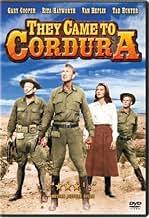
After contact with the enemy, and after losing many men, five men were nominated for the Medal of Honor. Since the army needed living heroes to prepare the nation for its likely entry into WWI, Major Thomas Thorn (Gary Cooper), an awards officer, escorts the nominees, Lt. William Fowler (Tab Hunter), Sgt. John Chawk (Van Heflin), Cpl. Milo Trubee (Richard Conte), Pvt. Andrew Hetherington (Michael Callan), and Pvt. Renziehausen (Dick York), back to headquarters. This film is the story of that journey, and Thorn's exploration of the character of heroes.
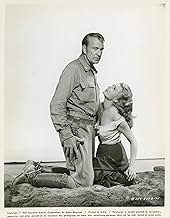
Adelaide Geary (Rita Hayworth), an American woman who owns the ranch where the battle was fought, is sent back with them on charge of treason for aiding Villistas against American soldiers, even though she had no choice.
Although Hayworth and Cooper both gave impressive performances, Van Heflin was the standout as a brutish sergeant, especially since he was acting against type, having played decent men forced into heroism during his best-known films, Shane (1953) and 3:10 to Yuma (1957).
After contact with the enemy, and after losing many men, five men were nominated for the Medal of Honor. Since the army needed living heroes to prepare the nation for its likely entry into WWI, Major Thomas Thorn (Gary Cooper), an awards officer, escorts the nominees, Lt. William Fowler (Tab Hunter), Sgt. John Chawk (Van Heflin), Cpl. Milo Trubee (Richard Conte), Pvt. Andrew Hetherington (Michael Callan), and Pvt. Renziehausen (Dick York), back to headquarters. This film is the story of that journey, and Thorn's exploration of the character of heroes.
Adelaide Geary (Rita Hayworth), an American woman who owns the ranch where the battle was fought, is sent back with them on charge of treason for aiding Villistas against American soldiers, even though she had no choice.
Although Hayworth and Cooper both gave impressive performances, Van Heflin was the standout as a brutish sergeant, especially since he was acting against type, having played decent men forced into heroism during his best-known films, Shane (1953) and 3:10 to Yuma (1957).
"What is courage? What is cowardice?"
This tortuous drama is one of only a handful of films depicting America's skirmish with Mexico early last century. Although staged in CinemaScope against a spectacular mountainous backdrop, the real drama is mainly interior and most of the conflict between the officers rather than with the Mexicans.
Rita Hayworth in a very rare latino role gives possibly her best performance as a shady lady along for the ride.
They Came to the Point
Glendon Swarthout's brutal, excellent novel receives a handsome, intelligent, and staid Hollywood adaptation---toned down and with a happier ending and less savage sense of irony. Robert Rossen isn't able to keep the film moving. His direction is heavy and without pace, almost formal---a mistake in a story where desperate people are pushed so hard they crack up. The screenplay is relatively faithful to the book but smooths off the rough edges, as expected in an early 60s Hollywood feature. What results is a digest of the book, with themes turned into talking points conveyed through on-the-nose dialogue, especially in the new material at the end.
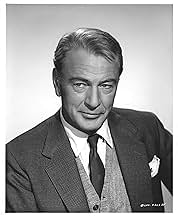
As usual in his later roles Gary Cooper conveys pained dignity, but he's too old and difficult to accept as a coward. A 40-something Jimmy Stewart, with his reserves of neurosis, or Henry Fonda, whose rectitude could shade into unbending mania, would have been better choices. Rita Hayworth is perfect as the middle-aged woman of ill-repute, while Van Heflin is impressively scummy but not physically imposing enough as Sgt. Chawk. Tab Hunter convinces as a careerist Lieutenant but can't convey seediness. The other soldiers are one note and less vivid than in the book, which is more worth your time.
They Came to Cordura
Take Gary Cooper and Rita Hayworth, surround them with a core of actors who are still well-known today, add beautiful scenery, tackle a very interesting philosophical question. What's not to like? As it turns out, there's a lot not to like. Coop's role is to portray a world-weary, duty-bound officer, obsessed with heroism. Diappointingly, "wooden" would best describe his take on the role. Hayworth, as tequila-drinking, cigarette-smoking, comforter-of-America's-enemies is, at times, over the top. She's still got the sexy sizzle she's known for, but the sexual tension between her and the men isn't compelling. The supporting members of the cast are supposed to devolve from heroes to louts, but their hand is tipped so early in the movie, that their later actions are expected--not deplored. It's a dark western that would appear to be yin to "The Magnificent Seven"'s yang. Heroes become brutes--brutes become heroes. The later is a lot more entertaining and--a lot more satisfying.
faux flaws?
This is in response to comments on 'They Came to Cordura' regarding its dramatic weakness and flawed camera work and editing.
The flaws may be real, but they might not be the fault of the filmmaker (writer-director Robert Rossen).
Reportly, the film was taken out of Rossen's hands by the studio and drastically cut and re-cut. The director's original version, about 1/2 hour longer, was apparently much better, making much more dramatic sense.
Further, the movie was shot in CinemaScope, and comments on its poor cinematography and editing are likely based on viewing a crude pan & scan video copy. Such artificial flaws are common with panned & scanned widescreen movies.
.
The flaws may be real, but they might not be the fault of the filmmaker (writer-director Robert Rossen).
Reportly, the film was taken out of Rossen's hands by the studio and drastically cut and re-cut. The director's original version, about 1/2 hour longer, was apparently much better, making much more dramatic sense.
Further, the movie was shot in CinemaScope, and comments on its poor cinematography and editing are likely based on viewing a crude pan & scan video copy. Such artificial flaws are common with panned & scanned widescreen movies.
.
Did you know
- TriviaAlthough Gary Cooper was 57, his character Major Thorn was forty years old according to the novel. Early in the film it is mentioned that Thorn's father had recently been killed while still on active service.
- GoofsMajor Thorn improperly salutes Colonel DeRose in the opening scene when he is dismissed. He should have saluted and held his salute until it was acknowledged. Instead, he lowers his arm even before Colonel Rose acknowledges it.
- Quotes
Major Thomas Thorn: Did you ever see the Medal of Honor?
Private Renziehausen: No, Sir.
Major Thomas Thorn: It's the most beautiful decoration of all, as it should be. I'd trade an ear for one any time, two in fact.
Private Renziehausen: Excuse me, Sir, but I'd rather have the ear.
- Crazy creditsOpening credits prologue:
On the night of March 8th, 1916, a large mounted force of Mexican rebels under Pancho Villa crossed the American Border and attacked the town of Columbus, New Mexico, killing and wounding both American civilians and soldiers.
As a result of this action,the United States Army sent an expedition into Mexico with orders to capture Villa and disperse his forces.
It was during this campaign that one man, an United States Army officer,was forced to come face to face with two of the great fundamental questions that affect mankind:
What Is Courage? What Is Cowardice?
This is the story of his search for an answer.
- ConnectionsFeatured in Stars of the Silver Screen: Rita Hayworth (2011)
- How long is They Came to Cordura?Powered by Alexa
Details
Box office
- Budget
- $4,000,000 (estimated)
- Runtime
- 2h 3m(123 min)
- Color
- Aspect ratio
- 2.35 : 1
Contribute to this page
Suggest an edit or add missing content