

A small-time crook, hunted by the authorities for a car theft and the murder of a police officer, attempts to persuade a hip American journalism student to run away with him to Italy.A small-time crook, hunted by the authorities for a car theft and the murder of a police officer, attempts to persuade a hip American journalism student to run away with him to Italy.A small-time crook, hunted by the authorities for a car theft and the murder of a police officer, attempts to persuade a hip American journalism student to run away with him to Italy.
- Director
- Writers
- Stars
- Nominated for 1 BAFTA Award
- 5 wins & 4 nominations total




Jean Seberg
- Patricia Franchini
- (uncredited)

Jean-Luc Godard
- The Snitch
- (uncredited)
Richard Balducci
- Tolmatchoff
- (uncredited)
José Bénazéraf
- Man in wite car and elevator
- (uncredited)
René Bernard
- Journalist at Orly
- (uncredited)
Daniel Boulanger
- Police Inspector Vital
- (uncredited)
Gérard Brach
- Photographer
- (uncredited)

Philippe de Broca
- Journalist
- (uncredited)
Jean Domarchi
- Stolen man in toilets
- (uncredited)

Jean Douchet
- Man looking at traffic victim
- (uncredited)

Liliane Dreyfus
- Liliane
- (uncredited)
- …
Michel Fabre
- Police Inspector #2
- (uncredited)

Roger Hanin
- Carl Zubart
- (uncredited)
Jean Herman
- Soldier on the Champs-Elysées
- (uncredited)
Lila Herman
- Tolmatchoff's secretary
- (uncredited)
Henri-Jacques Huet
- Antonio Berrutti
- (uncredited)
- Director
- Writers
- All cast & crew
- Production, box office & more at IMDbPro
7.793.1K
1
2
3
4
5
6
7
8
9
10
Featured reviews
French New Wave for Dummies
This is the one that started it all kids, the daddy of post-modern cinema. MTV jump cuts, fractured soundtrack and images aplenty
Self reflexive to the point that it not only acknowledges its own existence, it revels in it.
All style and no substance is considered a bad thing today, unless its Tarantino. Well, if it wasn't for Godard, chances are there would be no QT.
All the characters and images, and dialogue and sets are constructed from all aspects of life - Michel is a Bogart collage. Patricia apes everything she sees, from her Interviewee's facial gestures to Michel's own.
Don't let all this technical mumbo fool you, I did my thesis on Godard and would happily bore the ass off you with a lecture in great detail about this film, but the fact is, it's a stormer.
Grips you by the throat and shakes the hell out of you, and it doesn't let go until the final breath.
Fantastically, artistically magnificent. If Godard wanted to make his debut picture to show how well he understood American ideals and the history of cinema, he couldn't have made a better picture.
Top stuff French guy.
Self reflexive to the point that it not only acknowledges its own existence, it revels in it.
All style and no substance is considered a bad thing today, unless its Tarantino. Well, if it wasn't for Godard, chances are there would be no QT.
All the characters and images, and dialogue and sets are constructed from all aspects of life - Michel is a Bogart collage. Patricia apes everything she sees, from her Interviewee's facial gestures to Michel's own.
Don't let all this technical mumbo fool you, I did my thesis on Godard and would happily bore the ass off you with a lecture in great detail about this film, but the fact is, it's a stormer.
Grips you by the throat and shakes the hell out of you, and it doesn't let go until the final breath.
Fantastically, artistically magnificent. If Godard wanted to make his debut picture to show how well he understood American ideals and the history of cinema, he couldn't have made a better picture.
Top stuff French guy.
10IZMatt
To those who "don't understand"
I don't blame those who state that they do not "understand" the superlatives surrounding Jean-Luc Godard's 1960 masterpiece, Breathless. It's primarily because to appreciate Breathless, one has to view the movie from a historical context, which also requires studying of not only the French New Wave, but film theories as a whole, and the lives of those apart of the New Wave. Breathless accomplished many things unprecedented prior (many completely unprecedented, but some things are not-so-much).
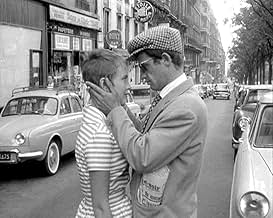
Roger Ebert put it best when he said that just as film fanatics may now stand outside a movie theatre waiting for the next Quentin Tarantino movie to be released, film enthusiasts were doing so for Godard in the 1960s. He was a revolutionary, which is why MovieMaker magazine called him the 4th most influential director of ALL-TIME (only behind Welles, Griffith, and Hitchcock)! What did Godard do different? Breathless is all style, simple as that. The story line is interesting, yes, but is Godard's aesthetics, production modes, subject matters, and storytelling methods that are key. First of all, the whole movie was shot on a hand-held camera, just like most all New Wave pictures. It was, however, only shot by two people (Godard and his cinematographer, Rouald) on a budget that did not top $50,000, a mere fraction of what most pictures cost at the time (another facet of the New Wave). It was shot completely on location in Paris, and utilized new film-making techniques that would be used by film-making students for decades to come (such as putting the camera in a mail cart on the Champs Elysees and following Belmondo and Seberg). Note Godard's use of American cinema influence, and how the montage art of the 1950s impacted this aesthetic.
(A brief New Wave lesson: Most New Wave directors were displeased with the "tradition of quality," or the older generation directors who, as Truffaut put it, made the "twelve or so" pictures per year that represented France at Venice and Cannes. Most of these pictures classic or modern literary adaptations, completely stagnant in artistic quality with rehashed subject matters based on historical periods. New Wave directors supported NEW tales of modern Parisian life, primarily, and were sick of the themes found in the tradition of quality films.) The storytelling methods in Breathless are perhaps the most fascinating part of the film. The jump cuts may seem lame, but one must again view them from a historical context: it had never been done before. This is exactly why Breathless is important -- practically every technique was revolutionary. They are so submerged into film-making practices now that Breathless seems typical. Yet at the time, it was, as I said prior, unprecedented.
Roger Ebert put it best when he said that just as film fanatics may now stand outside a movie theatre waiting for the next Quentin Tarantino movie to be released, film enthusiasts were doing so for Godard in the 1960s. He was a revolutionary, which is why MovieMaker magazine called him the 4th most influential director of ALL-TIME (only behind Welles, Griffith, and Hitchcock)! What did Godard do different? Breathless is all style, simple as that. The story line is interesting, yes, but is Godard's aesthetics, production modes, subject matters, and storytelling methods that are key. First of all, the whole movie was shot on a hand-held camera, just like most all New Wave pictures. It was, however, only shot by two people (Godard and his cinematographer, Rouald) on a budget that did not top $50,000, a mere fraction of what most pictures cost at the time (another facet of the New Wave). It was shot completely on location in Paris, and utilized new film-making techniques that would be used by film-making students for decades to come (such as putting the camera in a mail cart on the Champs Elysees and following Belmondo and Seberg). Note Godard's use of American cinema influence, and how the montage art of the 1950s impacted this aesthetic.
(A brief New Wave lesson: Most New Wave directors were displeased with the "tradition of quality," or the older generation directors who, as Truffaut put it, made the "twelve or so" pictures per year that represented France at Venice and Cannes. Most of these pictures classic or modern literary adaptations, completely stagnant in artistic quality with rehashed subject matters based on historical periods. New Wave directors supported NEW tales of modern Parisian life, primarily, and were sick of the themes found in the tradition of quality films.) The storytelling methods in Breathless are perhaps the most fascinating part of the film. The jump cuts may seem lame, but one must again view them from a historical context: it had never been done before. This is exactly why Breathless is important -- practically every technique was revolutionary. They are so submerged into film-making practices now that Breathless seems typical. Yet at the time, it was, as I said prior, unprecedented.
"If you don't like this film...then you can get stuffed!"
"À Bout de Soufflé" aka "Breathless", was the first full-length film directed by the controversial Jean-Luc Godard, and the first film of his long career that I've had the chance to see so far. "Breathless" is the landmark film of the Nouvelle Vague (New Wave), when young filmmakers such as François Truffaut thrilled the audiences and shocked the Establishment.
Although some people may not be as impressed with "Breathless" structure as they were in 1960, it remains a terrific, breathtaking film experience and has aged wonderfully. Such masterpieces live up to the hype and time, even though they're not as technically impressive as they were 40 years ago, and they're still powerful thanks to what great films consist of: passion. As another user rightfully stated, we have to look at "Breathless" from a historical point: it's different from any other previous film. Godard was truly a visionary and an incredibly talented, passionate "auteur".
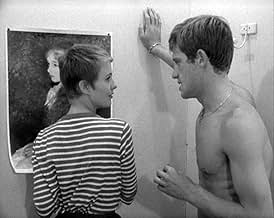
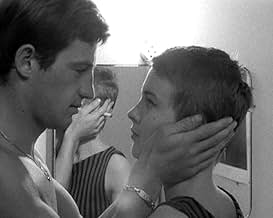
"Breathless" plot is rather simple: Michel Poiccard/Laszlo Kovacs (Jean-Paul Belmondo), our anti-hero, is a young criminal on the run from the police, after stealing a car and killing a cop. He has an affair with a beautiful young American, Patricia (Jean Seberg), an aspiring journalist who sells the New York Herald Tribune in the middle of the Champs Élysées (her first scene here was paid a tribute by Eva Green in Bertolucci's "The Dreamers"), and is also expecting Michel's baby. Patricia helps Michel to dodge the police, while they steal cars together in order to raise money for a trip to Rome. But when you want to "vivre dangereusement jusqu'au bout" - or, live dangerously till the end, things may end up not so well.
When you see Belmondo touching his lips, trying to imitate Humphrey Bogart's trade mark, Seberg walking on the Élysées as lovely as a girl can be, the unforgettable final moments...you don't worry about theories on why this is a classic. "À Bout de Soufflé" is Cinema.
Although some people may not be as impressed with "Breathless" structure as they were in 1960, it remains a terrific, breathtaking film experience and has aged wonderfully. Such masterpieces live up to the hype and time, even though they're not as technically impressive as they were 40 years ago, and they're still powerful thanks to what great films consist of: passion. As another user rightfully stated, we have to look at "Breathless" from a historical point: it's different from any other previous film. Godard was truly a visionary and an incredibly talented, passionate "auteur".
"Breathless" plot is rather simple: Michel Poiccard/Laszlo Kovacs (Jean-Paul Belmondo), our anti-hero, is a young criminal on the run from the police, after stealing a car and killing a cop. He has an affair with a beautiful young American, Patricia (Jean Seberg), an aspiring journalist who sells the New York Herald Tribune in the middle of the Champs Élysées (her first scene here was paid a tribute by Eva Green in Bertolucci's "The Dreamers"), and is also expecting Michel's baby. Patricia helps Michel to dodge the police, while they steal cars together in order to raise money for a trip to Rome. But when you want to "vivre dangereusement jusqu'au bout" - or, live dangerously till the end, things may end up not so well.
When you see Belmondo touching his lips, trying to imitate Humphrey Bogart's trade mark, Seberg walking on the Élysées as lovely as a girl can be, the unforgettable final moments...you don't worry about theories on why this is a classic. "À Bout de Soufflé" is Cinema.
To Reinvent The Wheel
Jean-Luc Godard intended to shake the delicate world of cinema, that much is obvious. But did he intend to reinvent it? Whether it was his intention or not isn't the point, the point is this; he did. Jean-Luc Godard, and Francois Truffuat are the undisputed fathers of the French New Wave. Some cinephiles or historians may feel like pointing elsewhere, to Jean Renoir for example, protesting that he is truly the father of the French New Wave, I disagree entirely. The French New Wave was a product of the kindred spirits and talents of Godard and Truffaut. And no other film represents the French New Wave more coherently than Jean-Luc Godard's dazzling 1960 picture, 'Breathless'. Unorthodox and uninhibited. Raw and experimental. Godard broke every rule in the book, disavowed the laws of cinema, and scribed a new rule book, one where the pages are blank, and possibilities are endless. The story is so simple I can summarize the entire film in half of a sentence, but I refuse to give you or Godard the satisfaction. What counts in Breathless is not the story, but how the story is told. The very definition of 'cool', the film is robust in creativity, and exuberant in its flaws, and passionate about its reckless behavior. Self aware and rebellious. If there was no breathless, there would have been no Tarantino, if there was no French New Wave, the streak of genius that ran through the nineties and 2000s wouldn't have existed. Before Breathless, it was believed that films took money, that you had to find yourself in a place of authority to make a film. Breathless broke this misconception. Breathless makes you want to run outside and make the film of your life. Breathless made that possible, Breathless made the amateur the auteur, Breathless reinvented the face of the cinema, and made you believe that could too. All you need is a girl and gun.
In's not like this in movies
Jean-Luc Godard's, A Bout de Souffle is possibly the brightest star to shine from the French New Wave. The 'Nouvelle Vague' came about from a group of like minded film critics writing for the Cahiers du Cinema.
With his knowledge of classic film narrative and style Godard went out to create his own film in homage to, and also complete contradiction to, classic Hollywood film.
The plot reads almost like a crime thriller typical of the 1930-40's. A criminal on the run from the police; the distraction of a beautiful woman; the escape and eventually someones death. But it is in Godard's approach to film style and use of new technologies that the typical crime thriller was turned on its head.
In a break from classic Hollywood narrative the film opens with little equilibrium. Our protagonist's motives are unclear as he tears off to Paris leaving a woman and a dead cop in his trail. This in turn makes the ending somewhat open ended. With no sense of equilibrium to start with how can there be closure on what has happened throughout the film.
Another twist on the classic storytelling in film is the progression of plot. It is naturally assumed in classic Hollywood film, that everything the spectator sees they see for a reason. With Michel's constantly pointless phone calls to retrieve owed money the plot is not pushed along at all. The inclusion of a 25 minute digression from the plot stands to emphasise the spectators reliance on narrative structure in the watching of films. Although watching the film closely is, as always, important in following the story A Bout de Souffle requires that little bit extra to define where the plot is being progressed and where Michel or Patricia are just flattering their egos or each other.
All in all I personally think that A Bout de Souffle brought about a sense of realism not seen in Hollywood cinema before 1959 and even now. The fact that life isn't full of clues that will help us progress in say our relationships or escape from authority, but is infact full of digression; self exploration; and the confusions of love, ego and aspirations.
With his knowledge of classic film narrative and style Godard went out to create his own film in homage to, and also complete contradiction to, classic Hollywood film.
The plot reads almost like a crime thriller typical of the 1930-40's. A criminal on the run from the police; the distraction of a beautiful woman; the escape and eventually someones death. But it is in Godard's approach to film style and use of new technologies that the typical crime thriller was turned on its head.
In a break from classic Hollywood narrative the film opens with little equilibrium. Our protagonist's motives are unclear as he tears off to Paris leaving a woman and a dead cop in his trail. This in turn makes the ending somewhat open ended. With no sense of equilibrium to start with how can there be closure on what has happened throughout the film.
Another twist on the classic storytelling in film is the progression of plot. It is naturally assumed in classic Hollywood film, that everything the spectator sees they see for a reason. With Michel's constantly pointless phone calls to retrieve owed money the plot is not pushed along at all. The inclusion of a 25 minute digression from the plot stands to emphasise the spectators reliance on narrative structure in the watching of films. Although watching the film closely is, as always, important in following the story A Bout de Souffle requires that little bit extra to define where the plot is being progressed and where Michel or Patricia are just flattering their egos or each other.
All in all I personally think that A Bout de Souffle brought about a sense of realism not seen in Hollywood cinema before 1959 and even now. The fact that life isn't full of clues that will help us progress in say our relationships or escape from authority, but is infact full of digression; self exploration; and the confusions of love, ego and aspirations.


Did you know
- TriviaDespite reports to the contrary, Jean-Luc Godard did not shoot the film without a script; however, he did not have a finished script at the beginning, instead writing scenes in the morning and filming them that day. See also Pierrot le fou (1965).
- GoofsDuring street shots, countless passersby look at Patricia and Michel and stare into the camera, revealing that the shots were made without filming barriers and simply used street pedestrians in place of extras.
- Quotes
Patricia Franchini: What is your greatest ambition in life?
Parvulesco: To become immortal... and then die.
- ConnectionsEdited into Pariz pripada nama! (2016)
Details
- Release date
- Country of origin
- Languages
- Also known as
- Sin aliento
- Filming locations
- 11 rue Campagne Première, Paris 14, Paris, France(on location)
- Production companies
- See more company credits at IMDbPro
Box office
- Budget
- FRF 400,000 (estimated)
- Gross US & Canada
- $414,173
- Opening weekend US & Canada
- $32,424
- May 30, 2010
- Gross worldwide
- $596,100
- Runtime
- 1h 30m(90 min)
- Color
- Sound mix
- Aspect ratio
- 1.37 : 1
Contribute to this page
Suggest an edit or add missing content