IMDb RATING
7.2/10
7.6K
YOUR RATING


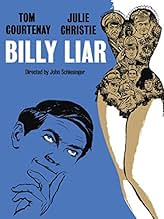
A lazy, irresponsible young clerk in provincial Northern England lives in his own fantasy world and makes emotionally immature decisions as he alienates friends and family.A lazy, irresponsible young clerk in provincial Northern England lives in his own fantasy world and makes emotionally immature decisions as he alienates friends and family.A lazy, irresponsible young clerk in provincial Northern England lives in his own fantasy world and makes emotionally immature decisions as he alienates friends and family.
- Director
- Writers
- Stars
- Nominated for 6 BAFTA Awards
- 1 win & 7 nominations total



Jim Brady
- Prisoner Escort
- (uncredited)
Aleksander Browne
- Bit Part
- (uncredited)
James Byron
- Serviceman
- (uncredited)
- Director
- Writers
- All cast & crew
- Production, box office & more at IMDbPro
7.27.5K
1
2
3
4
5
6
7
8
9
10
Featured reviews
Heads the pack in Kitchen Sink terms...
"Billy Liar!" impressed me more than many other admirable British pictures of this era, like "Room at the Top", "The Loneliness of the Long Distance Runner" and "This Sporting Life". It managed to generate a more tangible blend of poignancy and amusement. It's not often humour of the "laugh-out-loud" nature, more of the subtle, grim kind. The reality of Britain at that time is I suspect, very well conveyed here, with the old working-class, represented by Councillor Duxbury (astutely played by the fine Finlay Currie) and Billy's family, very much at odds with what they see as an ungrateful, decadent youth. All the performances hit the intended mark, with Leonard Rossiter typically Rossiter, almost as a younger Rigsby, without so much noticeable seediness. Julie Christie is as good as the role allows, an odd role, very much the "dream girl" of Billy and I dare say a good few others. The film expertly avoids sentimentalizing matters by its cunning, apposite last section. The Danny Boon character is, one suspects, all too typical of the TV light entertainer mould in reality. His reliance on cheap non-gags, smug guffaws and "audience banter" is well conveyed in just a few short scenes. It's interesting that Billy seems to aspire so much to write for him in particular... Helen Fraser's character Barbara is wonderfully quaint; a type long gone it seems. One can understand Billy's frustrations with his respectively prudish and plain (Barbara) and ignorant (Rita) girlfriends, and his anger at his family, although some sympathy is correctly reserved for them. The direction is very good by Schlesinger, emphasizing all the right things. The fine context-setting opening montage expertly draws in the viewer, and never at any stage henceforth is anyone's attention likely to wane. The film is most of all Tom Courtenay's; he gives a truly resonant performance, bringing to vivid life a character far removed from the norms of film making at the time. The fantasy sequences are finely done, and all add more deep impression of this character. His digressive tendencies, self-destructive habits, economy with the truth are well balanced by a sense of yearning and imagination. One cannot help but like and relate to the character, a creation that resoundingly rings true. His ambivalence to the class system comes across concisely, in particular. A fine film indeed, with so many of the smaller touches that many films miss. Witty, sad and a seminal film of the era, very much a crossroads in British history. Rating:- **** 1/2/*****
Wonderful British classic
Effective slice of life comedy/drama tells the story of scared, optimistic Billy (Tom Courtenay) who lives in a fantasy world where he's always a hero. Funny and charming, the film also packs a slight emotional punch that is somewhat similar to The Last Picture Show. Based on a stage play, the story of Billy Liar has since been revamped as a musical yet it's this 1963 version that works best.
Tom Courtenay and Julie Christie (Liz) leapfrogged to stardom with their performances but every actor is beautifully cast: Mona Washbourne, Wilfred Pickles, and Ethel Griffies are the character types who give Billy's family heartbreaking nuances while Helen Fraser and Gwendolyn Watts bring a refreshingly sympathetic humanity to his polar opposite fiancees.
Liz's entrance, Billy's fantasies, a dance hall sequence, a quiet hospital exchange between Billy and his mother, and the final choice are classic scenes that have been constructed with genius by John Schlesinger (Darling, Midnight Cowboy, Sunday Bloody Sunday). The Criterion Collection's DVD treatment of Billy Liar is a standout and shouldn't be missed. It's a great film.
Tom Courtenay and Julie Christie (Liz) leapfrogged to stardom with their performances but every actor is beautifully cast: Mona Washbourne, Wilfred Pickles, and Ethel Griffies are the character types who give Billy's family heartbreaking nuances while Helen Fraser and Gwendolyn Watts bring a refreshingly sympathetic humanity to his polar opposite fiancees.
Liz's entrance, Billy's fantasies, a dance hall sequence, a quiet hospital exchange between Billy and his mother, and the final choice are classic scenes that have been constructed with genius by John Schlesinger (Darling, Midnight Cowboy, Sunday Bloody Sunday). The Criterion Collection's DVD treatment of Billy Liar is a standout and shouldn't be missed. It's a great film.
A great film to become completely absorbed in.
What makes this little black and white film so absorbing? As I was watching it on late-night TV, I found myself on the edge of my seat, gripping the arms of my chair, trying not to yell at the main character, Billy Fisher, near the end of the film. How absorbed can you be?
The dialogue, the acting, and the storyline was so realistic and natural that I had completely forgotten that I was watching a film. Years later on the next viewing I had thought it wouldn't suck me in again, especially since I knew the ending, but I was wrong. In fact I was able to appreciate it all the more on the second viewing.
Tom Courtenay plays Billy Fisher, who is an immature, irresponsible young man living in a Walter Mitty-ish fantasy world, and invents implausible stories to attempt to hide his escapades, but his lies keep backfiring on him.
His life is rapidly falling apart. He is supposed to mail out calendars from his employers to their clients, but he doesn't mail them, and keeps the postage money. He even manages to con two girls into becoming engaged to him, and that explodes into a catfight over him when they find out. His grandmother is dying, his father is continually angry at him, and everything he does just makes matters worse.
Fortunately, he meets Liz, (played by Julie Christie, who is the best thing in this great movie). She is sweet, beautiful, and understands him completely because of her own need to escape, which she does by travelling around the country.
He has the opportunity to get away from all the trouble he's in and go to London, and make a fresh start with Liz who is so perfect for him. But can he change? Can he summon the courage to break free of the messy but secure life he knows and face the unknown? Will he recognise that Liz is the best thing that could ever happen to him?
I'm not going to tell you, because that would spoil the film, but, whichever way he decides, any film that has you on the edge of your seat, yelling "Go with her! Don't miss this opportunity! Go! Go!" you know it's a truly wonderful and realistic film!
The dialogue, the acting, and the storyline was so realistic and natural that I had completely forgotten that I was watching a film. Years later on the next viewing I had thought it wouldn't suck me in again, especially since I knew the ending, but I was wrong. In fact I was able to appreciate it all the more on the second viewing.
Tom Courtenay plays Billy Fisher, who is an immature, irresponsible young man living in a Walter Mitty-ish fantasy world, and invents implausible stories to attempt to hide his escapades, but his lies keep backfiring on him.
His life is rapidly falling apart. He is supposed to mail out calendars from his employers to their clients, but he doesn't mail them, and keeps the postage money. He even manages to con two girls into becoming engaged to him, and that explodes into a catfight over him when they find out. His grandmother is dying, his father is continually angry at him, and everything he does just makes matters worse.
Fortunately, he meets Liz, (played by Julie Christie, who is the best thing in this great movie). She is sweet, beautiful, and understands him completely because of her own need to escape, which she does by travelling around the country.
He has the opportunity to get away from all the trouble he's in and go to London, and make a fresh start with Liz who is so perfect for him. But can he change? Can he summon the courage to break free of the messy but secure life he knows and face the unknown? Will he recognise that Liz is the best thing that could ever happen to him?
I'm not going to tell you, because that would spoil the film, but, whichever way he decides, any film that has you on the edge of your seat, yelling "Go with her! Don't miss this opportunity! Go! Go!" you know it's a truly wonderful and realistic film!
Maturing like good wine (and no lie!)
Tragi-comic misadventures of a young man who invents a fantasy world as cover for his troubles and dreary middle-class existence in sixties Yorkshire.
Billy Liar was always a terrific film, but like so many of its kitchen-sink contemporaries (Saturday Night and Sunday Morning, A Kind of Loving) it has actually grown in substance and depth since its release. Part of the reason is the extensive use of on-location filming all these movies utilised: a post-war industrial landscape long since lost and therefore all the more vivid in its posterity. But where Billy Liar gets a bigger march on its predecessors - whether by intent or accident - is that it captures this landscape on the cusp of the swinging sixties, when architecture, culture, leisure and morality were all rapidly changing. In doing so it heralds many of the themes and issues that were to dominate western culture for the remainder of the 20th Century: pop culture, advertising, media obsession, celebrity, race relations and fantasy lifestyles.
Billy seemed an endearing but essentially lost soul in his day; an immature weakling unable to face up to the realities and responsibilities of adulthood. But looked at from the hindsight of 40 years he now seems symptomatic of what is today regarded as normal, almost aspirational, behaviour: self-absorption; avoidance of responsibility; glorification of celebrity; escape culture.
Whether director John Schelsinger and writers Keith Waterhouse and Willis Hall foresaw all the cultural and sociological changes they captured is something only they would know (they surely couldn't have seen the significance of casting Julie Christie - one of the ultimate swinging sixties icons). Whatever the case, what makes Billy Liar such a fascinating film is the casual, uncritical and unselfconscious way its many themes are observed. Its lack of preachiness or self-righteousness help keep it a fresh and funny entertainment that can be enjoyed at that level. Its historical importance as a perfect snapshot of a country at a time of rapid and fundamental change is nothing less than priceless.
Billy Liar was always a terrific film, but like so many of its kitchen-sink contemporaries (Saturday Night and Sunday Morning, A Kind of Loving) it has actually grown in substance and depth since its release. Part of the reason is the extensive use of on-location filming all these movies utilised: a post-war industrial landscape long since lost and therefore all the more vivid in its posterity. But where Billy Liar gets a bigger march on its predecessors - whether by intent or accident - is that it captures this landscape on the cusp of the swinging sixties, when architecture, culture, leisure and morality were all rapidly changing. In doing so it heralds many of the themes and issues that were to dominate western culture for the remainder of the 20th Century: pop culture, advertising, media obsession, celebrity, race relations and fantasy lifestyles.
Billy seemed an endearing but essentially lost soul in his day; an immature weakling unable to face up to the realities and responsibilities of adulthood. But looked at from the hindsight of 40 years he now seems symptomatic of what is today regarded as normal, almost aspirational, behaviour: self-absorption; avoidance of responsibility; glorification of celebrity; escape culture.
Whether director John Schelsinger and writers Keith Waterhouse and Willis Hall foresaw all the cultural and sociological changes they captured is something only they would know (they surely couldn't have seen the significance of casting Julie Christie - one of the ultimate swinging sixties icons). Whatever the case, what makes Billy Liar such a fascinating film is the casual, uncritical and unselfconscious way its many themes are observed. Its lack of preachiness or self-righteousness help keep it a fresh and funny entertainment that can be enjoyed at that level. Its historical importance as a perfect snapshot of a country at a time of rapid and fundamental change is nothing less than priceless.
Highly recommended early Schlesinger film
Billy Liar
John Schlesinger's excellent British comedy-drama concerns Billy (Tom Courtenay), a middle class young man who despises his position as a funeral parlor bookkeeper. Billy spends the majority of his time daydreaming of a much more interesting life filled with conquests, esp. of women. He'd love to quit his dead-end job and become a writer, but when the opportunity arrives, is he too content living in his head and telling lies to embellish his otherwise mundane existence? Too afraid to realize his dreams? This quirky slice-of-life is thematically similar to Le Distrait (The Daydreamer), a 1975 French release with an entirely different conclusion. A young, glowing Julie Christie appears briefly in Billy Liar, injecting color, life, and hope into Billy's dreary, black and white existence. Highly recommended. -- David Ross Smith
John Schlesinger's excellent British comedy-drama concerns Billy (Tom Courtenay), a middle class young man who despises his position as a funeral parlor bookkeeper. Billy spends the majority of his time daydreaming of a much more interesting life filled with conquests, esp. of women. He'd love to quit his dead-end job and become a writer, but when the opportunity arrives, is he too content living in his head and telling lies to embellish his otherwise mundane existence? Too afraid to realize his dreams? This quirky slice-of-life is thematically similar to Le Distrait (The Daydreamer), a 1975 French release with an entirely different conclusion. A young, glowing Julie Christie appears briefly in Billy Liar, injecting color, life, and hope into Billy's dreary, black and white existence. Highly recommended. -- David Ross Smith


Did you know
- TriviaThis movie made a star of Julie Christie, even though she's only in it for a total of twelve minutes.
- GoofsIn the opening title sequence, where a woman places a blanket over a balcony and runs off, an arm can be seen popping up from behind the wall and throwing the blanket off the balcony.
- Quotes
Alice Fisher: If you're in any more trouble, Billy, it's not something you can leave behind you, you know. You put it in your suitcase, and you take it with you.
- ConnectionsFeatured in Film Review: Julie Christie & John Schlesinger (1967)
- SoundtracksTwisterella
Performed by Muriel Day (dubbed by unknown vocalist)
- How long is Billy Liar?Powered by Alexa
Details
- Release date
- Country of origin
- Language
- Also known as
- Lažov Bili
- Filming locations
- 37 Hinchliffe Avenue, Baildon, Shipley, Bradford, West Yorkshire, England, UK(Billy's house, Stradhoughton)
- Production companies
- See more company credits at IMDbPro
Box office
- Budget
- £236,809 (estimated)
- Gross worldwide
- $29,591
- Runtime
- 1h 38m(98 min)
- Color
- Aspect ratio
- 2.35 : 1
Contribute to this page
Suggest an edit or add missing content