IMDb RATING
7.2/10
6.1K
YOUR RATING

After killing his employer when he tries to cheat him out of his payment, a man becomes an outlaw and starts following a self-proclaimed saint.After killing his employer when he tries to cheat him out of his payment, a man becomes an outlaw and starts following a self-proclaimed saint.After killing his employer when he tries to cheat him out of his payment, a man becomes an outlaw and starts following a self-proclaimed saint.
- Director
- Writers
- Stars
- Awards
- 1 nomination total


Milton Rosa
- Moraes
- (as Milton Roda)
Marrom
- Cego Júlio
- (uncredited)
- Director
- Writers
- All cast & crew
- Production, box office & more at IMDbPro
7.26.1K
1
2
3
4
5
6
7
8
9
10
Featured reviews
Horrifying and undoubtedly important
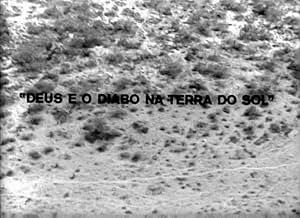
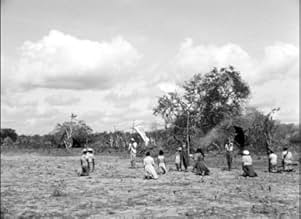
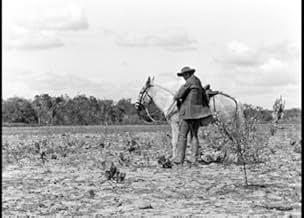
At just 25, Brazilian director Glauber Rocha directed Black God, White Devil, now considered one of the most important pictures to ever come out of Brazil, and a key entry into the Cinema Novo movement. Combining elements of Sergio Leone, Italian neo-realism, and Soviet propaganda such as the work of Sergei Eisenstein, Rocha created a brutal, grainy world inhabited by suicidal religious fanatics, wandering hit men, and psychopathic bandits. From the opening shots of rotting animal corpses and the endless Brazilian sertão, Rocha portrays a grim social realism, one of the key aspects of Cinema Novo.
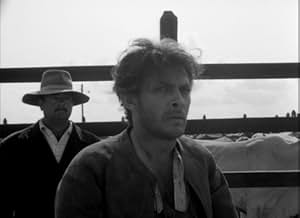
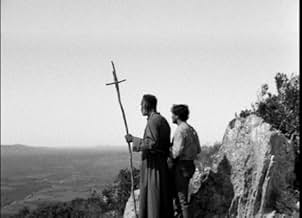
Ranch-hand Manuel (Geraldo Del Rey) lives in poverty with his wife Rosa (Yona Magalhaes). Fed up with his situation, he goes into town to sell his stock, only to have his boss try to cheat him out of his money, so Manuel kills him with a machete. Fleeing the authorities, he falls in with maniacal preacher Sebastiao (Lidio Silva), who leads Manuel, Rosa and his other followers on a killing spree. Circumstances lead to Manuel leaving the cause, and joining up with famous bandit Corisco (Othon Bastos), who also leads the couple on an orgy of meaningless violence and thievery. But shadowy gun-for-hire Antonio das Mortes (Mauricio do Valle), having been paid by the church and a poltician, is hot on Corisco's tail.
The film very much reminded me of Cormac McCarthy's astounding novel Blood Meridian, where the sheer brutality of the violence played as a metaphor for a society gone sour and a world intent of self-destruction. Like Blood Meridian's The Kid, Manuel and Rosa follow blindly to whichever cause they see a glimmer of hope in. They fail to see the lunacy of Sebastiao's behaviour, and it's only at the point where he stabs a baby in the heart that their eyes seem to be opened, only for them to shack up with the gibbering Corisco, a man who speaks like a poet but doesn't seem to be able to comprehend his own existence. It is at this point, about two-thirds in, that the film seems to lose momentum and becomes somewhat of an unfathomable mess.
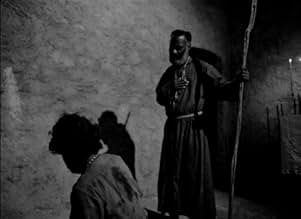
But it isn't just the social-political ponderings that make Black God, White Devil so memorable, it also has style in abundance. The camera-work is shaky and urgent at times, full of character close-ups from awkward angles, but it also uses fast editing reminiscent of Eisenstein's greatest works. Similar to Battleship Potemkin's (1925) Odessa steps sequence, the Monte Santo chapel massacre at the hands of Antonio das Mortes is simply electrifying. It is das Mortes' presence that leads to the moments that evoke the work of Sergio Leone, wrapping the shady anti-hero in moody atmosphere like Clint Eastwood's Man With No Name. It's a dangerous mixture of conflicting styles that works beautifully, making the film beautiful and cool, occasionally horrifying, and undoubtedly important. It's just a shame it doesn't manage to keep up with the absolutely astonishing opening two-thirds.
Ranch-hand Manuel (Geraldo Del Rey) lives in poverty with his wife Rosa (Yona Magalhaes). Fed up with his situation, he goes into town to sell his stock, only to have his boss try to cheat him out of his money, so Manuel kills him with a machete. Fleeing the authorities, he falls in with maniacal preacher Sebastiao (Lidio Silva), who leads Manuel, Rosa and his other followers on a killing spree. Circumstances lead to Manuel leaving the cause, and joining up with famous bandit Corisco (Othon Bastos), who also leads the couple on an orgy of meaningless violence and thievery. But shadowy gun-for-hire Antonio das Mortes (Mauricio do Valle), having been paid by the church and a poltician, is hot on Corisco's tail.
The film very much reminded me of Cormac McCarthy's astounding novel Blood Meridian, where the sheer brutality of the violence played as a metaphor for a society gone sour and a world intent of self-destruction. Like Blood Meridian's The Kid, Manuel and Rosa follow blindly to whichever cause they see a glimmer of hope in. They fail to see the lunacy of Sebastiao's behaviour, and it's only at the point where he stabs a baby in the heart that their eyes seem to be opened, only for them to shack up with the gibbering Corisco, a man who speaks like a poet but doesn't seem to be able to comprehend his own existence. It is at this point, about two-thirds in, that the film seems to lose momentum and becomes somewhat of an unfathomable mess.
But it isn't just the social-political ponderings that make Black God, White Devil so memorable, it also has style in abundance. The camera-work is shaky and urgent at times, full of character close-ups from awkward angles, but it also uses fast editing reminiscent of Eisenstein's greatest works. Similar to Battleship Potemkin's (1925) Odessa steps sequence, the Monte Santo chapel massacre at the hands of Antonio das Mortes is simply electrifying. It is das Mortes' presence that leads to the moments that evoke the work of Sergio Leone, wrapping the shady anti-hero in moody atmosphere like Clint Eastwood's Man With No Name. It's a dangerous mixture of conflicting styles that works beautifully, making the film beautiful and cool, occasionally horrifying, and undoubtedly important. It's just a shame it doesn't manage to keep up with the absolutely astonishing opening two-thirds.
Starts off great, but...
This film begins wonderfully, brilliantly shot and keenly acted- but right as you're sure it's coming to a close, the music suddenly runs uptempo and the narrator says the equivalent of "Wait, there's more!" and the second segment of the film destroys any credibility the first might have established. The director's portrayal of the desert's harshness lends logically to the lunacy of the characters- but Rosa's actions in the second half seem completely unmotivated, as if the actors ran out of script and just start making things up out of boredom in front of the camera. Laudable attempts at Eisenstein-style multiple-repeat editing are a good idea but using them to cover the low-budget nature of the action scenes is not. Overall worth seeing, but I must warn you that I fell asleep towards the end.
Western done Brazilian style.
Nothing wrong with a movie that is being a bit slower and different, as long as it fascinates. And this movie does that well.
It's an unusual movie, with an unusual approach and story. This is not a slick Hollywood movie here but an artistic South-American one. It doesn't really follow any familiar movie rules but having said that, this movie at the same time still remains a perfectly accessible one.
Even though there are of course some deeper meanings behind it all, the movie never feels too serious or heavy handed. The movie actually still manages to entertain as well, which is for most part thanks to its very lively characters, who especially come to live in its second half. Most people seem to have most problems with the movie its second half but I actually do think that this was the strongest and most intriguing part of the entire movie, since it seemed to focus more purely on its characters and less on its story, that is a complicated one to follow and completely understand.
What I foremost love about this movie is that it's being shot like a western, while it's actually a totally different genre movie, set in Brazil. The cinematography, directing, characters and such still make this movie really feel and look like a good old spaghetti western.
Due to its directing approach and way of storytelling this is a very visual orientated movie. Even though it can be a slow movie at times, its visuals still manages to fully keep you interested throughout. It's black & white cinematography does ensure this well.
No need and reason to overpraise this movie but it remains simply a good and special one to watch.
7/10
http://bobafett1138.blogspot.com/
It's an unusual movie, with an unusual approach and story. This is not a slick Hollywood movie here but an artistic South-American one. It doesn't really follow any familiar movie rules but having said that, this movie at the same time still remains a perfectly accessible one.
Even though there are of course some deeper meanings behind it all, the movie never feels too serious or heavy handed. The movie actually still manages to entertain as well, which is for most part thanks to its very lively characters, who especially come to live in its second half. Most people seem to have most problems with the movie its second half but I actually do think that this was the strongest and most intriguing part of the entire movie, since it seemed to focus more purely on its characters and less on its story, that is a complicated one to follow and completely understand.
What I foremost love about this movie is that it's being shot like a western, while it's actually a totally different genre movie, set in Brazil. The cinematography, directing, characters and such still make this movie really feel and look like a good old spaghetti western.
Due to its directing approach and way of storytelling this is a very visual orientated movie. Even though it can be a slow movie at times, its visuals still manages to fully keep you interested throughout. It's black & white cinematography does ensure this well.
No need and reason to overpraise this movie but it remains simply a good and special one to watch.
7/10
http://bobafett1138.blogspot.com/
Brilliant ending
"We can't do justice by shedding more blood."
This film takes place in roughly 1938-40, a period of political instability in Brazil during the early part of the Estado Novo, when Getulio Vargas had cemented his dictatorship after successfully overturning the election result of 1930. However, given the military coup that happened just months before it was released, obviously another period of great unrest which ushered in a new 21-year dictatorship, it seems like it must have had a lot of additional meaning for Brazilians at the time. As the 1964 coup against a free and fair election was supported by America, and as more recently Trump not only paved the way for Bolsonaro but is now doing everything he can to have him exonerated (for which I apologize as an American to my Brazilian friends), I found added meaning in how depressingly timeless the themes are here, even if the content seems so specific to the 1930's and the form is a blend of 1950's neorealism with 1960's New Wave.
The poor couple at the center of this film are trying to eke out a living in the harsh sertao (arid backcountry) of Northeast Brazil, and like poor people everywhere, are preyed upon by everyone. Their descent into going rogue begins when their rich employer threatens to use the law to cheat them out of their wages after some of his cows die being driven to market. In an act of anger, the man kills his employer and goes on the run. The couple is taken in by a would-be holy man who promises deliverance and miracles, but is more than a little cruel to the people who flock to him. Later they join a group of cangaceiros (bandits) led by a man who promises to fight against the "evil giant" of the Republic, but he's deranged and also a rapist and murderer, making it hard to feel swayed by his revolutionary speeches. The film is a testament to how brutal conditions and poverty lead to terrible things.
In the middle segment, I thought it was pretty telling that both sides were using (or perverting) religion to push for violence for their side. The miracle man preys on superstition and makes his new follower prove his devotion by putting a giant stone on his head and walking on his knees up a mountain. It gets worse when he asks him to sacrifice his baby, resulting in a brutal scene. Meanwhile the local priest, out of a threat to the status quo and the loss of revenue from baptisms and weddings, doesn't say hey, I wonder how I can understand or help those people, he calmly puts out a hit on the other holy man, something that results in a massacre.
It's interesting to note that the bandits are led by Corisco, a real-life cangaceiro who was killed in 1940. He was the subordinate of the most famous cangaceiro, Lampiao, who he references as having just died (which happened in 1938), so we can fix the rough time period of the film from that. With their distinctive fashion and ostensibly fighting for the poor, there is a certain romance to these rebels, but that dissipates when we see them murdering people. In one scene they loot a house, rape the woman, and convince the protagonist to cut off the man's penis, which he goes along with, just as went along with killing his own baby. It was this cruel immorality that kept me from really feeling the power of the line "If I die, another will be born," or truly connecting with these characters.
The ending is absolutely brilliant though. Let down by the wealthy, the church, and the rebels, the poor man runs through the desert towards the sea, as if in a desperate search of some other path to a solution, while the waves roll ashore indifferent to the human drama. I almost raised my review score because of it, but overall the grim reality of this film left me cold. The pace was also often too ponderous, and the storytelling didn't keep up with the fantastic visuals. Well worth seeing though, minimally for its place in Brazilian film history.
This film takes place in roughly 1938-40, a period of political instability in Brazil during the early part of the Estado Novo, when Getulio Vargas had cemented his dictatorship after successfully overturning the election result of 1930. However, given the military coup that happened just months before it was released, obviously another period of great unrest which ushered in a new 21-year dictatorship, it seems like it must have had a lot of additional meaning for Brazilians at the time. As the 1964 coup against a free and fair election was supported by America, and as more recently Trump not only paved the way for Bolsonaro but is now doing everything he can to have him exonerated (for which I apologize as an American to my Brazilian friends), I found added meaning in how depressingly timeless the themes are here, even if the content seems so specific to the 1930's and the form is a blend of 1950's neorealism with 1960's New Wave.
The poor couple at the center of this film are trying to eke out a living in the harsh sertao (arid backcountry) of Northeast Brazil, and like poor people everywhere, are preyed upon by everyone. Their descent into going rogue begins when their rich employer threatens to use the law to cheat them out of their wages after some of his cows die being driven to market. In an act of anger, the man kills his employer and goes on the run. The couple is taken in by a would-be holy man who promises deliverance and miracles, but is more than a little cruel to the people who flock to him. Later they join a group of cangaceiros (bandits) led by a man who promises to fight against the "evil giant" of the Republic, but he's deranged and also a rapist and murderer, making it hard to feel swayed by his revolutionary speeches. The film is a testament to how brutal conditions and poverty lead to terrible things.
In the middle segment, I thought it was pretty telling that both sides were using (or perverting) religion to push for violence for their side. The miracle man preys on superstition and makes his new follower prove his devotion by putting a giant stone on his head and walking on his knees up a mountain. It gets worse when he asks him to sacrifice his baby, resulting in a brutal scene. Meanwhile the local priest, out of a threat to the status quo and the loss of revenue from baptisms and weddings, doesn't say hey, I wonder how I can understand or help those people, he calmly puts out a hit on the other holy man, something that results in a massacre.
It's interesting to note that the bandits are led by Corisco, a real-life cangaceiro who was killed in 1940. He was the subordinate of the most famous cangaceiro, Lampiao, who he references as having just died (which happened in 1938), so we can fix the rough time period of the film from that. With their distinctive fashion and ostensibly fighting for the poor, there is a certain romance to these rebels, but that dissipates when we see them murdering people. In one scene they loot a house, rape the woman, and convince the protagonist to cut off the man's penis, which he goes along with, just as went along with killing his own baby. It was this cruel immorality that kept me from really feeling the power of the line "If I die, another will be born," or truly connecting with these characters.
The ending is absolutely brilliant though. Let down by the wealthy, the church, and the rebels, the poor man runs through the desert towards the sea, as if in a desperate search of some other path to a solution, while the waves roll ashore indifferent to the human drama. I almost raised my review score because of it, but overall the grim reality of this film left me cold. The pace was also often too ponderous, and the storytelling didn't keep up with the fantastic visuals. Well worth seeing though, minimally for its place in Brazilian film history.
This is a real masterpiece!!
This movie is so fantastic! I've seen it like 10 times or so, and I still get impressed whenever I watch it. Glauber Rocha, who was a total genius, unites various elements of Brazil's Northeastern culture in a great story about alienation of the people. The story is narrated by a singer who impersonates a regional popular singer; and the visual aspects of the film and the tone of black and white are supposed to resemble the rhymes and the woodcut covers which invoke the "literatura de cordel", or "string literature", which is very common in the northeast of Brazil(not so much today, but certainly in the 60's). The film shows how the powerful control the poorest through violence and intimidation, and how religion and the "Cangaço" movement can be bad when a person without perspective and objectives in life get involved with them. Manuel, the main character, is totally alienated by the "black god" Sebastião, which resembles, in many ways, real Brazilian preacher Antônio Conselheiro; and by the "white devil" Corisco(a real Cangaceiro who worked with real and, in the 20's and 30's, widely famous Cangaço boss Lampião), wonderfully performed by Othon Bastos, while the hired gun Antonio das Mortes is on the look for both Sebastião and Corisco through the badlands of Northeast. This is a real masterpiece!!


Did you know
- TriviaIn the scene where we see Manuel (Geraldo Del Rey) carrying a huge stone over his head while climbing Monte Santo on his knees, Del Rey insisted on carrying a real stone that weighted over 20 kilos - something that really worried director Glauber Rocha. After the shooting, Del Rey had to take 2 days off, as he wasn't in condition to show up.
- ConnectionsEdited into A Edição do Nordeste (2023)
- SoundtracksManuel e Rosa
Written by Glauber Rocha & Sérgio Ricardo
- How long is Black God, White Devil?Powered by Alexa
Details
- Release date
- Country of origin
- Official site
- Language
- Also known as
- God and the Devil in the Land of the Sun
- Filming locations
- Production companies
- See more company credits at IMDbPro
Box office
- Gross US & Canada
- $7,826
- Opening weekend US & Canada
- $3,200
- Nov 19, 2023
- Gross worldwide
- $7,826
- Runtime
- 2h(120 min)
- Color
- Sound mix
- Aspect ratio
- 1.37 : 1
Contribute to this page
Suggest an edit or add missing content