IMDb RATING
7.6/10
1.6K
YOUR RATING

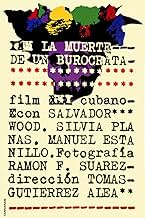
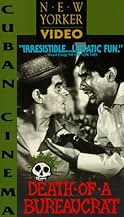
A young man attempts to fight the system in an entertaining account of bureaucracy amok and the tyranny of red tape.A young man attempts to fight the system in an entertaining account of bureaucracy amok and the tyranny of red tape.A young man attempts to fight the system in an entertaining account of bureaucracy amok and the tyranny of red tape.
- Director
- Writers
- Stars
- Awards
- 1 win & 1 nomination total
- Director
- Writers
- All cast & crew
- Production, box office & more at IMDbPro
7.61.6K
1
2
3
4
5
6
7
8
9
10
Featured reviews
A surprisingly critical and hilarious vision of Havana in '66
When lent this film by a Spanish professor, my expectations were not high -- I had no idea this film from the early years of revolutionary Cuba was by Gutierrez Alea, Tinton, the director of Strawberries and Chocalate. Now, having seen the film, I wonder how it is that such a wonderful, imaginative work is not better known. For a good laugh, this can hardly be beat.
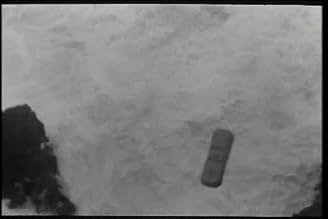
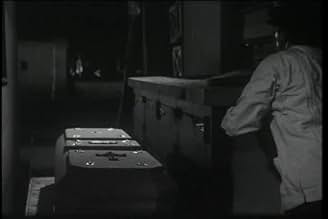
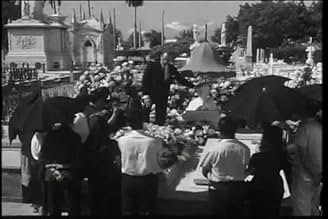
"Death of a Bureaucrat"(Muerte de un burocrata) is the story of a body that just can't get in the ground, and the frustrations suffered by the deceased's family in trying to address this situation. With the themes of bureaucratic rigidity, death, burial and the challenges of (then) modern-day Cuban life, we see linkages to Tinton's last work, "Guantanamera". The director has played with a range of techniques borrowed from some of the greats -- we find Bunuel's dream sequences, Chaplin's battles with the machine, and Keaton's daring-do. Hopefully, with the success of Tinton's final works, some of his earlier works will come into vogue.
"Death of a Bureaucrat"(Muerte de un burocrata) is the story of a body that just can't get in the ground, and the frustrations suffered by the deceased's family in trying to address this situation. With the themes of bureaucratic rigidity, death, burial and the challenges of (then) modern-day Cuban life, we see linkages to Tinton's last work, "Guantanamera". The director has played with a range of techniques borrowed from some of the greats -- we find Bunuel's dream sequences, Chaplin's battles with the machine, and Keaton's daring-do. Hopefully, with the success of Tinton's final works, some of his earlier works will come into vogue.
10Aw-komon
How many films from 1966 are still relevant today?
Forget post-revolutionary Cuba; right here in America, in 2000, there is enough bureaucracy for the comedic lessons of Alea's great film about people's propensity to conform at all costs to absurd restrictions from 'above' and cause misery to others rather than risk the slightest insecurity to themselves, to be driven home painfully. This is a really funny film but one that makes you think, like Tati's 'Playtime,' Fellini's early films or some of Bunuel's. This film is deeply critical and ridicules everything that is part and parcel of government enforced socialism. You can't fault Castro for not having a sense of humor, if he agreed to release this film. Leo Beower's understated music is, as always, excellent.
My grandmother was in this movie.
She is the model in the bikini holding a hammer 1 hour into the movie. Her name is Regina Amador, top model at Tropicana Club Havana, Cuba 1962-1968.
10ar656
It is easier to kill a bureaucrat than to kill bureaucracy.
This film is not just superb, but it is also a homage to movies in general.
This is a comedy, a tragedy, a parody, and a documentary. Why is this film so important to people who have never lived in Cuba? Because, like every work of art from the beginning of civilization, it is applicable the old Arab saying of "write about your street, and you will be writing about the world." Anyone who has ever dealt with the Tax Office, the Immigration Board, the City Bylaws Enforcement, the European Union office of standards, the Human Resources Department, the Phone Company, the Big Bank, the Insurance Company, or any other office of some big organization will immediately recognize the situations shown in this film.
A must see.
This is a comedy, a tragedy, a parody, and a documentary. Why is this film so important to people who have never lived in Cuba? Because, like every work of art from the beginning of civilization, it is applicable the old Arab saying of "write about your street, and you will be writing about the world." Anyone who has ever dealt with the Tax Office, the Immigration Board, the City Bylaws Enforcement, the European Union office of standards, the Human Resources Department, the Phone Company, the Big Bank, the Insurance Company, or any other office of some big organization will immediately recognize the situations shown in this film.
A must see.
Joseph K. Meets Harold Lloyd
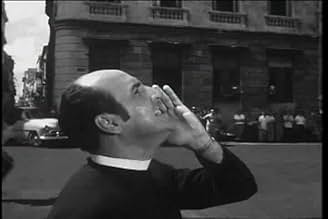
Communist Cuba in the 1960s is not exactly the place that you'd expect to produce a satire on bureaucracy. But the spirit of Harold Lloyd was kept alive by this singular farce, which manages to be both harrowing and funny; in which our hero (SLIGHT SPOILERS COMING:) begins by needing to recover his father's union card - sentimentally buried in the old man's coffin - and somehow finds himself ultimately perched on a window ledge surrounded by gawpers convinced he's threatening to jump.


Did you know
- TriviaThe girl who plays the girl n the black bikini with a hammer in the "Death to Bureaucracy" parade is Regina Amador, top model at Tropicana Club Havana, Cuba 1962-1968.
- Crazy creditsDedicated to Luis Buñuel, Stan Laurel and Oliver Hardy, Ingmar Bergman, Harold Lloyd, Akira Kurosawa, Orson Welles (as Orson Wells), Juan Carlos Tabio, Elia Kazan, Buster Keaton, Jean Vigo, Marilyn Monroe.
- SoundtracksCoja el paso
Written by Frank Dominguez
- How long is Death of a Bureaucrat?Powered by Alexa
Details
- Release date
- Country of origin
- Language
- Also known as
- Der Tod eines Bürokraten
- Filming locations
- La Habana, Cuba(town of the action)
- Production company
- See more company credits at IMDbPro
Box office
- Gross worldwide
- $3,323
- Runtime
- 1h 25m(85 min)
- Color
- Sound mix
- Aspect ratio
- 1.66 : 1
Contribute to this page
Suggest an edit or add missing content