IMDb RATING
6.8/10
1.3K
YOUR RATING

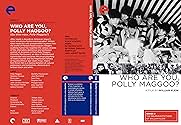
A model tells a television crew about her dreams of a life with Prince Charming while she is fending off the lecherous advances of a horde of men.A model tells a television crew about her dreams of a life with Prince Charming while she is fending off the lecherous advances of a horde of men.A model tells a television crew about her dreams of a life with Prince Charming while she is fending off the lecherous advances of a horde of men.
- Awards
- 1 win total

Dorothy McGowan
- Polly Maggoo
- (as Dorothy MacGowan)


- Director
- Writer
- All cast & crew
- Production, box office & more at IMDbPro
6.81.3K
1
2
3
4
5
6
7
8
9
10
Featured reviews
Better sources of information available....we have seen this before...
Perhaps, to be fair, I should re-watch the film, but at this point although it was a decent satire, there are so many more informative and entertaining films and books on this subject.
The film has some interesting scenes, and references to the emptiness and transitory nature of the profession as we see the documentary filmed on the streets of London. Grayson Hall ("Night of the Iguana")has an interesting cameo.
Overall, it seems the modeling industry is too complex, and variegated to be successfully depicted on film. Films such as "Unzipped" and "Seamless" touch on the subject. Television shows such as Darren Star's "Models Inc." can only graze the surface of a very moneyed and unpredictable business.
If you are truly interested in an expose on the modeling industry, you may want to read "Model" by Michael Gross, senior writer at Esquire and former fashion columnist for the New York Times. Former high fashion model Marie Helvin has also written "Catwalk", which proves very informative on this subject as well.
The film has some interesting scenes, and references to the emptiness and transitory nature of the profession as we see the documentary filmed on the streets of London. Grayson Hall ("Night of the Iguana")has an interesting cameo.
Overall, it seems the modeling industry is too complex, and variegated to be successfully depicted on film. Films such as "Unzipped" and "Seamless" touch on the subject. Television shows such as Darren Star's "Models Inc." can only graze the surface of a very moneyed and unpredictable business.
If you are truly interested in an expose on the modeling industry, you may want to read "Model" by Michael Gross, senior writer at Esquire and former fashion columnist for the New York Times. Former high fashion model Marie Helvin has also written "Catwalk", which proves very informative on this subject as well.
After a promising start, just a lot of nonsense
This film began very well and I had high hopes until I realized it was an Absurdist film--one that deliberately doesn't make sense and is designed to make normal people feel left out and confused. It's really a shame, as the opening sequence at the fashion show was fun and had a great point to make about the absurdity of fashion (particularly in the silly late 1960s). The ladies are all wearing clothes made from what appears to be tin or aluminum and they look like total idiots--all the while, the elite declare the clothes to be brilliant and works of art. Unfortunately, after this great sequence, it seems like the rest of the film is a deliberate attempt to appeal to the "sophisticated" and snobbish art film lovers, as the film is filled with seemingly bizarre and pointless scenes. While the film was not made by a Frenchman, it was in French and the film fits well within the French New Wave movement--which viewers will probably either love or hate. As for me, this film was tedious and I did not enjoy it in the least. Perhaps I am just too Bourgeoise in my sensibilities (or perhaps I just want a movie that makes sense).
Sometimes interesting, always incoherent
Absurdist comedy is a tricky thing to get right. This movie manages well in the opening scenes, which involve a bizarre fashion show and model Polly being propositioned by a string of losers on the street, and at its best it is reminiscent of the early films of Richard Lester. The director, however, has no interest in, or is incompetent at, story telling, and the film becomes a hodgepodge of miscellaneous nonsense. Sometimes it is still interesting, and it is always visually striking, but at times the movie becomes so random, with characters speaking in long sequences of non-sequitors, that it was painful. At best, this is an interesting curio, but as a movie it's a failure.
Abstract Art
Klein might have been a photographer extraordinaire, but his movies are through distorted lens. To clarify, the distortion isn't always for worse. Picasso too could be called drawing distortions, and Klein's movies too are - the works of abstract art. In these abstract arts, it is difficult to really identify what is real, and what is the fantasy. It is left on the viewer to interpret it, through his/her own judgment.
The premises of the movie is,
The reality TV program, OK TV does a "Who Are You" series on various famous personalities, the real person behind the public appearance. In this segment, they have chosen their subject as the super-model, Polly Magoo.
Though it is on surface on Fashion and Glamour industry, but it could be any other industry, which has a high degree of public exposure - movie actress, politician,....
The key person of the series, Grégoire (Jean Rochefort) tries to unravel the mystery of Polly (real life Super-model, Dorothy McGowan). He practically lives with her, shadowing her every moment, trying to understand the person, carrying out various psychological tests etc. Meanwhile there is a Prince of a foreign country, who had been obsessed with Polly, through her photographs, and as a result the Queen dispatches first spies to trace Polly, and the Prince follows, to make a Princess of her. In the sides, though in major roles in plot are two other characters, Miss Maxwell (Grayson Hall), as the Fashion Magazine editor (Publicist, if we think of it, in general, not limiting to the Fashion), and Isidore Ducasse (Jacques Seiler), the couturier (the manager/ adviser/ groomer/ secretary/ speech writer,...).
The thick paint on her face, hides Polly's freckles and the fashion house had made an asset of some of her physical shortcomings (e.g. her rabbit like incisors or lack of bust). In this, the real person is lost. Till, the Grégoire tests brings out some of it (though she points out, he himself is living at no less masquerade than her). In the end, the Cinderall had to chose who was her real prince charming, Prince Igor (Sami Frey) or Grégoire (Jean Rochefort), and the end has me a bit confused about her choice, it could be either. Or was it that brain (to be a Princess) won. It seems to be so, considering the teenager as the passive observer in the crowd.
This not only seems a satire on Klein's boss, Diana Vreeland (as some reviewer had mentioned), but it seems to be very highly autobiographical. The two protagonists, Dorothy McGowan and Klein are still alive, so probably they could tell. This was the very last public appearance of any kind of screen, still or moving, by Dorothy, and she retired at the age of only 26 or so. She was born in Brooklyn (like Polly). If I take it as her biography, it looks to be surprisingly similar, was Klein : Grégoire or Isidore (the presenter) ? Was per chance Klein too enamoured with her, not only through Camera, or it was only professional obsession (Isidore). It could be like many Composers have with singers, when they write opera specifically for a particular one, or directors with actors (of either gender), without anything remotely amorous in their relationship). Was Prince Igor Didier Dorot, who took her away ? A movie need to be watched again, especially towards the end, though there are hidden meanings everywhere (including the dinner scene, where the people make fun with her name).
This not only seems a satire on Klein's boss, Diana Vreeland (as some reviewer had mentioned), but it seems to be very highly autobiographical. The two protagonists, Dorothy McGowan and Klein are still alive, so probably they could tell. This was the very last public appearance of any kind of screen, still or moving, by Dorothy, and she retired at the age of only 26 or so. She was born in Brooklyn (like Polly). If I take it as her biography, it looks to be surprisingly similar, was Klein : Grégoire or Isidore (the presenter) ? Was per chance Klein too enamoured with her, not only through Camera, or it was only professional obsession (Isidore). It could be like many Composers have with singers, when they write opera specifically for a particular one, or directors with actors (of either gender), without anything remotely amorous in their relationship). Was Prince Igor Didier Dorot, who took her away ? A movie need to be watched again, especially towards the end, though there are hidden meanings everywhere (including the dinner scene, where the people make fun with her name).
Where Is Your Film, William Klein?
Although certainly superior to the other two releases in the Eclipse 3 DVD set of William Klein films, 'Who Are You, Polly Maggoo?' still suffers from the same debilitating loss of steam and shapelessness which bog down the later 'Mr. Freedom' and the prescient (if turgid) 'The Model Couple'.
After a promising start with a Paris fashion show, where rake-thin models parade through a cave in Dadaesque conical aluminium outfits, we are introduced to the eponymous heroine who is being profiled for a TV show which shares the films title. Dorothy McGowan is the unconventionally pretty (and highly appealing) Polly, whose life story is that of a 1960's Cinderella; plucked from obscurity from a crowd of Beatles fans at Kennedy Airport, as she was in real life, and rocketed to become the next supermodel. We are also introduced to an ennui glazed Prince, who fantasizes about procuring Polly, while the director of the TV profile slowly comes to find himself ensnared by her bemused charm. Cross-cut with this basic story are pretty pointless secondary characters who amount to little in the grander scheme of the film. There are the Rosencrantz and Guildenstern like dolts who go off to try and fetch Polly for their Prince (their absurdist exploits become highly annoying before long) and an sadly underwritten Rasputin-like figure who seemingly works for the Prince's mother.
Although often labeled as a critique of the fashion industry (surely a very soft target for satire) there is much more going on in the heart of this film. Klein has plenty of scope to pursue the meaninglessness of celebrity and how all (even those who posses it themselves) can succumb to the fantasy ideal that it enticingly instills in us, along with notions of individual self and the ever present critique of American vs. European sensibility. However, too many scenes are fractured away from the main points (the minutiae of the Prince's daydreams get rather tedious) and the change in mediums, like the animated sequences, seem thrown in to try and grab the audiences interest from floundering rather than present any real structural intention. Fantasy sequences such as Polly's daydream about the TV directors family (reminiscent in tone to the 1965 Terry Southern scripted masterpiece 'The Loved One') show some gripping vision but, again and again, Klein drops the ball by succumbing to the same excesses which would later characterize a certain type of 1960's film-making (such as the all-star spoof 'Casino Royale' or the great Alexander Mackendrick's directorial swan song, 'Don't Make Waves' - both released 1967).
As a visionary stylist, Klein excels but as a theorist and social commentator he flounders hopelessly in circular arguments and observations. As with the director's other fictional films, 'Who Are You, Polly Maggoo?' gives plenty in the way of wacky antics and visually impressive set-pieces but delivers little in regards to a coherent, tightly structured film experience.
After a promising start with a Paris fashion show, where rake-thin models parade through a cave in Dadaesque conical aluminium outfits, we are introduced to the eponymous heroine who is being profiled for a TV show which shares the films title. Dorothy McGowan is the unconventionally pretty (and highly appealing) Polly, whose life story is that of a 1960's Cinderella; plucked from obscurity from a crowd of Beatles fans at Kennedy Airport, as she was in real life, and rocketed to become the next supermodel. We are also introduced to an ennui glazed Prince, who fantasizes about procuring Polly, while the director of the TV profile slowly comes to find himself ensnared by her bemused charm. Cross-cut with this basic story are pretty pointless secondary characters who amount to little in the grander scheme of the film. There are the Rosencrantz and Guildenstern like dolts who go off to try and fetch Polly for their Prince (their absurdist exploits become highly annoying before long) and an sadly underwritten Rasputin-like figure who seemingly works for the Prince's mother.
Although often labeled as a critique of the fashion industry (surely a very soft target for satire) there is much more going on in the heart of this film. Klein has plenty of scope to pursue the meaninglessness of celebrity and how all (even those who posses it themselves) can succumb to the fantasy ideal that it enticingly instills in us, along with notions of individual self and the ever present critique of American vs. European sensibility. However, too many scenes are fractured away from the main points (the minutiae of the Prince's daydreams get rather tedious) and the change in mediums, like the animated sequences, seem thrown in to try and grab the audiences interest from floundering rather than present any real structural intention. Fantasy sequences such as Polly's daydream about the TV directors family (reminiscent in tone to the 1965 Terry Southern scripted masterpiece 'The Loved One') show some gripping vision but, again and again, Klein drops the ball by succumbing to the same excesses which would later characterize a certain type of 1960's film-making (such as the all-star spoof 'Casino Royale' or the great Alexander Mackendrick's directorial swan song, 'Don't Make Waves' - both released 1967).
As a visionary stylist, Klein excels but as a theorist and social commentator he flounders hopelessly in circular arguments and observations. As with the director's other fictional films, 'Who Are You, Polly Maggoo?' gives plenty in the way of wacky antics and visually impressive set-pieces but delivers little in regards to a coherent, tightly structured film experience.


Did you know
- TriviaUnderwent a 2K digital restoration in 2022 by the Éclair Group with support from the CNC.
- ConnectionsReferenced in We Are the Mods (2009)
- How long is Who Are You, Polly Maggoo??Powered by Alexa
Details
- Release date
- Country of origin
- Languages
- Also known as
- Who Are You, Polly Magoo?
- Filming locations
- Paris, France(main setting)
- Production companies
- See more company credits at IMDbPro
- Runtime
- 1h 41m(101 min)
- Color
- Sound mix
- Aspect ratio
- 1.66 : 1
Contribute to this page
Suggest an edit or add missing content