
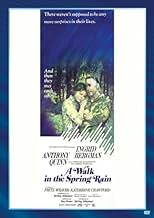
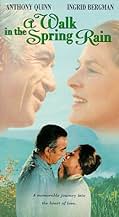
The Merediths move to an isolated farm. Mrs. Meredith and the neighbour Will Cade become friends and anticipate becoming lovers.The Merediths move to an isolated farm. Mrs. Meredith and the neighbour Will Cade become friends and anticipate becoming lovers.The Merediths move to an isolated farm. Mrs. Meredith and the neighbour Will Cade become friends and anticipate becoming lovers.
- Director
- Writers
- Stars



Tom Holland
- Boy
- (as Tom Fielding)

Michael Bullock
- One of men in fight crowd
- (uncredited)
Janet Nelson Chadwick
- Singer at Festival
- (segment "Oh Shenandoah")
- (uncredited)

- Director
- Writers
- All cast & crew
- Production, box office & more at IMDbPro
6.01K
1
2
3
4
5
6
7
8
9
10
Featured reviews
Responsibility.
The awareness of having to answer for one's actions-the film, for example, touches on parental responsibility-but does this responsibility have an expiration date, or rather, is there a point when the best interests of one's son or daughter might take precedence over one's own? The protagonist finds herself having to choose between duty and desire, a choice that is simple at 20, but much less so at nearly 60.
Writer and university professor Roger Meredith (Fritz Weaver) decides to spend a sabbatical with his wife Libby (Ingrid Bergman) in a mountain cabin, using the time to write a new book. The cabin's owner, Will Cade (Anthony Quinn), who lives next door with his wife Ann, is always available, particularly to Libby, through constant and at times insistent courtship. The two couples share a difficult relationship with their children: Ellen Meredith (Katherine Crawford) is searching for a role other than that of mother imposed on her by society, while the Cade son (Tom Holland) is a tormented spirit always seeking new challenges.
Director Guy Green, with a sober and extremely photographic style, perfectly captures Libby Meredith's emotional storm; Stirling Silliuphant's screenplay, based on Rachel Maddux's novel, attempts to show passion in old age, but fails to convince the audience; the film's best aspect is undoubtedly the acting, with Ingrid Bergman always on point and Anthony Quinn vigorous and masculine, while Fritz Weaver's excessive coldness perhaps clashes a bit.
Best moments: mother and daughter, two generations confronting each other to assert their willingness to pursue their passions. A must-see for fans of aging love and great nature photography.
Writer and university professor Roger Meredith (Fritz Weaver) decides to spend a sabbatical with his wife Libby (Ingrid Bergman) in a mountain cabin, using the time to write a new book. The cabin's owner, Will Cade (Anthony Quinn), who lives next door with his wife Ann, is always available, particularly to Libby, through constant and at times insistent courtship. The two couples share a difficult relationship with their children: Ellen Meredith (Katherine Crawford) is searching for a role other than that of mother imposed on her by society, while the Cade son (Tom Holland) is a tormented spirit always seeking new challenges.
Director Guy Green, with a sober and extremely photographic style, perfectly captures Libby Meredith's emotional storm; Stirling Silliuphant's screenplay, based on Rachel Maddux's novel, attempts to show passion in old age, but fails to convince the audience; the film's best aspect is undoubtedly the acting, with Ingrid Bergman always on point and Anthony Quinn vigorous and masculine, while Fritz Weaver's excessive coldness perhaps clashes a bit.
Best moments: mother and daughter, two generations confronting each other to assert their willingness to pursue their passions. A must-see for fans of aging love and great nature photography.
Two seemingly mismatched couples
This is a bittersweet tale of two people from different worlds who fall in love and are unhappily married to others. Ingrid Bergman and Anthony Quinn make this story poignant, well-acted and believable.
It's love at first sight for Quinn as he comes out the box, swinging and pitching in his attraction for her. Honestly, it's just a little unsettling him always popping up, being a corn-pone chatterbox, subtly moving in with the compliments and lingering looks. He comes out the gate heated; but who can blame him. It's Ingrid Bergman he's fancying. And she slowly simmers as her attraction grows for the Tennessee mountain man Quinn plays. She's the wife of a University professor ( Fritz Weaver. ) Nice guy, good provider, but you know the type: he's no ogre, but he's staid, pedantic, and definitely not romantic. As she is throughout her career in films, Bergman is the one to watch. Her characters are so full of life if only allowed to break free.
You know how unfair, biased, skewed and stark movies present choices when they pit Marriage vs the Love Affair. We've seen it time and time again ( "The Arnelo Affair", "There's Always Tomorrow", etc. ) Well this movie is no different. Quinn's wife (played by Virginia Gregg ) is as drab and as sexless as Bergman is glamorous and sensual. It's difficult to conjure up why there was even an attraction between them ( Quinn & Gregg ) in the first place. Fritz Weaver's character fares no better. Apparently he doesn't realize what we all know very well from watching movies; when a spouse says: "let's go away, just the two of us" your marriage is on the rocks. Yet Weaver is clueless. Him throwing up their age as a deterrent to living more spontaneously is also a fly in the liniment.
The movie throws in an unnecessary monkey wrench with the issues of the son and daughter of Quinn's and Bergman's in order to create conflict. I do like how Bergman stands up to her daughter in order to try and get some piece of happiness and joy out of life instead of maternal duty. No, we didn't need the kids in this to get conflict. The story should have stayed focused on how Bergman and Quinn handle their situation.
It's love at first sight for Quinn as he comes out the box, swinging and pitching in his attraction for her. Honestly, it's just a little unsettling him always popping up, being a corn-pone chatterbox, subtly moving in with the compliments and lingering looks. He comes out the gate heated; but who can blame him. It's Ingrid Bergman he's fancying. And she slowly simmers as her attraction grows for the Tennessee mountain man Quinn plays. She's the wife of a University professor ( Fritz Weaver. ) Nice guy, good provider, but you know the type: he's no ogre, but he's staid, pedantic, and definitely not romantic. As she is throughout her career in films, Bergman is the one to watch. Her characters are so full of life if only allowed to break free.
You know how unfair, biased, skewed and stark movies present choices when they pit Marriage vs the Love Affair. We've seen it time and time again ( "The Arnelo Affair", "There's Always Tomorrow", etc. ) Well this movie is no different. Quinn's wife (played by Virginia Gregg ) is as drab and as sexless as Bergman is glamorous and sensual. It's difficult to conjure up why there was even an attraction between them ( Quinn & Gregg ) in the first place. Fritz Weaver's character fares no better. Apparently he doesn't realize what we all know very well from watching movies; when a spouse says: "let's go away, just the two of us" your marriage is on the rocks. Yet Weaver is clueless. Him throwing up their age as a deterrent to living more spontaneously is also a fly in the liniment.
The movie throws in an unnecessary monkey wrench with the issues of the son and daughter of Quinn's and Bergman's in order to create conflict. I do like how Bergman stands up to her daughter in order to try and get some piece of happiness and joy out of life instead of maternal duty. No, we didn't need the kids in this to get conflict. The story should have stayed focused on how Bergman and Quinn handle their situation.
Anthony Quinn as a Tennessee mountain man?
First review above slams the people of the hills of Tennessee, assuming that they are backward, in-bred people. It's too late now, but I would have objected strenuously to that misguided garbage. The reviewer probably never met a real hillbilly, and no, "Deliverance" is not about real people, it's a fictional account invented in Hollywood. Please, you idiots, stop slamming mountain people. You don't even know any.
The problem I see with the movie is casting Anthony Quinn as a mountain man. I never saw any backgrounder that said he was an immigrant from Italy, Greece, or Mexico who moved to the mountains. With the character name they gave him, I assume they were seriously trying to palm Anthony off as a Tennessean. I did notice that they never actually showed his lips moving when he was delivering his lines: Anthony's accent wasn't identifiable as such, but it certainly wasn't TN mountains. I may well be missing something. But, one thing I'm not missing is the outright prejudice, and even hate, I see for the people of the mountains. Shame!
The problem I see with the movie is casting Anthony Quinn as a mountain man. I never saw any backgrounder that said he was an immigrant from Italy, Greece, or Mexico who moved to the mountains. With the character name they gave him, I assume they were seriously trying to palm Anthony off as a Tennessean. I did notice that they never actually showed his lips moving when he was delivering his lines: Anthony's accent wasn't identifiable as such, but it certainly wasn't TN mountains. I may well be missing something. But, one thing I'm not missing is the outright prejudice, and even hate, I see for the people of the mountains. Shame!
Bergman and Quinn
Libby Meredith (Ingrid Bergman) is the dutiful wife of college professor Roger Meredith. They are traditional and do not approve of their daughter's personal pursuit away from her family obligations. Roger is on sabbatical writing a book. The couple leaves New York City for the country where Libby finds flirtatious neighbor Will Cade (Anthony Quinn).
There is a promise of an epic romance. It has the great pairing of Bergman and Quinn. It should be incredible. Libby as a conservative matriarch is set up to join the sexual revolution. I like the conflict between mother and daughter. I don't buy Anthony Quinn as an American, let alone a southerner. This should be a battle for Libby's heart and mind by the two men. There is a sudden twist that short-circuits the confrontation. In short, I don't like the twist which comes out of nowhere. Otherwise, the two leads and the premise provide interesting viewing.
There is a promise of an epic romance. It has the great pairing of Bergman and Quinn. It should be incredible. Libby as a conservative matriarch is set up to join the sexual revolution. I like the conflict between mother and daughter. I don't buy Anthony Quinn as an American, let alone a southerner. This should be a battle for Libby's heart and mind by the two men. There is a sudden twist that short-circuits the confrontation. In short, I don't like the twist which comes out of nowhere. Otherwise, the two leads and the premise provide interesting viewing.
Three divergent accents adrift in the Smoky Mountains...
Admirers of classic films will no doubt enjoy seeing Anthony Quinn reunited with Ingrid Bergman, his co-star from 1964's "The Visit"; they're an interesting screen match, but here, in 1970, with handyman Quinn talking in a southern drawl and matronly Bergman playing a professor's wife living on a farm in Tennessee, one cannot help but feel a sense of central dislocation. Bergman's husband (American actor Fritz Weaver) takes a year off from teaching to write a textbook, but instead stares at his typewriter, pipe firmly stuck between his teeth (his wife isn't frigid, but he is). It's no wonder then that Bergman enjoys Quinn's advances, but since they're both married--and have problems with their selfish children besides--it's hardly a December-age romance. Dreary melodrama, adapted from the book by Rachel Maddux, with clumsy exposition and even clumsier attempts to modernize an old formula. Charles Lang's cinematography is a visually jarring mix of location shots, back projection and ugly sets, while miscast Quinn is overly-friendly and solicitous (he makes the audience as uncomfortable as Ingrid's chilly spouse). While it's good to see the two stars together again, this Smoky Mountains scenario is a drag: colorlessly staged, poorly-conceived, predictable and depressing. ** from ****


Did you know
- GoofsThe daughter's position at the kitchen table when Ingrid Bergman hits the cup and saucer with her hand.
- Quotes
Ellen Meredith: Why is it that if a woman wants to accomplish something, even her own parents consider her aggressive, unhappy or neurotic?
Roger Meredith: Because it's usually true.
- ConnectionsFeatured in The Hollywood Collection: Anthony Quinn an Original (1990)
- SoundtracksTitle song
("A Walk in the Spring Rain")
by Elmer Bernstein and Don Black
Title song sung by Michael Dees
- How long is A Walk in the Spring Rain?Powered by Alexa
Details
- Release date
- Country of origin
- Language
- Also known as
- Setnja po prolecnoj kisi
- Filming locations
- Production company
- See more company credits at IMDbPro
Box office
- Gross worldwide
- $52
- Runtime
- 1h 38m(98 min)
- Sound mix
- Aspect ratio
- 2.35 : 1
Contribute to this page
Suggest an edit or add missing content