IMDb RATING
6.5/10
1.6K
YOUR RATING

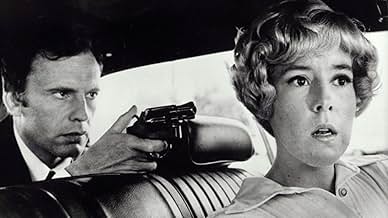
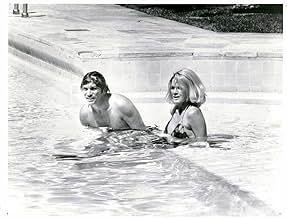
After fulfilling a contract killing in Los Angeles, a French hit man becomes the target of a hit himself and tries to flee back to Paris.After fulfilling a contract killing in Los Angeles, a French hit man becomes the target of a hit himself and tries to flee back to Paris.After fulfilling a contract killing in Los Angeles, a French hit man becomes the target of a hit himself and tries to flee back to Paris.
- Director
- Writers
- Stars


Ed Greenberg
- Hitchhiker
- (as Edward Greenberg)

Jackie Earle Haley
- Eric
- (as Jackie Haley)


- Director
- Writers
- All cast & crew
- Production, box office & more at IMDbPro
6.51.5K
1
2
3
4
5
6
7
8
9
10
Featured reviews
Intriguing plot hitman vs. hitman ..........
A French hitman, Jean Louis Trintigant, is hired to kill a Los Angeles mobster. After carrying out his assignment, the Frenchman becomes the hunted, with Detroit hitman, Roy Scheider relentlessly in pursuit. The cast is very game, and includes Ann Margaret, Angie Dickinson, Alex Rocco, and Talia Shire in a small role. Eventually things start to crystalize as to the "why", and the Frenchman begins to turn the tables. Jean Louis Trintigant takes some getting used to as the sort of anti hero. His performance is extremely low key, which tends to cause the story to lose momentum at times. Nevertheless, the unpredictable script, superb Los Angeles photography, and skilled acting keeps "The Outside Man" interesting. - MERK
A worthy viewing.
French star Jean-Louis Trintignant ("The Great Silence") plays Lucien Bellon, a French hitman who comes to L. A. to assassinate American mobster Victor (Ted de Corsia, "The Killing"). But soon Lucien is dodging attempts on his *own* life, thanks to a *relentless* - if not that competent - American hitman, Lenny (Roy Scheider, "The French Connection"). The only help that Lucien really gets is from Nancy Robson (Ann-Margret, "Carnal Knowledge"), the boss at a topless bar.
Directed with a true European sensibility by Jacques Deray ("He Died with His Eyes Open"), "The Outside Man" a.k.a. "Un Homme Est Mort" is good fun for lovers of crime fiction. Deray makes it a hard-to-resist combination of an offbeat approach, some very amusing doses of comedy, interesting choices (the final gunfight takes place in a funeral home, where Victor has been embalmed in a sitting position), a fairly relaxed tone most of the time, and an unhurried pace. The funky score by Michel Legrand is a delight, as is the use of various L. A. locations.
Trintignant is very good in the lead, playing this "outsider" who's lost amidst Southern California culture of the period. Ann-Margret, looking very sexy in low-cut dresses, is enticing as his reluctant associate. Scheider is a hoot as the determined rival hitman. Georgia Engel ('The Mary Tyler Moore Show') is hilarious as a ditzy housewife. The eclectic supporting cast also includes the wonderful Angie Dickinson ("Big Bad Mama"), Felice Orlandi ("The Driver"), Carlo De Mejo ("The House by the Cemetery"), Michel Constantin ("Le Deuxieme Souffle"), Umberto Orsini ("Goodbye Emmanuelle"), Carmen Argenziano ("The Accused"), John Hillerman ("Blazing Saddles"), Jon Korkes ("Catch-22"), Playboy Playmate Connie Kreski ("The Black Bird"), Ben Piazza ("The Candy Snatchers"), Alex Rocco and Talia Shire from "The Godfather", and a very young Jackie Earle Haley ("Watchmen"), making his film debut.
Overall, this made for very agreeable entertainment; I didn't even really have a problem with the way it ended, although others may certainly feel differently.
Seven out of 10.
Directed with a true European sensibility by Jacques Deray ("He Died with His Eyes Open"), "The Outside Man" a.k.a. "Un Homme Est Mort" is good fun for lovers of crime fiction. Deray makes it a hard-to-resist combination of an offbeat approach, some very amusing doses of comedy, interesting choices (the final gunfight takes place in a funeral home, where Victor has been embalmed in a sitting position), a fairly relaxed tone most of the time, and an unhurried pace. The funky score by Michel Legrand is a delight, as is the use of various L. A. locations.
Trintignant is very good in the lead, playing this "outsider" who's lost amidst Southern California culture of the period. Ann-Margret, looking very sexy in low-cut dresses, is enticing as his reluctant associate. Scheider is a hoot as the determined rival hitman. Georgia Engel ('The Mary Tyler Moore Show') is hilarious as a ditzy housewife. The eclectic supporting cast also includes the wonderful Angie Dickinson ("Big Bad Mama"), Felice Orlandi ("The Driver"), Carlo De Mejo ("The House by the Cemetery"), Michel Constantin ("Le Deuxieme Souffle"), Umberto Orsini ("Goodbye Emmanuelle"), Carmen Argenziano ("The Accused"), John Hillerman ("Blazing Saddles"), Jon Korkes ("Catch-22"), Playboy Playmate Connie Kreski ("The Black Bird"), Ben Piazza ("The Candy Snatchers"), Alex Rocco and Talia Shire from "The Godfather", and a very young Jackie Earle Haley ("Watchmen"), making his film debut.
Overall, this made for very agreeable entertainment; I didn't even really have a problem with the way it ended, although others may certainly feel differently.
Seven out of 10.
Film noir in Los Angeles
Being a native of Los Angeles, it's great a treat to see a overview of the city in 1973 supposedly from the plane to brings Trintignant. There are shots of "The Classic Cat", a club that no longer exists on Sunset Blvd. The chase scene filmed in Venice, CA, are also places that no longer exist as most of the development was still under construction. The music score is by Michel Legrand, whose "Umbrellas in Chernburg" is classic, here a little jarring, maybe intentional. Trintignant plays a hit man from France, who does commit cold blooded murder, so he's a bad guy. Roy Schneider, pre-Jaws, plays an even more gum chewing, sadistic killer after Trintignant.
Ann Magret, at this time, was having a difficult time having just recently lost her father in real life. She plays her part well, but it is unclear why her charactor would go out on a limb for Jean-Louis T., as his charactor treats her with sheer indifference. Angie Dickerson is a 70's babe that gives A.M. competition in the eye candy department.
The shoot out scene at the end of the movieis quite weird, the corpse in the funeral parlor displayed in a sitting position with cigar in hand and Trintigant's cohort being dragged by a hearse through the graveyard.
A 3 out of 5.
Ann Magret, at this time, was having a difficult time having just recently lost her father in real life. She plays her part well, but it is unclear why her charactor would go out on a limb for Jean-Louis T., as his charactor treats her with sheer indifference. Angie Dickerson is a 70's babe that gives A.M. competition in the eye candy department.
The shoot out scene at the end of the movieis quite weird, the corpse in the funeral parlor displayed in a sitting position with cigar in hand and Trintigant's cohort being dragged by a hearse through the graveyard.
A 3 out of 5.
I just don't get it.
After reading the comments here I decided to go see this movie when it played at a revival house. Now that I have seen as much of "The Outside Man" as I could stomach, I'm baffled by these other responses.
What some film buffs will accept in the name of nostalgia for a "Lost LA" knows no bounds. If this movie were set in some other place, no one would ever give it his/her time. It is shot like a TV movie (I'm not entirely convinced that it was *not* a TV movie, given the number of TV actors who appear). It is very, very poorly written, acted, and directed. Shoddy, even. The dialogue is stiff, but not even stiff in a clipped, noirish way, or in a way that could provide camp value. The actors are so wooden that they often wait an extra beat and glance off camera before delivering their responses to one another. The editing is absurd.
The film boils down to a series of vignettes involving our alienated French hit-man encountering and negotiating "LA scenes"--the boring housewife, the biker gang, the jesus-freak, the 'tough' blonde hooker, etc. None of these scenes connects with any other in any significant way. They're all just slices of life in 'gritty' LA, but shot in such a fake way that there is nothing whatsoever of 'the real' about them.
Of course, I'm not really qualified to speak about the movie as a whole, because I walked out. I have now walked out of a grand total of 3 movies in my life. I felt so liberated when I left, though, that it almost made watching the first half an hour or 45 minutes worth it.
Perhaps for many people the nostalgia factor overrides these critiques. I understand nostalgia for old LA, too, but for a city that was in fact entirely different than the LA of today (such as the one portrayed in "Mildred Pierce," say). This movie, however, focuses on LA as a hip, modern city, with rivers of freeways and 6-lane boulevards swamped with traffic. How different this is from today's LA is unclear to me. Sure, one can look at this film and say, "Gee, I remember when that club was still open," or "Oh, I loved that old pier." But these feelings run entirely counter to what this film says about LA: that it doesn't care about people's sentimental attachments to particular places and things, so get out of the way or become part of the pavement.
Let's face it, post-1950 or so, LA became a city defined by rapid change, of plowing under the old so the young citizens of today can make their mark. (Of course, pockets of 'old LA' still remain, and always will; not everything can get plowed under as efficiently as late capitalism would like.) This notion of change defines LA. However, some people cling to nostalgia for a particular era, even if it runs counter to what LA was 30 years ago and is today. This is a typical American set of actions and sentiments: destroy what is in order to bring on something new; glorify this destruction and change while it's happening; regret that we have brought about this change once it has been effected; build monuments to that which we have destroyed; lovingly remember that which has passed because it seems to come from a more innocent time; rebuke ourselves for ever thinking that we should have destroyed what was; repeat.
I swear, in a few years people are going to be saying things like, "I really miss that pocked old parking lot that surrounded the Cinerama Dome."
What some film buffs will accept in the name of nostalgia for a "Lost LA" knows no bounds. If this movie were set in some other place, no one would ever give it his/her time. It is shot like a TV movie (I'm not entirely convinced that it was *not* a TV movie, given the number of TV actors who appear). It is very, very poorly written, acted, and directed. Shoddy, even. The dialogue is stiff, but not even stiff in a clipped, noirish way, or in a way that could provide camp value. The actors are so wooden that they often wait an extra beat and glance off camera before delivering their responses to one another. The editing is absurd.
The film boils down to a series of vignettes involving our alienated French hit-man encountering and negotiating "LA scenes"--the boring housewife, the biker gang, the jesus-freak, the 'tough' blonde hooker, etc. None of these scenes connects with any other in any significant way. They're all just slices of life in 'gritty' LA, but shot in such a fake way that there is nothing whatsoever of 'the real' about them.
Of course, I'm not really qualified to speak about the movie as a whole, because I walked out. I have now walked out of a grand total of 3 movies in my life. I felt so liberated when I left, though, that it almost made watching the first half an hour or 45 minutes worth it.
Perhaps for many people the nostalgia factor overrides these critiques. I understand nostalgia for old LA, too, but for a city that was in fact entirely different than the LA of today (such as the one portrayed in "Mildred Pierce," say). This movie, however, focuses on LA as a hip, modern city, with rivers of freeways and 6-lane boulevards swamped with traffic. How different this is from today's LA is unclear to me. Sure, one can look at this film and say, "Gee, I remember when that club was still open," or "Oh, I loved that old pier." But these feelings run entirely counter to what this film says about LA: that it doesn't care about people's sentimental attachments to particular places and things, so get out of the way or become part of the pavement.
Let's face it, post-1950 or so, LA became a city defined by rapid change, of plowing under the old so the young citizens of today can make their mark. (Of course, pockets of 'old LA' still remain, and always will; not everything can get plowed under as efficiently as late capitalism would like.) This notion of change defines LA. However, some people cling to nostalgia for a particular era, even if it runs counter to what LA was 30 years ago and is today. This is a typical American set of actions and sentiments: destroy what is in order to bring on something new; glorify this destruction and change while it's happening; regret that we have brought about this change once it has been effected; build monuments to that which we have destroyed; lovingly remember that which has passed because it seems to come from a more innocent time; rebuke ourselves for ever thinking that we should have destroyed what was; repeat.
I swear, in a few years people are going to be saying things like, "I really miss that pocked old parking lot that surrounded the Cinerama Dome."
The unusual funeral at Los Angeles, underrated French Polar!!
After a family tragedy, Jean-Louis Trintignant was invited by Jacques Deray to make this picture in America aiming for clear your mind aftermaths of sad happenings, actually his character wasn't a hitman properly, he just had debts on games at Paris and had to kill a great mobster at Los Angeles in exchange to be free doing this assignment, sadly after fulfilled his task another real hitman tries kill him before leaving Los Angeles.
Then came up the gorgeous Ann Margret a former owner of a burlesque night club to aid him got a passport to get back to Europe, he soon figures out that such returning won't ensure laissez-passer even in Paris, so he decides stay to settle the things chasing the mastermind that ordering his death.
It's criminally underrated by large majority at IMDB's members in so unusual French Polar, it's has enough action, chasing streets and mainly many twists on the clever plot, also to enhance the offering the producers exposing the sinful nightlife of California on those peppery burlesque environment, fantastic casting and mainly by the Ann-Margret's decollete as the whole shaped body, what a vision of heaven!!
Thanks for reading.
Resume:
First watch: 2024 / How many: 1 / Source: DVD / Rating: 8.
Then came up the gorgeous Ann Margret a former owner of a burlesque night club to aid him got a passport to get back to Europe, he soon figures out that such returning won't ensure laissez-passer even in Paris, so he decides stay to settle the things chasing the mastermind that ordering his death.
It's criminally underrated by large majority at IMDB's members in so unusual French Polar, it's has enough action, chasing streets and mainly many twists on the clever plot, also to enhance the offering the producers exposing the sinful nightlife of California on those peppery burlesque environment, fantastic casting and mainly by the Ann-Margret's decollete as the whole shaped body, what a vision of heaven!!
Thanks for reading.
Resume:
First watch: 2024 / How many: 1 / Source: DVD / Rating: 8.


Did you know
- TriviaAccording to Jackie Earle Haley, when Jean-Louis Trintignant slaps him in the face, Trintignant really slapped him hard. Two takes were filmed and Trintignant slapped for real both times.
- GoofsWhen the young cab driver is killed at home, he first receives the shot and then waits one second to be thrown on the floor, as if he hesitated to do it.
- Alternate versionsAn "X" Rated addition used for European release contains 10 additional minutes, most notably in the scene where Jean Louis Trintignant meets Ann Margret at the downtown LA nightclub. The European version contains full frontal nudity throughout the scene. This "X" rated version screened in Los Angeles at the American Cinematheque in 1998 and was mistakenly screened as the "PG" version on Showtime Networks in 2001.
- ConnectionsFeatured in Dusk to Dawn Drive-in Trash-o-Rama Show Vol. 2 (1996)
- How long is The Outside Man?Powered by Alexa
Details
- Release date
- Countries of origin
- Languages
- Also known as
- A Man Is Dead
- Filming locations
- Beverly Hilton Hotel - 9876 Wilshire Blvd., Beverly Hills, California, USA(Lucien arrives at his hotel.)
- Production companies
- See more company credits at IMDbPro
- Runtime
- 1h 44m(104 min)
- Color
- Aspect ratio
- 1.85 : 1
Contribute to this page
Suggest an edit or add missing content