
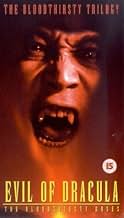
A teacher assumes a position at a school that's run by a vampire.A teacher assumes a position at a school that's run by a vampire.A teacher assumes a position at a school that's run by a vampire.
- Director
- Writers
- Stars
- Awards
- 1 nomination total
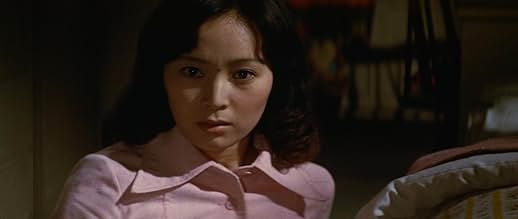
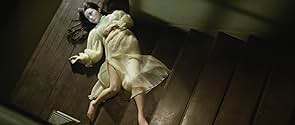


Yasuko Agawa
- Keiko Nonomiya
- (as Tomoe Mari)
- Director
- Writers
- All cast & crew
- Production, box office & more at IMDbPro
6.3988
1
2
3
4
5
6
7
8
9
10
Featured reviews
small amount of nudity here and there
Third of the trilogy of Hammer inspired Japanese 70s movies. Not quite as good as the first, this is an improvement on Lake of Dracula, with much better photography helping this become a very good looking film and adding interest to some of those middle sequences. Starts very well indeed and the finale certainly has some vigour, even if you are urging someone to construct a crucifix to bring things to a more urgent ending. Actually, total absence of use of the crucifix to save the day is presumably something to do with the Japanese not wanting to elevate the importance of such alien paraphernalia, but thats just a guess. So, bit more action here, bit more colour and a bit more sexed up too with small amount of nudity here and there.
🌑🌹 Crimson Whispers: The Enigma of "Evil of Dracula" 🌹🌑
In the secluded halls of "Chi o suu bara" (a.k.a. "Evil of Dracula"), director Michio Yamamoto conjures a uniquely Japanese vampire tale. While Dracula himself remains elusive, the film's cyanotic bloodsuckers and eerie atmosphere cast a hypnotic spell.
Professor Shiraki (Toshio Kurosawa) arrives at the Seimei School for girls, where tragedy lingers like a shadow. The principal's wife lies in the basement, her coffin awaiting the customary seven days. As students vanish, Shiraki grapples with nightmares and inexplicable encounters. The scent of roses-white, then crimson-haunts the bitten.
Toshio Kurosawa's portrayal of Shiraki balances skepticism and dread. His encounter with a vampire-dismissed as a dream-sets the stage for chaos.
Kunie Tanaka's Doctor Shimimura unravels the mystery of tiny needle marks on a fainting student. The symbolism of the white rose turning red adds an intriguing layer.
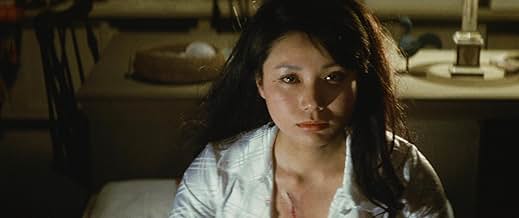
Omoe Mari's Keiko Nonomiya, the missing student, embodies vulnerability and allure. Her transformation is both tragic and seductive.
Shin Kishida commands the screen as the main bloodsucker. His savage hunger and physical power evoke primal fear.
"Evil of Dracula" dances on the edge of folklore and fever dream. Its flaws-awkward dialogue and shallow emotions-fade against the crimson backdrop. A cult gem for vampire aficionados.
🌑🌹 Sink your teeth into this Japanese nocturne-a haunting symphony of blood and longing. 🌑🌹
Professor Shiraki (Toshio Kurosawa) arrives at the Seimei School for girls, where tragedy lingers like a shadow. The principal's wife lies in the basement, her coffin awaiting the customary seven days. As students vanish, Shiraki grapples with nightmares and inexplicable encounters. The scent of roses-white, then crimson-haunts the bitten.
Toshio Kurosawa's portrayal of Shiraki balances skepticism and dread. His encounter with a vampire-dismissed as a dream-sets the stage for chaos.
Kunie Tanaka's Doctor Shimimura unravels the mystery of tiny needle marks on a fainting student. The symbolism of the white rose turning red adds an intriguing layer.
Omoe Mari's Keiko Nonomiya, the missing student, embodies vulnerability and allure. Her transformation is both tragic and seductive.
Shin Kishida commands the screen as the main bloodsucker. His savage hunger and physical power evoke primal fear.
"Evil of Dracula" dances on the edge of folklore and fever dream. Its flaws-awkward dialogue and shallow emotions-fade against the crimson backdrop. A cult gem for vampire aficionados.
🌑🌹 Sink your teeth into this Japanese nocturne-a haunting symphony of blood and longing. 🌑🌹
A Different Flavor
"Professor Shiraki" (played by Toshio Kurosawa) arrives from Tokyo to a new school for teenage girls in a small Japanese village. Upon checking in he learns that the principle's wife died a couple of days earlier and that a student named "Keiko Nonomiya" (Tomoe Mari) went missing about the same time. That night he has an encounter with a vampire that matches Keiko's description but dismisses the incident as nothing more than a dream. Not long afterward another student named "Kyoko Hayashi" (Keiko Aramaki) faints in his classroom and is taken to the school's doctor, "Doctor Shimimura" (Kunie Tanaka). During Kyoko's examination two small "needle pricks" are discovered but neither Professor Shiraki nor Doctor Shimimura are able to figure out their significance. Since she appears to be tired, they send her back to her dorm room to recover with her two roommates, "Yukiko Mitamura" (Mio Ohta) and "Kumi" (Mariko Mochizuki) promising to take care of her. All hell breaks loose after that. Anyway, having outlined the first part of the story, I'll stop here so I won't spoil everything for any viewers who wish to see the rest. Now, although this is a "standard" vampire story, the fact that it is entirely Japanese results in a few curious details. For example, a white rose is seen by the bedside of each of the females who have been bitten. Once they drink blood the rose turns red. I thought that was an interesting touch. Having said that though, I thought there were a couple of faults as well. First, the dialogue was awful. But the movie I saw was originally in Japanese and dubbed in English and it is quite possible that much had been simplified or even lost in translation. Likewise, the acting was also quite bad. Even so, this film had a different flavor than most other vampire movies and I thought some of it was actually quite good. Obviously, there will be people who might not like this film. Like I said, it has its flaws. But I think fans of this genre might be pleasantly surprised.
Uneven but entertaining, and pretty well made
Swell filming locations and set design are rounded out with fine detail of decorative elements, giving some great imagery to serve as the setting. Even in building a sense of mystery, the writing is rather direct, and at times a bit over the top, and in this instance composer Riichiro Manabe's score echoes that slant. Still, 'Evil of Dracula' also carries a minor sense of atmosphere that's gratifying, and growing suspense. Though broadly declining genuine fright or thrills, this is pretty entertaining throughout.
The cast do well to embody their roles, embracing every shift in demeanor and doing a fine job of bringing their characters to life. That said, I'm not sure that the screenplay provides a lot of room to explore parts freely; suitable as they are, performances feel relatively straightforward and scripted. Of anyone on hand, Shin Kishida is most notable in his part as the principal - here leaning much further into an exaggerated, overt portrayal of a very particular creature of the night, alternately echoing classic interpretations, and straight-up chewing scenery.
Somewhat unremarkable overall, there's nonetheless some fun cleverness to the narrative that differs from other vampire flicks. Though maintaining the air of the slightly overdone approach, the climax is especially well done, producing the most substantial excitement of the film. It seems quite certain that this is where the most energy and resources were devoted as great care is given to the choreography, stunts, and special effects.
Smart as some plot points are, 'Evil of Dracula' doesn't wholly stand out among the wealth of other vampire movies in the world. Of the trio of features Toho produced in the early 70s, this strikes me as being in the middle of the pack: more carefully considered than the often middling 'Vampire doll,' but also definitely less sharp and stimulating than the superb 'Lake of Dracula.' That said, this is most assuredly far from a bad movie - just not the utter cream of the crop, either.
There's little about this picture that impresses outright, and for whatever it does well, the level of enjoyment to be had doesn't mark this as a film to proverbially write home about. But it's consistent and crafted well, with a measure of greater intelligence around the edges. 'Evil of Dracula' isn't absolutely essential, but it's capably entertaining, and worth watching should you come across it.
The cast do well to embody their roles, embracing every shift in demeanor and doing a fine job of bringing their characters to life. That said, I'm not sure that the screenplay provides a lot of room to explore parts freely; suitable as they are, performances feel relatively straightforward and scripted. Of anyone on hand, Shin Kishida is most notable in his part as the principal - here leaning much further into an exaggerated, overt portrayal of a very particular creature of the night, alternately echoing classic interpretations, and straight-up chewing scenery.
Somewhat unremarkable overall, there's nonetheless some fun cleverness to the narrative that differs from other vampire flicks. Though maintaining the air of the slightly overdone approach, the climax is especially well done, producing the most substantial excitement of the film. It seems quite certain that this is where the most energy and resources were devoted as great care is given to the choreography, stunts, and special effects.
Smart as some plot points are, 'Evil of Dracula' doesn't wholly stand out among the wealth of other vampire movies in the world. Of the trio of features Toho produced in the early 70s, this strikes me as being in the middle of the pack: more carefully considered than the often middling 'Vampire doll,' but also definitely less sharp and stimulating than the superb 'Lake of Dracula.' That said, this is most assuredly far from a bad movie - just not the utter cream of the crop, either.
There's little about this picture that impresses outright, and for whatever it does well, the level of enjoyment to be had doesn't mark this as a film to proverbially write home about. But it's consistent and crafted well, with a measure of greater intelligence around the edges. 'Evil of Dracula' isn't absolutely essential, but it's capably entertaining, and worth watching should you come across it.
🌌🏯🌹 A Vampire Tale with a Twist: A Retro Review 🌹🌌🏯
The 1974 Japanese horror film "Chi o suu bara," or "The Evil of Dracula" in the West, is an intriguing entry into the vampire genre. With a unique blend of influences and a distinct style, this film is an oddball yet entertaining addition to the vampire canon.
"Chi o suu bara" is the final installment of Toho's 'Bloodthirsty Trilogy,' directed by Michio Yamamoto, and it certainly has a flavor all its own. The film draws heavily on the Hammer Horror vibe, with a touch of Italian flair and even a hint of Godzilla-esque monster movie thrown in for good measure. This eclectic mix of influences gives the film a unique tone and style that sets it apart from its contemporaries.
The story follows the classic battle between good and evil, with Shiraki and Kumi facing off against Dracula and his undead minions. While the plot is somewhat predictable, the film has a certain charm and offers some fun, gruesome special effects. The ending, in particular, is abrupt yet satisfying, delivering on the vampire action that audiences crave.
One of the most memorable aspects of the film is its aesthetic. With a mix of wide-screen presentation and Eastern trimmings, the film has a retro 70s cheese factor that is hard to resist. The lead villain, Dracula, sports an unusual Ralph Bates-inspired bouffant hairstyle, adding a touch of humor to the horror.
The cast, including Toshio Kurosawa, Kunie Tanaka, and Katshuhiko Sasaki, deliver solid performances, though it is the unique blend of genres and the film's overall strangeness that truly shine. This film will appeal to those who enjoy weird and wonderful genre pieces that embrace their oddities.
While it may not be the scariest entry into the horror genre, "Chi o suu bara" is an enjoyable watch and a refreshing take on vampire lore. It embraces its B-movie status with gusto and provides a unique cultural twist on a familiar tale.
For fans of vampires and retro horror, this film is worth a watch, if only to experience a different take on a familiar legend. While it may not be a masterpiece, "Chi o suu bara" is an entertaining and memorable addition to the world of Dracula.
"Chi o suu bara" is the final installment of Toho's 'Bloodthirsty Trilogy,' directed by Michio Yamamoto, and it certainly has a flavor all its own. The film draws heavily on the Hammer Horror vibe, with a touch of Italian flair and even a hint of Godzilla-esque monster movie thrown in for good measure. This eclectic mix of influences gives the film a unique tone and style that sets it apart from its contemporaries.
The story follows the classic battle between good and evil, with Shiraki and Kumi facing off against Dracula and his undead minions. While the plot is somewhat predictable, the film has a certain charm and offers some fun, gruesome special effects. The ending, in particular, is abrupt yet satisfying, delivering on the vampire action that audiences crave.
One of the most memorable aspects of the film is its aesthetic. With a mix of wide-screen presentation and Eastern trimmings, the film has a retro 70s cheese factor that is hard to resist. The lead villain, Dracula, sports an unusual Ralph Bates-inspired bouffant hairstyle, adding a touch of humor to the horror.
The cast, including Toshio Kurosawa, Kunie Tanaka, and Katshuhiko Sasaki, deliver solid performances, though it is the unique blend of genres and the film's overall strangeness that truly shine. This film will appeal to those who enjoy weird and wonderful genre pieces that embrace their oddities.
While it may not be the scariest entry into the horror genre, "Chi o suu bara" is an enjoyable watch and a refreshing take on vampire lore. It embraces its B-movie status with gusto and provides a unique cultural twist on a familiar tale.
For fans of vampires and retro horror, this film is worth a watch, if only to experience a different take on a familiar legend. While it may not be a masterpiece, "Chi o suu bara" is an entertaining and memorable addition to the world of Dracula.


Did you know
- TriviaWhile Shin Kishida once again portrays a vampire, his character is not meant to be the same as the previous film, since this film is a new story.
- ConnectionsFollows The Vampire Doll (1970)
- How long is Evil of Dracula?Powered by Alexa
Details
- Release date
- Country of origin
- Language
- Also known as
- La maldición de Drácula
- Production companies
- See more company credits at IMDbPro
Contribute to this page
Suggest an edit or add missing content