

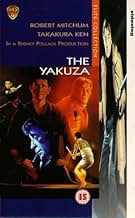
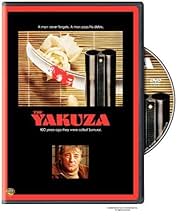
American private-eye Harry Kilmer returns to Japan to rescue a friend's kidnapped daughter from the clutches of the Yakuza.American private-eye Harry Kilmer returns to Japan to rescue a friend's kidnapped daughter from the clutches of the Yakuza.American private-eye Harry Kilmer returns to Japan to rescue a friend's kidnapped daughter from the clutches of the Yakuza.
- Director
- Writers
- Stars



Ken Takakura
- Ken Tanaka
- (as Takakura Ken)

Eiji Okada
- Toshiro Tono
- (as Okada Eiji)


Keiko Kishi
- Eiko Tanaka
- (as Kishi Keiko)


Kyôsuke Machida
- Jiro Kato
- (as Kyosuke Machida)


Eiji Gô
- Shiro 'Spider' Tanaka
- (as Go Eiji)
- Director
- Writers
- All cast & crew
- Production, box office & more at IMDbPro
7.211.3K
1
2
3
4
5
6
7
8
9
10
Featured reviews
"I have destroyed his past, and his future"
One of the best West-meets-East films made. Great dialogues, very realistic fighting scenes, even though this film has been made so long ago, without any CGI tricks at all, yet the sword fights still look really great. But in my opinion the story, which may be shortly described with one of the sentences spoken by Harry Kilmer (Robert Mitchum) at the end of this film: "I have destroyed his past, and his future" - perhaps the story is what it makes this film so unique and timeless. Outstanding performance by Ken Takakura ("Ken Tanaka")! If you haven't seen it yet - get it now! And why do I say "get it" instead of "rent it"? Because unfortunately VHS version available in US is more than 10 minutes shorter, and European VHS versions have even more *vital to the plot* cuts! (More info here: http://www.us.imdb.com/title/tt0073918/alternateversions
or if it doesn't work try the link under "Alternate versions"). Please: don't waste your time on those! I swear these edited versions must have been edited either by some blind and deaf personae, or a child who didn't understood plot at all! Currently the only good, somewhat true to the original theatrical print (just slightly more than 3 minutes shorter), are the 2hr long versions available on the not-so-legal (and not too good quality-wise) VCDs released in Hong Kong and Asia.
I rated this film very high - and I am not any big sword-actioneers fan, but nor is this movie any kind of sword fighting flicks. Its just a great story that is told (or actually shown) very well, and it deserves full 10/10.
or if it doesn't work try the link under "Alternate versions"). Please: don't waste your time on those! I swear these edited versions must have been edited either by some blind and deaf personae, or a child who didn't understood plot at all! Currently the only good, somewhat true to the original theatrical print (just slightly more than 3 minutes shorter), are the 2hr long versions available on the not-so-legal (and not too good quality-wise) VCDs released in Hong Kong and Asia.
I rated this film very high - and I am not any big sword-actioneers fan, but nor is this movie any kind of sword fighting flicks. Its just a great story that is told (or actually shown) very well, and it deserves full 10/10.
Powerful and melancholy
A neglected classic of 70s film-making, this is perhaps the most "Japanese" movie ever made by a non-Japanese. The story is rich and multi-layered, featuring not one but two sets of star-crossed lovers in a brilliant and melancholy examination of contrasting themes of memory, secrets and betrayal, friendship, honor and obligation. The script is both literate and intricate; the characters' motives are almost always obscure until another layer of deception is stripped away.
Only Robert Mitchum could have done justice to the role of Harry Kilmer, a retired detective returning to Japan for the first time in many years to rescue his old Army friend Tanner's daughter, who has been kidnapped by the Yakuza in a dispute over a debt Tanner owes them. When Kilmer arrives in Japan, he seeks out Ken, the brother of his ex-lover Eiko (played by the astoundingly lovely and talented Kishi Keiko). Ken is a lone wolf, an ex-Yakuza who now runs a martial arts school, and though there is obviously no love lost between the two, Kilmer knows Ken carries an obligation to him for rescuing Eiko and her infant daughter in the early days of the Occupation.
Kilmer is still bitter about the past, deeply wounded by his love for Eiko, who would not marry him even though she loves him deeply. This was the reason why he left Japan and never meant to return.
Now, with Ken's reluctant help, he rescues Tanner's daughter, but this only leads to an intensifying spiral of tragic consequences, because nothing is quite what it seems. Only when Kilmer begins to understand the truth of the situation is he able to act constructively.
Everyone in this film, from Brian Keith to Herb Edelman to Richard Jordan (in one of his first starring roles) turns in a first-rate performance. James Shigeta and Christina Kobuko also deserve honorable mention. But it is Mitchum and Takakura Ken who make this movie.
This is not an action film in the sense of later -- and far inferior -- efforts like "The Challenge" and "Black Rain", though there are scenes of intense and graphic violence. Nor does it have a happy ending, although some of the characters do ultimately find redemption and a hope of reconciliation.
"The Yakuza" is a work that deserves a much larger audience, one which will totally engage a thoughtful viewer with its universal themes worked out against the background of a very different culture, with its own mindset and traditions. I give it my highest recommendation.
Only Robert Mitchum could have done justice to the role of Harry Kilmer, a retired detective returning to Japan for the first time in many years to rescue his old Army friend Tanner's daughter, who has been kidnapped by the Yakuza in a dispute over a debt Tanner owes them. When Kilmer arrives in Japan, he seeks out Ken, the brother of his ex-lover Eiko (played by the astoundingly lovely and talented Kishi Keiko). Ken is a lone wolf, an ex-Yakuza who now runs a martial arts school, and though there is obviously no love lost between the two, Kilmer knows Ken carries an obligation to him for rescuing Eiko and her infant daughter in the early days of the Occupation.
Kilmer is still bitter about the past, deeply wounded by his love for Eiko, who would not marry him even though she loves him deeply. This was the reason why he left Japan and never meant to return.
Now, with Ken's reluctant help, he rescues Tanner's daughter, but this only leads to an intensifying spiral of tragic consequences, because nothing is quite what it seems. Only when Kilmer begins to understand the truth of the situation is he able to act constructively.
Everyone in this film, from Brian Keith to Herb Edelman to Richard Jordan (in one of his first starring roles) turns in a first-rate performance. James Shigeta and Christina Kobuko also deserve honorable mention. But it is Mitchum and Takakura Ken who make this movie.
This is not an action film in the sense of later -- and far inferior -- efforts like "The Challenge" and "Black Rain", though there are scenes of intense and graphic violence. Nor does it have a happy ending, although some of the characters do ultimately find redemption and a hope of reconciliation.
"The Yakuza" is a work that deserves a much larger audience, one which will totally engage a thoughtful viewer with its universal themes worked out against the background of a very different culture, with its own mindset and traditions. I give it my highest recommendation.
so good I can't believe that not only had I not seen it but not even heard of it
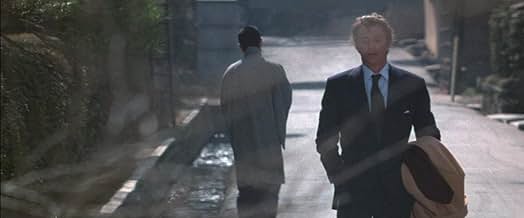
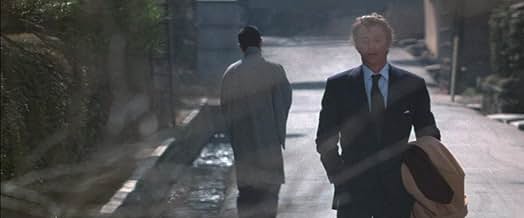
This is just so good I can't believe that not only had I not seen it but not even heard of it. Screenplay by Paul Schrader (and his brother) just before he did Taxi Driver should have drawn attention but then maybe the Scorsese film took all the attention. Sydney Pollack's direction is assured and he gets great performances from everyone, but I reckon it is the script thats the thing. Moreover it is the only US film I have ever seen that seems to have the vaguest notion of Japan and it culture. So much of this rings true that it tingles with the excitement. The 70s streets of Tokyo and Kyoto are something to behold and the believable interaction between the main characters quite fabulous. There is bloody action here but for a film with such a title nothing like as much as expected, and all the better for it. Love, memory, betrayal, loyalty and repayment of debts both financial and emotional are all here - oh and Robert Mitchum and ken Takakura are great.
The best East-meets-West movie you can see
Superb East-meets-West movie, I suspect largely due to Schrader's insight. Takakura Ken's performance really steals the show, though all actors are more than capable; Mitchum gives a great performance again. Not a martial arts movie, but contains a katana showdown that I can watch over and over again without finding fault [more believable than anything you'll see in 'Kill Bill'].
The story is gorgeously convoluted, keeping it's secrets to the very end, in a fitting Japanese manner. Action scenes are relatively restrained, and the story tells how Mitchum's character finally comes to understand Takakura Ken's character, and his apparently icy antagonism. When can we see a DVD copy?!
The story is gorgeously convoluted, keeping it's secrets to the very end, in a fitting Japanese manner. Action scenes are relatively restrained, and the story tells how Mitchum's character finally comes to understand Takakura Ken's character, and his apparently icy antagonism. When can we see a DVD copy?!
A must see for Japanophiles
Not only is this a good 70's gangster/action flick, it is also one of the few movies about Japan ever produced in the States that does not make too many mistakes about Japanese culture.
Ken Takakura puts in a great performance which is no surprise since he first became famous in Japan for acting in yakuza (gangster) movies.
Anyone who has ever tried to understand or explain the concept of "giri" should see this movie!
Ken Takakura puts in a great performance which is no surprise since he first became famous in Japan for acting in yakuza (gangster) movies.
Anyone who has ever tried to understand or explain the concept of "giri" should see this movie!


Did you know
- TriviaMartin Scorsese wanted to direct after Mean Streets (1973), but the producers wanted Sydney Pollack. Scorsese is on record that he would very much have liked to direct the film and was disappointed that he was passed over. However, he got to direct Alice Doesn't Live Here Anymore (1974) instead after being sought out by Ellen Burstyn. "Alice" ended up making more than 20 times its budget and won Burstyn an academy award, while this film became a box office bomb.
- GoofsThe plane that Kilmer is boarding at the end is a Boeing 707; the one shown taking off in the last scene is a 727.
- Alternate versionsFor the Spanish Castilian version all the dialogues were dubbed to Spanish, even the Japanese lines.
- ConnectionsFeatured in ...Promises to Keep (1974)
- How long is The Yakuza?Powered by Alexa
Details
Box office
- Budget
- $5,000,000 (estimated)
- Runtime
- 1h 52m(112 min)
- Sound mix
- Aspect ratio
- 2.39 : 1
Contribute to this page
Suggest an edit or add missing content