IMDb RATING
6.6/10
1.5K
YOUR RATING
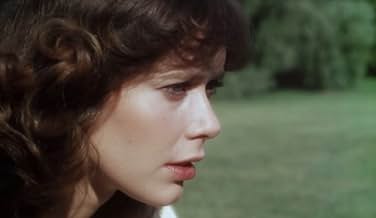
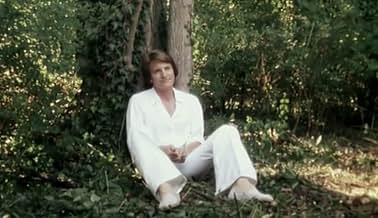
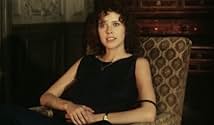
Alice leaves husband, car breaks down, spends night at manor. Next day car fixed but owners missing, she's trapped in walled estate, increasingly worried by strange discoveries.Alice leaves husband, car breaks down, spends night at manor. Next day car fixed but owners missing, she's trapped in walled estate, increasingly worried by strange discoveries.Alice leaves husband, car breaks down, spends night at manor. Next day car fixed but owners missing, she's trapped in walled estate, increasingly worried by strange discoveries.
- Director
- Writers
- Stars
- Awards
- 1 nomination total
Jean Le Boulbar
- Le Premier Homme
- (as Jean le Boulbar)
- Director
- Writers
- All cast & crew
- Production, box office & more at IMDbPro
6.61.4K
1
2
3
4
5
6
7
8
9
10
Featured reviews
A psychologically disturbing film which compels us to think about life after death...
Surprising movie! A twist in the end! I like such movies, when the viewer is fooled ...when what we thought we understood is overturned! Reminds me of something from 'The Sixth Sense'. Do you agree? I didn't like the the acting of Silvia Kristel in a few sequences, as she seemed to be making some effort to speak. In the first shots with her husband, she acted strangely as she didn't seem distressed at all when announcing the latter that she would leave him. There was no visible stress on her face and she appeared relaxed when communicating her departure. The husband also acted strangely when he told her to stay one more night and to leave tomorrow morning! No one would have realistically said that! didn't like a few shots as well...For instance, some night shots in the beginning were not properly lit. But, it remains a movie with a great script, with minimal dialog, with each shot compelling us to ask...'what will happen next?'. The characters were all weird - and later we can deduce why...
Has nothing to do with the Lewis Carrol story, but good enough.
The Disney cartoon is one of my favorite movies and while looking into other adaptations of the story I stumbled across this.
The beginning of the movie feels cliche and it drags a little. When she gets to Wonder/Horrorland the movie began to pull me in. The eerie infinite looping Mansion, with freaky characters and bizarre happenstances work well to build an unpredictable world that you alongside Alice get stuck in. Towards the end of the movie, keeping it spoiler free, Alice made a decision that I really don't understand. And the conclusion is something I had seen before in a Twilight Zone episode.
As an adaptation of Alice In Wonderland/Looking-Glass it's a flop. There is no Wonderland. None of the characters are there. The story is original. It's not complete non-sense. It's adult oriented. And aside from a couple of vague novel references it has nothing to do with Carrol's Story.
As a stand alone I think it's a hidden gem. With dozens of movie renditions, Alice doesn't always need to be true to the book. This movie has a great atmosphere, and in its own right a good sense of world building. Sure it's flawed and is clearly put together with time constraints and a low budget. But I do think it's worth checking out, and it's among the better horror movies that I have seen.
The beginning of the movie feels cliche and it drags a little. When she gets to Wonder/Horrorland the movie began to pull me in. The eerie infinite looping Mansion, with freaky characters and bizarre happenstances work well to build an unpredictable world that you alongside Alice get stuck in. Towards the end of the movie, keeping it spoiler free, Alice made a decision that I really don't understand. And the conclusion is something I had seen before in a Twilight Zone episode.
As an adaptation of Alice In Wonderland/Looking-Glass it's a flop. There is no Wonderland. None of the characters are there. The story is original. It's not complete non-sense. It's adult oriented. And aside from a couple of vague novel references it has nothing to do with Carrol's Story.
As a stand alone I think it's a hidden gem. With dozens of movie renditions, Alice doesn't always need to be true to the book. This movie has a great atmosphere, and in its own right a good sense of world building. Sure it's flawed and is clearly put together with time constraints and a low budget. But I do think it's worth checking out, and it's among the better horror movies that I have seen.
Excellent, unjustly unknown film
Saw this by chance late one evening.
Was attracted by the ambiance, which I found very Tarkovsky-esque, before I was attracted by Sylvia Kristel (she was not on screen during the first minutes I saw ;-)
Was surprised to see her act. Really loved the pace and the suspense. Found the conclusion wonderful, though-provoking, unexpected.
In my view this is clearly in the top 10 percent of Chabrol's production. I don't understand why this film is not well-known - maybe because it has an ex-erotic film actress in it?
A very good surprise.
Was attracted by the ambiance, which I found very Tarkovsky-esque, before I was attracted by Sylvia Kristel (she was not on screen during the first minutes I saw ;-)
Was surprised to see her act. Really loved the pace and the suspense. Found the conclusion wonderful, though-provoking, unexpected.
In my view this is clearly in the top 10 percent of Chabrol's production. I don't understand why this film is not well-known - maybe because it has an ex-erotic film actress in it?
A very good surprise.
Intriguing Unknown Masterpiece
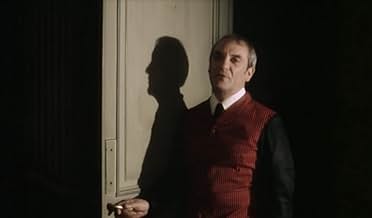
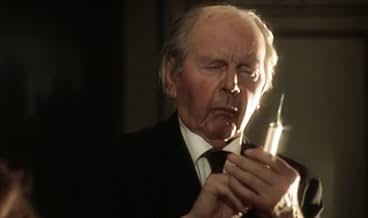
Alice Carol (Sylvia Kristel) leaves her husband (Bernard Rousselet) in a rainy night telling that she does not like him anymore. She travels alone but when her car breaks the windshield in a lonely road, she crosses the gate of a creepy manor and is welcomed by the owner Henri Vergennes (Charles Vanel) and his butler Colas (Jean Carmet) that invite Alice to spend the night in the house. On the next morning, Alice does not meet the two men and finds the windshield of her car surprisingly fixed. She tries to leave the real estate but does not find the gate. She stops the car and walks around the wall trying to find an exit. Soon she finds that she is trapped and cannot leave the property.
"Alice ou la Dernière Fugue" is an intriguing unknown masterpiece written and directed by Claude Charbrol and supported basically by the wonderful performance of the gorgeous Sylvia Kristel. The story is developed in a nightmarish atmosphere and the name of the lead character "Alice Carol" seems to be a tribute to "Alice in the Wonderland" of Lewis Carroll. Further, Adrian Lyne's "Jacob's Ladder" is visibly inspired in the storyline of this film. The mystery is kept until the very last scene. My vote is nine.
Title (Brazil): "Alice"
Note: On 17 November 2024, I saw this film again.
"Alice ou la Dernière Fugue" is an intriguing unknown masterpiece written and directed by Claude Charbrol and supported basically by the wonderful performance of the gorgeous Sylvia Kristel. The story is developed in a nightmarish atmosphere and the name of the lead character "Alice Carol" seems to be a tribute to "Alice in the Wonderland" of Lewis Carroll. Further, Adrian Lyne's "Jacob's Ladder" is visibly inspired in the storyline of this film. The mystery is kept until the very last scene. My vote is nine.
Title (Brazil): "Alice"
Note: On 17 November 2024, I saw this film again.
A Labyrinth of the Misogynistic Gaze
I expected a film with a protagonist named "Alice Carroll" to have something to do with Lewis Carroll's Alice books, but Claude Chabrol's "Alice or the Last Escapade" (although it seems a mistranslation to me to go from "fugue" to "escapade") reminds me more of Luis Buñuel's "The Exterminating Angel" (1962) and seems to have more in common with a different book, which this film's Alice reads in one scene, Jorge Luis Borges's "Fictions." That would explain the quasi-surrealism, labyrinth and purgatory-like entrapment and genre elements closer to horror than to the fairy tales of Carroll. Besides the one character's name, I didn't see much here beyond a checkered floor pattern or a somewhat small door and a generally strange place and characters suggesting that the film took inspiration from the Alice books. It's not an especially egregious bait-and-switch in this regard, although it's a travesty to cite Alice for a film that also reads largely as a reactionary revenge fantasy on the era's politics of second-wave feminism.
Allow me to elaborate. The picture begins with the male gaze (the concept of the "male gaze," itself, being a product of feminist film theory of the same era as this film--within a couple years, in fact, as Laura Mulvey penned her essay "Visual Pleasure and Narrative Cinema" in 1975), as Alice's beau is watching TV. While doing so, he calls upon Alice to listen to him complain about his day. Fed up with this male-centric gaze and storytelling, she announces that she's leaving him. He assumes she's being hysterical (a more accurate reading of the "fugue" in the title, I suspect, with all the misogynistic connotations of diagnosing women "hysterical") and warns her against leaving that night. Undeterred, Alice drives off on her own escapade, but her being a female driver in a man's movie, she soon crashes the car. A film-within-the-film of her emotional reflections is even played out on the windshield before the glass is broken--suggesting the incident has more to do with the emotional storm inside her than with the rainy weather outside.
Alice takes shelter in a mansion in what turns out to be something of a twist on the haunted, old-dark-house formula. The strange men she meets here inform her that she's trapped there and that her state of affairs is a source of amusement for them. In other words, she's found herself the subject of the male gaze, of which she cannot escape. She's confined in a film, with the mansion its theatre. This is, perhaps, most striking in a sequence that would otherwise seem to be a display of gratuitous nudity, as Alice stands seemingly alone in her room with a disembodied voice speaking to her. She tries to cover herself from an unseen gaze. Who's subjugating her with this voyeurism? We, the spectator, are.
This is such a well-constructed bit of reflexive composition centered on the cinematographic apparatus--its gaze and, thus, our gaze. It makes for a more engaging picture than the questionable ideology and trite sexism displayed would otherwise deserve.
Allow me to elaborate. The picture begins with the male gaze (the concept of the "male gaze," itself, being a product of feminist film theory of the same era as this film--within a couple years, in fact, as Laura Mulvey penned her essay "Visual Pleasure and Narrative Cinema" in 1975), as Alice's beau is watching TV. While doing so, he calls upon Alice to listen to him complain about his day. Fed up with this male-centric gaze and storytelling, she announces that she's leaving him. He assumes she's being hysterical (a more accurate reading of the "fugue" in the title, I suspect, with all the misogynistic connotations of diagnosing women "hysterical") and warns her against leaving that night. Undeterred, Alice drives off on her own escapade, but her being a female driver in a man's movie, she soon crashes the car. A film-within-the-film of her emotional reflections is even played out on the windshield before the glass is broken--suggesting the incident has more to do with the emotional storm inside her than with the rainy weather outside.
Alice takes shelter in a mansion in what turns out to be something of a twist on the haunted, old-dark-house formula. The strange men she meets here inform her that she's trapped there and that her state of affairs is a source of amusement for them. In other words, she's found herself the subject of the male gaze, of which she cannot escape. She's confined in a film, with the mansion its theatre. This is, perhaps, most striking in a sequence that would otherwise seem to be a display of gratuitous nudity, as Alice stands seemingly alone in her room with a disembodied voice speaking to her. She tries to cover herself from an unseen gaze. Who's subjugating her with this voyeurism? We, the spectator, are.
This is such a well-constructed bit of reflexive composition centered on the cinematographic apparatus--its gaze and, thus, our gaze. It makes for a more engaging picture than the questionable ideology and trite sexism displayed would otherwise deserve.
Did you know
- TriviaSylvia Kristel said in a 1981 interview that she feels this movie bombed because she only had one nude scene. She said "For some reason the roles in which I keep my clothes on never become successful movies."
- ConnectionsFeatures Des chiffres et des lettres (1972)
- SoundtracksLe 24ème concerto en ut mineur
by Wolfgang Amadeus Mozart (as Mozart)
Performed on piano by Paul Von Schilhawski
Conducted by Rudolf Albert
Disque MUSIDISC.
- How long is Alice or The Last Escapade?Powered by Alexa
Details
- Release date
- Country of origin
- Language
- Also known as
- Аліса, або остання втеча
- Filming locations
- Chateau des Migneaux, Villennes sur Seine, France(Mansion of Henri Vergennes)
- Production companies
- See more company credits at IMDbPro
- Runtime
- 1h 33m(93 min)
- Sound mix
- Aspect ratio
- 1.66 : 1
Contribute to this page
Suggest an edit or add missing content