

When a Japanese automobile company buys an American plant, the American liaison must mediate the clash of work attitudes between the foreign management and native labor.When a Japanese automobile company buys an American plant, the American liaison must mediate the clash of work attitudes between the foreign management and native labor.When a Japanese automobile company buys an American plant, the American liaison must mediate the clash of work attitudes between the foreign management and native labor.
- Director
- Writers
- Stars
- Awards
- 1 win total


- Mr. Sakamoto
- (as Soh Yamamura)


- Umeki Kazihiro
- (as Patti Yasuiake)


- Director
- Writers
- All cast & crew
- Production, box office & more at IMDbPro
Featured reviews
Drive home with an Assan
As the Reagan era winded down and corporations edged towards a global marketplace, director Ron Howard made one of several trips into the comedy genre with his 1986 smash 'Gung Ho,' which drew over $36 million in U.S. box office receipts. While in many ways dated, Howard's tongue-in-cheek story of colliding cultures in the workplace still offers hard truth for industrial life today.
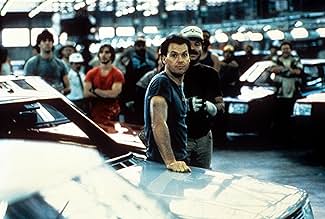
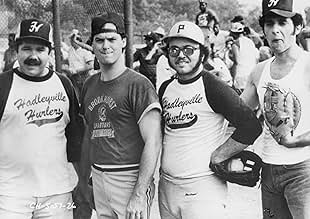
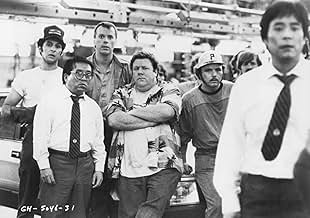
'Gung Ho' focuses on Hunt Stevenson (Michael Keaton), the automakers union rep from Hadleyville, a small, depressed town in the foothills of Pennsylvania. Stevenson has been asked to visit the Assan Motor Company in Tokyo (similar to real-life Toyota), which is considering a U.S. operation at the town's empty plant. With hundreds of residents out of work and the town verging on collapse, Assan decides to move in and Stevenson is hired as a liaison between company officials and workers on the assembly line.
The 112 minutes of 'Gung Ho' is a humorous look at these two sides, with their strengths and weaknesses equally considered: on one hand, an American workforce that values its traditions but is often caught in the frenzy of pride and trade unionism; on the other hand, Japanese workers who are extremely devoted to their job yet lacking in personal satisfaction and feelings of self-worth. In Stevenson, we find an American working class figure of average intelligence with the skills to chat people through misunderstandings. With the survival of his workers' jobs and most of Hadleyville on the line, Stevenson proves a likable guy who wants nothing more than a fair chance, although his cleverness will sink him into a great deal of trouble. Besides answering to the heads of Assan, we witness a delicate balancing act between Stevenson and his fellow union members, many of whom he grew up with. This includes Buster (George Wendt), Willie (John Turturro), and Paul (Clint Howard, Ron's brother).
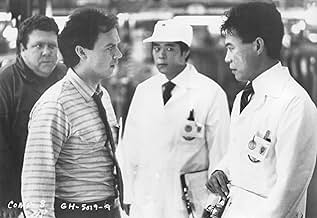
The Japanese cast is headed by Gedde Watanabe, also known for 'Sixteen Candles' and 'Volunteers.' Watanabe plays Kazihiro, the plant manager who is down on his luck and begins to feel a sympathy for American life. He is constantly shadowed by Saito (Sab Shimono), the nephew of Assan's CEO who is desperate to take his spot in the pecking order. While given a light touch, these characters fare very well in conveying ideas of the Japanese working culture.
With Hunt Stevenson dominating the script, Michael Keaton has to give a solid performance for this film to work. 'Gung Ho' is indeed a slam-dunk success for Keaton, who also teamed with Ron Howard in 1994's 'The Paper.' He made this film during a string of lighter roles that included 'Mr. Mom,' 'Beetle Juice,' and 'The Dream Team' before venturing into 'Batman,' 'One Good Cop,' and 'My Life.' It's also hard not to like Gedde Watanabe's performance as the odd man out, who first wears Japanese ribbons of shame before teaming up with Stevenson to make the auto plant a cohesive unit.
The supporting cast is top-notch, including Wendt, Turturro, Shimono, and Soh Yamamura as Assan CEO Sakamoto. Mimi Rogers supplies a romantic interest as Audrey, Hunt's girlfriend. Edwin Blum, Lowell Ganz, and Babaloo Mandel teamed up for Gung Ho's solid writing. The incidental music, which received a BMI Film Music Award, was composed by Thomas Newman. Gung Ho's soundtrack songs are wall-to-wall 80s, including 'Don't Get Me Wrong,' 'Tuff Enuff,' and 'Working Class Man.'
The success of 'Gung Ho' actually led to a short-lived TV series on ABC. While more impressive as a social commentary twenty years ago, Ron Howard's film still has its comic value. It is available on DVD as part of the Paramount Widescreen Collection and is a tad short-changed. Audio options are provided in English 5.1 surround, English Dolby surround, and French 'dubbing,' but subtitles are in English only. There are no extras, not even the theatrical trailer. On the plus side, Paramount's digital transfer is quite good, with little grain after the opening credits and high quality sound. While a few extras would have been helpful - especially that 'Gung Ho' was a box office success - there's little to complain about the film presentation itself.
*** out of 4
Not edgy, but funny
Come back with me, children, to a time when Michael Keaton was a straight-up comedy guy, and you might find some joy in this film. It's a gentle comedy -- the kind Ron Howard specializes in -- but if that's your thing, you should check this out. Keaton's low-key charm is just right for this project.
"Gung Ho" is a bit dated, because it takes places in the last stage of the pre-global economy world, when it still mattered what country a business was based in. That said, it delivers laughs as well as a lesson on how people can learn from each other, to great benefit.
You could watch this film and enjoy it without remembering one scene in particular you really liked, but that's because the whole movie provides a slow but constant stream of laughs. It's like an I.V. drip. And I mean that in a good way.
Welcome Back to the Lost World of the 80's.
"Gung Ho" does a better job of capturing the mood of the American industrial workforce than just about any other popular movie made during that period. Certainly the movie has its flaws -- some loose plot threads and mediocre acting jobs by everyone except Michael Keaton and Gedde Watanabe. But the story really is about the meeting of East and West: Keaton's Hunt Stevenson personifies America, brash and confident on the outside yet insecure underneath. Watanabe's Kazuhiro personifies Japan, on top of the heap with a successful system, but wondering if there is more to be learned from their Western rivals. The movie's plot, flawed as it is, simply provides a framework for the conflict, and eventually synthesis, of their two personalities.
Keaton's acting overshadows everyone else's, and practically makes the movie by itself. I've always admired Keaton for his ability to deliver lines that feel improvised, no matter what script he's following. His character, Hunt Stevenson, is a likable, affable everyman, a natural leader with a wise-ass streak. But he has a fatal flaw common to many of us: he doesn't want to disappoint anyone. He'll distract the crowd with inspirational anecdotes, and even lie, rather than point out the ugly truth.
Kazuhiro is the mirror image of Stevenson: shy and introspective, but also, because of his Japanese upbringing, reluctant to be the bearer of bad news. The scene in which Stevenson first comes to Kazuhiro with the employees' grievances captures perfectly the Japanese approach to workplace conflict. Kazuhiro replies to Stevenson's complaints with "I understand what you are saying," but won't refuse his requests out loud. Stevenson misinterprets this as agreement, and goes away saying, "Okay, we've got that settled." (This is still a problem in Japanese-American business relations in the 21st century!)
Ultimately, Kazuhiro and Stevenson have the same problem: get the factory working smoothly, meet production goals, and fulfill their responsibility to the workers under them. In working towards this goal, they each have to take a page from the others' book. Kazuhiro's family becoming more "Americanized" is an obvious example. Also note that Stevenson thinks it's odd when Kazuhiro explains how he had to make a public apology to his workers for failing them -- and yet, later in the movie, Stevenson does exactly that himself.
The plot and its resolution are a little cornball, but hey, this is a comedy. If you can overlook the movie's flaws, there is a great story about self-realization and open-mindedness here.
light-hearted fun from difficult subject matter
Director Ron Howard makes light-hearted fun from a difficult subject matter. For the most part, it works for me. It can be off-putting for an audience that is either pro or anti-union. Howard essentially splits the difference by having both workers and management come together in a happy ending. Michael Keaton is fun. He faces the challenge with charm. Another director would make this a tougher movie but Howard is not that guy.
Cultural Clashes
But let's face it: the movie isn't funny. Babaloo Mandel and Lowell Ganz are terrific writers ("Splash", "Parenthood") but they didn't create much moments we could say they were funny, most of the time is just using of caricatures to make some amusing moments, they barely work, maybe two or three scenes. Their concentration to the more engaging aspects was what made "Gung Ho" something really worth seeing. It pokes fun on the culture comparisons between U.S., specially when it comes to both nations traditions but it also establishes a greater sense of supporting each other, one might be better than the other but only together they come up with something bigger, better and stronger. Having a movie like this made on a decade where American superiority was presented in every single movie and also in politics is something of a miracle. It basically says: "We're no longer the strongest nation in the world, neither the most efficient but we can aspire to be if we follow some other examples around the world". Sure, it doesn't paint a fair picture for both sides (Japanese as workaholics who can't contest their bosses and Americans as lazy and incompetent), often recurring to stereotypes but presents something good out of those.
Although a little sloppy, clichéd and never serious enough, "Gung Ho" can be used as a source of inspiration, at least for those who have a company and doesn't know how to bring out the best with their employs, it's always there to bring out of the best of a team, push them to the limits and show them the advantages of following new directives. I know this movie is something of a classic between Administration students in here, and most of them enjoy it. Out of this department, it might be a disappointment for Keaton and Ron Howard fans, they're not at their best. The supporting cast formed with the likes of Mimi Rogers, George Wendt, John Turturro, Rance and Clint Howard save this for a bit, but the most interesting in scene is Watanabe, the funniest in the show.
In the end, it reaches its purpose of presenting a parallel between cultures, but never takes our fully enjoyment, neither much of our laughs. Easy to watch and quite motivational though. 7/10


Did you know
- TriviaAccording to Bloomberg Businessweek, Toyota executives later used the movie as an example of how not to manage Americans.
- GoofsIn the opening at the management training center, the old worker is shown in subtitles as referring to his family (to support). But the Japanese words do not mention them at all. He only apologizes and says he will work hard.
- Quotes
Hunt Stevenson: If you walk out that door, you're going to miss a great comeback. We're ready to roll here, Jack.
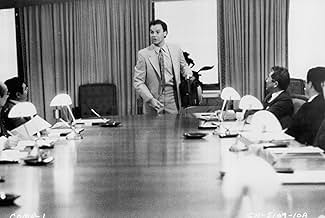
Mr. Sakamoto: This will never be like a Japanese factory... *Jack.*
Hunt Stevenson: Oh, yeah? You're right. You know what else? So what?
Mr. Sakamoto: You failed.
Hunt Stevenson: Really? Wanna know something? I got one of the first cars ever made here. I got *the* first car ever - I don't think I want it anymore. As a matter of fact, here.
[hands keys to Mr. Sakamoto]
Hunt Stevenson: Why don't you take the keys, okay? I'd rather have one of those cars.
[points to cars in assembly line]
Hunt Stevenson: I'd rather have one of these cars that *we* made *together,* by hand. Your guys and my guys, together. You know why? Because those cars stand for something. Those cars stand for something pretty great. I'm proud of those cars. I'm taking one.
[Turns to workers]
Hunt Stevenson: Gentlemen, I'm going home in my new car!
[All workers cheer and applaud, then silently pray that Hunt's new car has a working engine. Hunt starts the car, and the workers cheer. However, the car literally falls apart after about two yards, and the workers start to moan. Hunter gets out of the car]
Hunt Stevenson: I tell ya, I thought it handled great!
- Alternate versionsSome international editions distributed by Paramount on DVD, reduced the aspect ratio from original 2.39:1 to 2.09:1.
- ConnectionsFeatured in Generation X: The Power of Disruption (2016)
- SoundtracksDon't Get Me Wrong
Written by Chrissie Hynde
Performed by The Pretenders
Produced by Jimmy Lavine and Bob Clearmountain
Courtesy of Sire Records Company
- How long is Gung Ho?Powered by Alexa
Details
Box office
- Budget
- $18,000,000 (estimated)
- Gross US & Canada
- $36,611,610
- Opening weekend US & Canada
- $7,170,830
- Mar 16, 1986
- Gross worldwide
- $36,611,610
- Runtime
- 1h 51m(111 min)
- Color
- Aspect ratio
- 2.35 : 1