
A young couple who live next to each other in tenement apartments do everything they can to be together despite of their feuding families.A young couple who live next to each other in tenement apartments do everything they can to be together despite of their feuding families.A young couple who live next to each other in tenement apartments do everything they can to be together despite of their feuding families.
- Directors
- Writers
- Stars


Edward F. Cline
- The Cop
- (uncredited)

Jack Duffy
- The Judge
- (uncredited)
The Flying Escalantes
- Themselves
- (uncredited)

Virginia Fox
- The Girl
- (uncredited)

Joe Keaton
- His Father
- (uncredited)

Joe Roberts
- Her Father
- (uncredited)
- Directors
- Writers
- All cast & crew
- Production, box office & more at IMDbPro
7.64.9K
1
2
3
4
5
6
7
8
9
10
Featured reviews
Buster and Virginia
Really do appreciate all kinds of comedy, though admittedly more so than others (i.e. preferring the witty, sophisticated kind of comedy over the crude type). For me, Buster Keaton was and still is one of the greatest of all comedy geniuses. He was a very daring and athletic performer with brilliant comic timing and one of the very few people alive or dead to make deadpan (hence "The Great Stone Face" nickname), a very acquired taste style usually and how well it has been done has widly varied, look good.
Keaton may have done even better than 'Neighbors', both short and feature films. Not all the pacing is quite there, but the light-hearted charm, daringly athletic stunts and funny gags certainly are and in large quantities for all three. Cannot say anything bad about Keaton either and have little to fault 'Neighbors' even overall, almost everything is done right if just lacking the extra something of his best work that were paced a little more evenly and were even more imaginative.
'Neighbors' is let down solely by some lagging pacing in the middle, where the storytelling does slow down and doesn't feel as eventful. The slightness of the story is betrayed here.
The first and especially third acts however are paced beautifully and despite it sounding routine on paper it is in execution anything but. The early portions are zany and incredibly charming, without feeling too much like set up. The chemistry between Keaton and Virginia Fox is light-hearted and sweet without being sugary. The third act has some truly inventive moments of slapstick and gags, not to mention the to-be-expected bold Keaton stunts.
While the washing line escape from the apartment is a masterful set piece where Keaton's athletic ability is something to behold, it also features one of the most inspired endings of any of Keaton's films. It looks good, if not imaginative perhaps, and all the sight gags work, being never less than very amusing and they are not predictable. The slapstick doesn't become too goofy and doesn't get clumsy or repetitive, and the stunts are wonderfully athletic and bold. 'Neighbors' is beautifully directed too.
Virginia Fox is lovely, her character meatier than in other collaborations with Keaton, and one can see what Keaton sees in her, but Keaton is the star. One envies his physicality and how he is able to do all those difficult stunts and make them look easy, and he also has witty comic timing and is still an unparallelled master at making deadpan interesting and expressive.
Overall, not one of Keaton's best but still great. 9/10
Keaton may have done even better than 'Neighbors', both short and feature films. Not all the pacing is quite there, but the light-hearted charm, daringly athletic stunts and funny gags certainly are and in large quantities for all three. Cannot say anything bad about Keaton either and have little to fault 'Neighbors' even overall, almost everything is done right if just lacking the extra something of his best work that were paced a little more evenly and were even more imaginative.
'Neighbors' is let down solely by some lagging pacing in the middle, where the storytelling does slow down and doesn't feel as eventful. The slightness of the story is betrayed here.
The first and especially third acts however are paced beautifully and despite it sounding routine on paper it is in execution anything but. The early portions are zany and incredibly charming, without feeling too much like set up. The chemistry between Keaton and Virginia Fox is light-hearted and sweet without being sugary. The third act has some truly inventive moments of slapstick and gags, not to mention the to-be-expected bold Keaton stunts.
While the washing line escape from the apartment is a masterful set piece where Keaton's athletic ability is something to behold, it also features one of the most inspired endings of any of Keaton's films. It looks good, if not imaginative perhaps, and all the sight gags work, being never less than very amusing and they are not predictable. The slapstick doesn't become too goofy and doesn't get clumsy or repetitive, and the stunts are wonderfully athletic and bold. 'Neighbors' is beautifully directed too.
Virginia Fox is lovely, her character meatier than in other collaborations with Keaton, and one can see what Keaton sees in her, but Keaton is the star. One envies his physicality and how he is able to do all those difficult stunts and make them look easy, and he also has witty comic timing and is still an unparallelled master at making deadpan interesting and expressive.
Overall, not one of Keaton's best but still great. 9/10
lovely
An imposible love story becomes pretext for gags and fascinating adventures. And start point for a great reflection of the genius of one of magnificent actors. A film who could be a Chaplin one. But the difference consists, first, in the force of nuances. And in the impecable art of Buster Keaton to transform ordinary situations in roots of impressive gems.
Neighbors
This Buster Keaton short has some outstanding and breathtaking stunts. You have to see it to believe it.
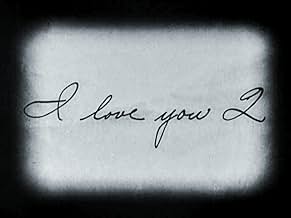
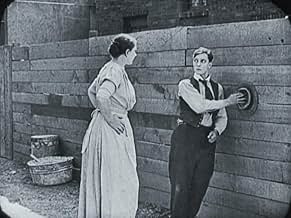
Buster is in love with his neighbour. They send notes through a hole in the fence. Their respective fathers disapprove of the romance.
Buster is determined to marry his girl even though he goes through a series of mishaps involving both families and the police.
The plot itself is frothy and silly. Buster constantly gets detained by a policeman and then escapes. At one point he is blacked up when escorted by a policeman and then runs away for the policeman to arrest a black man who walks past.
Given that this short was made in 1920. This is still the early days of cinema. Some of the physical acrobatic stuff Buster does is impressive, including three men standing on top of each other which happens at the end. A few times I had to rewind it and watch it again.
Buster is in love with his neighbour. They send notes through a hole in the fence. Their respective fathers disapprove of the romance.
Buster is determined to marry his girl even though he goes through a series of mishaps involving both families and the police.
The plot itself is frothy and silly. Buster constantly gets detained by a policeman and then escapes. At one point he is blacked up when escorted by a policeman and then runs away for the policeman to arrest a black man who walks past.
Given that this short was made in 1920. This is still the early days of cinema. Some of the physical acrobatic stuff Buster does is impressive, including three men standing on top of each other which happens at the end. A few times I had to rewind it and watch it again.
Of Necessity Experimental
No, nothing to do with the Aussie soap opera. This "Neighbors"- I keep the original American spelling- is a silent comedy short from 1920. The plot is a comic take on the "Romeo and Juliet" story. Buster Keaton and Virginia Fox play young lovers who live in flats in adjoining buildings but whose families are constantly quarrelling with one another. Both families are, of course, hostile to the young people's relationship, and the film is the story of how Buster and Virginia overcome the obstacles to their love. (I use the names of the actors because we never find out the names of their characters. The cast-list simply refers to "The Boy" and "The Girl").
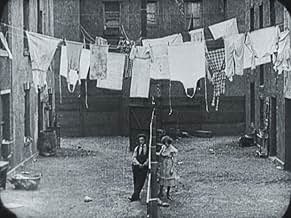
Modern rom-coms also often deal with how young couples deal with the obstacles to their love, but today such "obstacles" are generally metaphorical- not only parental disapproval but also things like differences in social class or a fear of commitment. This being a silent comedy, however, the obstacles in "Neighbors" can be literal, physical barriers such as a wooden fence separating the two properties and the fact that Virginia's bedroom is on the third floor. Buster has to use his acrobatic skills to overcome these barriers with circus-style stunts involving a trapeze and much balancing on top of ladders.
Films like this were a part of my childhood in the sixties and seventies because they were often shown on British television. I suspect that this was done to provide a nostalgic treat for my grandparents' generation, who would have remembered them from their youth, but they also proved popular with my own generation. My parents were both born in the thirties and, having grown up after the sound revolution, regarded silents as very old-fashioned, so I often ended up watching them with Grandma and Grandpa. I was certainly not alone among my schoolfriends in my enthusiasm for these old films; they were not expressly made as children's films, but there was obviously something about their physical style of humour which appealed to the young.
To the modern adult, this style of humour can seem as unsophisticated as it did to my parents; one of the gags, for example, involves Buster's trousers falling down during the wedding ceremony after his belt breaks. We have to remember, however, that the cinema of the 1910s and early 1920s was, of necessity, experimental. Silent acting, whether in comedy or serious drama, was something new, and film-makers could not rely upon the traditional skills of the theatre, where actors could speak. Pioneers like Keaton, who acted as co-writer and co-director of this film, had to be continually experimenting to find out what worked and what didn't. And in "Neighbors" he does sometimes succeed in making us laugh.
Modern rom-coms also often deal with how young couples deal with the obstacles to their love, but today such "obstacles" are generally metaphorical- not only parental disapproval but also things like differences in social class or a fear of commitment. This being a silent comedy, however, the obstacles in "Neighbors" can be literal, physical barriers such as a wooden fence separating the two properties and the fact that Virginia's bedroom is on the third floor. Buster has to use his acrobatic skills to overcome these barriers with circus-style stunts involving a trapeze and much balancing on top of ladders.
Films like this were a part of my childhood in the sixties and seventies because they were often shown on British television. I suspect that this was done to provide a nostalgic treat for my grandparents' generation, who would have remembered them from their youth, but they also proved popular with my own generation. My parents were both born in the thirties and, having grown up after the sound revolution, regarded silents as very old-fashioned, so I often ended up watching them with Grandma and Grandpa. I was certainly not alone among my schoolfriends in my enthusiasm for these old films; they were not expressly made as children's films, but there was obviously something about their physical style of humour which appealed to the young.
To the modern adult, this style of humour can seem as unsophisticated as it did to my parents; one of the gags, for example, involves Buster's trousers falling down during the wedding ceremony after his belt breaks. We have to remember, however, that the cinema of the 1910s and early 1920s was, of necessity, experimental. Silent acting, whether in comedy or serious drama, was something new, and film-makers could not rely upon the traditional skills of the theatre, where actors could speak. Pioneers like Keaton, who acted as co-writer and co-director of this film, had to be continually experimenting to find out what worked and what didn't. And in "Neighbors" he does sometimes succeed in making us laugh.
Wild & Crazy Fun - A Fabulous Short
This is one of the few short films that was understated on the back on the DVD. Usually they make it sound better than it often winds up. Despite little buildup, this was tremendous fun for 18 minutes.
The very beginning is very innocent as Harold and Virginia Fox exchange love notes through a peephole in a fence that divides their family's tenement properties. Quickly, the parents of each come out, intercept the messages, disapprove, meddle further and then get involved in one wild and crazy scene after another. Featured are some terrific stunts and just general madness and mayhem with one funny sight gag after another. This is so frenetic that it has to be seen, not read about. Just be ready for a wild ride of feuding neighbors and cops.
It does calm down for a minute or two when a judge makes the parents sign a "peace treaty." Harold then announces he and Virginia are going to get married.....and they try to do that but, a combination of pants that won't stay up (don't ask) and Virginia's father, Big Joe Roberts, break that up. Now we go back to slapstick and clever scenes as Buster's friends help get his girl back. It's another crazy finish, albeit a short one.
It's very inventive stuff and one of Harold's best. It is an extra on the "Seven Chances" DVD. Note: Playing Buster's dad in here was his real-life father, Joe Keaton.
The very beginning is very innocent as Harold and Virginia Fox exchange love notes through a peephole in a fence that divides their family's tenement properties. Quickly, the parents of each come out, intercept the messages, disapprove, meddle further and then get involved in one wild and crazy scene after another. Featured are some terrific stunts and just general madness and mayhem with one funny sight gag after another. This is so frenetic that it has to be seen, not read about. Just be ready for a wild ride of feuding neighbors and cops.
It does calm down for a minute or two when a judge makes the parents sign a "peace treaty." Harold then announces he and Virginia are going to get married.....and they try to do that but, a combination of pants that won't stay up (don't ask) and Virginia's father, Big Joe Roberts, break that up. Now we go back to slapstick and clever scenes as Buster's friends help get his girl back. It's another crazy finish, albeit a short one.
It's very inventive stuff and one of Harold's best. It is an extra on the "Seven Chances" DVD. Note: Playing Buster's dad in here was his real-life father, Joe Keaton.


Did you know
- TriviaIncluded in "Buster Keaton: The Shorts Collection" blu-ray set, released by Kino.
- Quotes
His Father: He's my son and I'll break his neck any way I please!
- ConnectionsEdited into The Golden Age of Buster Keaton (1979)
Details
- Runtime
- 18m
- Color
- Sound mix
- Aspect ratio
- 1.33 : 1
Contribute to this page
Suggest an edit or add missing content