IMDb RATING
6.6/10
1.4K
YOUR RATING

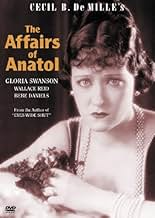
Socialite Anatol Spencer seeks a better relation than he has with his wife. He sets up the friend of his youth Emilie in an apartment and she two-times him; he comforts near-suicidal Annie a... Read allSocialite Anatol Spencer seeks a better relation than he has with his wife. He sets up the friend of his youth Emilie in an apartment and she two-times him; he comforts near-suicidal Annie and she robs him.Socialite Anatol Spencer seeks a better relation than he has with his wife. He sets up the friend of his youth Emilie in an apartment and she two-times him; he comforts near-suicidal Annie and she robs him.
- Director
- Writers
- Stars
- Awards
- 1 win total


Laura Anson
- Vivian's Maid
- (uncredited)

Alma Bennett
- Chorus Girl
- (uncredited)

William Boyd
- Guest
- (uncredited)

Shannon Day
- Chorus Girl
- (uncredited)

Julia Faye
- Tibra
- (uncredited)

Elinor Glyn
- Bridge Player
- (uncredited)

Winter Hall
- Dr. Johnston
- (uncredited)

Raymond Hatton
- Great Blatsky - Violin Teacher
- (uncredited)

Fred Huntley
- Stage Manager
- (uncredited)
- Director
- Writers
- All cast & crew
- Production, box office & more at IMDbPro
6.61.4K
1
2
3
4
5
6
7
8
9
10
Featured reviews
Tragic Wallace Reid In DeMille Comedy
THE AFFAIRS OF ANATOL, which are really only his attempts to help unhappy or wayward women, has left his own marriage in a very precarious predicament.
During the 1920's, director Cecil B. DeMille became famous for two types of film - the lavish historical spectacle & the elaborate, somewhat salacious, social comedy. ANATOL is an example of the latter. While its plot is insignificant (and faintly ludicrous), it is still quite enjoyable to watch, and can boast of fine performances & superior production values.
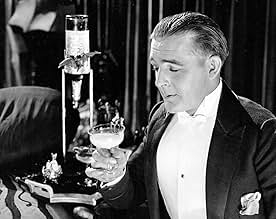
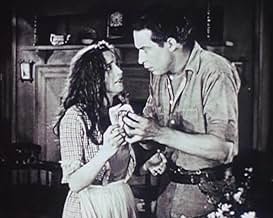
In the title role, Wallace Reid acquits himself very well as the hapless rich chump whose noble deeds always seem to backfire. Good-natured & affable, he is only too susceptible to damsels in distress. But even this worm can turn, and his violent scenes - laying waste the apartment of a mendacious maiden, crashing into his wife's locked boudoir - show the energy & passion of which this nearly forgotten star was capable.
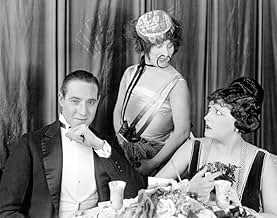
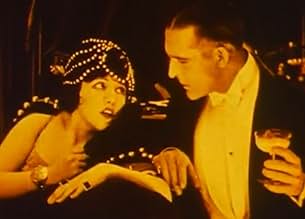
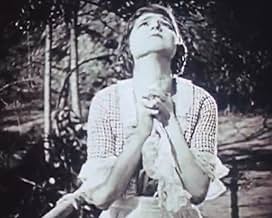
Gloria Swanson, as Reid's lively spouse; Wanda Hawley as a millionaire's courtesan; Agnes Ayres as a duplicitous country wife; and diabolic Bebe Daniels as the ultimate vamp, all add greatly to the enjoyment of the proceedings, slinking about in fashions (all except Miss Ayres) only crazy movie folk of the 1920's could ever truly get by with.
Movie mavens will have no trouble spotting the irrepressible Polly Moran as a zany nightclub orchestra leader.
A Wallace Reid film is a rather rare & wonderful thing now, as most of them seem to have vanished long ago. Reid, immensely popular in his day, was the epitome of the American Hero. Tragically, his story became a living nightmare. Injuries received while on location in Oregon in 1919 left him seemingly unable to complete his role. The Paramount Studio doctor was dispatched to plug him full of morphine and put him back in front of the cameras. It worked, but already weakened by alcoholism, Reid now became a helpless morphine addict. His problem was an open secret in Hollywood, but instead of the real help he desperately needed, he was given more of the deadly drug. His box office returns were considered too valuable, and the Studio pushed him through an insufferable number of films - 7 in 1921, 8 in 1922. After ANATOL, in which it was becoming obvious that his good looks were beginning to decay, Reid made 11 more films in increasing agony. His death on January 18, 1923, was officially attributed to the influenza which finally overcame the body debilitated by alcohol & drug addiction. Wallace Reid was only 31 years old.
During the 1920's, director Cecil B. DeMille became famous for two types of film - the lavish historical spectacle & the elaborate, somewhat salacious, social comedy. ANATOL is an example of the latter. While its plot is insignificant (and faintly ludicrous), it is still quite enjoyable to watch, and can boast of fine performances & superior production values.
In the title role, Wallace Reid acquits himself very well as the hapless rich chump whose noble deeds always seem to backfire. Good-natured & affable, he is only too susceptible to damsels in distress. But even this worm can turn, and his violent scenes - laying waste the apartment of a mendacious maiden, crashing into his wife's locked boudoir - show the energy & passion of which this nearly forgotten star was capable.
Gloria Swanson, as Reid's lively spouse; Wanda Hawley as a millionaire's courtesan; Agnes Ayres as a duplicitous country wife; and diabolic Bebe Daniels as the ultimate vamp, all add greatly to the enjoyment of the proceedings, slinking about in fashions (all except Miss Ayres) only crazy movie folk of the 1920's could ever truly get by with.
Movie mavens will have no trouble spotting the irrepressible Polly Moran as a zany nightclub orchestra leader.
A Wallace Reid film is a rather rare & wonderful thing now, as most of them seem to have vanished long ago. Reid, immensely popular in his day, was the epitome of the American Hero. Tragically, his story became a living nightmare. Injuries received while on location in Oregon in 1919 left him seemingly unable to complete his role. The Paramount Studio doctor was dispatched to plug him full of morphine and put him back in front of the cameras. It worked, but already weakened by alcoholism, Reid now became a helpless morphine addict. His problem was an open secret in Hollywood, but instead of the real help he desperately needed, he was given more of the deadly drug. His box office returns were considered too valuable, and the Studio pushed him through an insufferable number of films - 7 in 1921, 8 in 1922. After ANATOL, in which it was becoming obvious that his good looks were beginning to decay, Reid made 11 more films in increasing agony. His death on January 18, 1923, was officially attributed to the influenza which finally overcame the body debilitated by alcohol & drug addiction. Wallace Reid was only 31 years old.
A man, blinded by his need to be good, he can't help but get in trouble
The Affairs of Anatol (1921)
A long, involved, romantic and slightly moralizing movie about a really good hearted man caught between two women. That's the reason to watch it, that and Gloria Swanson in the lead as the wife. The other woman (Wanda Hawley) is a bit of a siren, and our good fellow is trying to be a charitable fellow with her, and only gets himself in trouble. She plays him like a child.
The year, 1921, is just at the point where the silent film is solidifying and getting sophisticated in a modern sense. There is still a lot of static (fixed) camera in this one (even though one of the photographers was the legendary Karl Struss). This puts the emphasis on the acting, which rises to the occasion. The copy I saw had some great hand colored title cards and some scenes that were toned in rich yellows or other colors, which made it all quite fun. The conflict between the two women, and the intrusion of another man or two, make this a classic soap opera kind of drama, well done and clear enough to follow once you get the basic flow. There are sort of two halves, and the second part out in the country is a nice shift even though the theme remains similar.
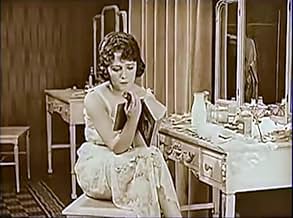
Of interest? The director, Cecil B. De Mille, had a hugely influential and long career, and this is toward the beginning, and it shows his tendency to find the popular themes that audiences would connect with, rather than push technical or aesthetic boundaries. Some might call him a populist, interest above all in success, but he was an expert director who knew how to make a movie really coherent, handling the story and actors with precision and a sympathetic feel. And the subject matter here is actually a bit edgy--a married man hanging out with a woman in her most intimate spaces. The play of the "bad" woman against the "good" one is a little expected, of course, but it's such a heartwrenching problem for this nice guy who just wants to help (or so he says), it's painfully enjoyable to watch.
A long, involved, romantic and slightly moralizing movie about a really good hearted man caught between two women. That's the reason to watch it, that and Gloria Swanson in the lead as the wife. The other woman (Wanda Hawley) is a bit of a siren, and our good fellow is trying to be a charitable fellow with her, and only gets himself in trouble. She plays him like a child.
The year, 1921, is just at the point where the silent film is solidifying and getting sophisticated in a modern sense. There is still a lot of static (fixed) camera in this one (even though one of the photographers was the legendary Karl Struss). This puts the emphasis on the acting, which rises to the occasion. The copy I saw had some great hand colored title cards and some scenes that were toned in rich yellows or other colors, which made it all quite fun. The conflict between the two women, and the intrusion of another man or two, make this a classic soap opera kind of drama, well done and clear enough to follow once you get the basic flow. There are sort of two halves, and the second part out in the country is a nice shift even though the theme remains similar.
Of interest? The director, Cecil B. De Mille, had a hugely influential and long career, and this is toward the beginning, and it shows his tendency to find the popular themes that audiences would connect with, rather than push technical or aesthetic boundaries. Some might call him a populist, interest above all in success, but he was an expert director who knew how to make a movie really coherent, handling the story and actors with precision and a sympathetic feel. And the subject matter here is actually a bit edgy--a married man hanging out with a woman in her most intimate spaces. The play of the "bad" woman against the "good" one is a little expected, of course, but it's such a heartwrenching problem for this nice guy who just wants to help (or so he says), it's painfully enjoyable to watch.
Well worth seeing
This film is great fun, and often -- and I think intentionally, as in the 'Satan Synne' segment -- very funny: "an extravagant story that never by any chance could be taken seriously," as one contemporary reviewer approves. It's hard to sympathise with spoiled wife Vivian at first (a hard-edged performance by Gloria Swanson), but as the film goes on we start to realise that she does have a point.
This being a de Mille film, the costumes are of course fantastic; although it's actually not Swanson, the famous 'clothes-horse', who gets the best dresses here. Production values are elsewhere very high, as well, extending into beautifully-drawn title cards (in one case, with a live-action car actually driving across it!) and a lot of sacrificed furniture, while frankly, those jewelled flowers look almost worth losing a lover over...
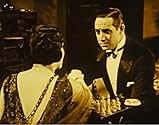
But it's not all gloss and enjoyable silliness. There's some fine acting on display as well, not least from Wallace Reid as the well-meaning 'Tony' whose halo begins progressively to slip -- and, in a couple of telling little scenes, from Elliott Dexter as the overlooked best friend. (The little scene over the chessboard is a perfect illustration of the power of the silent screen: everything made explicit without a word.)
The picture's stage heritage shows up mainly in a few over-long title cards, where plot points are conveyed in one long 'speech'; at almost two hours in duration, it's also unbalanced in the direction of the first half, which could almost stand as a film on its own without its briefer 'sequels'. If Emilie is not to have a film of her own, there is perhaps a little too much time devoted to her.
But "The Affairs of Anatol" is well worth seeing -- not least, as an eye-opener for those like myself who associate C.B. de Mille with vast Biblical epics. This piece of froth and frivolity has more of the charm of a Harold Lloyd movie minus the slapstick; one can really see why 'handsome Wallace Reid' was a star; and there are just enough well-judged moments of genuine feeling among the spectacle and satire to make us care about the various minor players.
This being a de Mille film, the costumes are of course fantastic; although it's actually not Swanson, the famous 'clothes-horse', who gets the best dresses here. Production values are elsewhere very high, as well, extending into beautifully-drawn title cards (in one case, with a live-action car actually driving across it!) and a lot of sacrificed furniture, while frankly, those jewelled flowers look almost worth losing a lover over...
But it's not all gloss and enjoyable silliness. There's some fine acting on display as well, not least from Wallace Reid as the well-meaning 'Tony' whose halo begins progressively to slip -- and, in a couple of telling little scenes, from Elliott Dexter as the overlooked best friend. (The little scene over the chessboard is a perfect illustration of the power of the silent screen: everything made explicit without a word.)
The picture's stage heritage shows up mainly in a few over-long title cards, where plot points are conveyed in one long 'speech'; at almost two hours in duration, it's also unbalanced in the direction of the first half, which could almost stand as a film on its own without its briefer 'sequels'. If Emilie is not to have a film of her own, there is perhaps a little too much time devoted to her.
But "The Affairs of Anatol" is well worth seeing -- not least, as an eye-opener for those like myself who associate C.B. de Mille with vast Biblical epics. This piece of froth and frivolity has more of the charm of a Harold Lloyd movie minus the slapstick; one can really see why 'handsome Wallace Reid' was a star; and there are just enough well-judged moments of genuine feeling among the spectacle and satire to make us care about the various minor players.
The Glo Show
An interesting document of almost one hundred years ago. Your enjoyment of this will obviously depend on whether you like silents or not. As a look way back to the beginnings of narrative film making and a fashion show of what woman wore then this has some interest. Gloria is unquestionably the star and she holds the screen with no problem. A renown clotheshorse her outfits are bizarre in the extreme to the modern eye but were the height of high fashion in their day. It's also a rare chance to see the doomed Wallace Reid in one of his few existing films. He was deep in the throes of the morphine addiction that would kill him within two years when this was made and looks shockingly old when you realize he was only 29 at the time, he appears 50 minimum.
Entertaining though overlong social comedy
The plot and an analysis is elsewhere here well done with Ron Oliver's review. Suffice to say that the hand-tinted titles and the sepia-toned film itself, hinting at reds along with its browns are a real joy to behold. Seeing so many luminaries in one film is also a treat - Reid, Swanson, Moran, Daniels, Ayres.
However, the film could easily have been a half hour shorter with less wear and tear on the viewer and with virtually little loss in the morality tale or sense of the work. It's all enjoyable but it does drag a bit.
Grapevine and Kino both have excellent prints. Important for its director and his non-epic style as well as for the presence of Reid and Swanson, but far from a great or important film.
However, the film could easily have been a half hour shorter with less wear and tear on the viewer and with virtually little loss in the morality tale or sense of the work. It's all enjoyable but it does drag a bit.
Grapevine and Kino both have excellent prints. Important for its director and his non-epic style as well as for the presence of Reid and Swanson, but far from a great or important film.


Did you know
- TriviaGloria Swanson admitted in an interview decades later that Wallace Reid's drug addiction scared her while they were making this film, and she avoided socializing with him because of it.
- GoofsIn the flashback sequence where Emilie is on a swing and two mirrors are set up to give repeated reflections of the action, the cameraman bending over his camera is visible a few times when the swing moves out of the way.
- Quotes
Anatol Spencer: Let's not kiss any more, dear, until after breakfast.
- Alternate versionsFilm Preservation Associates copyrighted a version in 1999 with a music score compiled and performed by Brian Benison. It was produced for video by David Shepard and ran 117 minutes.
- ConnectionsEdited into Don't Tell Everything (1921)
Details
- Release date
- Country of origin
- Language
- Also known as
- Anatol: Five Kisses
- Production company
- See more company credits at IMDbPro
- Runtime
- 1h 57m(117 min)
- Sound mix
- Aspect ratio
- 1.33 : 1
Contribute to this page
Suggest an edit or add missing content