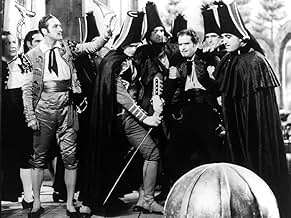
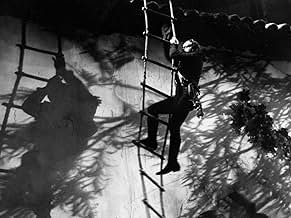
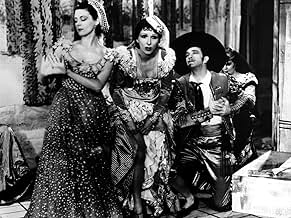
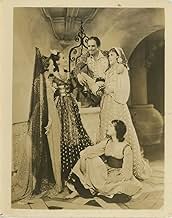
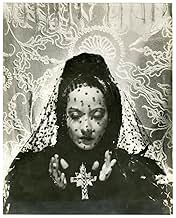
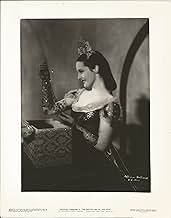
After having faked his own death and escaped Seville, aging lothario Don Juan returns, only to find that he has been promptly forgotten; perhaps a raven-haired beauty can coax him back into ... Read allAfter having faked his own death and escaped Seville, aging lothario Don Juan returns, only to find that he has been promptly forgotten; perhaps a raven-haired beauty can coax him back into business.After having faked his own death and escaped Seville, aging lothario Don Juan returns, only to find that he has been promptly forgotten; perhaps a raven-haired beauty can coax him back into business.
- Director
- Writers
- Stars
- Awards
- 1 win & 1 nomination total
Barry MacKay
- Rodrigo The Impostor - A Man of Romance
- (as Barry Mackay)
Claud Allister
- The Duke - A Dukes Go
- (as Claude Allister)
- Director
- Writers
- All cast & crew
- Production, box office & more at IMDbPro
6.3858
1
2
3
4
5
6
7
8
9
10
Featured reviews
Farewell Mr. Fairbanks!
This was at the twilight of Douglas Fairbanks's career and he gives a great performance both in comedy and adventure as Don Juan. He wasn't at the end of his career because he was too old or no longer popular in fact he just decided to call it a day while he was still very much a huge star and relatively young at barely over 50 years old. It's a great performance and a great way to say goodbye for Douglas Fairbanks. The movie is not the best but he is superb.
Fairbanks Last Film
"The Private Life of Don Juan" is a 1934 comedy from Alexander Korda and is notable as the swan song of screen legend Douglas Fairbanks. The Don Juan character comes from a 14th Century Spanish play, several books and plays (including works by Byron and Moliere) and the Mozart opera Don Giovanni (1787). The first film was in 1926 starring John Barrymore. Don Juan would be played later by Errol Flynn (1949) and Johnny Depp (1995).
Douglas Fairbanks Sr. was one of the biggest stars in the early years of Hollywood, referred to as "The King" of Hollywood. Along with Chaplin, DW Griffith, and Fairbank's wife, Mary Pickford, he founded United Artists (1919). He founded the Motion Picture Academy (1927) and was its first President, was the first to put his hands and feet in the cement at Grauman's Chinese Theatre, and hosted the first Oscar ceremony in 1929.
Fairbanks virtually invented the swashbuckler film and appeared in such classics as "The Three Musketeers" (1921), "Robin Hood" (1922), and "The Thief of Bagdad" (1924). He wasn't really known for his lothario roles, which were more the focus for his contemporaries Valentino and Barrymore.
Fairbanks was in England along with his son, looking for work, when he came upon Alexander Korda and hence this film. Korda loved film biographies - "The Private Life of Henry VIII" (1933), "The Private Life of Helen of Troy" (1927), "Rembrandt" (1936), "That Hamilton Woman" (1941), and "Bonnie Prince Charlie" (1948) – and while the character Don Juan is more fiction than fact, he was so well known it does take on an historical tone
Merle Oberon plays one of Fairbank's love interests. She started in films in 1928 but it was her role as Anne Boleyn opposite Charles Laughton in Korda's "The Private Life of Henry VIII" (1933) that brought her to stardom. She was nominated for an Oscar for "The Dark Angel" (1935) but is probably best remembered for her role as Cathy in "Wuthering Heights" (1938). Oberon appeared in several Korda films and eventually they married in 1939 and then divorced in 1945 when she married cinematographer Lucien Ballard.
Binnie Barnes plays a maid. Barnes was a major star of the 30s, appearing in "Private Life of Henry VIII" (1933), "Diamond Jim" (1935), "Last of the Mohicans" (1936) and "3 Musketeers" (1939). Her philosophy was - "I'm no Sarah Bernhardt. One picture is just like another to me as long as I don't have to be a sweet woman."
French born Georges Perinal (1897-1965) is the photographer. He worked often with Korda (Henry VIII, Rembrandt, Catherine the Great) and won an Oscar for "The Thief of Bagdad" (1940) and was nominated for "Four Feathers" (1939).
The NY Times called the film "a visually attractive costume comedy" but disliked Fairbanks' performance noting - "the microphone is ruthlessly unkind to him. Neither in voice nor theatrical skill is he gifted to read lines."
1934 was an OK year for films. The top box office slots went to "Viva Villa", "Cleopatra" and "The Barretts of Wimpole Street" and "It Happened One Night" was the big Oscar winner. That year "The Thin Man" series began, Karloff and Lugosi appeared in "The Black Cat", Fred Astaire and Ginger Rogers danced in "The Gay Divorcée", Laurel and Hardy laughed it up in "Babes in Toyland", and Howard Hawks' "Twentieth Century" came out.
The aging Fairbanks is marvelous as the aging lothario, and one can't help but make comparisons with John Wayne's "The Shootist" (1976), Edward G Robinson's "Soylent Green"(1973), Errol Flynn's "Too Much too Soon" (1958) or John Barrymore's "The Great Man Votes" (1939). Fairbanks is particularly good when philosophizing about the vagaries of fame and the problems of growing old.
This isn't the best film, but it is an opportunity to see the famous Douglas Fairbanks in a talkie and in a role that requires acting rather than swashbuckling alone. His voice is a bit disappointing and his acting skills are not terrific, though they are certainly acceptable. He is surprisingly agile as the 52 year old demonstrates throughout the film. Although his contemporaries were disappointed, the passage of time lets us evaluate him more appropriately.
Douglas Fairbanks Sr. was one of the biggest stars in the early years of Hollywood, referred to as "The King" of Hollywood. Along with Chaplin, DW Griffith, and Fairbank's wife, Mary Pickford, he founded United Artists (1919). He founded the Motion Picture Academy (1927) and was its first President, was the first to put his hands and feet in the cement at Grauman's Chinese Theatre, and hosted the first Oscar ceremony in 1929.
Fairbanks virtually invented the swashbuckler film and appeared in such classics as "The Three Musketeers" (1921), "Robin Hood" (1922), and "The Thief of Bagdad" (1924). He wasn't really known for his lothario roles, which were more the focus for his contemporaries Valentino and Barrymore.
Fairbanks was in England along with his son, looking for work, when he came upon Alexander Korda and hence this film. Korda loved film biographies - "The Private Life of Henry VIII" (1933), "The Private Life of Helen of Troy" (1927), "Rembrandt" (1936), "That Hamilton Woman" (1941), and "Bonnie Prince Charlie" (1948) – and while the character Don Juan is more fiction than fact, he was so well known it does take on an historical tone
Merle Oberon plays one of Fairbank's love interests. She started in films in 1928 but it was her role as Anne Boleyn opposite Charles Laughton in Korda's "The Private Life of Henry VIII" (1933) that brought her to stardom. She was nominated for an Oscar for "The Dark Angel" (1935) but is probably best remembered for her role as Cathy in "Wuthering Heights" (1938). Oberon appeared in several Korda films and eventually they married in 1939 and then divorced in 1945 when she married cinematographer Lucien Ballard.
Binnie Barnes plays a maid. Barnes was a major star of the 30s, appearing in "Private Life of Henry VIII" (1933), "Diamond Jim" (1935), "Last of the Mohicans" (1936) and "3 Musketeers" (1939). Her philosophy was - "I'm no Sarah Bernhardt. One picture is just like another to me as long as I don't have to be a sweet woman."
French born Georges Perinal (1897-1965) is the photographer. He worked often with Korda (Henry VIII, Rembrandt, Catherine the Great) and won an Oscar for "The Thief of Bagdad" (1940) and was nominated for "Four Feathers" (1939).
The NY Times called the film "a visually attractive costume comedy" but disliked Fairbanks' performance noting - "the microphone is ruthlessly unkind to him. Neither in voice nor theatrical skill is he gifted to read lines."
1934 was an OK year for films. The top box office slots went to "Viva Villa", "Cleopatra" and "The Barretts of Wimpole Street" and "It Happened One Night" was the big Oscar winner. That year "The Thin Man" series began, Karloff and Lugosi appeared in "The Black Cat", Fred Astaire and Ginger Rogers danced in "The Gay Divorcée", Laurel and Hardy laughed it up in "Babes in Toyland", and Howard Hawks' "Twentieth Century" came out.
The aging Fairbanks is marvelous as the aging lothario, and one can't help but make comparisons with John Wayne's "The Shootist" (1976), Edward G Robinson's "Soylent Green"(1973), Errol Flynn's "Too Much too Soon" (1958) or John Barrymore's "The Great Man Votes" (1939). Fairbanks is particularly good when philosophizing about the vagaries of fame and the problems of growing old.
This isn't the best film, but it is an opportunity to see the famous Douglas Fairbanks in a talkie and in a role that requires acting rather than swashbuckling alone. His voice is a bit disappointing and his acting skills are not terrific, though they are certainly acceptable. He is surprisingly agile as the 52 year old demonstrates throughout the film. Although his contemporaries were disappointed, the passage of time lets us evaluate him more appropriately.
Fairbanks Goes Out in Style
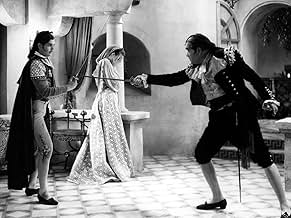
Legendary lover Douglas Fairbanks (as Don Juan) feels the fatigue of advancing years; so, the ageing lady-killer takes advantage of a misunderstanding, and fakes his own death. After a rest, Mr. Fairbanks tries to return to his amorous ways; but, nobody believes he's the real Don Juan. Through it all, Fairbanks fans both new (Merle Oberon as Antonita) and old (Benita Hume as Dona Dolores) flames.
A look at the credits of "The Private Life of Henry VIII" (1933) will reveal what filmmaker Alexander Korda had in mind - obviously, with "Don Juan", he hoped to duplicate the success of the earlier "Henry VIII". Unfortunately, this similarly staged "Private Life" found itself coming up short, and is significantly more lowly regarded. Indeed, it is a flat film. Moreover, the supporting cast is introduced in a confusing manner; it's difficult to keep track of who's who.
In his last film role, Fairbanks is terrific as an ageing "Don Juan". Interestingly, he succeeds in eliciting the feeling he memorably portrayed "Don Juan" sometime during his 1920s box office reign. Not so, the famed womanizer was played, in fact, by John Barrymore; and, in spirit, by Rudolph Valentino. Still, Fairbanks makes the role personal; undoubtedly, his status as an fading film superstar helped.
Fairbanks' best scene occurs about a half hour in, when he is informed of his character's "death" via the sword of Gibson Gowland (as Don Alfredo). Fairbanks pretends to be his character's mourning steward; then, he offers some interesting, likely personal, observations on fame. This is followed by a nice funeral sequence, revealing much about the famed lady-killer's escapades. Barry Mackay's deftly inept portrayal as a wannabe Juan is worth noting; his "inability" to leap effectively contracts Fairbanks' ageing gracefulness.
******* The Private Life of Don Juan (8/28/34) Alexander Korda ~ Douglas Fairbanks, Merle Oberon, Benita Hume
A look at the credits of "The Private Life of Henry VIII" (1933) will reveal what filmmaker Alexander Korda had in mind - obviously, with "Don Juan", he hoped to duplicate the success of the earlier "Henry VIII". Unfortunately, this similarly staged "Private Life" found itself coming up short, and is significantly more lowly regarded. Indeed, it is a flat film. Moreover, the supporting cast is introduced in a confusing manner; it's difficult to keep track of who's who.
In his last film role, Fairbanks is terrific as an ageing "Don Juan". Interestingly, he succeeds in eliciting the feeling he memorably portrayed "Don Juan" sometime during his 1920s box office reign. Not so, the famed womanizer was played, in fact, by John Barrymore; and, in spirit, by Rudolph Valentino. Still, Fairbanks makes the role personal; undoubtedly, his status as an fading film superstar helped.
Fairbanks' best scene occurs about a half hour in, when he is informed of his character's "death" via the sword of Gibson Gowland (as Don Alfredo). Fairbanks pretends to be his character's mourning steward; then, he offers some interesting, likely personal, observations on fame. This is followed by a nice funeral sequence, revealing much about the famed lady-killer's escapades. Barry Mackay's deftly inept portrayal as a wannabe Juan is worth noting; his "inability" to leap effectively contracts Fairbanks' ageing gracefulness.
******* The Private Life of Don Juan (8/28/34) Alexander Korda ~ Douglas Fairbanks, Merle Oberon, Benita Hume
Quite good
Douglas Fairbank Sr.'s swan song. He retired afterward and died five years later. Fairbanks was not very successful in the sound era, and this film was dismissed on its release, and flopped. It's actually pretty good, though. Fairbanks is a tad awkward, but it works in favor of the story. He plays an aging Don Juan. He is still a hit with the ladies, but he's annoyed that he has impersonators. After one of these impersonators is killed in action, Don Juan takes the opportunity to retire from the business, faking his own death. At first he enjoys his life as a regular man, but when he discovers that romance is much more difficult without his reputation preceding him, he decides to re-enter the identity of Don Juan. Problem is, no one believes him. It's a clever and very funny movie, beautifully shot and well acted. Merle Oberon is especially entertaining as a dancer.
When the legend becomes fact... retire.
Don Juan, the great lover, is now middle-aged and finds he no longer has the same appeal with the ladies. Meanwhile a young impostor keeps the Don Juan legend alive by kissing women all over town. When trying to make a comeback, the real Don Juan can't live up to his own legend.
This is a very funny movie and an interesting take on the Don Juan character. We see him forced to adhere to a strict diet, as his good looks are "his only asset", and balcony-climbing has become a chore. It's a tale about aging and clutching to one's youth.
The cast is great for this witty Alexander Korda film. Young Merle Oberon is very beautiful as a dancer whose celebrity profits from being kissed by the great Don Juan. Benita Hume is lovely as the one woman who understands Don Juan - his wife. And it's a rare treat to see Douglas Fairbanks Sr. in a sound film, playing Don Juan in what would be his final role. The movie's a lot of fun, and even the opening credits are full of wit.
This is a very funny movie and an interesting take on the Don Juan character. We see him forced to adhere to a strict diet, as his good looks are "his only asset", and balcony-climbing has become a chore. It's a tale about aging and clutching to one's youth.
The cast is great for this witty Alexander Korda film. Young Merle Oberon is very beautiful as a dancer whose celebrity profits from being kissed by the great Don Juan. Benita Hume is lovely as the one woman who understands Don Juan - his wife. And it's a rare treat to see Douglas Fairbanks Sr. in a sound film, playing Don Juan in what would be his final role. The movie's a lot of fun, and even the opening credits are full of wit.
Did you know
- TriviaFinal theatrical movie of Douglas Fairbanks (Don Juan).
- Crazy creditsLengthy, humorous and accurate role descriptions are listed for each character in the opening credits.
- ConnectionsFeatured in Broken Flowers (2005)
- SoundtracksThe Don Juan Serenade
(1934)
(Published in Great Britain with title "Senorita Carmencita")
Music by Mischa Spoliansky
Lyrics Arthur Wimperis
Performed by John Brownlee
Played as background music often
- How long is The Private Life of Don Juan?Powered by Alexa
Details
- Release date
- Country of origin
- Official site
- Language
- Also known as
- Privatni zivot Don Žuana
- Filming locations
- Production company
- See more company credits at IMDbPro
- Runtime
- 1h 29m(89 min)
- Color
- Aspect ratio
- 1.37 : 1
Contribute to this page
Suggest an edit or add missing content