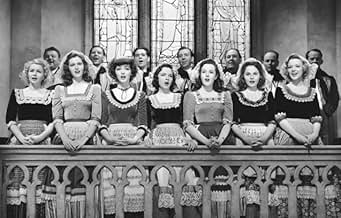
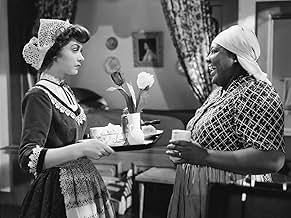
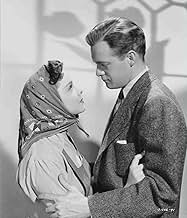
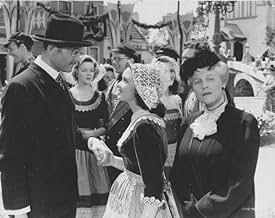
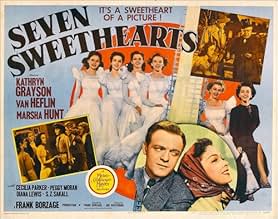
Henry falls in love with Billie, one of seven daughters of an eccentric hotel owner. Billie loves him back but refuses marriage because family tradition demands that the eldest daughter must... Read allHenry falls in love with Billie, one of seven daughters of an eccentric hotel owner. Billie loves him back but refuses marriage because family tradition demands that the eldest daughter must marry first.Henry falls in love with Billie, one of seven daughters of an eccentric hotel owner. Billie loves him back but refuses marriage because family tradition demands that the eldest daughter must marry first.
- Director
- Writers
- Stars
- Director
- Writers
- All cast & crew
- Production, box office & more at IMDbPro
6.5657
1
2
3
4
5
6
7
8
9
10
Featured reviews
A Pleasant Comedy
This wartime musical comedy is very charming, in part due to its unusual story line. Credit to director Frank Borzage and the writers for including many whimsical elements.
Songstress Kathryn Grayson plays the youngest daughter (Billie) of a Michigan family and carries the biggest load due to her vocalizing. When a New York photojournalist (Van Heflin as Henry Taggart) comes to their small town to cover the local tulip festival, he is caught off guard by the innkeeper's seven daughters, each a stunning beauty.
"Cuddles" Sakall is the father who runs his inn in an unconventional manner, but still clings to traditions. He is a lovable character with plenty of personality.
Though the story has its conflicts, it never feels heavy. This is a quirky film that is fun to watch.
Songstress Kathryn Grayson plays the youngest daughter (Billie) of a Michigan family and carries the biggest load due to her vocalizing. When a New York photojournalist (Van Heflin as Henry Taggart) comes to their small town to cover the local tulip festival, he is caught off guard by the innkeeper's seven daughters, each a stunning beauty.
"Cuddles" Sakall is the father who runs his inn in an unconventional manner, but still clings to traditions. He is a lovable character with plenty of personality.
Though the story has its conflicts, it never feels heavy. This is a quirky film that is fun to watch.
Dutch Theme Park
Seven Sweethearts has Van Heflin as a news reporter sent on a puff assignment to cover the famous Tulip Festival in Delft, Michigan. Then as now Michigan has a large Dutch population, at the time it was represented in the US Senate by Arthur Vandenberg. But this particular town has turned into a veritable Dutch Theme Park.
All presided over by the local innkeeper S.Z. Sakall whose hotel staff includes his seven lovely daughters and Louise Beavers. All have some kind of talent, but Sakall wants to keep them near. The oldest daughter is Marsha Hunt and Sakall if he has to lose them wants them married off in descending order. He pushes Heflin and Hunt together who just wants to get out of Delft and go on the stage.
But Heflin has eyes for Kathryn Grayson. The plot premise is the same as in the Fred Astaire/Rita Hayworth classic You Were Never Lovelier being done the same year at Columbia. It's a much better film than Seven Sweethearts, having those two as leads and a Jerome Kern score give it an insurmountable boost over this film.
Not that Seven Sweethearts isn't bad. It's the kind of romantic tale that Frank Borzage loved and while this isn't one of his classics it's passable enough entertainment. Kathryn Grayson sings some nice melodies nothing special though. And Van Heflin is a favorite.
Seven Sweethearts is old fashioned, but still good entertainment.
All presided over by the local innkeeper S.Z. Sakall whose hotel staff includes his seven lovely daughters and Louise Beavers. All have some kind of talent, but Sakall wants to keep them near. The oldest daughter is Marsha Hunt and Sakall if he has to lose them wants them married off in descending order. He pushes Heflin and Hunt together who just wants to get out of Delft and go on the stage.
But Heflin has eyes for Kathryn Grayson. The plot premise is the same as in the Fred Astaire/Rita Hayworth classic You Were Never Lovelier being done the same year at Columbia. It's a much better film than Seven Sweethearts, having those two as leads and a Jerome Kern score give it an insurmountable boost over this film.
Not that Seven Sweethearts isn't bad. It's the kind of romantic tale that Frank Borzage loved and while this isn't one of his classics it's passable enough entertainment. Kathryn Grayson sings some nice melodies nothing special though. And Van Heflin is a favorite.
Seven Sweethearts is old fashioned, but still good entertainment.
odd little film
"Seven Sweethearts" is about a journalist who travels to Holland, Michigan to do a story about tulip time there and falls in love. The owner of the hotel has seven young, lovely daughters, all with men's names, who live in an isolated little world of clogs and tulips. One of them is pretty Billie (Kathryn Grayson) with whom the jaded reporter falls in love. All the girls, with the exception of the ambitious, cold Reggie (Marsha Hunt) have boyfriends and are aching to get married. But tradition states that the oldest girl must marry first.
This movie seemed very long to me, strange, and somewhat boring. It's filled with B actors, with the exception of Heflin, Grayson, and character actor S.K. Sakall, who hands in one of the best acting scenes toward the end of the film when he has a confrontation with Billie. Grayson had a thin, fluttery coloratura soprano that nevertheless possessed some beautiful high notes and pianissimos, and she entertains throughout with songs and arias such as "Je suis Titania." She's good in her role. Heflin seems out of place but is quite likable.
For those who don't know, the oldest girl marrying first was and perhaps still is a tradition in many cultures. The ending is cute, but this is still a cloying film, and it's hard to believe that this family had no relatives in Holland that they were concerned about during wartime. I suppose the idea was to take everyone out of the war for a while.
This movie seemed very long to me, strange, and somewhat boring. It's filled with B actors, with the exception of Heflin, Grayson, and character actor S.K. Sakall, who hands in one of the best acting scenes toward the end of the film when he has a confrontation with Billie. Grayson had a thin, fluttery coloratura soprano that nevertheless possessed some beautiful high notes and pianissimos, and she entertains throughout with songs and arias such as "Je suis Titania." She's good in her role. Heflin seems out of place but is quite likable.
For those who don't know, the oldest girl marrying first was and perhaps still is a tradition in many cultures. The ending is cute, but this is still a cloying film, and it's hard to believe that this family had no relatives in Holland that they were concerned about during wartime. I suppose the idea was to take everyone out of the war for a while.
Starring Vehicle For Kathryn Grayson
Van Heflin is a roving photographer and story writer for a New York paper. He writes color pieces. He thinks he has found a suitable subject in New Delft in Michigan, where Dutch traditions survive. They are strongest in the eccentric hotel run by widowed S. Z. Sakall and his seven daughters, all of whom have boys' names. Heflin is initially annoyed by all the color, but soon falls in love with youngest daughter Kathryn Grayson. But an MGM feature needs some complications.
It's Joe Pasternak's first production for Metro, and it's his standard collection of schmaltz and sentiment under the direction of Frank Borzage -- who was getting tired of the tight rein on directors at the company. Pasternak clearly saw in Miss Grayson a chance to offer some competition to the Deanna Durbin machine he had been in charge of at Universal, and Miss Grayson gets a variety of songs to sing that show off her operatic voice. Cinematographer is in charge of lighting her, and does his usual impeccable job. It's good to see Heflin get a sympathetic lead for a change, and the usual MGM gloss is applied to a cast that includes Marsha Hunt, Cecillia Parker, Peggy Moran, Isobel Elsom, Donald Meek, and Louise Beavers. The highlight is the ensemble dance number in costume choreographed by Ernst Matray.
light escapism
Reporter Henry Taggart (Van Heflin) arrives in Little Delft, Michigan to write about the tulip festival. He encounters Mr. Van Maaster (S. Z. Sakall) who runs the local hotel with his seven beautiful male-named daughters. He falls for the youngest daughter Billie (Kathryn Grayson), but family tradition prevents her marrying until all the other sisters marry before her.
These are beautiful babes. This premise never made that much sense to me especially with so many daughters. I guess it's screwball fun, but it could be better with only one other sister aka Taming of the Shrew. The singing is not my style, but it doesn't detract. This is light entertainment which is good escapism for its time.
Did you know
- TriviaAlthough the onscreen credits say "original screenplay," a $200,000 lawsuit was filed against the screenwriters, MGM and producer Joe Pasternak by playwright Ferenc Herczeg in 1949, claiming they took the idea from his 1903 play Seven Sweethearts. Herczeg was in a Nazi concentration camp in 1942 when the film was released, and didn't hear about it until 1948. The case was settled out of court for a substantial amount.
- GoofsWhen Billie is singing to Henry, two white doves land on the windowsill. When they fly away, a string can be seen pulling on the leg of the dove on the left.
- ConnectionsFeatured in Personalities (1942)
- SoundtracksTulip Time
(1942) (uncredited)
Music by Burton Lane
Lyrics Ralph Freed
Played during the opening credits and sung by an offscreen chorus
Reprised at the tulip festival and danced by a chorus
Sung by Kathryn Grayson
Details
- Release date
- Country of origin
- Language
- Also known as
- Las siete novias
- Filming locations
- Production company
- See more company credits at IMDbPro
Box office
- Budget
- $752,000 (estimated)
- Runtime
- 1h 38m(98 min)
- Color
- Aspect ratio
- 1.37 : 1
Contribute to this page
Suggest an edit or add missing content