
A French captain (Jean-Pierre Aumont) poses as a Nazi to pinpoint a U-boat base off the coast of France, while assuming the identity of a look-a-like French citizen.A French captain (Jean-Pierre Aumont) poses as a Nazi to pinpoint a U-boat base off the coast of France, while assuming the identity of a look-a-like French citizen.A French captain (Jean-Pierre Aumont) poses as a Nazi to pinpoint a U-boat base off the coast of France, while assuming the identity of a look-a-like French citizen.


Jean-Pierre Aumont
- Bertrand Corlay
- (as Pierre Aumont)
- …


6.7384
1
2
3
4
5
6
7
8
9
10
Featured reviews
Brittany on the MGM back lot
This picture has the look and feel of a British film of the period, probably because it includes mainly actors who spent WWII in Hollywood under contract to MGM. Jean-Pierre Aumont and his colleagues show their previous training on stage through too large gestures and reactions. Also, the acting often looks as if war were a lot of fun.
Aumont is incredibly handsome but seems wasted in this two-dimensional portrayal of a Free French warrior. The picture no doubt bolstered the spirits of his fans, dramatizing the efforts of the Free French at a crucial time in history. Any authenticity in his character comes from the knowledge that he did indeed serve with the Free French, for which he was later decorated by the French government.
The best acting in the film is by the naturalistic Susan Peters and the classically trained Margaret Wycherly.
Nevertheless, the picture is worth seeing for its place in the history of movie making.
Aumont is incredibly handsome but seems wasted in this two-dimensional portrayal of a Free French warrior. The picture no doubt bolstered the spirits of his fans, dramatizing the efforts of the Free French at a crucial time in history. Any authenticity in his character comes from the knowledge that he did indeed serve with the Free French, for which he was later decorated by the French government.
The best acting in the film is by the naturalistic Susan Peters and the classically trained Margaret Wycherly.
Nevertheless, the picture is worth seeing for its place in the history of movie making.
Between Britain and Brittany
The film emerges from a moment when Hollywood was still adjusting its craft to the pressures and demands of a world at war, and that context permeates every technical and artistic choice on screen. The wartime environment shaped not only the tone but the methods of production: studios were urged to produce works that could sustain morale, clarify allegiances, and sketch the war in forms that felt immediate without necessarily adhering to combat realism. This influences the film's visual texture-there is a crispness to the lighting and a restraint in the staging that reflects the necessity of speed, efficiency, and thematic clarity rather than the more atmospheric ambiguity that would later define post-1945 resistance dramas. At the same time, 1943 was a year in which Hollywood began experimenting with grittier chiaroscuro to mirror the clandestine nature of occupied Europe, so the film occupies that early transitional space between polished studio artificiality and emerging noir-inflected war aesthetics.
The cinematography favors a careful balance of theatrical composition and emerging location-realism simulation. Interiors tend to rely on controlled lighting that emphasizes sharp contrasts between characters, which suits a story of infiltration, suspicion, and shifting identities, even if the effect sometimes appears too immaculate to evoke the psychological tension it seeks. When compared to The Moon Is Down (1943), which uses shadow and spatial depth to evoke the pervasive dread of an occupied town, the film opts for a clearer, more linear visual strategy, shaping its images to ensure narrative legibility over atmospheric weight. On the other hand, when juxtaposed with the rougher visual textures of Edge of Darkness (1943), the film's studio-driven compositions feel slightly more contained, less invested in rugged realism and more aligned with precise dramatic staging. That choice is neither a flaw nor a strength by itself, but it does position the film firmly within the propagandistic priorities of its production year: clarity over ambiguity, legibility over immersion.
The sound design and score underscore these tendencies. The music aligns with 1940s studio conventions where emotional cues are explicit, with orchestration rising predictably to underline tension or resolve. There is a certain earnestness to this musical language, a desire to embolden the viewer rather than allow unease to linger. While this works well in moments of mobilizing patriotic sentiment, it occasionally undercuts opportunities for a deeper psychological portrayal of clandestine resistance. Compared to The Moon Is Down (1943), which employs a more subdued and atmospheric scoring style to capture the dread of occupation, this film maintains a brisker musical momentum, reflective of its focus on mission-driven urgency rather than existential strain. Sound effects-boots on cobblestones, distant artillery rumbles, hushed voices-are cleanly mixed but never intrusive; they serve narrative efficiency more than world-building density.
Acting in the film adheres to the wartime performance codes of moral clarity and expressive restraint. The protagonist's dual role demands a modulation between controlled intensity and outward calm, and this is executed with commendable discipline even when the script pushes toward melodramatic expression. The supporting cast operates within archetypes recognizable from similar wartime resistance narratives, though certain secondary performances bring more nuance than the screenplay might have initially suggested. Faces are captured in tight, deliberate close-ups that highlight moral resolve, fear, or defiance, often substituting psychological depth with emblematic purpose. In comparison with Uncertain Glory (1944), close enough in era and similar in its depiction of duplicity within occupied Europe, the performances here are less shaded by moral ambiguity and more aligned with the straightforward heroism the year of production demanded. This reduces complexity but increases readability, which was a key aim of films intended to strengthen civilian morale while acknowledging the difficulties of European resistance movements.
Production design reflects the paradoxes of wartime filmmaking: a desire to evoke occupied Brittany with limited resources and without the ability to film in Europe. Sets are crafted with care, and although the textures sometimes betray their studio origins, there is an admirable effort to recreate the claustrophobia of villages under surveillance. Costuming is notably precise, lending visual credibility even when spatial authenticity is harder to achieve. The mise-en-scène purposely avoids overcrowding: resistance films of this moment often rely on bareness rather than density, suggesting a landscape emptied by fear and control, and the film follows that pattern effectively. Yet there are areas where a more daring visual strategy could have deepened the sense of danger-props and environments occasionally appear too orderly for a region under occupation, a contrast to the more lived-in feel of Edge of Darkness (1943), which leans into rugged textures to enhance the sense of communal struggle.
Editing supports the film's forward momentum with clean, unobtrusive cuts. Transitions are designed for precision rather than rhythm, with a tempo that mirrors the protagonist's mission-focused trajectory. There are moments where the editing feels almost too brisk, sacrificing atmospheric buildup in favor of narrative progression, but that tendency fits the propagandistic function of many 1943 resistance films: urgency was a virtue, contemplation a luxury. The film's pacing remains consistent, though some viewers might sense that emotional beats resolve more quickly than they have time to fully resonate.
Thematically, the film reflects the morale-bolstering imperatives of mid-war Hollywood: a reassurance that occupied Europe harbored both courage and loyalty, and that clandestine operations were both necessary and noble. The message is unmistakable, shaped by the anxieties and needs of 1943, and this historical context explains both the film's strengths-its conviction, clarity, and sense of purpose-and its limitations, such as occasional overstatement and a reluctance to explore morally ambiguous territory. At a time when audiences needed orientation as much as entertainment, the film answers that call with a blend of suspense, visual polish, and narrative directness, offering a crafted wartime artifact whose technical and artistic choices reveal as much about the moment it was made as about the story it seeks to evoke.
The cinematography favors a careful balance of theatrical composition and emerging location-realism simulation. Interiors tend to rely on controlled lighting that emphasizes sharp contrasts between characters, which suits a story of infiltration, suspicion, and shifting identities, even if the effect sometimes appears too immaculate to evoke the psychological tension it seeks. When compared to The Moon Is Down (1943), which uses shadow and spatial depth to evoke the pervasive dread of an occupied town, the film opts for a clearer, more linear visual strategy, shaping its images to ensure narrative legibility over atmospheric weight. On the other hand, when juxtaposed with the rougher visual textures of Edge of Darkness (1943), the film's studio-driven compositions feel slightly more contained, less invested in rugged realism and more aligned with precise dramatic staging. That choice is neither a flaw nor a strength by itself, but it does position the film firmly within the propagandistic priorities of its production year: clarity over ambiguity, legibility over immersion.
The sound design and score underscore these tendencies. The music aligns with 1940s studio conventions where emotional cues are explicit, with orchestration rising predictably to underline tension or resolve. There is a certain earnestness to this musical language, a desire to embolden the viewer rather than allow unease to linger. While this works well in moments of mobilizing patriotic sentiment, it occasionally undercuts opportunities for a deeper psychological portrayal of clandestine resistance. Compared to The Moon Is Down (1943), which employs a more subdued and atmospheric scoring style to capture the dread of occupation, this film maintains a brisker musical momentum, reflective of its focus on mission-driven urgency rather than existential strain. Sound effects-boots on cobblestones, distant artillery rumbles, hushed voices-are cleanly mixed but never intrusive; they serve narrative efficiency more than world-building density.
Acting in the film adheres to the wartime performance codes of moral clarity and expressive restraint. The protagonist's dual role demands a modulation between controlled intensity and outward calm, and this is executed with commendable discipline even when the script pushes toward melodramatic expression. The supporting cast operates within archetypes recognizable from similar wartime resistance narratives, though certain secondary performances bring more nuance than the screenplay might have initially suggested. Faces are captured in tight, deliberate close-ups that highlight moral resolve, fear, or defiance, often substituting psychological depth with emblematic purpose. In comparison with Uncertain Glory (1944), close enough in era and similar in its depiction of duplicity within occupied Europe, the performances here are less shaded by moral ambiguity and more aligned with the straightforward heroism the year of production demanded. This reduces complexity but increases readability, which was a key aim of films intended to strengthen civilian morale while acknowledging the difficulties of European resistance movements.
Production design reflects the paradoxes of wartime filmmaking: a desire to evoke occupied Brittany with limited resources and without the ability to film in Europe. Sets are crafted with care, and although the textures sometimes betray their studio origins, there is an admirable effort to recreate the claustrophobia of villages under surveillance. Costuming is notably precise, lending visual credibility even when spatial authenticity is harder to achieve. The mise-en-scène purposely avoids overcrowding: resistance films of this moment often rely on bareness rather than density, suggesting a landscape emptied by fear and control, and the film follows that pattern effectively. Yet there are areas where a more daring visual strategy could have deepened the sense of danger-props and environments occasionally appear too orderly for a region under occupation, a contrast to the more lived-in feel of Edge of Darkness (1943), which leans into rugged textures to enhance the sense of communal struggle.
Editing supports the film's forward momentum with clean, unobtrusive cuts. Transitions are designed for precision rather than rhythm, with a tempo that mirrors the protagonist's mission-focused trajectory. There are moments where the editing feels almost too brisk, sacrificing atmospheric buildup in favor of narrative progression, but that tendency fits the propagandistic function of many 1943 resistance films: urgency was a virtue, contemplation a luxury. The film's pacing remains consistent, though some viewers might sense that emotional beats resolve more quickly than they have time to fully resonate.
Thematically, the film reflects the morale-bolstering imperatives of mid-war Hollywood: a reassurance that occupied Europe harbored both courage and loyalty, and that clandestine operations were both necessary and noble. The message is unmistakable, shaped by the anxieties and needs of 1943, and this historical context explains both the film's strengths-its conviction, clarity, and sense of purpose-and its limitations, such as occasional overstatement and a reluctance to explore morally ambiguous territory. At a time when audiences needed orientation as much as entertainment, the film answers that call with a blend of suspense, visual polish, and narrative directness, offering a crafted wartime artifact whose technical and artistic choices reveal as much about the moment it was made as about the story it seeks to evoke.
Good underground film and portrayal of mixed French loyalties in WW II
This is a Hollywood movie made in the middle of World War II. It's a very good portrayal of British and French undercover work during the war, as well as of the French underground. To its credit, it also shows the betrayal of some of the French, including a double agent and traitors among the underground.
The French underground contributed to the Allied efforts against Germany in WW II. But the country also saw a significant collaboration with the Nazis, in the Vichy government, socializing with the Germans, and spies and double agents in the underground.
At the time "Assignment in Brittany" was being made, Germany's blockade of the Atlantic was in place. By the end of 1943, when it had ended - due to loss of ships and air support, the Germans had sunk 3,500 merchant ships enroute to the United Kingdom and Russia. Some 175 Allied war ships also had been sunk. Germany lost 783 U-boats and 47 surface ships.
There wasn't a specific U-boat base on the coast of France that had to be knocked out, as this movie shows. Rather, Allied bombing raids hit several ports from which U-boats operated. But, most of the U-boat losses were from Allied aircraft and convoy escort ships. The Atlantic battle was one of attrition in which the Allies outlasted the Germans with superior naval power combined with a blockade of Germany from its Baltic Sea ports.
This film has some good action toward the end. But its best aspect is the portrayal of the French underground and people during the German occupation. The story is an interesting one. Considering that MGM had to shoot the movie on its Hollywood studios, the film has a realistic feel as though it's taking place in Brittany France during the war.
The cast all do a fine job and the film quality and production are good. This was the American film debut of both Jean-Pierre Aumont and Signe Hasso. He is Capt. Pierre Metard in the French Army, and goes undercover back into France as a look-alike, Bertrand Corlay. His duty is to pinpoint the hidden German U-boat base so that the Allies can attack and destroy it. The story has an element of romance, but not the obviously usual type that Hollywood inserts to increase appeal for a film.
Here are a couple of interesting lines from the movie. Corlay and a schoolteacher, Jean Kerenor (played by Richard Whorf) are going into the town pub when a German guard stops them. Kerenor says, "One uncovers. It's good form for the content." They take their hats off and enter, where town men and German officers are seated at tables. But all others are wearing their hats.
To Metard, who impersonates her son, Madame Henriette Corlay says, "There are women, monsieur, who give their love but once. I think Ann's one of them. When you go..." Capt. Metard, "It's not I she loves... it's your son." Mme. Corlay, "I don't think you believe that. Monsieur, don't make her suffer any more."
The French underground contributed to the Allied efforts against Germany in WW II. But the country also saw a significant collaboration with the Nazis, in the Vichy government, socializing with the Germans, and spies and double agents in the underground.
At the time "Assignment in Brittany" was being made, Germany's blockade of the Atlantic was in place. By the end of 1943, when it had ended - due to loss of ships and air support, the Germans had sunk 3,500 merchant ships enroute to the United Kingdom and Russia. Some 175 Allied war ships also had been sunk. Germany lost 783 U-boats and 47 surface ships.
There wasn't a specific U-boat base on the coast of France that had to be knocked out, as this movie shows. Rather, Allied bombing raids hit several ports from which U-boats operated. But, most of the U-boat losses were from Allied aircraft and convoy escort ships. The Atlantic battle was one of attrition in which the Allies outlasted the Germans with superior naval power combined with a blockade of Germany from its Baltic Sea ports.
This film has some good action toward the end. But its best aspect is the portrayal of the French underground and people during the German occupation. The story is an interesting one. Considering that MGM had to shoot the movie on its Hollywood studios, the film has a realistic feel as though it's taking place in Brittany France during the war.
The cast all do a fine job and the film quality and production are good. This was the American film debut of both Jean-Pierre Aumont and Signe Hasso. He is Capt. Pierre Metard in the French Army, and goes undercover back into France as a look-alike, Bertrand Corlay. His duty is to pinpoint the hidden German U-boat base so that the Allies can attack and destroy it. The story has an element of romance, but not the obviously usual type that Hollywood inserts to increase appeal for a film.
Here are a couple of interesting lines from the movie. Corlay and a schoolteacher, Jean Kerenor (played by Richard Whorf) are going into the town pub when a German guard stops them. Kerenor says, "One uncovers. It's good form for the content." They take their hats off and enter, where town men and German officers are seated at tables. But all others are wearing their hats.
To Metard, who impersonates her son, Madame Henriette Corlay says, "There are women, monsieur, who give their love but once. I think Ann's one of them. When you go..." Capt. Metard, "It's not I she loves... it's your son." Mme. Corlay, "I don't think you believe that. Monsieur, don't make her suffer any more."
We need more movies like this
Solid story, I think well done and paced nicely for modern sensibilities even. Dramatic scenes jump to quite harrowing action without warning, and play out realistically. A relatively simple, high-stakes spy/war plot, clearly resolved. Nice bits of play acting, being discovered, double agents, etc. etc.
Some here complain about the acting, but I thought it all worked great, and the supporting cast really held up their end; even people on screen for two minutes seem real, and to be motivated by actual emotion.
Not a great transfer, and hard to watch but I caught it on TCM. Nicely done sets, and mostly works within the confines of budget by keeping things indoors and at night. The few outdoor scenes (especially those in the day) are a bit lame in the backlot/studio way they were, but that's about the only flaw I can find in it.
Some here complain about the acting, but I thought it all worked great, and the supporting cast really held up their end; even people on screen for two minutes seem real, and to be motivated by actual emotion.
Not a great transfer, and hard to watch but I caught it on TCM. Nicely done sets, and mostly works within the confines of budget by keeping things indoors and at night. The few outdoor scenes (especially those in the day) are a bit lame in the backlot/studio way they were, but that's about the only flaw I can find in it.
from a novel by Helen MacInnes
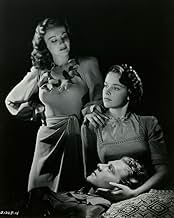
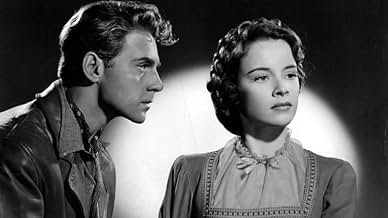
Jean-Pierre Aumont, Susan Peters, Signe Hasso, and Margaret Wycherly star in "Assignment in Brittany," a 1943 film.
The story concerns a young man, Capt. Pierre Matard (Aumont), who is sent to France because he is a lookalike of an injured man, Bertrand Corlay (also Aumont) hospitalized in London. The British need to location of a port in Brittany that has destroyed a lot of British ships. Pierre goes to France and impersonates Corlay.
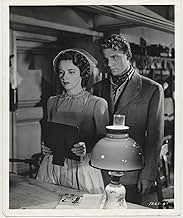
Matard knows a great many facts about Corlay but nothing of his cold personality and the fact that he has been playing ball with the Nazis. Bertrand's mother catches on fairly quickly; his girlfriend (Susan Peters) is slower on the draw. Corlay also has a mistress (Hasso), which comes as a surprise. He works with the Free French, all the while trying to keep himself and others out of danger.
The last time I saw Jean-Pierre Aumont was in a TV movie called Sins in 1986. He was 75 years old, and I don't think I ever saw him as anything but elderly. Well, boy, what a hunk he was - that beautiful mane of hair, glorious smile, good build - wow.
This is a typical black and white film about the war, showing the courage of the people in the French resistance. Everybody was good, and despite a critique of stage mannerisms on this board, I was frankly unaware of it.
It was nice to see the lovely Susan Peters as the shy but loving girlfriend of Bernard, who actually falls for his impersonator Matard. Only two years later, she would be in a hunting accident and spend the following 7 years in a wheelchair, until her death in 1952 at the age of 31.
Aumont actually fought with the Free French in North Africa. He was widowed in 1951 when his wife, Maria Montez, died of heart failure while sitting in a hot bath. He remarried in 1956, to Marisa Pavan, and stayed married to her until his death 45 years later.
Good movie, good suspense, and a young and vital Aumont.
The story concerns a young man, Capt. Pierre Matard (Aumont), who is sent to France because he is a lookalike of an injured man, Bertrand Corlay (also Aumont) hospitalized in London. The British need to location of a port in Brittany that has destroyed a lot of British ships. Pierre goes to France and impersonates Corlay.
Matard knows a great many facts about Corlay but nothing of his cold personality and the fact that he has been playing ball with the Nazis. Bertrand's mother catches on fairly quickly; his girlfriend (Susan Peters) is slower on the draw. Corlay also has a mistress (Hasso), which comes as a surprise. He works with the Free French, all the while trying to keep himself and others out of danger.
The last time I saw Jean-Pierre Aumont was in a TV movie called Sins in 1986. He was 75 years old, and I don't think I ever saw him as anything but elderly. Well, boy, what a hunk he was - that beautiful mane of hair, glorious smile, good build - wow.
This is a typical black and white film about the war, showing the courage of the people in the French resistance. Everybody was good, and despite a critique of stage mannerisms on this board, I was frankly unaware of it.
It was nice to see the lovely Susan Peters as the shy but loving girlfriend of Bernard, who actually falls for his impersonator Matard. Only two years later, she would be in a hunting accident and spend the following 7 years in a wheelchair, until her death in 1952 at the age of 31.
Aumont actually fought with the Free French in North Africa. He was widowed in 1951 when his wife, Maria Montez, died of heart failure while sitting in a hot bath. He remarried in 1956, to Marisa Pavan, and stayed married to her until his death 45 years later.
Good movie, good suspense, and a young and vital Aumont.


Did you know
- TriviaThe Germans built several submarine bases on the west coast of France after their occupation of the country in 1940. Enormous submarine pens of reinforced concrete were erected at Bordeaux, Brest, La Pallice, Lorient and Saint-Nazaire. These structures protected the U-Boats from attack and allowed them freer access to the Atlantic Ocean, as the submarines did not have to transverse the English Channel or go around the UK via the North Sea from bases in Germany. As of 2020 these massive constructions are still largely intact and some have even been re-purposed. The pens at La Pallice can be seen in Das Boot (1981) and Raiders of the Lost Ark (1981).
- Quotes
Jean Kerenor: [as he and Metard/Corlay are stopped by a guard from entering a pub] One uncovers. It's good form for the content.
[German officers as well as town folk are seated inside]
Details
- Runtime
- 1h 36m(96 min)
- Color
- Aspect ratio
- 1.37 : 1
Contribute to this page
Suggest an edit or add missing content