

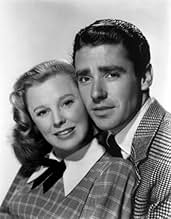
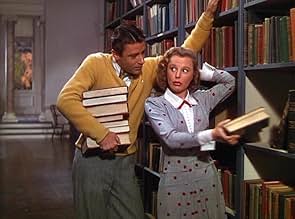
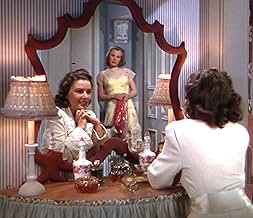
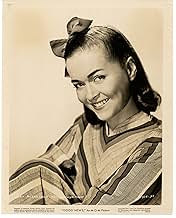
Golden Globe winner June Allyson and Peter Lawford star in this enjoyable musical about a football hero who falls in love with his French tutor.Golden Globe winner June Allyson and Peter Lawford star in this enjoyable musical about a football hero who falls in love with his French tutor.Golden Globe winner June Allyson and Peter Lawford star in this enjoyable musical about a football hero who falls in love with his French tutor.
- Nominated for 1 Oscar
- 1 nomination total


Robert E. Strickland
- Peter Van Dyne III
- (as Robert Strickland)


King Baggot
- Man at Coat Check Counter
- (uncredited)

William A. Boardway
- Dance Guest
- (uncredited)
6.72.9K
1
2
3
4
5
6
7
8
9
10
Featured reviews
9tavm
Good News is one of the most underrated MGM musicals
Good News is one of the most underrated MGM musicals from the '40s I've ever seen from that era. While leads June Allyson and Peter Lawford are no Judy Garland and Mickey Rooney (who ironically, were the original considered leads for this movie version years ago), they sing and dance entertainingly enough for one to not notice after a while. Another underrated talent showcased here is one Joan McCracken who shines in the opening number and the later made-for-film specialty "Pass That Peace Pipe", which was eventually nominated for an Oscar for Best Original Song. And dig the "Velvet Fog" Mel Torme in his younger days crooning here! Excellent debut for director Charles Walters and screenwriters Betty Comden and Adolph Green makes this one of the most spectacular musical comedies I've seen yet! P.S. Among the extras on the DVD are two numbers from the 1930 film version of Good News, the title number and "The Varsity Drag", both performed energetically and athletically by a young woman named Dorothy McNulty, later to be known as Penny Singleton from the Blondie movies. All of the above are well worth checking out!
The musical is pretty good, the transfers I've seen need a touch up
The musical itself is everything you expect from an MGM musical of the late 1940's - rather light on story and heavy on visual style and good music. I've had the advantage of seeing the original movie musical from 1930, at least what's left of it, which is actually the entire film minus the Technicolor finale. That original has the disadvantage of not having the technical advantages in sound recording and camera mobility. However, the original 1930 movie does have the character of Babe being played by the pixie-like Bessie Love of "Broadway Melody of 1929", and she is every inch the mischievious flapper that Joan McCracken just is not. In fact, the coeds in the 1947 film seem very much like they're from 1947, they're just dressed up in the fashions and driving the cars of the 1920's.
In this film, Connie (June Allyson) is tutoring Tommy (Peter Lawford) in French just as in the 1930 version - except there the subject was astronomy. However, there are two big differences here. In the 1947 film, Lawford's motivation for studying French is to win the affection of a beautiful new student. Also, Tommy knows exactly who Connie is, and their attraction builds slowly. In the 1930 film, the first time Tommy sees Connie she isn't exactly wildly attractive, but she is the best student in the subject at the college. Also, Tommy is already enrolled in French, he is just in danger of failing it and not being able to play in the big game. Also notice in this later film the presence of a very young Mel Torme who seems to be standing in for Cliff Edwards from the 1930 version, complete with ukelele.
In this film, Connie (June Allyson) is tutoring Tommy (Peter Lawford) in French just as in the 1930 version - except there the subject was astronomy. However, there are two big differences here. In the 1947 film, Lawford's motivation for studying French is to win the affection of a beautiful new student. Also, Tommy knows exactly who Connie is, and their attraction builds slowly. In the 1930 film, the first time Tommy sees Connie she isn't exactly wildly attractive, but she is the best student in the subject at the college. Also, Tommy is already enrolled in French, he is just in danger of failing it and not being able to play in the big game. Also notice in this later film the presence of a very young Mel Torme who seems to be standing in for Cliff Edwards from the 1930 version, complete with ukelele.
A wonderful fantastatical world of joy and possibilities
The chance of waking up at six AM in a semi semiconscious state, flipping on my T.V. and seeing the 1947 film GOOD NEWS, well was such a wonderful surprise. The film of a fantasy life on a college campus sparked me into awaking on a happy positive note. Zany,yes Colorful,yes Lighthearted,yes ESCAPE,yes into a world that seem be be removed from our modern day world. Why shouldn't a Film, Broadway play allow you to slide back into a more comfortable Time and Place? Look theater and the film industry's job is to give us all a place to regenerate our joys and outlook of life. Some how the current films main purpose seems too be,to hang a dark cloud over the populous, retreat into the sanctuary of our home. Times are a changing! and bad in now good. Someone with Intelligence and Knowledge should pick up the script of GOOD NEWS! and run like deer to Broadway in good old N.Y.C. and get this gem on stage. The American public is ripe for some good,happy toe taping fun. I want to leave a theater and feel there is still hope for the human race.....Isn't that what entertaining is all about? But of course the non talented producers seem to not understand the needs of a American Renaissance. Is there something wrong leaving a theater with a smile on your face and a song in your heart". Or is that too plebeian? Lou Sisbarro
The good news is...this is a delightful musical
There are definitely better musicals than 'Good News' made before, during and since. That doesn't matter, because although it has imperfections it is still a delight in so many ways.
Starting with 'Good News' problems, it is agreed that the scene with Connie Gilchrist is overwritten and overacted (in fact, some of the humour is tiresomely flat) and that the football scene is overlong and drags. It is also a shame that Mel Torme, by far the best singer in the cast, has very little to do, a singer of his calibre deserves better than that.
On the other hand, 'Good News' is very lavishly produced. It is true that the costumes and hair-styles are more 1940s than 1920s, but they do look lovely, and numbers like "Pass that Peace Pipe" and "Varsity Drag" are filmed beautifully. The music is wonderful, especially "Pass that Peace Pipe", "Varsity Drag", the title number, "Imagine" and the most famous song "The Best Things in Life are Free". "The French Lesson" is very funny as well. The choreography similarly dazzles, especially in "Pass that Peace Pipe" and "Varsity Drag", which are two of the energetic musical numbers of the 40s.
Charles Walters directs excellently, hard to believe that this was his directorial debut. The script is mostly very amusing and fills the heart with warmth, the film crackles with energy and while the story is fluffy and predictable admittedly it is also light-hearted, heart-warming and charming with solid pacing, also not being as contrived or corny as some musicals' stories were.
June Allyson has a role that fits her to the bone and it shows off her personality and strengths so well. She sings "Imagine" touchingly wistfully. Am not usually a fan of Peter Lawford, but while his singing is only adequate if even that he does give some charm to a rather caddish character and his dancing looks more comfortable than in other musicals he participated in. He and Allyson sparkle together, especially in "The French Lesson", even if they are too old to pass for college students. Joan McCracken is crackling fun that it beggars belief that her career wasn't bigger.
In conclusion, has flaws but 'Good News' is a delight on the most part. 8/10 Bethany Cox
Starting with 'Good News' problems, it is agreed that the scene with Connie Gilchrist is overwritten and overacted (in fact, some of the humour is tiresomely flat) and that the football scene is overlong and drags. It is also a shame that Mel Torme, by far the best singer in the cast, has very little to do, a singer of his calibre deserves better than that.
On the other hand, 'Good News' is very lavishly produced. It is true that the costumes and hair-styles are more 1940s than 1920s, but they do look lovely, and numbers like "Pass that Peace Pipe" and "Varsity Drag" are filmed beautifully. The music is wonderful, especially "Pass that Peace Pipe", "Varsity Drag", the title number, "Imagine" and the most famous song "The Best Things in Life are Free". "The French Lesson" is very funny as well. The choreography similarly dazzles, especially in "Pass that Peace Pipe" and "Varsity Drag", which are two of the energetic musical numbers of the 40s.
Charles Walters directs excellently, hard to believe that this was his directorial debut. The script is mostly very amusing and fills the heart with warmth, the film crackles with energy and while the story is fluffy and predictable admittedly it is also light-hearted, heart-warming and charming with solid pacing, also not being as contrived or corny as some musicals' stories were.
June Allyson has a role that fits her to the bone and it shows off her personality and strengths so well. She sings "Imagine" touchingly wistfully. Am not usually a fan of Peter Lawford, but while his singing is only adequate if even that he does give some charm to a rather caddish character and his dancing looks more comfortable than in other musicals he participated in. He and Allyson sparkle together, especially in "The French Lesson", even if they are too old to pass for college students. Joan McCracken is crackling fun that it beggars belief that her career wasn't bigger.
In conclusion, has flaws but 'Good News' is a delight on the most part. 8/10 Bethany Cox
A knockout!
I know of no other movie musical that feels so much like I am watching a Broadway show. Just one great number right after another and they all have something to do with the story or characters. And just think of all the history behind those actors. June? Well, there never was a role she was better suited for and she gives it an enthusiasm no one else could have. Peter? Miscast? Yup, but this isn't Shakespeare and he is so sweet. McCracken? What a shame there is so little of this talent on screen. I remember first seeing this movie when I was a teenager. 40 years later it is better. Now I can appreciate the broad comedy and it is amazing to see how tender it can be. Why they didn't extend the design into 1920s hairstyles for the women I can't understand,but the movie looks great. The DVD I just saw must have been remastered; the colors were brilliant. For some of us this is MGM's best. Certainly its most honest and least pretentious. What a peek into a world that is gone and will never come back. Such innocence.


Did you know
- TriviaSince Peter Lawford spoke French fluently and June Allyson did not, Lawford had to teach Allyson how to teach him to speak French in "The French Lesson" scene.
- GoofsDuring the "Varsity Drag" musical number, one of the chorus girls is accidentally pushed out of step.
Possibly (even likely) intentional as non-professional (i.e., high school, college) productions are rarely perfectly performed.
- Quotes
Pooch: Come on, Bobby, get your uniform off.
Bobby Turner: Aw, gee, Poochy. I get so little chance to wear it I like to keep it on until the last minute. Sometimes I even rub a little dirt on it just to convince myself I'm really on the team.
- ConnectionsFeatured in MGM Parade: Episode #1.4 (1955)
- SoundtracksGood News
(uncredited)
Music by Ray Henderson
Lyrics by Lew Brown and Buddy G. DeSylva
Sung by Joan McCracken and chorus
- How long is Good News?Powered by Alexa
Details
- Release date
- Country of origin
- Languages
- Also known as
- ¡Viva el amor!
- Filming locations
- Production company
- See more company credits at IMDbPro
Box office
- Budget
- $1,662,718 (estimated)
- Runtime
- 1h 33m(93 min)
- Aspect ratio
- 1.37 : 1
Contribute to this page
Suggest an edit or add missing content