

After Fugui and Jiazhen lose their personal fortunes, they raise a family and survive difficult cultural changes during 1940s to 1970s China.After Fugui and Jiazhen lose their personal fortunes, they raise a family and survive difficult cultural changes during 1940s to 1970s China.After Fugui and Jiazhen lose their personal fortunes, they raise a family and survive difficult cultural changes during 1940s to 1970s China.
- Won 1 BAFTA Award
- 5 wins & 6 nominations total
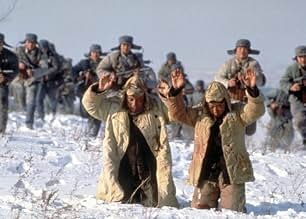
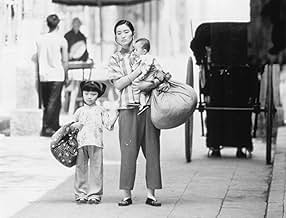
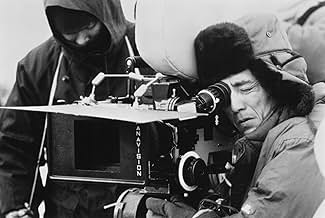
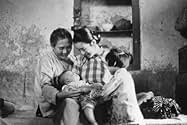


- Director
- Writers
- All cast & crew
- Production, box office & more at IMDbPro
Featured reviews
Moving, comic and political despite being a little bleak at times it is almost without flaw
I watched this movie because it had won the top award at Cannes. I hadn't high hopes for some reason, but I figured it was worth a look. I am very glad I did because it is a wonderful little piece that can be enjoyed with little knowledge of the regime against which it is set. The story follows the family's misfortunes and how they are affected by the rise of Chairman Mao. Their plight is touching as they suffer wrongs but also show compassion on others all the while trying to do the right thing by the system that is impacting on them. Even when tragedy occurs they never blame Communism but heap it on themselves instead.
This unfolds over many years with the rise of Mao as the backdrop. The parrellel between the two things is clear without being forced or rammed down our throats it's a wonderful bit of handling. Even better is the infusion of comic touches all the way through, the dialogue (even in subtitle form) is great and is witty and touching I laughed out loud many times.
Not having seen any other films by Zhang, I can only hope they are as good as this one. The cast, too, do a great job with the film. You Ge's Fugui is fabulous he is a draw from the start on, and his ageing is so convincing that credit must go not only to the makeup but also to Ge for doing so well with potentially tragic figure. Likewise Gong is superb but ages less convincingly. The support cast are all good from the children through to the figures of Mao like Jiang and Niu. The only thing that saddened me about the two great leads is to think that Western cinema will never care to have them in any films I guess that when it comes to Hong Kong cinema Hollywood only are interested if it has slow-motion and guns! (and they think they're cutting edge!)
Overall I find it very hard to fault this film as it has so much going for it on so many levels. Just as a human story it is excellent, and the historical context only serves to make it better. Comic and touching right to it's perfectly pitched close, this should be searched out by anyone who wants a genuinely moving human tale with political comment sown into each frame without intrusion.
My Honest Opinion
I watched this movie because I was taking a class on the politics of China. When I saw that this movie covered such an expansive time period I thought "great, I will learn something." That I did. I cried, I cheered, I stayed up very late... I made my then future husband watch it... he liked it too, not as much as I do.
I tell everyone in conversations about movies that this one is my all time favorite. It took the place of American Beauty, a movie that I have watched about eleven times.
So, I recommend it. If I had a lot of money I would pay people to watch this. It is THAT great.
An All-Time Top Ten Film
Most Chinese who lived through Mao's Revolution say this film tells it like it was at the simple townsperson level. Though it can serve as an overview of Chinese history 1944 to 1970 or so, unlike Lean's "Gandhi" or "Lawrence of Arabia", this is not a hero's biopic. Instead we see a foolish, once rich but now fallen heir and his wife blown about by the winds of fortune for three decades and challenged as parents trying to raise two children under increasingly harsh and punitive communist tyranny. What you sense in this film, that I've never seen before in any Chinese film, is how the ethical and moral principles that have prevailed in Chinese culture for 2500 years - a mix of transcendence and pragmatism, humility and grit, cosmic harmonic balance and social duty - allows an ordinary couple to accept unbearable tragedy and keep going. It also shows what this survival strategy costs them in their Communist context. The screenplay is full of cosmic irony. It makes us aware, without shouting, that this is just one family among millions. As Yimou's transitional screen message says: "...leaving no family unaffected". It is to that extent, a tribute film.
Maybe ten hours of Kieslowski's "Decalogue" might accomplish the same broad survey of of human happenstance and emotion. Maybe Kurosawa in three or four hours. But never in two plus hours have I seen the scope Zhang Yimou achieves here. "To Live" also contains as wise a moral lesson as any film I've seen, and it's a gentle one despite the surrounding violence. I couldn't paraphrase the lesson for you. I wouldn't try. Just watch. It will reach you non-verbally in about 90 minutes. Just know, this isn't Shakespeare, Hollywood or soap opera. It's something else.
Gong Li's work is as powerful as anything Streep or Sarandon have ever done in the west - which is all the more inspiring since the camera doesn't lavish star-level attention on her. As her husband, Ge You turns in an emotionally riveting, charming, sometimes funny and devastatingly honest performance. The direction is sure handed, the shooting unfailingly gorgeous. Zhang Yimou's cinematic canvass has never been so big or his palette so colorful and controlled. Full of spectacle, great sweeps of time and onrushing tides of humanity, "To Live" is still, in the end, a sweet and poignant epic with an intimate, observant heart. Great story telling. Do not miss! Try to view a letterbox version on a big screen.
Such a moving piece
It is easy to dismiss this movie as a "Sad period piece," but with another look, one sees that this is a story about triumph... of taking heart in the fact that one lives. The title, "To Live," is very apt, as we see the rises and falls of one small family living through the ups and downs of China during the pre-revolutionary era, the civil war, the Great Leap Forward, the Proletariat Cultural Revolution, and beyond.
This movie is at turns dramatic, humorous, touching, chilling, heart-wrenching, and triumphant. A true roller coaster of emotions, played out in the subtle tones only Chinese film can truly capture.
An emotional, rewarding experience
'Huozhe' or 'To Live' takes us on a trip in China that will last us from the 40's through the 70's. Through that time, we will see life through the eyes of Fugui and Jiazhen, a husband and wife with 2 children, as well as Fugui's mother.
Fugui, the husband, has a gambling problem which will set off a chain of events that will have them lose the house, and eventually separate the family. Jiazhen, his wife, is forced to take a job which will put a strain on her children. Communist and nationalist armies battle each other, and the rise of Chairman Mao will affect them as well. Fugui will go through layers of mishaps that will change him forever. I don't want to detail anything more about the plot, it's much more worth viewing it and experiencing it then anything I can ever say here.
Not once is this movie boring, effectively placing us there, with the family. The acting seems so natural that it feels like you are there, traveling with them, rather then viewing them through a camera. This of course shows the strength of Zhang's directing. You Ge plays Fugui, a popular actor in China, won the award for the Cannes Film Festival. Li Gong is beautiful, and portrays her character with such passion, it's no wonder she has been nominated nearly a dozen times, winning most.
Emotional without being sappy, honest, & historically accurate, the film does have a black shroud covering it. In times of sadness, it's lifted a bit to allow us to see happiness, indeed, life, pull this family together. It even has bits of humor in it, at times, I laughed along with the family as much as I felt their pain. Little details, such paintings in the background that chip away as time goes by, shows how much care went into making this film. Characters that seem unimportant become part of the story later.
What a wonderful film. When I saw it 10 years ago, it not only changed the way I saw foreign movies, it also changed the way I see life and people. Any movie that can do that is one I highly recommend to anyone.
A perfect 10 out of 10.


Did you know
- TriviaInitially, Director Zhang Yimou was forbidden from filmmaking for 5 years by the Chinese Communist Party as a result of making this film. However, due to outside pressure this was later withdrawn.
- Quotes
Little Bun: [playing with chickens] When will they grow up?
Xu Jiazhen: Very soon.
Little Bun: And then?
Xu Fugui: And then... the chickens will turn into geese... and the geese will turn into sheep... and the sheep will turn into oxen.
Little Bun: And after the oxen?
Xu Fugui: After oxen...
Xu Jiazhen: After oxen, Little Bun will grow up.
Little Bun: I want to ride on an ox's back.
Xu Jiazhen: You will ride on an ox's back.
Xu Fugui: Little Bun won't ride on an ox... he'll ride trains and planes... and life will get better and better.
- How long is To Live?Powered by Alexa
Details
Box office
- Gross US & Canada
- $2,332,728
- Opening weekend US & Canada
- $32,900
- Nov 20, 1994
- Gross worldwide
- $2,332,728
- Runtime
- 2h 13m(133 min)
- Color
- Sound mix
- Aspect ratio
- 1.85 : 1