IMDb RATING
5.8/10
3.9K
YOUR RATING

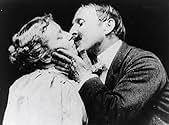
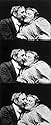
In a medium closeup shot of the first kiss ever recorded on screen, two fervent lovers cuddle and talk passionately at a hair's breadth, just before the love-smitten gentleman decides to giv... Read allIn a medium closeup shot of the first kiss ever recorded on screen, two fervent lovers cuddle and talk passionately at a hair's breadth, just before the love-smitten gentleman decides to give his chosen one an innocent peck.In a medium closeup shot of the first kiss ever recorded on screen, two fervent lovers cuddle and talk passionately at a hair's breadth, just before the love-smitten gentleman decides to give his chosen one an innocent peck.
- Director
- Writer
- Stars
- Awards
- 1 win total


- Director
- Writer
- All cast & crew
- Production, box office & more at IMDbPro
5.83.8K
1
2
3
4
5
6
7
8
9
10
Featured reviews
Interesting Historical Landmark
As short and simple as it is, this is still an interesting historical landmark, as one of the first movies to be surrounded by public controversy. Some of the other early movies are remembered for the initial surprise they caused (for example, the fear that some audiences felt when they first saw footage of a train coming towards the camera), but the reaction to this movie was different.
Given the accounts of the reactions that it caused, the footage itself seems surprisingly innocuous. The participants in "The Kiss" are neither young nor attractive, and their feelings towards each other seem more affectionate than sensual. That it caused such comment in its time no doubt speaks in part to what that generation was concerned with, but even at that, surely most persons had seen this kind of behavior before.
What made this different was that it was projected on a large screen for all to see, and that an intimate moment had been captured in a form that could be preserved forever and replayed over and over. Unlike a stage scene, a movie is never really over and forgotten, since audiences can still see it many decades later. Also unlike a stage scene, a movie camera could capture the scene in a (medium) close-up, bringing the viewer much closer to the kissing couple.
A movie also captures the entire sequence of events, so that the impression of what is happening is fleshed out in its entirety, making it more memorable than even the most well-chosen moment for a still photograph. All of these thoughts may not fully explain it either, but the fact remains that, though there are certainly some different things that other media can do better than cinema, this was an early example of what movies can do to a degree that other art forms cannot quite rival.
Given the accounts of the reactions that it caused, the footage itself seems surprisingly innocuous. The participants in "The Kiss" are neither young nor attractive, and their feelings towards each other seem more affectionate than sensual. That it caused such comment in its time no doubt speaks in part to what that generation was concerned with, but even at that, surely most persons had seen this kind of behavior before.
What made this different was that it was projected on a large screen for all to see, and that an intimate moment had been captured in a form that could be preserved forever and replayed over and over. Unlike a stage scene, a movie is never really over and forgotten, since audiences can still see it many decades later. Also unlike a stage scene, a movie camera could capture the scene in a (medium) close-up, bringing the viewer much closer to the kissing couple.
A movie also captures the entire sequence of events, so that the impression of what is happening is fleshed out in its entirety, making it more memorable than even the most well-chosen moment for a still photograph. All of these thoughts may not fully explain it either, but the fact remains that, though there are certainly some different things that other media can do better than cinema, this was an early example of what movies can do to a degree that other art forms cannot quite rival.
One of the First 'Censored' Films
It was just like the Edison company to create a big scandal by filming a couple kissing in grotesque closeup view. From the beginning, they had never really been an especially 'clean' company, in the sense of keeping with the moralities of the time. (Instead, if you want to know the truth, they were actually just the opposite). You had the boxing films, scandalous enough already considering how illegal the sport was at the time; you had cockfights, a despicable sport similar to bullfighting; you had dancers like Annabelle Moore showing their ankles and belly-dancing, etc. And what did they do to demonstrate the first use of film editing? They reenacted the beheading of Mary Stuart. So it's no surprise that when it came to picking a scene from the famous Broadway musical "The Widow Jones", they of course chose the kissing bit. Today, it's a fairly innocent kiss, not a romantic movie star kiss, not a quick peck, just a sweet little display of affection. Unfortunately, such displays of affection, famous Broadway musical or not, just weren't acceptable at the time--and as result of the film's release, there were cries of censorship.
Furthermore, that's not the worst of it. After news of the scandalous feature spread throughout the cinemas, it appears to have inspired further remakes, including Edison's own "The Kiss" of 1900. So I guess, thanks to Edison, this 20-second clip is the big reason why Hollywood and the other companies all around the world went perverse on us and to this day indulge in violence and sex. Sad, but so true. Who would have though a brief kiss on the lips inspired all the garbage shown in movie theaters today?
Furthermore, that's not the worst of it. After news of the scandalous feature spread throughout the cinemas, it appears to have inspired further remakes, including Edison's own "The Kiss" of 1900. So I guess, thanks to Edison, this 20-second clip is the big reason why Hollywood and the other companies all around the world went perverse on us and to this day indulge in violence and sex. Sad, but so true. Who would have though a brief kiss on the lips inspired all the garbage shown in movie theaters today?
They get ready to kiss, begin to kiss, and kiss and kiss and kiss in a way that brings down the house every time.
In 1896 the Edison Company purchased the rights to a motion picture projector that had been invented by C. Francis Jenkins and Thomas Armat. The projector was renamed the Vitascope and had its commercial debut on April 23, 1896. During its first year the most popular film shown using the Edison vitascope was the May Irwin Kiss.
May Irwin who was a Canadian actor, comedienne and singer. Her first starring role on Broadway came in 1895 in a musical comedy created for her by J.J. McNally, called The Widow Jones. In one key scene at the end of the play, Irwin and her costar, John C. Rice, kiss each other with something of a flourish. Many were scandalized when they recreated their stage kiss for Edison's camera the following year, and one clergy member denounced the film as "a lyric of the stockyards". Critic Herbert Stone complained, " . . . neither participant is physically attractive and the spectacle of their prolonged pasturing on each other's lips was hard to beat when only life size. Magnified to gargantuan proportions and repeated three times over is absolutely disgusting!" Despite, or perhaps because of these derisive reviews, the May Irwin Kiss became the most popular film produced that year by Thomas Edison's film company.
May Irwin who was a Canadian actor, comedienne and singer. Her first starring role on Broadway came in 1895 in a musical comedy created for her by J.J. McNally, called The Widow Jones. In one key scene at the end of the play, Irwin and her costar, John C. Rice, kiss each other with something of a flourish. Many were scandalized when they recreated their stage kiss for Edison's camera the following year, and one clergy member denounced the film as "a lyric of the stockyards". Critic Herbert Stone complained, " . . . neither participant is physically attractive and the spectacle of their prolonged pasturing on each other's lips was hard to beat when only life size. Magnified to gargantuan proportions and repeated three times over is absolutely disgusting!" Despite, or perhaps because of these derisive reviews, the May Irwin Kiss became the most popular film produced that year by Thomas Edison's film company.
A first in more ways than one.
I discovered silent movies one day when I was too sick to go to school and the local educational TV station ran several of them. That was where I was exposed to this early Edison short. Later I discovered this simple film, showing nothing more than 2 people kissing, was blasted by clergyman who used such terms as "A lyric of the stockyards" to describe this intimate act blown up larger than life and projected on a screen. Here moving pictures were still in their infancy and already certain people who let zealotry replace common sense were calling for censorship! Some things never change! We are lucky that so many Edison shorts survived for us to see these days. You have to wonder what all the fuss was about.
Historical Landmark
Hearing what a scandal this caused, you have to wonder what the 1890-oids would think of what goes into movies today. But considering its only about 10 seconds long, you really have got to see this movie. Its a historical landmark. First romance ever filmed people, are you really going to miss that??
Imagine if kissing on screen was still a social taboo? Imagine every romance movie ever made ( Casablanca, Titanic, Breakfast at Tiffany's, Romeo and Juliet, etc. ) minus any physical affection whatsoever. it would be a lot more weird and a lot less fun. Think of what we owe to this film. I think we kind of owe these guys aprox. 10 seconds of our time.
Imagine if kissing on screen was still a social taboo? Imagine every romance movie ever made ( Casablanca, Titanic, Breakfast at Tiffany's, Romeo and Juliet, etc. ) minus any physical affection whatsoever. it would be a lot more weird and a lot less fun. Think of what we owe to this film. I think we kind of owe these guys aprox. 10 seconds of our time.


Did you know
- TriviaA fifteen-second kiss by May Irwin and John C. Rice brought the first demand for film censorship.
- ConnectionsEdited into Sixty Years of Seduction (1981)
Details
- Release date
- Country of origin
- Language
- Also known as
- The John C. Rice-May Irwin Kiss
- Production company
- See more company credits at IMDbPro
- Runtime
- 1m
- Color
- Sound mix
- Aspect ratio
- 1.33 : 1
Contribute to this page
Suggest an edit or add missing content