IMDb RATING
7.5/10
1.3K
YOUR RATING

1979. A village in Pakistan. A widow sees her 17 years old son being attracted to Islamist militants. It brings her past back.1979. A village in Pakistan. A widow sees her 17 years old son being attracted to Islamist militants. It brings her past back.1979. A village in Pakistan. A widow sees her 17 years old son being attracted to Islamist militants. It brings her past back.
- Director
- Writers
- Stars
- Awards
- 8 wins & 2 nominations total


Aamir Ali Malik
- Saleem
- (as Aamir Malik)
Navtej Singh Johar
- Jaswant
- (as Navtej Johar)

Arshad Mahmood
- Mehboob
- (as Arsad Mahmud)
Fareeha Jabeen
- Shabnam
- (as Fariha Jabeen)

- Director
- Writers
- All cast & crew
- Production, box office & more at IMDbPro
7.51.3K
1
2
3
4
5
6
7
8
9
10
Featured reviews
The Genesis....
Its easier to stand on the present day and judge the event on the basis of right and wrong (of course staying within the limits of being politically correct). Khamosh Paani does a bit more than that. It goes back in time and attempts to point at the situations/ circumstances/ events where the seeds of terrorism & fundamentalism were sown by wily politicians in the garb of uniting the people to cleanse the nation. Khamosh Paani is an introspection and references to the Godzilla staring at everyones face today. Through the character of Veero/ Ayesha the director attempts to give a message that history is bound to repeat itself when the path of extremism is chosen.
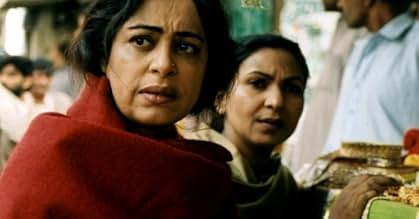
Kiron Kher: Veero/ Ayesha has seen it before and its almost like a a deja vu should her son chooses to tread the path. The pain and anguish of the mother, yet being resilient to hold back the truth is well portrayed.
Aamir Ali Malik: He does a good job of donning various caps from a headless "lover-boy" chicken, metamorphosing into a purpose-filled jihaadi youth.
Shilpa Shukla: It took me a while to recollect this "Chak De" girl. Her character was merely "used" to show the ideology change in Saleem owing to which the there isn't much meat.
The built up of the events and narrative deserves brownie points. The prosake village life where everybody is living harmoniously like a family is depicted well and the initiation of the snail-paced transformation.
Sabiha Sumar has a story to tell and it does come with a bitter pill, therefore the viewpoint is open to debate. And the barrage of pot calling the kettle black starts - NOW!
Kiron Kher: Veero/ Ayesha has seen it before and its almost like a a deja vu should her son chooses to tread the path. The pain and anguish of the mother, yet being resilient to hold back the truth is well portrayed.
Aamir Ali Malik: He does a good job of donning various caps from a headless "lover-boy" chicken, metamorphosing into a purpose-filled jihaadi youth.
Shilpa Shukla: It took me a while to recollect this "Chak De" girl. Her character was merely "used" to show the ideology change in Saleem owing to which the there isn't much meat.
The built up of the events and narrative deserves brownie points. The prosake village life where everybody is living harmoniously like a family is depicted well and the initiation of the snail-paced transformation.
Sabiha Sumar has a story to tell and it does come with a bitter pill, therefore the viewpoint is open to debate. And the barrage of pot calling the kettle black starts - NOW!
A film, subtle and noble
Nothing prepares you for the subtlety and searing honesty of this film. There is something ennobling about watching it. The director gives us vignettes of life in Pakistan, circa 1980 and 1999, and paints the portrait of a country in the grip of a ruinous Islamization. General Zia-ul-Haq took the country backward by several years through his repressive policies and Sabiha Sumar shows us glimpse of what he did to the country.
In a film so subtly wrought, it is unusual to be struck particularly by acting performances but for Shilpa Shukla is a revelation. It is a splendidly understated performance and I must say her sensuality stirred me too.
In a film so subtly wrought, it is unusual to be struck particularly by acting performances but for Shilpa Shukla is a revelation. It is a splendidly understated performance and I must say her sensuality stirred me too.
Awakening a Sleeping Giant
'Silent Waters'is consciously designed to be an issue-based movie. The subject seemed to follow a certain pattern in which women took the center stage in the narrative. Though, there were parallel tracks as well, but it was a perception developed out of simple observation, and not because there was any particular ideology to propound.
The film is based on actual events that took place when the Indian sub-continent was partitioned in 1947 into two new states - India and Pakistan. It was a time of intense violence. In pre-partition Punjab, Muslims and Sikhs had lived side-by-side, but during the partition men from both sides of the religious divide slaughtered each other. Each looted the other's property, which included their respective women: little distinction was made between robbing cattle and abducting women. Muslim men abducted Sikh women while Sikh men abducted Muslim women. The women were raped, bought, sold and, sometimes, murdered; some ended up marrying their abductors.
This film has a definite Punjabi feel, set on the borders of Pakistan in 1979 - the year that president Zia Ul-Haq introduced Islamic laws into what was meant to be a secular country.
Silent Waters is chillingly humane drama that will stay with you for a long time.
The film is based on actual events that took place when the Indian sub-continent was partitioned in 1947 into two new states - India and Pakistan. It was a time of intense violence. In pre-partition Punjab, Muslims and Sikhs had lived side-by-side, but during the partition men from both sides of the religious divide slaughtered each other. Each looted the other's property, which included their respective women: little distinction was made between robbing cattle and abducting women. Muslim men abducted Sikh women while Sikh men abducted Muslim women. The women were raped, bought, sold and, sometimes, murdered; some ended up marrying their abductors.
This film has a definite Punjabi feel, set on the borders of Pakistan in 1979 - the year that president Zia Ul-Haq introduced Islamic laws into what was meant to be a secular country.
Silent Waters is chillingly humane drama that will stay with you for a long time.
Simple and subtle, haunting and poignant
This amazing picture is undoubtedly a statement on the never-ending religious war that has become a sad but integral part of history. Terrible to see how people are not allowed to live their life in peace, so much that some of them are forced to change their primary identity in order to survive. This story takes place in 1979 in the village of Charkhi, Pakistani Punjab, where middle-aged widow Ayesha lives a poor lifestyle with her 18-year-old son Saleem. She makes a living from her late husband's pension and by teaching the Quran to young girls. Her son Saleem is a handsome, simple and likable guy who is in love with a young girl named Zubeida. But soon starts the trouble, when Saleem suddenly gets involved with a group of Islamists. He breaks up from Zubeidaa, and Ayesha is frightened to see her son turning into an extremist, as this brings her past back and reminds her of a secret which has haunted her for years, a secret of which even Saleem is unaware. Painful flashbacks to the violent Partition hint, with a woman standing on the well's edge, are heartbreaking. One brave woman chose to live, but now circumstances take her back to this very damned well, to complete the uncompleted.
Khamosh Pani is a film evidently made with passion and sincerity. It is brilliantly directed and acted. The story is one of its kind, and the execution is superb. The dialogues are very well-written and the film is benefited by a wonderful background score. Sabiha Sumar skillfully captures the dim atmosphere of the Pakistani Punjab, and the quiet, sombre narrative style effectively symbolises the silent waters it deals with. The power of this film seems to come not only from the realistic way in which it was depicted and the honesty with which its issue was handled, but equally from the roundly excellent acting. Sumar's cast, which consists mainly of Indian actors, is led by one of the finest actresses in India, Kirron Kher. Kher is outstanding as the struggling, strong and tormented Ayesha, and infuses her role with depth and pathos very few actresses would be able to. Aamir Malik is convincing as Saleem, and his character's transformation from a carefree romantic fool to a decisive Islamist is well done. Shilpa Shukla is lovely as Zubeidaa but she mostly shines in the film's last scene.
To sum it up, Khamosh Pani is one exceptional piece of art. The many ironies it conveys are horrifying but simple. The film's last few sequences are deeply moving and touching. One scene (you will know what I am talking about) is really poignant. I highly recommend you to see this film.
Khamosh Pani is a film evidently made with passion and sincerity. It is brilliantly directed and acted. The story is one of its kind, and the execution is superb. The dialogues are very well-written and the film is benefited by a wonderful background score. Sabiha Sumar skillfully captures the dim atmosphere of the Pakistani Punjab, and the quiet, sombre narrative style effectively symbolises the silent waters it deals with. The power of this film seems to come not only from the realistic way in which it was depicted and the honesty with which its issue was handled, but equally from the roundly excellent acting. Sumar's cast, which consists mainly of Indian actors, is led by one of the finest actresses in India, Kirron Kher. Kher is outstanding as the struggling, strong and tormented Ayesha, and infuses her role with depth and pathos very few actresses would be able to. Aamir Malik is convincing as Saleem, and his character's transformation from a carefree romantic fool to a decisive Islamist is well done. Shilpa Shukla is lovely as Zubeidaa but she mostly shines in the film's last scene.
To sum it up, Khamosh Pani is one exceptional piece of art. The many ironies it conveys are horrifying but simple. The film's last few sequences are deeply moving and touching. One scene (you will know what I am talking about) is really poignant. I highly recommend you to see this film.
no words to describe
I am at a loss of words after watching this one which is more than a film, it is an experience therefore, the only words in which this masterpiece can be described are adjectives-mind blowing, shocking, great in narrative and style, simple and subtle, poignant, brilliant exposition. Here is finally a movie, that shocks you, surprises you, questions you, slaps you, make you cry, shows you a mirror-to sum up evoke strong responses. The film finally succeeds in speaking a universal language. Here No sides are taken but just roots you to the middle of the premise. It touched the epic proportions of earlier masterpieces Garam Hawa and Tamas, based on partition issues. Though an influence of Iranian new wave cinema is seen on film maker sabiha sumer yet it is an original piece. A superior product, a touching tale, a classic world cinema, indeed.. "Jinhe naaz hai Black par wo kahan hain".


Did you know
- TriviaThe film had trouble finding a distributor for theatrical release in Pakistan, due to perceived lack of market. Despite this the filmmakers organized 41 free screenings throughout small towns and villages all across the country, starting with a premiere in Wah, where the film was shot.
- ConnectionsFeatured in Women Make Film: A New Road Movie Through Cinema (2018)
Details
- Release date
- Countries of origin
- Official sites
- Languages
- Also known as
- El silencio del agua
- Filming locations
- Production companies
- See more company credits at IMDbPro
Box office
- Gross US & Canada
- $7,384
- Opening weekend US & Canada
- $1,617
- Oct 10, 2004
- Gross worldwide
- $7,384
Contribute to this page
Suggest an edit or add missing content