IMDb RATING
7.5/10
1.3K
YOUR RATING

1979. A village in Pakistan. A widow sees her 17 years old son being attracted to Islamist militants. It brings her past back.1979. A village in Pakistan. A widow sees her 17 years old son being attracted to Islamist militants. It brings her past back.1979. A village in Pakistan. A widow sees her 17 years old son being attracted to Islamist militants. It brings her past back.
- Director
- Writers
- Stars
- Awards
- 8 wins & 2 nominations total

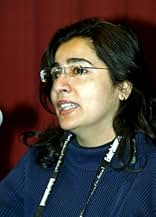
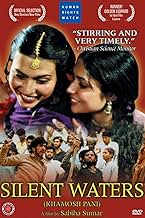
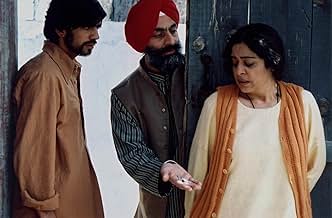

Aamir Ali Malik
- Saleem
- (as Aamir Malik)
Navtej Singh Johar
- Jaswant
- (as Navtej Johar)

Arshad Mahmood
- Mehboob
- (as Arsad Mahmud)
Fareeha Jabeen
- Shabnam
- (as Fariha Jabeen)

- Director
- Writers
- All cast & crew
- Production, box office & more at IMDbPro
7.51.3K
1
2
3
4
5
6
7
8
9
10
Featured reviews
Outstanding movie
This is an outstanding movie, illustrating life in rural Punjab in Pakistan and how the ugly scepter of religious fundamentalism raises its head and disrupts the peaceful flow of village life under General Zia. At the every end, it refers to the current version of an old story under yet another General, Musharaf.
The central story is about Ayesha, a Sikh girl abducted and left behind during the Partition, who has made a new life for herself in Pakistan, being forced to take on a new identity, marrying one of her abductors, and raising a son she dotes upon. The return of her long lost brother as a pilgrim and the taking over of the village by fanatics ends up destroying the life she had created. Kirron Kher in the lead role is very good and all the actors do a great job.
My only concern is that viewers without a close understanding of the India Pakistan Partition may miss out some of the subtleties. That however did not stop the judges at a European film festival from awarding the best actress prize to Kirron Kher.
The central story is about Ayesha, a Sikh girl abducted and left behind during the Partition, who has made a new life for herself in Pakistan, being forced to take on a new identity, marrying one of her abductors, and raising a son she dotes upon. The return of her long lost brother as a pilgrim and the taking over of the village by fanatics ends up destroying the life she had created. Kirron Kher in the lead role is very good and all the actors do a great job.
My only concern is that viewers without a close understanding of the India Pakistan Partition may miss out some of the subtleties. That however did not stop the judges at a European film festival from awarding the best actress prize to Kirron Kher.
South Asian filmmakers are maturing
Every now and then you are suddenly hit by a movie that leaves an impression on you. This movie has the potential for the same.
If I ever to describe the movie in one word - that would be "moving". It indeed moved me. After the movie my only response was silence. I just didn't know how to react. It was an experience - though a very real one. It was as if you are witness to the events and you feel so frustrated that there is nothing you can do about it.
I could write about the story of the movie, however a part of the fun in the movie is the way the story unfolds itself. So I better keep mum on that. I would just mention that the story is set in Rawalpindi area of Pakistan and its the story about a mother and a son living there. Though its not a social statement, it touches upon the issues of religion, partition, coexistence, terrorism besides being an emotional and philosophical drama.
On the movie making, I think its a brilliantly written script. A dialogue that I still remember from the film is when the mother says - "If the son is not mine then who in the world is." It is a painful acceptance of the solitude and the loneliness of each and everyone of us.
The acting is almost perfect. In fact it seems that there are no actors in the movie. Its as if real people are living those lives. I wonder how the director found such actors. Kiron Kher, in her central role as the mother, has outperformed herself. Her silence is so expressive, that she doesn't need any dialogues.
On the whole I think the movie deserves great credit. I am terribly disappointed at the (current) 6.8 rating at IMDb. I realize that its a non-populist movie but I would have felt that anybody who ended up seeing the movie would be affected by it. As for me, I give it a perfect 10.
If I ever to describe the movie in one word - that would be "moving". It indeed moved me. After the movie my only response was silence. I just didn't know how to react. It was an experience - though a very real one. It was as if you are witness to the events and you feel so frustrated that there is nothing you can do about it.
I could write about the story of the movie, however a part of the fun in the movie is the way the story unfolds itself. So I better keep mum on that. I would just mention that the story is set in Rawalpindi area of Pakistan and its the story about a mother and a son living there. Though its not a social statement, it touches upon the issues of religion, partition, coexistence, terrorism besides being an emotional and philosophical drama.
On the movie making, I think its a brilliantly written script. A dialogue that I still remember from the film is when the mother says - "If the son is not mine then who in the world is." It is a painful acceptance of the solitude and the loneliness of each and everyone of us.
The acting is almost perfect. In fact it seems that there are no actors in the movie. Its as if real people are living those lives. I wonder how the director found such actors. Kiron Kher, in her central role as the mother, has outperformed herself. Her silence is so expressive, that she doesn't need any dialogues.
On the whole I think the movie deserves great credit. I am terribly disappointed at the (current) 6.8 rating at IMDb. I realize that its a non-populist movie but I would have felt that anybody who ended up seeing the movie would be affected by it. As for me, I give it a perfect 10.
The Genesis....
Its easier to stand on the present day and judge the event on the basis of right and wrong (of course staying within the limits of being politically correct). Khamosh Paani does a bit more than that. It goes back in time and attempts to point at the situations/ circumstances/ events where the seeds of terrorism & fundamentalism were sown by wily politicians in the garb of uniting the people to cleanse the nation. Khamosh Paani is an introspection and references to the Godzilla staring at everyones face today. Through the character of Veero/ Ayesha the director attempts to give a message that history is bound to repeat itself when the path of extremism is chosen.
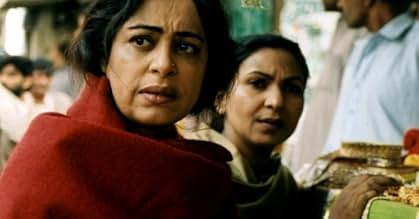
Kiron Kher: Veero/ Ayesha has seen it before and its almost like a a deja vu should her son chooses to tread the path. The pain and anguish of the mother, yet being resilient to hold back the truth is well portrayed.
Aamir Ali Malik: He does a good job of donning various caps from a headless "lover-boy" chicken, metamorphosing into a purpose-filled jihaadi youth.
Shilpa Shukla: It took me a while to recollect this "Chak De" girl. Her character was merely "used" to show the ideology change in Saleem owing to which the there isn't much meat.
The built up of the events and narrative deserves brownie points. The prosake village life where everybody is living harmoniously like a family is depicted well and the initiation of the snail-paced transformation.
Sabiha Sumar has a story to tell and it does come with a bitter pill, therefore the viewpoint is open to debate. And the barrage of pot calling the kettle black starts - NOW!
Kiron Kher: Veero/ Ayesha has seen it before and its almost like a a deja vu should her son chooses to tread the path. The pain and anguish of the mother, yet being resilient to hold back the truth is well portrayed.
Aamir Ali Malik: He does a good job of donning various caps from a headless "lover-boy" chicken, metamorphosing into a purpose-filled jihaadi youth.
Shilpa Shukla: It took me a while to recollect this "Chak De" girl. Her character was merely "used" to show the ideology change in Saleem owing to which the there isn't much meat.
The built up of the events and narrative deserves brownie points. The prosake village life where everybody is living harmoniously like a family is depicted well and the initiation of the snail-paced transformation.
Sabiha Sumar has a story to tell and it does come with a bitter pill, therefore the viewpoint is open to debate. And the barrage of pot calling the kettle black starts - NOW!
Simple and subtle, haunting and poignant
This amazing picture is undoubtedly a statement on the never-ending religious war that has become a sad but integral part of history. Terrible to see how people are not allowed to live their life in peace, so much that some of them are forced to change their primary identity in order to survive. This story takes place in 1979 in the village of Charkhi, Pakistani Punjab, where middle-aged widow Ayesha lives a poor lifestyle with her 18-year-old son Saleem. She makes a living from her late husband's pension and by teaching the Quran to young girls. Her son Saleem is a handsome, simple and likable guy who is in love with a young girl named Zubeida. But soon starts the trouble, when Saleem suddenly gets involved with a group of Islamists. He breaks up from Zubeidaa, and Ayesha is frightened to see her son turning into an extremist, as this brings her past back and reminds her of a secret which has haunted her for years, a secret of which even Saleem is unaware. Painful flashbacks to the violent Partition hint, with a woman standing on the well's edge, are heartbreaking. One brave woman chose to live, but now circumstances take her back to this very damned well, to complete the uncompleted.
Khamosh Pani is a film evidently made with passion and sincerity. It is brilliantly directed and acted. The story is one of its kind, and the execution is superb. The dialogues are very well-written and the film is benefited by a wonderful background score. Sabiha Sumar skillfully captures the dim atmosphere of the Pakistani Punjab, and the quiet, sombre narrative style effectively symbolises the silent waters it deals with. The power of this film seems to come not only from the realistic way in which it was depicted and the honesty with which its issue was handled, but equally from the roundly excellent acting. Sumar's cast, which consists mainly of Indian actors, is led by one of the finest actresses in India, Kirron Kher. Kher is outstanding as the struggling, strong and tormented Ayesha, and infuses her role with depth and pathos very few actresses would be able to. Aamir Malik is convincing as Saleem, and his character's transformation from a carefree romantic fool to a decisive Islamist is well done. Shilpa Shukla is lovely as Zubeidaa but she mostly shines in the film's last scene.
To sum it up, Khamosh Pani is one exceptional piece of art. The many ironies it conveys are horrifying but simple. The film's last few sequences are deeply moving and touching. One scene (you will know what I am talking about) is really poignant. I highly recommend you to see this film.
Khamosh Pani is a film evidently made with passion and sincerity. It is brilliantly directed and acted. The story is one of its kind, and the execution is superb. The dialogues are very well-written and the film is benefited by a wonderful background score. Sabiha Sumar skillfully captures the dim atmosphere of the Pakistani Punjab, and the quiet, sombre narrative style effectively symbolises the silent waters it deals with. The power of this film seems to come not only from the realistic way in which it was depicted and the honesty with which its issue was handled, but equally from the roundly excellent acting. Sumar's cast, which consists mainly of Indian actors, is led by one of the finest actresses in India, Kirron Kher. Kher is outstanding as the struggling, strong and tormented Ayesha, and infuses her role with depth and pathos very few actresses would be able to. Aamir Malik is convincing as Saleem, and his character's transformation from a carefree romantic fool to a decisive Islamist is well done. Shilpa Shukla is lovely as Zubeidaa but she mostly shines in the film's last scene.
To sum it up, Khamosh Pani is one exceptional piece of art. The many ironies it conveys are horrifying but simple. The film's last few sequences are deeply moving and touching. One scene (you will know what I am talking about) is really poignant. I highly recommend you to see this film.
no words to describe
I am at a loss of words after watching this one which is more than a film, it is an experience therefore, the only words in which this masterpiece can be described are adjectives-mind blowing, shocking, great in narrative and style, simple and subtle, poignant, brilliant exposition. Here is finally a movie, that shocks you, surprises you, questions you, slaps you, make you cry, shows you a mirror-to sum up evoke strong responses. The film finally succeeds in speaking a universal language. Here No sides are taken but just roots you to the middle of the premise. It touched the epic proportions of earlier masterpieces Garam Hawa and Tamas, based on partition issues. Though an influence of Iranian new wave cinema is seen on film maker sabiha sumer yet it is an original piece. A superior product, a touching tale, a classic world cinema, indeed.. "Jinhe naaz hai Black par wo kahan hain".


Did you know
- TriviaThe film had trouble finding a distributor for theatrical release in Pakistan, due to perceived lack of market. Despite this the filmmakers organized 41 free screenings throughout small towns and villages all across the country, starting with a premiere in Wah, where the film was shot.
- ConnectionsFeatured in Women Make Film: A New Road Movie Through Cinema (2018)
Details
- Release date
- Countries of origin
- Official sites
- Languages
- Also known as
- El silencio del agua
- Filming locations
- Production companies
- See more company credits at IMDbPro
Box office
- Gross US & Canada
- $7,384
- Opening weekend US & Canada
- $1,617
- Oct 10, 2004
- Gross worldwide
- $7,384
Contribute to this page
Suggest an edit or add missing content