IMDb RATING
6.8/10
3.3K
YOUR RATING

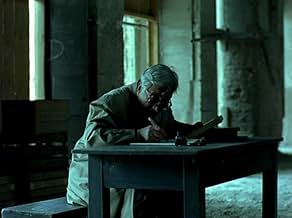
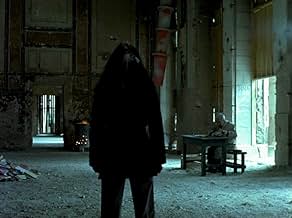
An indictment of modern times divided into three "kingdoms": "Enfer" ("Hell"), "Purgatoire" ("Purgatory") and "Paradis" ("Paradise").An indictment of modern times divided into three "kingdoms": "Enfer" ("Hell"), "Purgatoire" ("Purgatory") and "Paradis" ("Paradise").An indictment of modern times divided into three "kingdoms": "Enfer" ("Hell"), "Purgatoire" ("Purgatory") and "Paradis" ("Paradise").
- Awards
- 1 win & 6 nominations total



- Director
- Writer
- All cast & crew
- Production, box office & more at IMDbPro
6.83.2K
1
2
3
4
5
6
7
8
9
10
Featured reviews
Insights on War and Memory Amidst the Gauloise Smoke
"Notre Musique" could be either a late night college bull session or one of those Monty Python skits where historical warmongers sit around rationally comparing their various atrocities with a coolly objective BBC moderator.
Maybe it's a French intellectual's reality show pitch: we'll set up a dialog between a Jew and a Palestinian at a literary meeting in bombed-out Sarajevo as observed by living ghost Native Americans after bombarding them with images of war and genocide through 19th and 20th century history.
Amidst this trumped-up pretentiousness, Godard the filmmaker does make some good points about war and memory. While the historical images, both from fiction and journalism, are colorized to contemporize them, one easily concedes, yeah, war is hell and hey didn't "Saving Private Ryan" prove that to us, when Godard cannily trumps that thought by discussing how war in fiction - from legend and poetry to movies -- touches people more than the reality.
Then just as you're about to protest, hey, you're showing all these war images without their raison d'etre, Godard springs into a profound verbal and visual illustration of the importance of context, leading to an appreciation of how history is written by the victors. The points about the impact on Western psyche of the Trojans from Homer's perspective were more insightful than all of the "Troy" movie.
However, those debaters that are translated in the subtitles talk in didactic epigrams that will make more sense when one can rewind the DVD for reflection (including the explanation of the title). The French intellectual smug superiority gets annoying -- we don't see any images of WW II collaborators vs. Resistance fighters, let alone colonial legacy issues in Algeria or Muslims in France today.
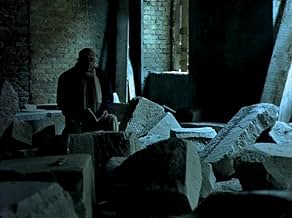
While I'm not sure if the images of discarded books amidst the ruins of war were about the hopelessness of literature and the arts or its unquenchable survival as some are salvaged, Godard has an intellectual's faith in the power of dialog (and cigarette smoking), though pessimistic about the ability of the media to communicate it effectively, as he sets up an overly freighted discussion between an idealistic and ambitious young Israeli woman of Russian descent, whose grandparents were saved from the Holocaust by a Righteous Gentile, and an articulate Palestinian writer, as translated by another Wandering French/Israeli Jew.
I think he was also trying to incorporate suicide bombers into the trajectory of French intellectual thought from Durkheim to Camus that sees it as an existential act of protest against anomie, but well, Jean Luc, we can't all be French.
Typical for a Godard film, the woman to my right gushed that it was her second screening and it was her favorite of his films, and the woman on my left said she couldn't figure out what it was about.
Maybe it's a French intellectual's reality show pitch: we'll set up a dialog between a Jew and a Palestinian at a literary meeting in bombed-out Sarajevo as observed by living ghost Native Americans after bombarding them with images of war and genocide through 19th and 20th century history.
Amidst this trumped-up pretentiousness, Godard the filmmaker does make some good points about war and memory. While the historical images, both from fiction and journalism, are colorized to contemporize them, one easily concedes, yeah, war is hell and hey didn't "Saving Private Ryan" prove that to us, when Godard cannily trumps that thought by discussing how war in fiction - from legend and poetry to movies -- touches people more than the reality.
Then just as you're about to protest, hey, you're showing all these war images without their raison d'etre, Godard springs into a profound verbal and visual illustration of the importance of context, leading to an appreciation of how history is written by the victors. The points about the impact on Western psyche of the Trojans from Homer's perspective were more insightful than all of the "Troy" movie.
However, those debaters that are translated in the subtitles talk in didactic epigrams that will make more sense when one can rewind the DVD for reflection (including the explanation of the title). The French intellectual smug superiority gets annoying -- we don't see any images of WW II collaborators vs. Resistance fighters, let alone colonial legacy issues in Algeria or Muslims in France today.
While I'm not sure if the images of discarded books amidst the ruins of war were about the hopelessness of literature and the arts or its unquenchable survival as some are salvaged, Godard has an intellectual's faith in the power of dialog (and cigarette smoking), though pessimistic about the ability of the media to communicate it effectively, as he sets up an overly freighted discussion between an idealistic and ambitious young Israeli woman of Russian descent, whose grandparents were saved from the Holocaust by a Righteous Gentile, and an articulate Palestinian writer, as translated by another Wandering French/Israeli Jew.
I think he was also trying to incorporate suicide bombers into the trajectory of French intellectual thought from Durkheim to Camus that sees it as an existential act of protest against anomie, but well, Jean Luc, we can't all be French.
Typical for a Godard film, the woman to my right gushed that it was her second screening and it was her favorite of his films, and the woman on my left said she couldn't figure out what it was about.
Notre Musique
Leave it up to Monsieur Godard to shoot his first film to directly address the Palastineans since Ici et ailleurs in '76 in Sarajevo with a cast that includes US Marines, Native Americans in full traditional regalia, and Godard himself in counter-sermonizing flesh. At least, and this is much more than trivial record keeping, the maestro has found a way to render his digital photography as gorgeous as the celluloid variety for which he is well known. The quality of the video images takes Notre Musique miles beyond the wan DV sections in Éloge de l'amour. This is all the more interesting considering his response, during the film's central writer's conference, to a question concerning whether or not digital cameras can save cinema. Godard stares into his DV lense and says nothing; the question cannot have an answer other than the one to be provided, immanently, vis-a-vis the unwinding of our collective species activity. Godard, as always, is best when he resists the unavailing temptation to answer the questions which constitute him as one of the most compelling artists of the 20th Century. Though his autodidactic flights of fancy may fail to soar as solidly as before, his discourses remain ultimately profound, his metaphors as unstintingly powerful as ever, his plagiarism as unflappable. He has begun to rely again on Borges, which is always good, and there is much less Merleau-Ponty. The only major flaw of the film is the opening section "Hell" (yes, Dante is backstage here folks), in which the montage is more of a groantage, in the manner of a Baraka (God no!) more than anything Eisenstein might recognize as dialectical. "Heaven", however, is wonderful. All Godard does is take the US Marine anthem at its word.
Godard's first really good film in a while
I first saw Notre Musique at the NY film festival, and responded to it strongly because it was, after going through a slew of his more recent work of the 80s and 90s (often hit or miss, more miss), a very well structured, interesting picture with a very distinct look and feel that balanced the elegiac and darkness with some light. Watching it again, I'm still fascinated most by the first segment 'Hell'. If this was just a stand-alone short film, I would rank it among some of Godard's best work from the 60s. It's brash, it's seemingly unending, the narration actually does fit the images on screen (which, from my perspective, is what ends up usually irking me with some of Godard's later work when he does this), and all of these images of civilization decaying through war and other disasters, and the machinery and technology used for all of this death and horror, really works to a great effect.
Purgatory, the second segment, is often quite good, as it's a really well-balanced mix of fiction and documentary as real life writers and professors and journalists go through issues like Sarajevo, troubles in the middle east, and cinema itself as Godard humorously and sometimes somberly goes through a lecture to some students as he's part of the setting. There's even a perfectly understated, interested performance by the lead Sarah Adler. When the film then transforms into the last act, Paradise, it kind of starts to break some of the power and interest in the previous sections of the film (I didn't really connect with much of the symbolism, as beautifully photographed as it all was). But what ends up really impressing me most about Notre Musique is that I really could understand most, if not all, of what many of these long stretches of dialog were about- unlike in some past, notoriously messy films by the director- and it worked without Godard's way of filming subjects and locations. Julien Hirsch's cinematography, going through the director's vision, is often so striking I'd say it's some of the best that was done in 2004 anywhere.
There's still some kind of documentarian's spirit at heart, and it really does work best in the conversations that go on in the film, as lots of subject matter gets covered. This mixed with a partially fictionalized story helps to make something pretty special, if not really sensational, and in its 80 minute running time nothing overstays its welcome. If anything, the film is almost too short by a few minutes. It's a mix of history, politics, poetry, cinema, and the meanings of life and death, and not often does it come off pretentious.
Purgatory, the second segment, is often quite good, as it's a really well-balanced mix of fiction and documentary as real life writers and professors and journalists go through issues like Sarajevo, troubles in the middle east, and cinema itself as Godard humorously and sometimes somberly goes through a lecture to some students as he's part of the setting. There's even a perfectly understated, interested performance by the lead Sarah Adler. When the film then transforms into the last act, Paradise, it kind of starts to break some of the power and interest in the previous sections of the film (I didn't really connect with much of the symbolism, as beautifully photographed as it all was). But what ends up really impressing me most about Notre Musique is that I really could understand most, if not all, of what many of these long stretches of dialog were about- unlike in some past, notoriously messy films by the director- and it worked without Godard's way of filming subjects and locations. Julien Hirsch's cinematography, going through the director's vision, is often so striking I'd say it's some of the best that was done in 2004 anywhere.
There's still some kind of documentarian's spirit at heart, and it really does work best in the conversations that go on in the film, as lots of subject matter gets covered. This mixed with a partially fictionalized story helps to make something pretty special, if not really sensational, and in its 80 minute running time nothing overstays its welcome. If anything, the film is almost too short by a few minutes. It's a mix of history, politics, poetry, cinema, and the meanings of life and death, and not often does it come off pretentious.
film as literature
There are movies to help you relax on a Saturday night and there are movies that stimulate, even if that means asking questions that have no answers. I didn't understand this movie but I still felt stimulated by its questions. I tried so hard to make the connections and I had a lot of trouble. But you don't read Portrait of the Artist as a Young Man once without discussing it and expect to understand it. Nor is the more accessible Three Colors Trilogy meant to be seen only once for complete understanding. The quality of a movie is not determined by its accessibility. It's a limited understanding of the medium to judge film by its accessibility. It can be more than an easy way to relax. It can be the impetus to dialogue. I cared about this movie because I didn't understand it.
Godard makes most other filmmakers look simple-minded
Godard's status as a filmmaker, and an auteur, cannot be challenged. He no longer needs to make a name for himself and is free (within reason) to pursue the projects he likes, and carry them out to his own satisfaction. He also has an enormous and varied body of work 'under his belt', along with the experience that this has brought. And yet, these facts do not seem to have made him complacent. No one could accuse him of 'going commercial', and though the new Godard is 'nicer' than the strident, know-it-all politician of his Maoist period, he can't be accused of slowing down.
This film is a case in point. Within in, one finds so much going on, so many ideas, and at such a pace, that it really needs multiple viewings. At 75 minutes, it flies by. It is hard, therefore, to cover all the issues raised by the film, but I will try to give a summary of my impressions.
The film follows a basic triptych structure named according to the rather Catholic names of Hell, Purgatory and Heaven. Parts 1 and 3 act like short wings to the hour-long centrepiece.
In a brutal first 10 minutes, appropriately called 'Hell', one is confronted with a mix of images of war from film and from war footage. Personally, I've always found documentary footage of war, however grainy or poorly shot, much more troubling than the most violent parts of acted film (such as Saving Private Ryan). Is Godard pushing the two together (implying moral responsibility of the filmmaker), or contrasting them through montage? (Suggesting the dual aspects of film-making, which he will emphasise later in the film, when comparing Israelis, who have become a film, to the Palestinians, who have become a documentary.) Like the rest of the film, it is a brilliantly edited tour-de-force of images and ideas.
The second section, Purgatory, consists largely of discussions between writers and journalists drawn to Sarajevo for a literary conference. The number of questions (though not answers) that bubble to the surface in these discussions is astounding. Citations (a Godardian standard) are given new meaning through editing / montage. And many more eminently quotable lines are added by Godard and the other participants, literary figures playing themselves, such as Mahmoud Darwish, whose analysis is original and perceptive, and Juan Goytisolo. This section has a documentary feel, but an artist's aesthetic. The film itself looks superb, demonstrating a real eye for shot composition. This makes his films 'surface' extremely watchable, even before the 'substance' is broached. The substance is tasty too, with a superabundance of wit on parade, not in the sense of trite humour, but real insight, combined with a sober sigh before the unchangeable.
The last 'movement' is of course 'Heaven', which is amusingly guarded by US marines, and looks a little like the less-than-heavenly site in which the end of Godard's 'Weekend' was played out. This playfulness and self-referentiality was typical of the rest of the film also, for example, in the trio of vocal Native Americans reminiscent of characters in 'Sympathy for the Devil'. Where does quotation end and creation begin? Godard's work is full of citation and self-allusion, but due to the (specifically filmic) nature of montage and narrative context, these citations and allusions take on new meanings.
The film is, therefore, certainly elitist, as are so many great films (and novels for that matter). 'Notre Musique' demands a cine-literate viewer, and preferably also familiar with Godard, since there is a lot of meaningful and playful self-referentiality. (One could also argue that someone new to this kind of film-making might be challenged to improve their cine-literacy). More importantly, it demands an alert viewer, because there is potentially much more happening than merely what is on the screen. Godard, in examining filmic space has also created a space between screen and viewer, making him or her an active part of the process of meaning-making.
Certainly, if all films were of this caliber, one would get a sore head thinking them through, but it is important to be enlivened by such a work as this from time to time, just to remember film's artistic and intellectual potential.
This film is a case in point. Within in, one finds so much going on, so many ideas, and at such a pace, that it really needs multiple viewings. At 75 minutes, it flies by. It is hard, therefore, to cover all the issues raised by the film, but I will try to give a summary of my impressions.
The film follows a basic triptych structure named according to the rather Catholic names of Hell, Purgatory and Heaven. Parts 1 and 3 act like short wings to the hour-long centrepiece.
In a brutal first 10 minutes, appropriately called 'Hell', one is confronted with a mix of images of war from film and from war footage. Personally, I've always found documentary footage of war, however grainy or poorly shot, much more troubling than the most violent parts of acted film (such as Saving Private Ryan). Is Godard pushing the two together (implying moral responsibility of the filmmaker), or contrasting them through montage? (Suggesting the dual aspects of film-making, which he will emphasise later in the film, when comparing Israelis, who have become a film, to the Palestinians, who have become a documentary.) Like the rest of the film, it is a brilliantly edited tour-de-force of images and ideas.
The second section, Purgatory, consists largely of discussions between writers and journalists drawn to Sarajevo for a literary conference. The number of questions (though not answers) that bubble to the surface in these discussions is astounding. Citations (a Godardian standard) are given new meaning through editing / montage. And many more eminently quotable lines are added by Godard and the other participants, literary figures playing themselves, such as Mahmoud Darwish, whose analysis is original and perceptive, and Juan Goytisolo. This section has a documentary feel, but an artist's aesthetic. The film itself looks superb, demonstrating a real eye for shot composition. This makes his films 'surface' extremely watchable, even before the 'substance' is broached. The substance is tasty too, with a superabundance of wit on parade, not in the sense of trite humour, but real insight, combined with a sober sigh before the unchangeable.
The last 'movement' is of course 'Heaven', which is amusingly guarded by US marines, and looks a little like the less-than-heavenly site in which the end of Godard's 'Weekend' was played out. This playfulness and self-referentiality was typical of the rest of the film also, for example, in the trio of vocal Native Americans reminiscent of characters in 'Sympathy for the Devil'. Where does quotation end and creation begin? Godard's work is full of citation and self-allusion, but due to the (specifically filmic) nature of montage and narrative context, these citations and allusions take on new meanings.
The film is, therefore, certainly elitist, as are so many great films (and novels for that matter). 'Notre Musique' demands a cine-literate viewer, and preferably also familiar with Godard, since there is a lot of meaningful and playful self-referentiality. (One could also argue that someone new to this kind of film-making might be challenged to improve their cine-literacy). More importantly, it demands an alert viewer, because there is potentially much more happening than merely what is on the screen. Godard, in examining filmic space has also created a space between screen and viewer, making him or her an active part of the process of meaning-making.
Certainly, if all films were of this caliber, one would get a sore head thinking them through, but it is important to be enlivened by such a work as this from time to time, just to remember film's artistic and intellectual potential.


Did you know
- Quotes
Olga Brodsky: If anyone understands me, then I wasn't clear.
- ConnectionsEdited from Angels of Sin (1943)
- SoundtracksDas Buch der Klänge
Composed by Hans Otte
- How long is Our Music?Powered by Alexa
Details
- Release date
- Countries of origin
- Official sites
- Languages
- Also known as
- Müziğimiz
- Filming locations
- Production companies
- See more company credits at IMDbPro
Box office
- Gross US & Canada
- $139,922
- Opening weekend US & Canada
- $8,210
- Nov 28, 2004
- Gross worldwide
- $293,681
Contribute to this page
Suggest an edit or add missing content