Suddenly Human
- Episode aired Oct 13, 1990
- TV-PG
- 46m
IMDb RATING
6.4/10
3.7K
YOUR RATING

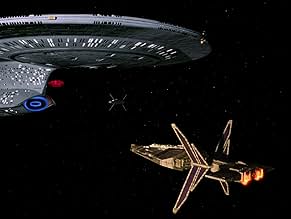
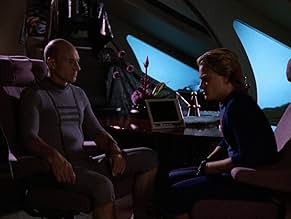
On a mission to an alien training mission, they discover one of its trainees to be a human.On a mission to an alien training mission, they discover one of its trainees to be a human.On a mission to an alien training mission, they discover one of its trainees to be a human.






K.C. Amos
- Operations Division Officer
- (uncredited)
Rachen Assapiomonwait
- Crewman Nelson
- (uncredited)

Majel Barrett
- Enterprise Computer
- (voice)
- (uncredited)
Michael Braveheart
- Crewman Martinez
- (uncredited)

Larry Echerer
- Talarian
- (uncredited)

Eben Ham
- Operations Division Ensign
- (uncredited)
Carrie Henger
- Security Officer
- (uncredited)
6.43.6K
1
2
3
4
5
6
7
8
9
10
Featured reviews
Where's the mannequin?
Watched this episode a couple weeks ago on H&I. I saw a mannequin in the left hand seat on the bridge, where Wesley usually sits, as it zoomed in to Riker on the bridge. I was trying to show this to my sister, even signed up for Paramount plus, and this scene has been cut or edited and is not available on any version I can fine. Did anyone else watch this and see this mannequin? I find it very hard to believe that I am the only person in 30 years to catch this mannequin on screen.
ALLUSIONS TO THE EMERALD ISLE
This episode makes several pointed (albeit unrelated and undiscussed) references to Irish history. This is surprising as none of the episode's listed writers, editors, and actors appear to be or have been Irish or even of Irish descent.
The forename of "Adm. Connaught Rossa" (played by Barbara Townsend) is a clear reference to Connaught (now called Connacht), one of the four provinces that comprise the island of Ireland.
More importantly, the character called "Jono" was born Jeremiah Rossa to human parents, although raised as a Talerian. In real life, a man called Jeremiah O'Donovan Rossa was a 19th-century Fenian. (The Fenians were the Irish rebel group which was the immediate precursor of the Irish Republican Army.) He fled the British authorities to New York City, where he lived until his death, and from whence he delegated violent attacks in London and elsewhere, often involving dynamite. He died in New York in June 1915 but his body was interred in Ireland on August 1, 1915 in a "heroes ceremony" coordinated by the Irish Republican Brotherhood for propaganda value. (The following year, the fateful Easter Rising of 1916, which would eventually lead to the severing of most of Ireland from the United Kingdom, occurred.)
The forename of "Adm. Connaught Rossa" (played by Barbara Townsend) is a clear reference to Connaught (now called Connacht), one of the four provinces that comprise the island of Ireland.
More importantly, the character called "Jono" was born Jeremiah Rossa to human parents, although raised as a Talerian. In real life, a man called Jeremiah O'Donovan Rossa was a 19th-century Fenian. (The Fenians were the Irish rebel group which was the immediate precursor of the Irish Republican Army.) He fled the British authorities to New York City, where he lived until his death, and from whence he delegated violent attacks in London and elsewhere, often involving dynamite. He died in New York in June 1915 but his body was interred in Ireland on August 1, 1915 in a "heroes ceremony" coordinated by the Irish Republican Brotherhood for propaganda value. (The following year, the fateful Easter Rising of 1916, which would eventually lead to the severing of most of Ireland from the United Kingdom, occurred.)
A Contemporary Issue
When a disabled ship's tiny crew is brought on board the Enterprise, they assume they have been kidnapped and mistreated. They are Talarian's except for one, a handsome, blonde teenaged boy. He considers himself one of them and fears the crew. It turns out that when he was a little boy, the Talarians killed his parents. His only living relative is his grandmother who happens to be an admiral in Starfleet. He is put in a different setting than his crewmates and Picard, reluctantly, becomes his mentor. It is eventually revealed that the Captain of a Talarian vessel adopted him after the fatal battle. He wants his son back. The issue becomes, how do we treat someone who has only known one way of life. The initial effort is to return him to his childhood roots. He understands this but it miserable with it. He is also expected to act as those on the Enterprise do. The alien Captain gives Picard an ultimatum. Give the boy back or face all out war with heavy casualties. An interesting dilemma and worth a look.
Patrick Stewart rescues it
Enterprise encounters a human boy raised by a different species.
This is an okay episode with good performances.
The story has some interesting themes, particularly the cultural clash aspects and the question of wellbeing of an individual in this type of situation.
For me it is portrayed with some contrivances and instances of over explanation. Do we need Troi to address Picard's role dealing with the situation? Is it even the correct approach? Does it feel forced into the story to fit Picard's character development? Would Worf have been a better fit to lead the story? Is the eventual "I've learned something today" speech simplistic or even necessary? Has Picard been portrayed as too astute a leader in previous episodes to accept he would not see the right course of action from the start? Why introduce a certain character only to disregard her at the story's resolution?
I think these aspects plus some others tend make the characters and plot feel a bit silly for getting to the extreme situations they are faced with.
That being said the performance of Patrick Stewart (as always) lifts the material significantly. So much so you can buy into most situations because he is such an engaging actor. He is supported well by Sherman Howard in certain scenes. Chad Allen does his best with the material he has in the key role of Jono, but the emphasis is more on the conflict between Enterprise and Talarians than the effect on his character.
This is an okay episode with good performances.
The story has some interesting themes, particularly the cultural clash aspects and the question of wellbeing of an individual in this type of situation.
For me it is portrayed with some contrivances and instances of over explanation. Do we need Troi to address Picard's role dealing with the situation? Is it even the correct approach? Does it feel forced into the story to fit Picard's character development? Would Worf have been a better fit to lead the story? Is the eventual "I've learned something today" speech simplistic or even necessary? Has Picard been portrayed as too astute a leader in previous episodes to accept he would not see the right course of action from the start? Why introduce a certain character only to disregard her at the story's resolution?
I think these aspects plus some others tend make the characters and plot feel a bit silly for getting to the extreme situations they are faced with.
That being said the performance of Patrick Stewart (as always) lifts the material significantly. So much so you can buy into most situations because he is such an engaging actor. He is supported well by Sherman Howard in certain scenes. Chad Allen does his best with the material he has in the key role of Jono, but the emphasis is more on the conflict between Enterprise and Talarians than the effect on his character.
Picard tries his hand at being a surrogate daddy!
When the episode begins, the Enterprise comes upon a disabled Talerian ship. All the soldiers on board are a mess and close to death, so they're brought to sick bay. However, this is a very odd lot--as they're all children--teens pushed into the tough job of being soldiers. But something is REALLY odd about one of the teens--he's NOT a Talerian but a human. How he got to be with the Talerians is initially a mystery, but soon they learn through DNA tests that his family was wiped out by Talerians and the young boy was raised thinking he was a Talerian. The task is now to bring him back to his extended human family, but clearly he's too militant and too damaged to possibly be returned at this time. But, oddly, he will listen to no one but Captain Picard. So, the Captain is given a task he surely hates--to be the surrogate father to a very annoying and difficult young man. And, given that the Captain has almost no paternal instincts at all, this is indeed a HUGE problem! An even bigger problem develops when the Talariens arrive and demand to get the boy back...or else.
This episode touches on many contemporary issues, such as child soldiers (a serious problem in some African conflicts), post-traumatic stress disorder and adoption difficulties. And, it touches on the BIG issue...that Picard hates dealing with children--though he really wasn't that bad with this initial effort. All in all, despite being rather 'touchy-feely', it's a pretty good episode--mostly because it was well written and acted.
This episode touches on many contemporary issues, such as child soldiers (a serious problem in some African conflicts), post-traumatic stress disorder and adoption difficulties. And, it touches on the BIG issue...that Picard hates dealing with children--though he really wasn't that bad with this initial effort. All in all, despite being rather 'touchy-feely', it's a pretty good episode--mostly because it was well written and acted.


Did you know
- TriviaGeordi La Forge appears only for a very brief scene, which is actually stock footage. Prior to the filming of The Best of Both Worlds Part II (1990), LeVar Burton had had surgery and couldn't make an appearance.
- GoofsData clearly checks his cards when playing the card game. As an android, he would not need to check what cards he has; they would be committed to memory. He could, of course, be 'mimicking' human behavior. In reality, he was checking so that viewers at home could see his hand.
The "mimicking" statement is accurate. Data has often indicated his desire to be "more human" as is exemplified by the conversation when Wesley's face is covered with a banana split.
- Quotes
Captain Jean-Luc Picard: Ever since I was a child, I've always known exactly what I wanted to do: be a member of Starfleet. Nothing else mattered to me. Virtually my entire youth was spent in the pursuit of that goal. In fact... I probably skipped my childhood altogether.
- ConnectionsEdited into Star Trek: The Next Generation: Force of Nature (1993)
- SoundtracksStar Trek: The Next Generation Main Title
Composed by Jerry Goldsmith and Alexander Courage
Details
- Runtime
- 46m
- Color
- Sound mix
Contribute to this page
Suggest an edit or add missing content