We'll Always Have Paris
- Episode aired Apr 30, 1988
- TV-PG
- 45m
IMDb RATING
6.5/10
3.9K
YOUR RATING


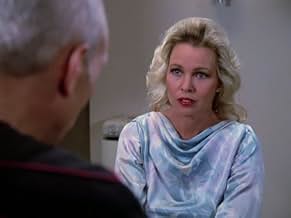
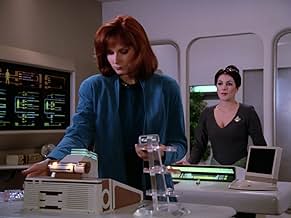
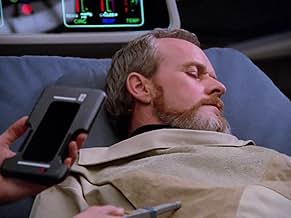
A scientist's experiment in time goes awry, reuniting Picard with an old flame, now married to the scientist.A scientist's experiment in time goes awry, reuniting Picard with an old flame, now married to the scientist.A scientist's experiment in time goes awry, reuniting Picard with an old flame, now married to the scientist.


Denise Crosby
- Lieutenant Natasha 'Tasha' Yar
- (credit only)


Wil Wheaton
- Wesley Crusher
- (credit only)


Isabel García Lorca
- Gabrielle
- (as Isabel Lorca)


Majel Barrett
- Enterprise Computer
- (voice)
- (uncredited)
James G. Becker
- Youngblood
- (uncredited)
6.53.9K
1
2
3
4
5
6
7
8
9
10
Featured reviews
A Senior Trekker writes................
Writing in 2021, it is great to see that I am not the only person taking a retrospective look at Star Trek, the Next Generation. When this series was first released in 1987, a little less than twenty years after the end of the Original Series, many people thought that, without Captain Kirk and his crew, it couldn't really be Star Trek. However, original creator Gene Roddenberry, was fully invested in the casting, writing and overall look of the new series, so let's see how it shaped up:
This episode was embarrassingly bad at the time and hasn't aged well, either.
Why did the crewmembers, confronted with a potentially universe-ending, race against time, interdimensional phenomenon, spend so much time talking about their feelings?
Why on earth did Michelle Phillips agree to do this piece if she felt so uncomfortable in the role?
Why did Patrick Stuart, who has the skills to romance a cardboard cut-out convincingly should he feel so inclined, turn in a performance so completely devoid of charm?
The screen realisation of the Cafe Des Artistes was about as Gallic as plate of cold French fries and an insult to the Parisians of any century.
Best forgotten.
(Senior Trekker scores every episode with a 5)
This episode was embarrassingly bad at the time and hasn't aged well, either.
Why did the crewmembers, confronted with a potentially universe-ending, race against time, interdimensional phenomenon, spend so much time talking about their feelings?
Why on earth did Michelle Phillips agree to do this piece if she felt so uncomfortable in the role?
Why did Patrick Stuart, who has the skills to romance a cardboard cut-out convincingly should he feel so inclined, turn in a performance so completely devoid of charm?
The screen realisation of the Cafe Des Artistes was about as Gallic as plate of cold French fries and an insult to the Parisians of any century.
Best forgotten.
(Senior Trekker scores every episode with a 5)
Seen from a different perspective.
I must have been between 8 to 10 years old when Star Trek: The Next Generation first aired in my country. It became for me, as for so many others, a pillar in one's growing up and throughout life. I might have rewatched (rather: binged) the whole series about 20 times.
This episode is, in my honest opinion, misunderstood by lots of people, including the writers themselves. Making such a comment is quite bold, not to say filled with hubris, so please allow me to elaborate.
Reading the trivia and comments, there's a lot of focus on the love story, but I believe that this, as far as a story that wants to be told, was only the setting for the main events. The central story was dealing with time, gravity, and the distortions caused by meddling with them. It was dealing with the construction of space, time, and reality.
Similarly to "Where no-one has gone before", where there are several side-stories; Wesley's being ignored and then vindicated, Kosinski's arc from arrogance to humility and being needed, even Picard briefly getting a visit from his past. These stories are there to support the main event, they are there to bring depth, illustrations, metaphors and examples to the main event. The main event is about the fabric of reality, and the teasing notion that space, time and thought are connected.
I like to view this episode in a similar way. The main event is about time, gravity and the construct of reality. And the love story is a supporting arc. Unfortunately, the main event is shadowed somewhat by the side-story, as even the people involved (writers, producers, cast etc) focused more and got distracted by the love story and forgot about the grandeur of the main event. But the central story still stands out and I shall forever be fascinated with the turbolift incident, and of course the climactic ending where Data saves the day.
One of my favourite ST:TNG episodes, almost 40 years down the line.
This episode is, in my honest opinion, misunderstood by lots of people, including the writers themselves. Making such a comment is quite bold, not to say filled with hubris, so please allow me to elaborate.
Reading the trivia and comments, there's a lot of focus on the love story, but I believe that this, as far as a story that wants to be told, was only the setting for the main events. The central story was dealing with time, gravity, and the distortions caused by meddling with them. It was dealing with the construction of space, time, and reality.
Similarly to "Where no-one has gone before", where there are several side-stories; Wesley's being ignored and then vindicated, Kosinski's arc from arrogance to humility and being needed, even Picard briefly getting a visit from his past. These stories are there to support the main event, they are there to bring depth, illustrations, metaphors and examples to the main event. The main event is about the fabric of reality, and the teasing notion that space, time and thought are connected.
I like to view this episode in a similar way. The main event is about time, gravity and the construct of reality. And the love story is a supporting arc. Unfortunately, the main event is shadowed somewhat by the side-story, as even the people involved (writers, producers, cast etc) focused more and got distracted by the love story and forgot about the grandeur of the main event. But the central story still stands out and I shall forever be fascinated with the turbolift incident, and of course the climactic ending where Data saves the day.
One of my favourite ST:TNG episodes, almost 40 years down the line.
10XweAponX
This is Star Trek
Of all of the episodes of the original series, next-generation, Deep Space 9, Voyager and enterprise, this episode is Star Trek. This episode is in fact what Star Trek is about.
Maybe this is an homage to the original series episode with "Lazarus", the man from two universes- but where that episode deals with time in respect to alternate universes, this episode deals with time itself, The constancy of time, and what would happen if that constancy were interfered with.
It also deals with time in a relationship that Picard had with a woman played here by Michelle Phillips, Who he meets here 15 years after he walked away.
Picard's former love interest is married to a doctor Mannheim, who has discovered a crack in time, a crack which has to be sealed.
Where normal people would be confused by alleged time-hiccups, Data is not confused. So Data is the one who has to work with past and future iterations of himself to close this crack.
This episode is always fascinating to watch, it's one of Brent Spiner's greatest Data performances. There is a quality of believability here, suspension of disbelief is not a problem, it's a fantastic concept, we believe in it because of its uniqueness.
Episodes like this were rare in the Trek franchise, but when they were revealed, they were very refreshing. In fact next generation had a double roll with the very next episode "Conspiracy".
Of course the last few episodes of season one lacked the appearance of Denise Crosby as Tasha Yar- Who I admit I did not like in season one but I actually liked a lot more when she appeared in "yesterday's enterprise" and then later as Sela, the daughter of that alternate Tasha. And those future episodes of course also dealt with time and/or alternate time-lines.
When we watch episodes like this, we start to wonder if time is as immutable as we think it is.
Maybe this is an homage to the original series episode with "Lazarus", the man from two universes- but where that episode deals with time in respect to alternate universes, this episode deals with time itself, The constancy of time, and what would happen if that constancy were interfered with.
It also deals with time in a relationship that Picard had with a woman played here by Michelle Phillips, Who he meets here 15 years after he walked away.
Picard's former love interest is married to a doctor Mannheim, who has discovered a crack in time, a crack which has to be sealed.
Where normal people would be confused by alleged time-hiccups, Data is not confused. So Data is the one who has to work with past and future iterations of himself to close this crack.
This episode is always fascinating to watch, it's one of Brent Spiner's greatest Data performances. There is a quality of believability here, suspension of disbelief is not a problem, it's a fantastic concept, we believe in it because of its uniqueness.
Episodes like this were rare in the Trek franchise, but when they were revealed, they were very refreshing. In fact next generation had a double roll with the very next episode "Conspiracy".
Of course the last few episodes of season one lacked the appearance of Denise Crosby as Tasha Yar- Who I admit I did not like in season one but I actually liked a lot more when she appeared in "yesterday's enterprise" and then later as Sela, the daughter of that alternate Tasha. And those future episodes of course also dealt with time and/or alternate time-lines.
When we watch episodes like this, we start to wonder if time is as immutable as we think it is.
I had trouble keeping my eyes open with this one....
This episode of "Star Trek: The Next Generation" is a rather poor one--mostly because the show features two plots and one of them is frankly very dull. As for the other, it is decent...but nothing to get excited about either. Overall, it left me very flat.
The Enterprise notices a space wrinkle where things repeat themselves for an instant. This distortion is investigated--and it takes the ship right in the path of a woman who Picard abandoned many years ago in order to go to space. Michelle Phillips stars as the woman and this part of the show isn't bad. But the time distortion is so very dull and uninteresting. It really was just an excuse to bring Picard and his old flame together--and it should have been a lot better. Overall, sort of like a soap opera and as far as the sci-fi goes, it was a bust.
By the way, while many viewers will recognize the phrase "we'll always have Paris". If you don't, it's from "Casablanca".
The Enterprise notices a space wrinkle where things repeat themselves for an instant. This distortion is investigated--and it takes the ship right in the path of a woman who Picard abandoned many years ago in order to go to space. Michelle Phillips stars as the woman and this part of the show isn't bad. But the time distortion is so very dull and uninteresting. It really was just an excuse to bring Picard and his old flame together--and it should have been a lot better. Overall, sort of like a soap opera and as far as the sci-fi goes, it was a bust.
By the way, while many viewers will recognize the phrase "we'll always have Paris". If you don't, it's from "Casablanca".
Utterly Forgettable
I just watched this episode and i can barely remember what happened. Picard didn't go on a date once and he regrets it? Yawn. A potentially interesting rift in time is barely shown or used before being easily fixed? Wasted premise. Worst of all they turned Paris into "Space Paris". Ugly buildings right in the center. Ugh.


Did you know
- TriviaThe menu at the Café des Artistes includes such delicacies as "Croissants D'ilithium", "Klingon Targ a la mode," "Tribbles dans les blankettes," and "L'Antimatter Flambé."
- GoofsWhen Data puts the antimatter in the stream, he asks for a 27 second count down. Data has an internal chronometer and is notorious for giving arrival times down to the second. He is also capable of handling multiple calculations and thoughts at the same time without distraction. Why would he need an external audio countdown? Data requested the external audio countdown before the time distortion occurred because he knew that, when it occurred, there would be more than one of him and then could link his chronometer with the correct dimension.
- Quotes
[last lines]
Commander William T. Riker: I've only been there once, but they've got this great club - I don't remember the name of it. They serve those blue concoctions.
Counselor Deanna Troi: It's across the square from the Zanza Men's Dance Palace.
Captain Jean-Luc Picard: It's called the Blue Parrot Cafe - and you're buying.
- ConnectionsFeatured in Viden om: Teleportation (1999)
- SoundtracksStar Trek: The Next Generation Main Title
Composed by Jerry Goldsmith and Alexander Courage
Details
- Runtime
- 45m
- Color
- Sound mix
- Aspect ratio
- 1.33 : 1
Contribute to this page
Suggest an edit or add missing content