Showing posts with label Marvel. Show all posts

Wednesday, February 12, 2025

One Question Answered on the Marvel RPG Status


Apparently Marvel has announced - or at least is taking orders for - a new sourcebook on the Avengers. Good! That should cover a lot of ground and combined with the X-Men book that's already out and the Spider-Man book coming soon that really just leaves the FF as the last of the big four classic groupings not covered. 

Wednesday, January 29, 2025

Status of the Marvel Multiverse RPG?


There are a lot of great superhero RPGs out there right now:

  • Mutants and Masterminds is still chugging along. There aren't a ton of new things out there but they've been doing adventures lately which is about the only thing the game hasn't thoroughly covered.
  • ICONS is another mature RPG that is still cranking out new material.
  • Champions is not one I hear much about anymore but it is still producing things like .. .character creation cards? I'm not sure I get that but I'll have to take a closer look.
  • The Sentinel Comics RPG is one of the newer entries in this category and the latest thing there is the new version of the starter set which is probably a good thing but I wish they were doing more! I'll have to cover it in another post but this is a very promising game that just needs a little more attention.
  • Absolute Power is the new version of Silver Age Sentinels. It's been out for a year or two now and has decent support so if you think a BESM approach to supers is interesting it's worth a look. This one is probably worthy of a separate post as well.
All of the above games are currently in-print and have pretty solid support beyond the basic rules but there was one potentially giant new entry in the field in the last couple of years that many of us were interested in - the Marvel Multiverse RPG, published by, well, Marvel itself. My own account of a tryout game is here and I thought it was worth considering as a real option. 

For Marvel we saw the main rulebook come out in 2023 along with a starter adventure and  since then we've seen an "Adventure" - Cataclysm of Kang and an "Expansion" about the X-Men. That's decent enough and there is one other announced book coming which is the Spider-Verse Expansion. There was also a set of Marvel Dice and a short Deadpool adventure that came out around the time of the movie last year.


Recently though I saw new copies of the core rulebook show up at a local Half-Price Books. Not one copy, but multiples. Now Half-Price is a pretty regular stop for my wife and I - there are quite a few of them around DFW - and we hit them whenever we are out and about. Over the past few weeks I've seen multiple new copies in multiple stores in the area. That's not a great sign for a new game as that means they are remaindered or whatever the official industry term is and sold off as a bulk lot. It happens from time to time but being fairly aware of what shows up on the RPG shelf in local used bookstores sometimes things jump out like this. So I am concerned about how the game is doing - I decided to check around online.

The MMRPG D616 Facebook group used to consistently show up in my FB feed as a group with "10+ posts a day" as recently as last year. Now it's down to "5 posts a day". Well ... 

The MMRPG Reddit group has slowed from maybe around 5 posts per day to roughly 3 per day. Not as dramatic as FB but it does seem less active. 


There is also a starter set that was supposed to be coming out from Gamefound that has been delayed from September-November to "early next year" which is ... now. It funded in February 2024. It's causing some friction. Beyond that there were some other accessories mentioned like GM screens and maps and power cards and more dice  - all of them seemingly tied to some of the supplement books. None of them have appeared or seem to have release dates. None of that is good. 


I wonder if some of the accessories are being held up or "reassessed" due to sales numbers maybe not being what they were expecting. The lack of announced books beyond the Spider-Verse book also does not feel great. I know a lot of this is anecdotal and I'm not trying to jump too far to conclusions - it's been a fairly slow-grow game line but it does seem to have gotten really slow here of late. I've been watching these things for a long time and what I'm seeing here is not positive. 

Let me say that I hope I am wrong about the direction things look to be heading. A thriving Marvel RPG could be a great way to both bring in new players and pull existing players away from D&D as their only game. I hope that we are just in a slow period where a company new to RPGs (Marvel) is working with a new partner on accessories (CMON) and things are just taking extra time. If that is the case I'd love to see a new Avengers book or Fantastic Four book announced - there is a FF movie coming out after all - for later this year. I'll be crossing my fingers as I watch for the next update on this game.

Wednesday, September 20, 2023

Marvel Multiverse - The Intro Adventure PDF is Out


Quick note - Marvel finally put their intro adventure up in PDF form for free on DTRPG. It starts out as a straightforward hostage situation:

When the heroes arrive on the scene, the police officer in charge informs them that the situation is even worse than what they were told. The Hydra agents are demanding that the city of New York drape the Statue of Liberty in a Hydra uniform, and they’re threatening to kill a researcher every hour on the hour until that happens. There are five minutes left until the first hour is up.

I mean ... that's pretty Silver/Bronze Age appropriate I would say. As you might suspect there is more going on here than Hydra grandstanding. There is a solid map which is nice if you're going to have action scenes in a modern office building. Also there are stats for Hydra Agents (which are already in the main book), Officers, and Armored Agents (like that one up top) so it beefs up the non-super foes list a bit and it's nice to have them all right here in the adventure instead of being referred to page X. It's a nice introduction and it's exactly the kind of thing that could have been included in the main rulebook in my opinion. A free PDF is not a bad option though - thanks for that Marvel. 

That's the latest and greatest for the Marvel game as far as I know. Kang is coming in November so we will get a better look at what the big books for this game will look like then.


Tuesday, August 8, 2023

Marvel Multiverse RPG - Playtest Report


Saturday night four of the regular crew got together with me and we gave the new Marvel game a spin. 

One of the great things about playing in a well-known universe like this is being able to pick a character you like and jump right in. I did not want to get bogged down in character creation this first time so we picked from the 100+ heroes described in the book:

  • Thing was played by Grognard Mike
  • Iron Man was played by Variable Dave
  • Spider-Man 2099 was played by Next-Gen Patty (who also brought a copy of the book)
  • Beast was played by Battletech Terry
So that was our mix of heroes. One of the best parts of sitting around the table with a group of guys like this is that everyone has strong comic book knowledge so over the course of the evening I learned:
  • Mike spent some time looking up Jimmy Durante videos and info so he could sound more authentically Thing-like and figuring out which era of Ben Grimm he was aiming for.
  • Dave worked up Tony Stark's speech that kicked off the adventure with no prompting from me.
  • Patty broke down the history and origin of SM2099 for us because it has been 20+ years since I looked at any of that.
  • Terry spelled out the relative capabilities of original-form Beast vs. Blue-Fur Beast as we debated various numbers assigned to the different characters 
This was not doing Google-searches on the phone - this was guys talking through it as we played. Very casual and tons of fun. 

There is no starter adventure for this outside of Roll20 or Demiplane or whatever online play platform they are using so I had to put something together fairly quickly. The situation is this: Stark Industries is launching a new ferry boat in NYC harbor powered by a new Micro-Arc-Reactor. Once tested this will usher in a new era of clean safe power that could be expanded to other infrastructure uses and will also allow riders to charge up their electric cars as that becomes a more common need.  Stark will be there to make the speech, Miguel wanted to see the speech and also scout out a new Roxxon facility going in across the river, while Hank and Ben are meeting there and then going to try a new restaurant afterwards. 

Unfortunately Hydra has its eye on this new technology and has hired The Hand to disrupt things while a pair of Hydra agents steal the reactor. Classic Marvel stuff in my mind.

So this first part was to try out heroes vs. mooks as everyone that will be showing up here is at a lower rank than our heroes. I had a second phase sketched out that would have involved more actual villains but we didn't get to that point. It does leave me an easy in for a second session though.

The Scene: a large ferry boat with a lower deck about half-full of cars, 20-30 people milling around there and on an upper deck where our heroes have gathered along with a few notables. It's still at the dock for the moment. 

So some open areas, some cover, a somewhat limited area overall assuming you don't want to go into the water, an upper and lower level to add that third dimension plus some cars to throw or blow up along with a lot of potential hostages. I try to give my guys options.

This game uses 5 foot squares so I sketched it out on a battlemat and added some toy cars and 40K vehicles and a monitor stand for the second level and we were set!

Tony Stark says his piece, there is applause all around, and then a bunch of ninjas led by the infamous Elektra  appear out of the crowd and the shadows and begin ordering people to the back of the ferry.


I had thought we might work in more social interaction but my players were really just waiting for the trouble to start so we jumped right in. Initiative is the standard 3d6/d616 as they call it roll modified by Vigilance + any Traits or Powers. It is called out on the character sheet so it saves you from doing the math each time. We ended up with:
  • Ninjas
  • SM2099
  • Beast
  • Thing
  • Elektra
  • Iron Man
The Hand is busy doing crowd control. We decided in this universe Stark still has a secret ID as does this Spider-Man so they spend the first round ducking out of sight and changing. Beast drops into a Defensive Stance while Thing grabs a ninja and throws him into another ninja (Quick Toss - a Super Strength power) knocking them both out. - an awesome start!


Starting with this first round a growing feeling crystalized for me: many of these powers feel like 4th Edition D&D powers. I felt like it after re-reading the powers section and my players came around on it too. Here's the Quick Toss power:


Every character gets a Move Action, a Standard Action, and a Reaction every round. So the trick here is to use a Standard to grab someone, then use your Reaction to do this and damage two targets. There are a LOT of higher-end powers that do interesting things like this. 

Another thing to note is that this one has a Focus cost. Originally I thought Focus was just another damage track to cover non-physical stuff but a lot of powers (particularly the more advanced ones) have a Focus cost and there are ways to recover some focus during a fight. This feels a lot like the Vitality and Wounds system from the first version of d20 Star Wars (originally used in Spycraft) where Jedi burned Vitality to use force powers and yes there are consequences to running out of Focus. We will need to play more to see just how extensive this is in play but it is a pretty common thing among the higher-up Powers.


Next round most of the Ninjas start lining up on the heroes as Elektra moves to engage Beast. Iron Man appears as if out of nowhere and unloads a missile swarm onto part of the upper deck catching multiple ninjas in the blast!


Now admittedly we did get a laugh out of Tony Stark's area effect blast being based on his Ego but this is one area where the flavor feels a little off. Iron Man's Elemental Control powerset is labelled as "Energy" which is fine in general but a) I never pictured Iron Man as an "Elemental Control" type character and b) the character write-ups have zero notes on what the different powers are supposed to represent beyond that broad descriptor. Johnny Storm, sure, I know what his blasts and barrages probably look like. Iron Man tends to have a bunch of different ranged attacks and while I get leaving it up to the player's interpretation is a valid approach in general I didn't design this character so I would really like a few words next to each power describing what they were thinking. Which version of IM is this? Is one attack meant to represent the palm repulsors? Is another the uni-beam? Is another one missiles like we went with? Flavor is a huge part of a superhero game and this one falls down a little here. 

Another trend to note here is that it is extremely common to have multi-target powers inflict half-damage with full damage + a special effect on a Fantastic Success. Remember a Fantastic Success is a 1 on the Marvel die which is treated as a 6 for the math. So one out of six rolls you will get something awesome so if you're used to d20 critical frequencies, well, these are far more common.


The battle is fully on now and the ninjas are not having a big effect on our heroes - Beast, Iron Man, and Thing are all basically immune to ninja-punches - so Elektra is in the fight trying to keep Beast and Thing busy ...


Alright so many of the power sets have a version of this - this is for Melee Weapons but there is also one for Marital Arts and one for Ranged Weapons, among others. This is a pretty basic attack - notice no prerequisites and no Focus cost - but it does let you do something cool by striking two nearby targets with one action. In this case Thing and Beast and Spider-Man all had versions of this and used it to great effect on ninjas, but for Elektra it was ... not great. She was not going to have much impact on either of her targets with half damage.

After a few rounds Thing has leapt aft to take out the ninjas guarding the hostages while Beast and Spider-Man finish off Elektra and her helpers while Iron Man sprays missiles anywhere he can hit at least two of them. Then two Hydra agents emerge from below decks carrying a chest between them as a minisub surfaces next to the ferry and a giant man in a hydra uniform stands up next to the boat as well. 

This is called "putting a clock on it" as even a mook-fight can get more tense if the enemy has a chance to get away with something important. The heroes were having no trouble at all with the Hand but I was hoping Hydra Giant Man - I literally used the Giant Man stats - would make it a little more tricky. 


It did not work out that way as 2099 gets ridiculous with one of his moves ...


You can see this lets him move, smack two people - possibly webbing them up - and then move again. This felt very spider-mannish!


Meanwhile Beast is playing leader and starts calling out to the rest of the team ...


This felt like a perfect fit.

 IM blasts one of the Hydra Agents leaving the other one to drag the chest to the side of the boat. The Hydra Giant smacks Thing for just about no damage. Ben then sees an opportunity, leaps in between the two, and bashes their heads together!


This move takes out the last two standing combatants and that poor Hydra agent ... in Thing's words "This man needs a hospital". Iron Man picks up the sub and places it on the deck, the pilot surrenders, and the Micro-Arc-Reactor - and the hostages - are saved!


Post-Game Thoughts

  • Number one my players had a really good time. Something about superhero games, especially ones using familiar characters, really brings it out. So right away I will say the rules did not get in the way of a good time.
  • The core mechanic of the game is used consistently throughout and as far as I can tell resolves everything with a single roll - that's huge. It plays quick which meant my players weren't tied up doing math on multiple rolls so they naturally tended to describe what was happening with their powers. I like that a lot. It's not as detailed as the original "One Roll Engine" as seen is Godlike and others with the height and the width etc. but it is easy to grasp and plays quick.
  • It feels very much like 4E D&D when it comes to powers - look at Spider Strike up there. I consider that a good thing.
    • Now look at Battle Plan and Combat Support - the 4E Warlord lives! You can have a character who can fight well who can also hand out buffs throughout a combat! The whole Tactics power tree is made up of powers like this and they are awesome. Beast and Cap and other leader types feel like they actually have useful, flavorful abilities in a fight beyond just punching like everyone else!
    • The possible downside here is that you are choosing from a list of pre-built powers rather than building your own and that's where the lack of flavor and customization could come in. Playing known superheroes it was not a huge problem though Iron Man did feel a little clunky with that power set. Workable, but clunky. Making your own character is going to push you down some set paths that could feel limiting but in return they will help make a cohesive character. We will have to explore that part. 
  • On my previous post I had some concerns - let's talk about those:
    • The 5' square thing did not feel particularly limiting.
    • Lack of a skill system was not the problem I envisioned. This session was mostly combat but I think the tags and traits will allow for enough specialization that it will work just fine. this is probably something to be better evaluated in a long term campaign.
    • The lack of vehicles/animals/robots and the very limited number of NPC type stats is an impediment to putting something together on the fly. There are a few agent-types in the book but not many. I've been spoiled by games from M&M to ICONS to the prior Marvel Heroic Roleplaying for including a lot of these building block type units and it does feel like a miss here. 
    • I didn't change up the task numbers here as it was mostly combat and I don't see a point to adding that in to the mix. 
  • This game could -REALLY- use a cheatsheet. There is a list of specific Standard Actions and Reactions and there is a size chart that is referenced a lot. Many characters have some level of "Mighty" and that references the size chart for how much you can lift and carry and what it does to your combat numbers. I may have to make one myself before we play again. 
  • One rules issue I need to look up: Elektra does that double strike move to hit Beast and Thing. Beast has Defensive Stance up which gives attackers Trouble when attacking him. The attack is specifically called out as one roll vs. both targets ... how does this work? Thing inadvertently benefits from Beast's defensive move? Do we keep track of the roll vs. the re-roll separately? At the time I just went with Trouble on the roll as it's still just one roll but given how many powers use this same approach I'd like a little more clarity.

Anyway that is a very long rundown of our session. It went very well overall and at least one other player was going to pick up the book after trying it out. I am very sure this is not our last round with this system - it's just a question of where it falls in the list of options for The Next Game. 

Thursday, August 3, 2023

Marvel Multiverse RPG - First Look


Quick take: this is a vastly improved system compared to the initial playtest rules. I talked about them here and then a later take on the playtest updates here. I did not like that initial version at all but had more interest in the final playtest rules. This new version is improved in every way over those and I like it enough I will be trying it out with the crew this weekend. 

Of course they're going to want to sell you some dice!

Basics

  • It's still 3d6 with one designated as the Marvel die where a "1" counts as a "6". Add these together, add a stat modifier, then compare to a target number where meeting or exceeding = success and rolling under = failure. So it's similar to most d20 systems but with a bell curve and a wild die mechanic. 
  • A 6 on the Marvel die and succeeding means you have a "Fantastic Success" which gives a bonus effect depending on what you're doing. Some of these are defined but there is a lot of flexibility here. A failure when you do this is a "Fantastic Failure" and means something good still happens - this is similar to netting out with only advantages in FFG Star Wars. It's not a success but it's still beneficial somehow. 
  • Rolling all sixes is an "Ultimate Fantastic Success" and is an auto-success which ignores any Trouble (see below)  and is pretty much the best possible outcome you could have.
  • Some powers, traits, and situations, grant "Edge" which is reroll one die from your roll and take the best result - so it never hurts you. 
  • "Trouble" is triggered in similar ways and means you must reroll the highest die and take the worst of the two. Trouble and Edge can stack up individually and they do cancel each other out if both would apply. 
  • They dropped the "Botch" concept from the early version so they figured out that you don't really need a critical failure mechanic, especially in a superhero game. That said the concept is out there if anyone wants to add it back in. 
Characters

  • A character is built around the 6 core stats: Melee, Agility, Resilience, Vigilance, Ego, Logic. Yes it spells Marvel. Yes they mention it. Your score in these stats is your modifier like Mutants & Masterminds. Human average for all of these is zero and derived stats typically have a minimum of 10.
    • Melee drives HTH attacks
    • Agility drives ranged attacks
    • Resilience x30 is your Health - hit points by another name.
    • Vigilance x30 is your Focus - this is another damage tracking stat but it's not Stun as in Champions or Shadowrun. It's more for emotional or possibly fatigue type effects. This is where psychic damage hits. Reaching zero here gives a character Trouble on all rolls. I think there are some interesting implications in this.
    • Ego in D&D terms is sort of Wisdom + Charisma and it drives magical attacks and rolls
    • Logic covers the obvious and also drives mental powers. The example given in the book is that Reed Richards and Professor X both have high Logic scores.
    • I think the usage of these are fairly obvious but I do like seeing Vigilance in the mix there. Perception type skills are used a lot in in RPGs in my experience so why not make them a core stat?

    • There is also "Karma" which starts off equal to Rank and allows one to heal and activate Edge and Trouble once per point and then refreshes with a good night's sleep.
    • Beyond the stats a character is defined by Powers, Traits, and Tags
      • Powers are covered in about 14 pages and I am sure we will see more in future books
      • Traits are like advantages in other games. They add flavor and typically give a small bonus like Edge on certain checks
      • Tags are more like disadvantages in other games - think secret identity, dependent NPCs, code of honor, etc. - and give no mechanical benefit but can be touched on for Karma
    • They did, thankfully do away with the archetypes and the 25 ranks that were in the original version. I really don't think many people are asking for classes and levels in a superhero game these days and they figured that out during the playtest. 
    • Rank is still a thing though. There are six ranks that are really a power tier kind of system. Rank 1 is "normals" even with some training, Rank 2 covers neighborhood protectors as they say - like Daredevil & Elektra. Jump to Rank 4 and that's where most of your Avengers and X-Men fall like Spider-Man, Cap, Iron Man, Black Panther, Colossus, Wolverine, etc. Rank 5 covers your heavier hitters like Thor and then Rank 6 is Cosmic level - Captain Marvel and the Silver Surfer types.

      This does have a mechanical impact on the game as your Rank is a multiplier to damage. So if someone throws a punch it is the result of the Marvel die (so 1-6) x the characters rank  and then we add the Melee stat modifier (the stat is the modifier like Mutants & Masterminds, average human is "0"). 

      Example: War Machine has a Melee stat of 2 and is a Rank 4 hero so a punch will do 1d6 x4 + 2. There may be some additional power or circumstance that could impact this but that's the base. Also, a Fantastic success  in melee means double damage so that could change things dramatically.

      If you're wondering how this stacks up to his defenses ...

      War Machine has "Sturdy 2" which reduces the multiplier of incoming attacks and has 90 Health so an average punch to himself would do 3.5 x2, so 7, +2, so 9. So he could take 10 average punches from himself.

      But if, say, Thor whacks him with Mjolnir, well ... now we're looking at a d6x10 (which we reduce by 2 for the armor) so 3.5x8 = 24, then we add 12 for the stat ... so BAM! 36 points in one average hit! On the third one of those Rhodey is down and out!
    How many spider-characters will be in this book? 10? 20? 100?

    Combat

    • This game does use rounds of 5 seconds where each combatant gets a move action, a standard action, and a reaction once per round. 
    • Initiative is a standard 3d6 test - highest goes first.
    • Distances are measured on a grid of 5' squares. This is the weirdest thing left in this game to me - an obvious D&Dism that is just silly in a game where people fly and teleport and run around the world in ten seconds. It's not really an obstacle to anything, just a weirdly specific baseline to have.
    • In addition to Health and Focus damage there are various conditions like Blinded, Stunned, etc. I think the game covers the full range of things one would expect. 
    • The topper: Knockback ...


      It's a good start ...

    That example just cracks me up and this whole section shows me that someone gets it on the writing team.

    Initial Concerns

    • Well, there is no skill system. Your stats combined with Traits pretty much describe your day to day life.
      • You're not going to make a "Stealth" roll - you're most likely going to make an Agility check with an Edge from your "Sneaky" trait if you have one.
      • Defensive use of stats, like say the guard you are trying to sneak past, is the modifier + 10. So this sneak check would be Agilty + bonuses vs. the guard's vigilance defense which would be Vigilance + 10. 
      • Not much modifies these rolls - having a trait gives you an Edge or gives the opponent Trouble, depending on who is doing what. It's playable but it's not exactly intuitive coming from many other RPGs. 
    • There are no vehicles listed in the core book. I have a process for throwing a car at someone and a process for punching someone through the side of a battleship but I don't have stats to use either of those things in the game. That feels like a miss.
    • Task numbers are good but there is one concept that leaked in that is a personal beef:
      • There are 7 levels of difficulty from Trivial at -6 to Challenging at 0 to Absurd at +6, with steps of +/-2 in between. This is fine and expected.
      • Then there is a separate chart for "Challenging TN by Rank" which presents the base target number for "Challenging" tasks as 10 + Rank. I really really dislike this approach as a task, in my mind, should be rated in its absolute difficulty - If climbing the side of a skyscraper is a "Difficult" rated task then it should be, say, a TN14. It shouldn't be a TN12 for a Rank 1 character and a TN 16 for a Rank 4 character. Rank 4 types are inherently more capable so yes, they will typically have an easier time completing the same task than a Rank 1! Changing the base number equalizes the difficulty between the two which defeats much of the reason for designating Rank in the first place.
      • This feels especially off when they note that many teams have members of different Ranks like the Avengers where Hawkeye is Rank 2, Black Widow is Rank 3, Captain America is Rank 4, and Thor is Rank 5. 
      • I'm going to try it as written first but I will be keeping an eye on it.
    It's not just a pun - pretty sure he will be in my game this weekend!

    Things Done Well
    • The rules are presented in the right order: Basic task resolution mechanics, then how to read a character sheet, then combat, then how to create a character, then the reference sections. Excellent! Don't jump into telling me how to build a character before I have any idea how the system works!
    • The layout, language, and examples all seem right. It's a good-looking book.
    • It does contain a full character creation system so one can make an original character right from the start.
    • There are about 130 pages of character profiles and they take one page each so that means we start off with about 130 Marvel characters to use. Now some of these are things like "Hand Ninjas" or "Vampires" but the vast majority are named Marvel characters which is exactly the kind of thing a game like this needs. Well done!
    So there's my initial rundown of the book. I'm going to get my hands dirty with it this weekend I will post about that next week!

    Wednesday, February 22, 2023

    Follow Up - Some Old-School Marvel Resources


    As a follow up to yesterday's post here are some links to some great support sites:

     First up is the granddaddy of them all Classic Marvel Forever. This site has been around for years and was the one-stop shop for all things MSH including PDFs of the original books. The obvious links are gone these days but I suspect they are still reachable with some creativity. Beyond that there is a ton of extra material from character profiles (including DC!), organizations, house rules, and just a lot of interesting material if you're actually running a campaign.


    Another solid one is FASERIP.com which is a site I was previously unaware of but does have a ton of material as well. The Links section in particular is a gold mine for characters and character generators and all kinds of useful materials. The site's author has also created their own MSH retroclone which apparently takes the FASERIP rules I mentioned in yesterdays post and adds a bunch more stuff. I have not checked it out myself but I will at some point. Until then here's a link to the FASERIPopedia in case you want to take a look.


    Finally there is MSH Gamer which is another great, modern site with character writeups, rules, links - it's just a great site and is definitely worth a look if you're interested in MSH.


    Finally a personal note - MSH has gotten some flack over the years about the color chart and how people don't like charts and how it may seem like a kids' game etc. I'd like to point out that one of the goals of many more recent RPG designs is to achieve something beyond basic pass/fail results with their base mechanic. From Savage Worlds success/raise mechanic, One-Roll Engine's height/width mechanic, FFG's funky dice results for several of their games, various dice pool games, and others, have all tried to implement a simple mechanic that gives something more than a simple made it/didn't make it result. 

    Well ... here's a game that had -three- possible levels of success plus failure on -every- roll with guidelines on what those different levels could mean while covering a power level that ranged from Aunt May to Thor and Hulk and beyond ... and it's from 1984. So before you dismiss it as "the kid's superhero RPG" or an introductory superhero game, take another look. There's a reason people still discuss it and use it today beyond "nostalgia". There is a serious, robust, time-tested game system here that is as capable as anything newer on the market. 

    Tuesday, February 21, 2023

    Superhero RPG Roundup Part 1 - Marvel-ish


    I went down the rabbit hole these past few weeks to figure out which supers game I was going to run for the group. As is typical for me I went way overboard but it was a good excuse to see if there was anything new out there and also to take a second look at some of the more recent acquisitions I might have skimmed and dismissed.

    One of the options I was considering was some version of the old TSR Marvel Super Heroes system. One, because I have fond memories of it. Two, because it's pretty easy to grasp and jump in and start throwing cars at bad guys. Three because there have been several efforts over the last ten years to retroclone it and so make it more available to people. Inevitably these do-overs include some rules changes just like the D&D retroclones do so the question usually is "do you like the changes?" because you presumably already like the underlying system or you wouldn't be looking at them. I do like the original so I started pulling up "4 Color" system games to see what was out there.

    The oldest one I am aware of is the Four Color System from Seraphim Games. It is pretty much a straight distillation of the old rules, both basic and advanced, without any major additions. The downside is that it renames every.single.part. of the game and changes the colors of the results table, including using red and yellow for different levels of success than they were originally. So it's not FASERIP here, it would be MCBFIAW ... however you want to pronounce that. This really hurts the familiarity advantage for those of us who played the old one. I assume this is a product of it's time and an effort to avoid any taint of copyright infringement but to me personally it was pretty damaging. If you're not worried about carrying over the old familiar then it's a solid choice for a baseline MSH game.


    There is also a 4C Expanded by a different author which takes a lot of the same concepts but breaks some things as well - for me at least. Instead of FASERIP your primary attributes are Might, Agility, Stamina, Strength, Intellect, Vision, and Ego ... so "MASSIVE" which is better than the prior version so points for that. The biggest problem for me though is this:


    I mean, the colors are still wrong here AND we're dropping the glorious majesty of the full table for this abbreviated version that only shows the break points! Instead of column shifts you'd have row shifts and who wants that? More seriously the biggest objection some people have to the MSH rules is that they ran off of a chart. This still runs off of a chart, just a smaller one, so what is the benefit here?

    Outside of these changes it also adds a point-buy option for character generation alongside the expected random tables. The general approach and tone are different though - it clearly wants to be a universal system and I believe a later version 2.0 really embraces this. Here though it still shows with optional rules for more "realistic" results, a lot more detail in skills, and a 25 page gear chapter. MSH was always about broad strokes to me so breaking down five different types of swords plus blowguns and chakrams ... it feels out of place in this system given the game's origins. It does have a nice section of NPCs, minor opposition, animals, and fantasy creatures and that's a nice inclusion. Overall it is comprehensive but it just goes in a direction I was not looking for in my MSH type game.  

    The next entry is literally named FASERIP and has been out since 2016. As you can guess from the name it addresses one of my concerns with 4C by using a lot of the same terminology though it does change the rank names and it changes the Results table but it changes it to Bronze/Silver/Gold as the levels of success which while different is also incredibly intuitive - excellent choice here if you feel like you have to change it up. In the authors own words:

    The rules of this game are not an exact replica of the rules of the game that it is emulating. While the majority of them are the same there are some differences. The main differences are that this game uses a different list of super powers and that it has a different method of generating characters. However, in play, the game retains the feel of the original game that it is emulating

    The changes mentioned as far as creation is that the random generation options are mixed with some point buy options to allow players more control over how their heroes end up. It looks decent enough to me. Overall I like this one a lot and it is a complete supers game with examples, stock NPCs, and some alternate settings. It's laid out by someone who had a clue and remarkably it is free!


    Next up was this one. That's a lot of title. "ZENITH COMICS PRESENTS: MIGHTY SUPER HEROES THE ROLE PLAYING GAME BETA-PLAYTEST EDITION" ... yeah. Sure. Great.

    First up it's not pretty - it's a beta version and there's not a lot of layout flair and no art. That's fine. They do keep most of the rank names and the chart colors from the original - hallelujah! Task resolution does differ a bit though. From the rulebook:

    When making a FEAT you take the Rank of your Ability (also called its Intensity) and compare it to the Rank of the opposing Ability (or Power, or item), and apply the difference as either a positive or negative (expressed as +/-CS) on the Universal Table, starting at the Column called Shift 0 (SH0).

    So it's not the linear chart we are used to but something slightly different:

    It assumes there will always be an opposing value which is quite different than the original game. 

    Character generation is random with an option for modelling one after a known hero -  this boils down to make it up and let your GM look at it. 

    The game adds a new stat "Dynamic" which is Charisma by another name. OK.

    It also adds Callings, which is described as "why you do this" and can be tagged ala FATE to gain column shift bonuses by the hero or negatives or other trouble by the GM. Cool. The game also adds Weaknesses which are exactly what they sound like with potential negative mechanical impacts. It's a short list right now so maybe updates will solidify this section. There are also Contacts, another limited section, and Quirks, both positive and negative. Quirks are more like Hero or GURPS advantages and disadvantages so now it has that as well. 

    There is an extensive Powers section as you might expect and it looks to be pretty well thought out with specific tasks, difficulties, and optional adjustments for each one.

    There is some other innovative stuff here. Minion rules, a Villain Karma pool for the GM, and I like the idea of trying to innovate within the MSH framework in some ways.

    I'm still not sure about that new approach to task resolution. Given that it expects an opposing value for every task, which effectively translates into column shifts, but there is also a table of column shift modifiers, I think it could get tricky adjudicating some situations. I think I like the approach the earlier system took and that some other similar retroclones take as well but it's not broken or bad in my eyes - just not the exact flavor I want.  


    Alright after working my way through multiple FASERIP based games I can tell you this one was my favorite. It has all of the signature traits of the original - the rank names and structure is almost the same, the task resolution is the same, and the color chart is the same - off to a good start. They've taken "Intensity" from the advanced rules set and just incorporated it into the game as "Difficulty". The idea here is that if there is a difficulty rating you compare your relevant ability to that difficulty and if it is higher you still just need a green, if they are equal you need a yellow, and if it is higher you need a red (and if it is much higher you just can't do it). I think this works better than what Zenith is trying to do as it is just easier to grasp in my opinion. 

    One significant addition here is the new stat "Resolve" - for social encounters. As damage is to Health, Stress is to Resolve. This opens up some space for characters to be mechanically better (or worse) than others in non-combat situations and I think it's a big gain for the game as there are some actual mechanics around it now.

    The other big addition is the Profiles system. These are lifted pretty directly from the Marvel Heroic Roleplaying system (Cortex these days) and effectively replace the old Karma system:

    I loved these in MHR once I figured them out and my players did too. Seeing them here really made me think about the impact they had on play and how it could work in this system and I am very much looking forward to trying them out when I get the chance. There are guidelines on how often each level can be earned and then a nice list of ways it can be spent much like the old system - everything from improving the results of a roll to shaking off stun to bringing in a contact to avoiding death ... for a time.

    Character creation has two approaches right now - Narrative (or "just pick") and Random (with tables) and there are plans to add an archetype system as well. It looks fine for now and MSH never had a real point-based system anyway. The approach they have taken here is to put the character creation rules with all the power lists, talents, profiles, etc. in a separate book as you mostly use it during character creation. The main book for the game is all about running things so it can be a lot lighter than trying to put it all in to one. Makes sense to me.  Of course there is a GM chapter with advice on running the game and some options rules too so things might not be completely sorted out yet.


     So anyway there's a rundown of my journey through Marvel Retroclones. Lots of things to think about but I did find a clear favorite. More on those other systems I explored will be coming along presently.


    Thursday, February 2, 2023

    That New Marvel RPG - August 2023


    I posted about it last year, what I thought would be the first of several, and then honestly I just ran out of gas. The more I looked at it the more it looked like "work" instead of fun and that's a bad sign when it comes to RPGs. The different but not -that- different dice mechanics, the weird mix of class and level elements into a superhero game in a modern release, and the unnecessarily complicated bunch of modifiers and  details just made it look un-fun. Just basic elements like "where is the skill system" ... well some of what you might consider skills are mixed into the stats ... ok fine ... but some are also in the "traits" system and some are mixed into powers. I looked at it, asked myself when was I ever going to run it, and decided the answer was "not anytime soon" so I put it on the shelf and mostly forgot about it while house-hunting and prepping for the move. 

    This week we have a new announcement that the core rulebook is releasing this year with a big adventure and an X-Men supplement is coming next year. Alright, time to take another look - Nope! Still do not like it! Then I went and downloaded the latest rules revisions and, well, I have to say it looks a lot better than the first version. They got rid of archetypes! Excellent! They cut the 25 ranks (that looked a whole lot like M&Ms Power Levels) down to 6:

    ▶ Rank 1—Rookie: A regular person or a brand-new hero. 

    ▶ Rank 2—Protector: A character who protects a neighborhood, such as Daredevil or Iron Fist. 

    ▶ Rank 3—Champion: A hero who protects a major city, such as Spider-Man. 

    ▶ Rank 4—Legend: A hero who protects an entire nation, such as Captain America.

    ▶ Rank 5—Mythic: A hero who walks among the gods, such as Thor. 

    ▶ Rank 6—Cosmic: A hero who can influence the course of a galaxy, such as Captain Marvel. 

    That seems like a fairly reasonable breakdown of power levels for a superhero game. It took them an extra update but they also got rid of Rank as a modifier - it appears to be entirely a non-mechanical thing now outside of determining how many power sets and individual powers a character has. 


    Also they've cut way down on the number of modifiers and defenses and just the math and numbers in general. This is good as I don't think we should have do a lot of "x25" calculations in the course of the game - well, outside of knockback distance from a Hulk-punch anyway.

    They also split Traits into Traits (mechanical effect) and Tags (non-mechanical RP-type stuff like "secret identity") Traits come into play per the rules for each one while Tags are something you can invoke for Karma points. Totally sensible. There's been some shuffling of things between those two and Powers and it mostly makes sense. 

    The M in Marvel is now "Melee" instead of "Might" which explains my double take when I saw Cap had a 6 and She-Hulk had a 3 before I looked more closely. The updated character sheets are here by the way.

    So there has definitely been positive change happening with the game. Of course, it ain't perfect - from the latest update (November 2022):

        Brawling

        This is a new power.

        The character is hard to shoot.

        Power Sets: None

        Prerequisites: None

        Action: None

        Duration: Permanent

        Effect: The character can use their Melee defense score against Agility attacks too.

    Does that sound like "brawling"? If I said "my character has Brawling" is that what springs to mind? He's harder to shoot? There are several things like this where something just seems off in some way. The "d616" roll is now identified as "dMarvel" - I'm not kidding. I can't tell if the update was rushed or if that's a placeholder or if they just have a very different view of the universe than I do.

    I'd say that's roughly a Villains & Vigilantes level of detail on the character sheet - not too bad.

    I think the power flowcharts remain too which are not my favorite things. Still, it looks more interesting than the first draft. This is from one of the earlier updates but may be my favorite power idea out of the whole thing:

        New Rule: Tech Reliance

        ▶ Original rule page 59

        ▶ The character relies on technology for their powers. When they take damage that would render    them unconscious, they can instead lose one of their technology related power sets of their choice. (For this purpose only, all of a character’s utility powers are considered a single set.) 

         If the attack that would render the character unconscious is a fantastic success, the attacker gets to choose the power set to be lost instead.

         Assuming the character has access to parts and tools, lost power sets can be repaired after a battle by means of a challenging Logic check.

    This is such a great example of a power or trait meshing with the genre - I have to figure out how to incorporate it into some other games now.


    Despite this particular bit of awesome and the improvements noted above I keep coming back to one inescapable thought: Given the opportunity to run a superhero RPG would I choose this as the ruleset I want to use? The answer is pretty much always no. That's the problem. Even just looking at Marvel RPGs, well ...

    • TSR's MSH (FASERIP) had a lot of innovative mechanics for the time and it still holds up pretty well. It's easy to understand, easy to play, and it just works the vast majority of the time. It takes a broad approach and sticks to it. 
    • TSR's next effort, SAGA, is not one I have played but the people who like it *really* like it and will tell you all about it given half a chance. It clearly stuck with people and that tells me it had something special. 
    • The Marvel Universe RPG - well this is the outlier. It's the one with the stones. Never played it, never heard much good about it, don't really care about checking it out.
    • MWP's Marvel Heroic Roleplaying - here is another loose or narrative approach that can take a minute to grasp coming from other systems but it works really well and people who like it *really* like it - count me among them. It's not a Champions replacement it's a different kind of game entirely.
    So out of 4 previous Marvel RPGs 3 of them are still well-loved to this day and yes I would happily run or play the two I know and I'm not opposed to learning the one I don't. They all feel more intuitive for a Marvel campaign than this new one does - and that's without even diving into Champions, Mutants & Masterminds, Villains & Vigilantes, ICONS, BASH, or any of the other license-free superhero games out there today. Hey, if someone offered to run it I would probably play it, but that's about as far as I can go. I'm sure it will have some great art and the layout will likely be fine but the rules ... hmmm.

    I hope the final release version hits me differently but right now it's nowhere near the top of that list. 

    Wednesday, May 18, 2022

    The New Marvel RPG - Part I: Dice Mechanics


    I was a fan of the TSR Marvel RPG back when it came out. I mean ... it wasn't Champions but we had some fun with it over the next few years.

    I did not play the SAGA Marvel game. No experience, no reference, so no opinion on that one other than I know some people really liked it.  

    It took a while but I eventually grokked the entirely different approach taken with MWP's Marvel Heroic Roleplaying and I have never had a bad session while running it. 

    All of these were innovative in some way - TSR's version had the color chart with different levels of success mapped in. SAGA had the whole card mechanic thing. MWP was a very different take on superheroics and changed the way some of us look at these things. 

    Now there is a new Marvel RPG. I've had it for a few weeks now. Read through it a few times, thought through it, haven't played it yet though I hope that will change in the near future. My rough take is that it feels pretty playable but I'm not sure it has the innovation that the other versions had. I think it will take a few posts to work thought the things I want to cover so let's start with the basics. 


    The short take: It's sort of like a d20 game but with 3d6 instead of a d20. Add 3d6 together, add modifiers, and compare to a target number. Beat that target number and you succeed, roll under and you failed. 

    They call it the "Action Check". One of the 3d6 dice needs to be a different color because it triggers special effects like the Wild Die in d6 Star Wars. They call that one the "Marvel die". Alrighty.

    They also call this "d616" because it's a reference. It does help distinguish it from a normal 3d6 roll but we're pushing the "cute" envelope here. 

    If the Wild Die - I mean Marvel Die - comes up as a 1 then you count it as a 6 - called a "Fantastic" roll. If this happens when the two normal dice come up 6's then you have the best possible roll in the game, called an Ultimate Fantastic roll.  

    If the special die comes up a 1 when the other two dice come up as 1's (so triple 1's here) you do not get the free 6 - your total is "3", and it's a Botch, the worst possible roll in the game. 

    I'm not sure how much they will really push the terminology but they do call it out so I'm noting them here. Specifically, a Fantastic success result (so a 6 on the Wild die) is called out as a "Yes and" type of result.  A Fantastic failure result (a 1 on the Wild die) is a "No but" type of outcome. Now the preceding rules section specially says "Fantastic" for a success and "Botch" for a fail, but here we get Fantastic Success and Fantastic Failure. I kind of like those terms better anyway and hey, it's a playtest set of rules so it won't be perfect.  

    An "Ultimate Fantastic Success" is an auto-succeed and ignores any "Trouble" - more on that below.

    I get the intent here. I'd say the goal is to get a range of results beyond pass/fail without having to do something like add in a bunch of special dice that generate interesting outcomes if you can interpret the runes in a timely fashion. This avoids both sending new players - and I suspect this game is aimed at a wide audience - out to buy a bunch of weird dice and complicating and slowing down play by asking a  GM to interpret a mix of symbols into a fun result. Some powers, especially attack powers, have an effect listed for a normal success and then a stronger effect and/or a bonus effect on a Fantastic Success so there are some places where this is already called out.

    That's all fine - Savage Worlds does something similar with Success, Success and a Raise, Failure, and Critical Failure, then it also has Bennies mixed in to play around with that even more. 

    So ... a player makes a roll - "Action Check" - to see if they pull something off. Similar to d20 there will be a target number. No, there is not really a standard number for this. There is a chart ... because there are Ranks. 


    Ranks are basically Power Level from Mutants and Masterminds. They serve as a guideline and limiter for powers and challenges but are not really part of an assumed progression by all characters and you do not automatically start at 1. 

    So first, you have to look at the rank of your character. That gives you the target number for a "Challenging" test. There are 7 levels of difficulty in Marvel Multiverse - Challenging is the middle, the +/- 0 level. Below that are "Routine" for a -2, "Easy" for a -4, and "Trivial" for a -7. Above it are "Difficult" for a +2, "Ridiculous" for a +4, and "Impossible" for a +7 to the base target number. This is of course shown on another chart:

    Not a big fan of "Impossible" as a difficulty class. That's a word that literally means "you can't do it". Surely we can find another word to use there. On the other hand I do like "Ridiculous" as a difficulty ... a lot.


    Most normal tasks will use this difficulty chart-based number. Sometimes though you are opposed by a living opponent. In those cases each character has a "Defense" number for each Ability as well which is based off of their particular details. A character "attacks" by rolling dice +modifiers to beat an opponents defense. 

    So, say a PL10 hero ... I mean a Rank 10 hero, like Spider-Man, for example, wants to do something. Rank 10 gives a TN of 23. Say the GM thinks it's a bit tough to pull off so decides it's "Difficult". Now he needs a 25 ... on 3d6. Tricky.

    This brings us to modifiers and here the game goes it's own way again. Every character has ability scores - taken from a point buy system - this is pretty normal. The ability score is a modifier to any action Checks using that ability. Basic human ability is rated "0", they can go as low as -4, and super abilities appear to run on a 1-10 scale. This is one of the 3 main sources of a modifier. The stats are:

    • Might
    • Agility
    • Resilience
    • Vigilance
    • Ego
    • Logic
    Yeah it spells "Marvel" but they do acknowledge and own it in the book so I'm OK with it. They represent exactly what you think they do - and yes Ego is mental power just like in Champions.

    Here's the sheet for Spider-Man. Im not going to cover all of it today but it's good to have an example.

    Each character also has to choose an Archetype, of which there are six: Blaster, Bruiser, Genius, Polymath, Protector, and Striker. At first glance you might want to scream "classes!" but they are not quite that. The main aspect I am concerned with in this post is that they grant another set of modifiers for each ability based on your rank. Spider-Man is classified as a Polymath. Say he's trying to do an Agility-based Action Check. He would get the normal d616, +7 from his Agility, and then another +7 because he is a Rank10 Polymath.  Yes, there is another chart for each Archetype. I don't think this is automatically bad because once the numbers are on your character sheet you won't be consulting that chart again unless you rank up. 

    This same chart also covers Defense at each Rank for that Archetype, and that number is modified by the characters Ability. Again, it's noted on the character sheet so you don't have to consult a chart every time you roll or get punched.

    The third modifier is circumstantial stuff: It's dark. It's raining. It's alien tech. That kind of thing. There is no table for these it's left up to the GM. 

    The last wrinkle to the dice system is "Edge" and "Trouble". 

    • Edge lets you reroll one die and take the better result. Yes you can have multiple "edges" and you can use them all on one roll as you see fit.
    • Trouble forces you to reroll one die and take the worse result. Yes you can have multiple "troubles" and could be forced to keep rerolling one or both dice. 
    This is pretty much advantage and disadvantage from D&D 5th edition adapted for this dice system. I would say it is totally appropriate for a superhero game and fits in well. My only real question is when do you use this approach vs. using modifiers to the TN as described above. Would "It's raining" be worth a +4 to the TN, or would it be better as one or two steps of Trouble? This is where playing the game for a while would probably help a lot. 

    Did someone say "Fantastic"?

    The only overall mandated use of either that is mentioned is that for a Fantastic Success the default assumption is an Edge. So if you can't come up with anything more appropriate to the act then the player gets a reroll for their next action. I'd say a default on a botch to "Trouble" makes sense as well. 

    I tend to think these should be a token or a point that one could spend at any time, like a Savage Worlds benny, and not tied to "the next action" but that's just me and is another thing some actual playing time would aid. 

    The numbers are calibrated to give a hero of a given Rank about a 50/50 chance on a Challenging task. He has a +14 to a 3d6 roll using Agility , and his own Agility Defense is a 25. Average result on 3d6 is a 10.5 but since you can only roll either a 10 or an 11 he's right at 50%. If you look over the sample characters Modifiers and add 10.5 you will be right up against their Defenses, barring adjustments from specific Powers. 

    I'm not sure I like the Difficulty chart by Rank. If, say, climbing this brick wall is a "Challenging" task then why is the target number a 15 for a Rank 1 character but a 23 for a Rank 10 character?  Theoretically, a higher rank makes you better at everything ... so then why do we have to up the difficulty for the higher rank as well? I'm sure the math is being worked to keep things in a certain range but this is scaling the world based on the character's power, something I am generally against in an RPG and it seems particularly egregious in a superhero RPG. D&D 5E manages to not do it this way. Savage Worlds, Shadowrun, Hero System ... all can have high-powered characters in a mostly normal world and none of them take this approach. It's my least favorite part of this game so far. 

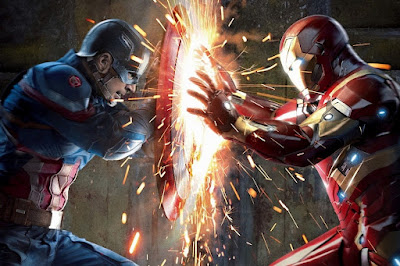
    Just as an example, let's say Iron Man decides to punch Captain America. Both of them are Rank 15. Melee attacks are Might vs. Agility. Stark has a Might modifier of +11. Cap has an Agility Defense of 24. Success is greater than or equal to so Tony needs to roll a 13 or better on 3d6 to do damage.

    Say Cap returns the favor. he has a Might modifier of +13 while Tony has an Agility Defense of 28. Cap is going to need a 15 or better to tag Shellhead. 

    While I'm not going into the full combat system here there would be a damage roll if either succeeded. Armor and shields absorb damage in this game so some of it would be mitigated and then the remainder would come off of their Health total. More on combat in a future post. 
     

    So wow, a whole post on dice mechanics. It seems like a lot but this is where the chrome is in this game. This is the system for everything. You don't have skills and you don't have feats or advantages or disadvantages - everything you do is tied to a stat, an "Ability" and 1 out of 6 times you're going to get a bonus and 1 out of 6 times you're going to get a negative consequence of some kind. Once in 216 times you're going to be awesome and once in 216 rolls you're going to absolutely fail. I'm guessing that handing out Edge and Trouble all through a session is going to liven up play considerably. Knowing your odds of success will help tremendously in deciding when to use an Edge, and how screwed you are with a Trouble. 

    More to come on this later in the week.