Showing posts with label Documentary. Show all posts

08 April 2013

Marjoe


United States – 1971
 Director – Sarah Kernochan and Howard Smith
RCA/Columbia Pictures Home Video, 1983, VHS
Run Time – 1 hour, 25 minutes

The first impression one gets while watching Marjoe – the man, not the movie- is that you’re being conned. Marjoe the film is about the man of the same name, Marjoe Gortner, whom I was introduced to, as I suspect most people within ten or so years on either side of 30 who watch movies were, by way of Starcrash. He was in a few other choice exploitation films of the late 70’s, but the Luigi Cozzi Star Wars rip off is probably his greatest work (and Cozzi’s.) Before he entered low budget cinema however, Gortner was a Pentacostal revival preacher from the age of four.

The difficulty, if it can be called that, for it is something more akin to suspicion and contagion, is in deciphering which of Gortner’s personalities is real; the speaking in tounges version, or the turned on tie-dye version, for each seems equally genuine. True, it’s unlikely that many of us has been to a revival the likes of those seen in Marjoe, but they bear a striking resemblance to the stories, and if the conviction and feeling of the attendees is anything to go on, Gortner is both effective and affective. Gortner is as convincing in his spasmic and gesticulating Haleilujah’s as he is counting the cash afterwards and explaining the intricacies of the faith healing scam to the documentary crew. Therein lies what I suspect is the convincing factor for so many fans of Marjoe (The Academy deemed it Best Documentary, 1972); its protagonists bizarre lack of duality. There is no difference outside context.

Gortner is not at one time a preacher and at another a hippie, but at all times Marjoe. To me this is what reveals the great lie in religion, for the pious man, the mouthpiece of God, the very conduit of the Holy Spirit (and thus the source of experiential faith) is merely a skilled and practiced (and it appears, weary) man at a job. He preaches because he knows how and it is lucrative, called to it as much as a plumber is “called” to fit pipe. The devout need him to confirm their faith in God as much as his long-haired pals need him to confirm their belief that it’s a sham. And of course, Gortner needs Marjoe in order to prove that he has a moral soul. It is fortunate for us, and I assume for Gortner that he can see and point to the difference between truth and fiction. It’s even more so to those like myself who are unbelievers, that Marjoe (the man and the movie) doesn’t clearly distinguish between the two because to do otherwise would be to rely on a common, but false dichotomy. Whether or not religion or science can be empirically proven is, for most of us, irrelevant. Each exists primarily to affirm through varying methods, our desires rather than any objective reality.

 We're gonna save this here pup, show him the kingdom of the almighty and bring him to Jesus!

Image 2 from MOMA
Image 3 from Jarrett's Blog
Image 4 from Awkwardboyhero

26 September 2012

A War Story


Canada - 1981
Director - Anne Wheeler
Visionsmiths, 1988, VHS
Run Time - 1 hour, 22 minutes


24 September 2012

Vietnam: The 10,000 Day War vol. 3


Book Three: The Weapons of War
Canada - 1980
Embassy Home Entertainment, 1987, VHS
Run Time - 1 hour, 38 minutes

While interesting, this long and well made documentary from the Canadian Broadcasting Company lacks the perspective that would allow for a less biased understanding of the war. It is worth watching as an artifact of both the war itself, and the coming to terms that the U.S. underwent in the 80's.
See also at LVA:
and the umbrella labels 'Namsploitation and Vietnam Vets

04 September 2012

Grudge Fights


Grudge Fights
United States - 1986
VidAmerica, 1986, VHS
Run Time - 1 hour

22 June 2012

Rodeo Bloopers


Rodeo Bloopers
United States - 1989
MNTEX Entertainment, 1989, VHS
Run Time - 30 minutes

Like it's close natural cousin, the Monster Truck Blooper, Rodeo Bloopers is an entirely contextual joke. Without a strong background in rodeo phenomenology, I had very little understanding of what exactly made any of the myriad faceplants and near-gorings 'bloopers' per-se. While far from being an expert, my not-negligible exposure to rodeo had always led me to believe that these sort of things were pretty routine. Ride angry three-thousand pound bull, fall off, escape death, repeat. While perhaps thrilling entertainment for the participants, to an outsider it seemed rather run-of-the-mill.

Still, it would be remiss of me to suggest that the Rodeo Blooper is a altogether mythological phenomenon. The act of naming has a certain existential function in all cultures, acting as a way of understanding and relating to the greater physical world outside of the individual. So to call something a 'Blooper," while you and I may not understand, evokes a certain taxonomy of experience and observation for those of the 'in' group. It marks those who belong, and perhaps more importantly, it marks those who simply never will.

14 May 2012

Set Free


Set Free 
United States – 1976
Director –
Omega Entertainment, 1986, VHS
Run Time – 42 minutes

I simultaneously love and cringe at the cruel and irony in that title; Set Free. It’s as if every secular stereotype about Christianity and its professed morality was simply embraced as an obvious necessity. Of course, the title is meant to refer to the spiritual freedom supposedly discovered by the men it depicts; born again convicts, some of them on death row, in San Quentin Maximum Security State Prison in 1976. They are hardly “free” in any sense that you and I might tangibly comprehend of course. But, through a belief in Christ and their own subsequent re-birth, they have ostensibly become “spiritually free.”

Boy, he sure looks like he feels "free"
The veracity of this claim of “freedom” rests of course on the Christian assumption that morality comes through God and his religion, that morality is received by imperfect men, from God. If morality is externalized, or not of men, it becomes normal, even expected for men to commit immoral acts. This is an awfully convenient claim because it means that a person doesn’t have to live the morality, only the practice, the ritual, the rites of religion. This is because, while certainly admirable, morality isn’t necessary to the practice of the Christian faith, it’s just a side benefit. Would anyone argue that moral behavior is invalid when practiced outside a religious context? No, but by Christianity’s standards, an immoral person can, through piety and ritual remain a good Christian, while a moral person who is not “saved” (or converted) is surely going to Hell.

'Powered by Christ'
And this gives us some idea why it’s easy, or inspiring for death-row inmates to find “freedom” in a Christian re-birth. They are Set Free from responsibility for their past behaviors by the ritual of Christianity; which is principally testifying and prosthelytizing, of which constitutes the entire forty-two minutes of this film. A number of the converts admit of this freely, asserting that they “couldn’t do it, only Jesus could do it” for them, and that he “gave them a new brain.”

Of course, these inmate’s failures to observe social duties, moral obligations which are general and well known, is what led to their paying the social price for their crimes. This of course is the cruel irony of the title to which I was referring. These inmates are in no sense of the word “free.” Their feelings of guilt (however subconscious they may be) has led them to a double incarceration. In the physical sense of course there can be no question, but in coping with the reality of their circumstances they have been led to a doctrine which asserts strict rules, yet in no way prevents them from returning (either to the behavior or the prison to which it led them.) That is because, as many believers have forgotten, spiritual enlightenment still does not free us from our moral duties to ourselves and others.

06 December 2011

Terror In the Aisles


United States - 1984
Director - Andrew J. Kuehn
MCA Home Video, 1985, VHS
Run Time - 1 hour, 24 minutes

Hosted by Donald Pleasence and  Nancy Allen.

14 November 2011

Midnight Movies

United States – 2005
Director – Stuart Samuels
Starz Home Entertainment, 2005, DVD
Run Time – 1 hour, 26 minutes

I was much too young to have any firsthand experience with the Cult, B and more recently Grindhouse movie phenomena, so it took me a long time to figure out what the designations meant in practical terms. These days they are used to give films a false cultural cache. But I understand that new meanings have been created by consumerism and marketing. Just like the meaning of an image or a icon can evolve as history slips by, so can a word. A B-movie is no longer the cheap movie on a double bill, it’s just anything with a low budget. Grindhouse no longer refers to the venue, but to the general class of graphic exploitation movies that might have shown in one.

But new meanings have no real weight unless we understand their inspirations. Midnight Movies bridges the gap between the use of “Cult Film” in the fast and loose marketing sense, and its original meaning in the pre-video world. In interviews with directors of seven films that became cultural phenomena, the closest thing to a “certified” cult film, Midnight Movies explains what made those films what they were. Their claim, and even several distributors and producers agree, is that all of these films became popular in spite of their peculiarities and counter-cultural aesthetic, not because of them. Often, as in the case of Alejandro Jodorowski’s El Topo, they suffered from a near total lack of distribution. Yet nevertheless they became literal “cult” films, with a rabid local following that went religiously, sometimes for years. When their cultural cache was discovered and they finally got popular distribution, these cults vanished. It was a classic case of an art that is no longer appealing once it is commodified and everyone knows about it.

Unfortunately, with the arrival of home video all of that changed. As much as I deign to criticize the video format I so love, history tells us (as does John Waters in Midnight Movies) that it was largely responsible for the death of true cult cinema. There are occasionally films like Troll II that develop a following despite the inherent solitude of home video, but it’s a different creature. In interviews with Jodorowsky, Waters (Pink Flamingos), George Romero (Night of the Living Dead), Perry Henzell (The Harder They Come), David Lynch (Eraserhead) and Richard O’Brien (Rocky Horror Picture Show), Midnight Movies makes it perfectly clear what “cult film” means and why as a category it no longer truly exists. A cult film simply cannot be made with intention and it cannot be made on BluRay or Netflix. As sad as that is for those of us unfortunate enough to have been born in the post video age, we have been lucky in one respect. Video has made it possible to preserve both the movies and the history that we missed. I can think of no better example than Midnight Movies: From the Margin to the Mainstream.

19 September 2011

Chicago Blues


Chicago Blues
United States - 1972
Director - Harley Cokliss
Rhapsody Films, 1991, VHS
Run Time - 50 minutes

There are a number of interesting things about this brief documentary beginning with the director. Cokliss has continued to work in film and has some noteworthy films to his name, however Chicago Blues is not listed among his credits. Nor is it listed among the credits for cinematographer Tak Fujimoto who has an even more impressive resume. Perhaps they're not proud of this film now that they've gone on to the big time. I can't understand why that would be the case though, Chicago Blues is a great piece of history.

Like many of the blues documentary and performance footage shot at the time it suffers a bit from the amateur anthropologist mentality of its makers. Upon 'discovering' Black culture through music in the 60's, white people seem genuinely surprised and practically impressed that there is a Black culture. In presenting the art, white filmmakers repeatedly decontextualized it, filming performers in artificial folksy or rural settings and surrounding them with curious white onlookers.

Chicago Blues is an exception to this trend namely because it doesn't present its subject matter as an exhibit. Icons Muddy Waters, Junior Wells and Buddy Guy (all of whom recorded together in the early 60's) and lesser known bluesmen like Floyd Jones discuss the experiences that led to the creation of the Chicago Blues sound. In the years during and after World War II, large numbers of Blacks left the south to find work up north. As a hub of national commerce, Chicago proved to be one of the most promising destinations. For people born and raised in the south, and for the music they brought with them, the change proved to be utterly transformative. In fact, it is that experience which the film claims was the context for the creation of the Chicago sound. More than any other blues film or documentary that I've seen, Chicago Blues attempts (and mostly succeeds) in allowing the subjects, from the musicians to the city, to speak for themselves.


11 July 2011

Talk of the Town

VCII boxes have these cool double side flaps, but they are a bit awkward to scan
Talk of the Town: Shows 1 and 2
United States - 1982
Director - Doug Raymond
VCII Incorporated, 1983/'84, VHS
Run Time - 1 horrific hour per show

You will hear these jokes over and over!
The fiction of time travel plays on idealized notions of history and historical moments. It is a fantasy that needs temporal distance, because the actual experience of those moments we would like to visit were really just as mundane as the ones we’re stuck in now. Given the choice a lot of people would probably choose to travel to the 40’s or the 1920’s or something even older, something with “heroism” or “style”. I would go back into the bad old days of the late 70’s and early 80’s. That era appeals to me because through the fog of time and oversimplification it looks like a badly dressed and desperate exercise in cheap self-indulgence. It appears to be a cultural void, without direction or identity, and it is because of this lack of any redeeming qualities that it appears, from this distance to have been tackier, louder, and shallower than anything before or since. Talk of the Town is exactly the sort of eye-popping time travel experience I’ve always wanted to take.

Hostess with mostest makeup.
Produced by VCX, one of video porn’s oldest names and distributed by their in-house non-porn label VCII, Talk of the Town is a procession of desperate posturing set to the worst musical genre (and a bad example at that) to have ever been shat out the sour infected anus of American pop culture. The guests are the dregs, the tail-draggingest end-throes of late70’s entertainment culture at its diveyest. Co-host Pat Cooper, Murray Langston and Rip Taylor provide a fine cross section of the sleaziest in male interpretation of the Aquarian sexual liberation ethic. Hostess Jaye P. Morgan’s repeated crowing about the “unscripted and uncensored” nature of the show (read off of cue cards) gives her male guests in both episodes license to “liberate” and openly express their ever present lecherous objectification.

The classy nicotine stained lingerie of the Talk of the Town Showgirls


Fortunately, things rarely go as planned in Vegas, and since their jokes have been so mind numbingly shitty up to this point, the most amusing part of this exercise in stamina is watching it self destruct. VCX was apparently unaware of the profound contradiction in hiring both boorish male comics and self-identified feminists to have a casual “adult” chat. In the first show, like hungry dogs chewing at their leashes in the presence of raw meat, the men unleash steady stream of childish innuendoes as soon as 23 year old Linda Blair walks on stage. As soon as adult film star Samantha Fox arrives however, the dick jokes of a few minutes ago transform instantly into embarrassed questions about “thingies” and “doing it”. They talk a big game but blood rushes back to their heads when confronted with a nonplussed and confident woman. Whoa, it turns out that liberation is actually pretty intimidating. The second show’s guests include Redd Foxx, Larry Storch and Jack Carter who in good form generally pour on the vitriol until the godmother of feminist comedy Rusty Warren arrives. On second thought maybe VCX did know what they were doing. By putting these women on last we have to consume some forty five minutes of manly non-comedy before the women arrive to get talked over by earlier guests and then cut short by time constraints.

One of the appealing things about time travel fantasies is the unstated and often unacknowledged assumption that one would be so much smarter than those coarse primitive bastards back then. But this is of course predicated on our present ability to know what they did right or wrong and pick it apart. Hindsight is 20/20 after all, and that’s what makes history and laughing at old and/or dead people so much fun. Talk of the Town is imminently mockable, from Jaye P. Morgan’s embalming makeup to the profoundly tacky ranch-style lingerie fashion show that staggers into the middle of both episodes. I only hope that some yet to be born future asshole has the spare time point out how full of shit I will have been.

Shut the fuck up Pat Cooper! SHUT UP!


One of the things I like about VCII tapes is the label on the cassette itself:


VCII had two logos at the beginning of their tapes. This clip is courtesy of LogicSmash


06 September 2010

Pierre Schoendorffer's Vietnam

My copy doesn't have a box, but it is an Interama release which used this (low rez) art.
Original Title - La 317eme Section
France - 1964
Director - Pierre Schoendorffer
Interama Video Classics, 1990, VHS
Run Time - 1 hour, 34 minutes
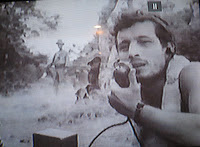
Most of the cinematic output that we in the States are exposed to is centered on the U.S. war in the 60’s, and with the exception of The Quiet American, ignores even the French conflict in the 1940s and 50s, much less any Vietnamese input on the subject. Not surprisingly, the Vietnamese and the French have made films about their own experiences of conflict, it’s just that there is little interest in the U.S. and so, the films are not readily available here. It’s not so much that the output exclusively focuses on the U.S. war then, just that for U.S. Americans that’s all that’s really interesting.
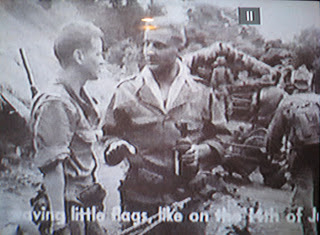
During the French war, which was largely bankrolled by the Eisenhower administration, French troops attempted to reassert colonial dominance over the entire country with far fewer men than the U.S. had 15 years later for half the country. Pierre Schoendorffer’s La 317eme Section aptly captures the strategic futility of the French position at the end of the war in 1954. The film centers on a tiny border outpost where two French Foreign Legionaires command a platoon of indigenous troops. They are ordered to leave their post and march through the mountains while evading the enemy. This turns out to be an order much more tactically and psychologically difficult than it sounds. All of this takes place during the prolonged battle of Dien Bien Phu, giving the film a lingering sense of doom (assuming you know, as a French audience would, the significance of that battle).
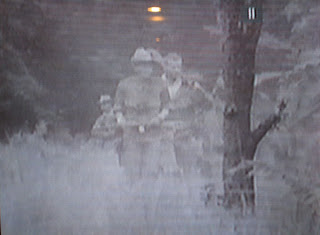
Considering that I am not French, much of the plot’s more subtle cultural implications are likely lost on me, but the platoon’s leadership suggests some important themes. The commanding lieutenant is a freshly minted French officer with little practical experience in the field, while his platoon sergeant is a German veteran of the Wehrmacht in WWII. Together they represent the profound change that France underwent in the aftermath of the Second World War as it transitioned from an outward looking colonial world power to a self-contained, modern nation-state. After the Second World War, the Indochinese War was one aspect of France’s attempt to reassert what it had been before. The fate of the 317eme section parallels this mission as past experience increasingly fails to provide insight into present circumstances. This is driven home in the concluding text which informs us of the Sergeant’s subsequent fate in Algeria. The platoon is a microcosm of France undergoing a traumatic, forced transformation at the hands of her own history.


Original Title - La Section Anderson
France - 1966
Director - Pierre Schoendorffer
Home Vision Public Media, 2000, VHS
Run Time - 1 hour, 5 minutes

Long before it reappeared in Full Metal Jacket, Nancy Sinatra’s 1966 #1 hit “These Boots are Made for Walkin’” captured the brilliant irony of the U.S. experience in Vietnam in Schoendorffer’s follow up to The 317th Platoon, The Anderson Platoon. In the 1960’s the director returned to Vietnam as a war correspondent for various French magazines, and in 1967 spent six weeks in the field filming a documentary about a single platoon of U.S. Army infantrymen. The entire film is narrated by the director, and in his opening lines he explains his conclusions: “I went back to rediscover the Vietnam I had left thirteen years ago with the French Army. Except for a few poignant scenes, I discovered, above all, America.” At first this would seem to be a rather obvious claim, but its deeper significance is revealed gradually throughout the film.
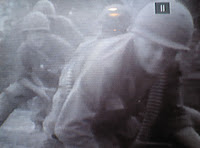
Schoendorffer’s cinematography focuses on the projection of U.S. culture and worldview into its foreign policy. It focuses on the pervasive atmospheric and psychological rather than physical presence that was created. This manifests in a sense that the U.S. restructures and recreates the familiar wherever it goes. The military appears as an encapsulated but pared down version of U.S. culture, while the civilian life visible to us on screen mirrors U.S. expectations. There is the feeling that the military and economic power that the U.S. exudes creates a bubble of conformity around itself which prevents the U.S. from ever really seeing a Vietnam not colored by its own presence, and thus unable to understand what the war might be about to the Vietnamese. The feeling one gets from this is that the United States is so inward looking that it is unable to perceive the unique identities and desires of other peoples. It appears as a cultural juggernaut, so monumental and diffuse that its disparate parts act independently around an ambiguous goal. It becomes oblivious, ineffective and self defeating, a blunt instrument of cultural hegemony.
Schoendorffer fortunately doesn’t try and ascribe a moral value to this phenomenon, he merely observes and reveals the way it manifests. The Anderson Platoon could be seen in this sense as the flip side of The 317th Platoon. It contrasts the overwhelming and potent presence of all things U.S. with the fragility of Frenchness in 317th. They are different national experiences separated by a great deal of history, but as a veteran of both wars (a combatant in the first and what we now call “embedded” journalist in the second) Schoendorffer is able to see the beginnings of a tragic similarity that wouldn’t be visible to most of us for at least another decade. It is important to remember that both of these films privilege a very limited Franco-American perspective, leaving out entirely any Vietnamese perspective. Despite the fact that they cannot tell us the whole story of these wars, Schoedorffer's films remain a powerfully reflective experience.

Some alternate cover art for Schoendorffer's films:


The first of the Anderson Platoon covers looks like someone's Photoshop project. To the best of my knowledge neither film has been released on DVD in the U.S.

25 February 2010

Monster Truck Bloopers 3


Monster Truck Bloopers 3
United States – 1993
Director – a bunch of drunk rednecks
Superior Promotions Inc., 1993, VHS
Run Time – 30 minutes

I have no personal experience with monster trucks. I have never been to a monster truck show and so, the only way I can make an assessment is through secondary sources. My impressions of monster truck culture are filtered through other people’s interpretations. They tell me what they think is interesting or important or fun about the event. Television advertisements for monster truck shows I assume, are intended to appeal to a slightly wider audience than the typical attendee. People who like something will consume it because they already know its merits. But you do have to present it in a format that will be comfortable to the established audience.


As such, my understanding of monster trucks is based on the accounts of people I know who have gone, and a handful of advertisements. From the former I have learned that monster truck shows are very, very loud, almost deafeningly so. Additionally I have been led to believe that monster truck shows are mostly just a stadium full of drunk redneck fistfights with trucks in the background. Understandably most of us notice the most shocking aspects of any experience, those things farthest outside our personal “normalcy”, and are likely to overemphasize those things in retelling. Hence it may be an artifact of cultural experience that all of the eyewitnesses whom I have talked to emphasize the overwhelming presence of rednecks and/or hillbillies brawling in the stands at monster truck shows.


That said, nobody has ever told me about what the trucks actually do at one of these events. It doesn’t appear to be entertaining enough for my friends to mention, or to keep the rednecks in their seats. My hope was that this tape would give me a glimpse into the monster truck culture as its participants see it, a self identification. Hence, I watched it with a feeling of anticipation, a desire to get an inside look at a foreign culture. Having done so, I found that it was simply monster trucks and other cars driving over and through stuff and then wrecking, machines pushed to cartoonish extremes. The tape lays this bare. I expected copious accidents, broken shit and wrecks, and I got them. But if this tape is really the primary source I believe it is, then clearly the breaking and wrecks are as much par for the course as the wheelies and crushed station wagons. There really is no such thing as a “blooper” in a niche field defined by boisterous extremes.

18 January 2010

Yaxchilan

Yaxchilan
Mexico – 1996
Director – Enrique Lecuona Saiz
Lecuona Films, 1996, VHS
Run Time – 45 minutes

So it should come as no surprise that I love this documentary, I’ve been into the culture of the ancient Maya and modern Mexico for quite a few years now. This tape came up in a random online search for all things related to the former. Really it’s not much of a documentary since there’s not whole lot of historical information divulged in the narration. It’s more of a video tour, which is fine, I can get the information I want from a book. But, Yaxchilan happens to be one of the hardest to reach ancient Maya cities in Mexico, at least it was last I read. It’s cradled in a deep loop of the Ucumacinta River which forms the border between far south eastern Mexico and Guatemala. In that case it’s pretty cool to get some quality video footage of a place I may never get to visit, and there is some incredible stuff to see at Yaxchilan.

Several years ago when I presented this tape to my friend so that he could make a DVD transfer for me he returned it saying that he had been disappointed because it wasn’t more informative. I can only assume that he was looking for the entertaining but sensationalized fare typical of National Geographic or the Discovery Channel. I’ll admit, I’m entertained by that type of show, but this is not one of them, it’s a much drier thing. Its entire 45 minute running time actually consist of a heavily edited walking tour of the ruins. By heavily edited I mean that there isn’t any actual walking, but slow pan shots of the site and architecture with narration that describes the buildings, their hypothesized purposes, and some general history of the ancient Maya in the Yucatan Peninsula. Some of the stuff on offer can been in the photographs I’ve included here in lieu of screencaps. I got them both from the Wiki Yaxchilan and associated pages.

It has the feeling of a vacation home video that’s been really well edited, scored with some tinny synthesized tribal music and narrated by an attractive sounding man with a latin accent. At the end he reads a poem over a series of camera pulls and some piano music. Mossy stones and epic ruined cityscapes abound. Seeing these images puts in perspective the complexity and advancement of the indigenous New World cultures of which the Maya at Yaxchilan were only one. It brings to mind the kind of dystopian collapse most of us normally associate with European empires like Rome and Greece.


Y'know, just for posterity and the like, I have scanned and posted the entire pamphlet included with the Yaxchilan cassette. Just click the link below.