Certified Public Accountant with five years of experience in account reconciliations, streamlining accounts, and financial planning. Highly motivated professional with a proven track record of delivering accurate reports and high-quality service. Possess a comprehensive understanding of all aspects of accounting and financial planning. A dedicated leader with the ability to lead effective teams in attaining profit improvement.
07/2019 - 09/2022, Accountant, Huntington Associates, Philadelphia
- Oversaw the management of all company accounts.
- Processed staff payroll and other main aspects of financial transactions.
- Managed accounting team of 10 and ensured that all accounting records were complete and accurate.
- Explained financial matters to people outside of the finance department in a comprehensive way.
- Handled sensitive and confidential matters discreetly.
- Working closely with junior staff members while aiding them in the progression of their careers.
11/2014 - 09/2018, Staff Accountant, Dubone Partnership, New York
- Managed accounts by analyzing costs and revenues.
- Projected future trends based on analysis work.
- Managed complex expense reporting.
- Developed strategies for minimizing tax liability.
- Worked closely with auditors during all audit processes.
- Performed financial risk assessments for all future business projects.
- Organized sales and profit reports.
- Prepared, reviewed, and submitted crucial budget plans for company goals.
10/2013 - 10/2014, Accounting Records Manager, Pepsico, New York
- Supervised staff of 12 finance department members.
- Prepared budget and analyzed inventories, cost of goods, and general accounts.
- Served as a liaison between the accounting staff and the external audit staff.
01/2023 - 01/2023, Certified Public Accountant, State of New York, New York City
07/2020 - 07/2020, Master of Business Administration and Accounting, St. Joseph's College, New York
05/2012 - 05/2012, Bachelor of Finance, University of Pennsylvania, Philadelphia
- Financial Reporting
- Taxation
- Auditing
- Cross-functional Collaboration
Effective accountant resume examples
A professional accountant resume should clearly show your technical accounting skills, measurable results, and relevant certifications, using a structured format that recruiters can scan quickly. To stand out, tailor your summary, skills, and experience to the job description so your resume passes ATS screening and reflects real business impact.


Related Resume Examples
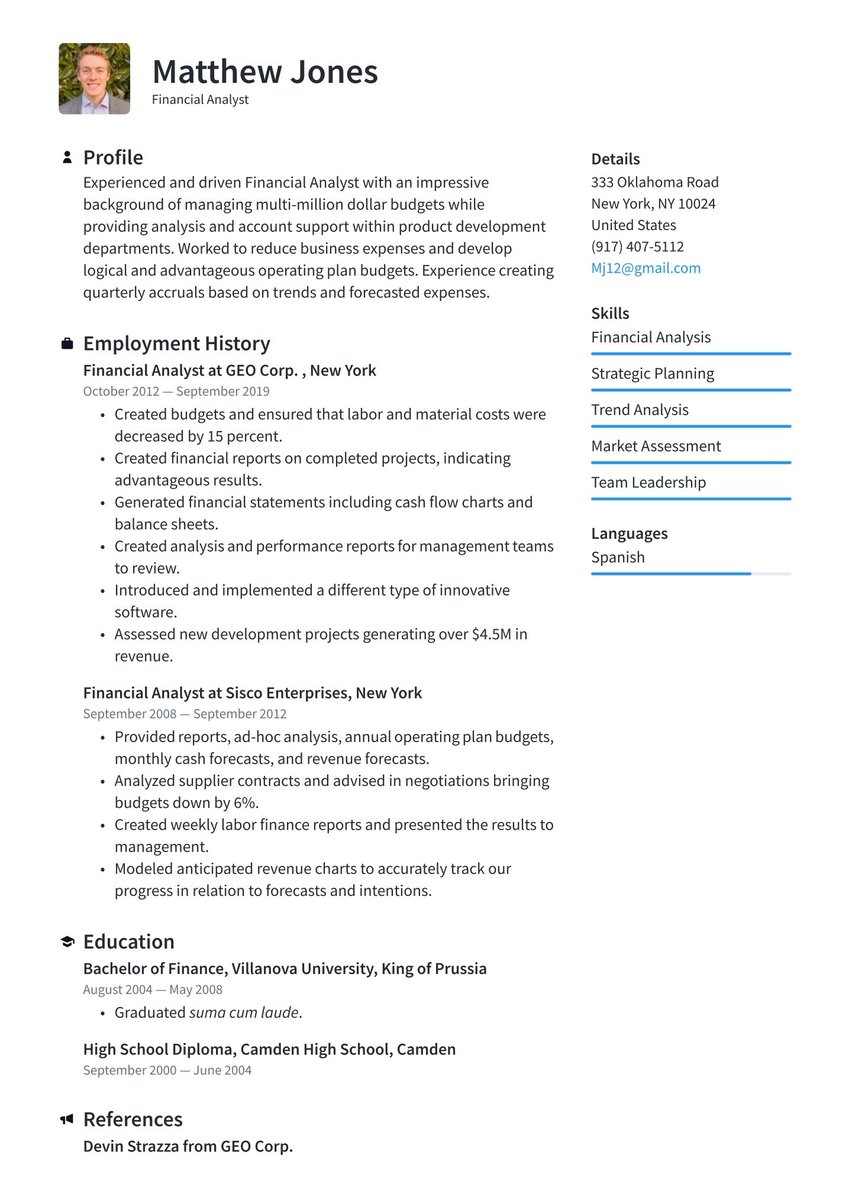
Financial Analyst resume example

Geared toward financial analysts, this sleek, data-driven layout emphasizes precision and clarity. Its clean structure and professional formatting highlight your analytical skills and strategic expertise, helping you impress decision-makers in corporate finance environments.
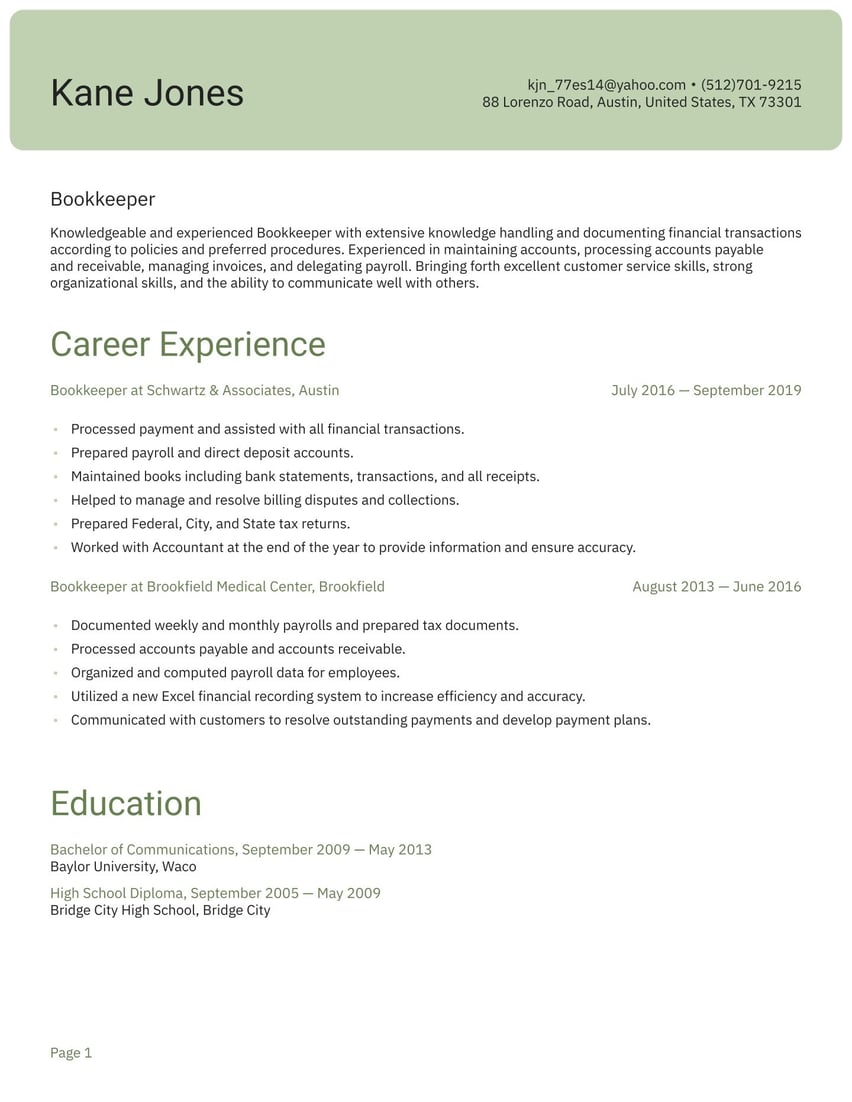
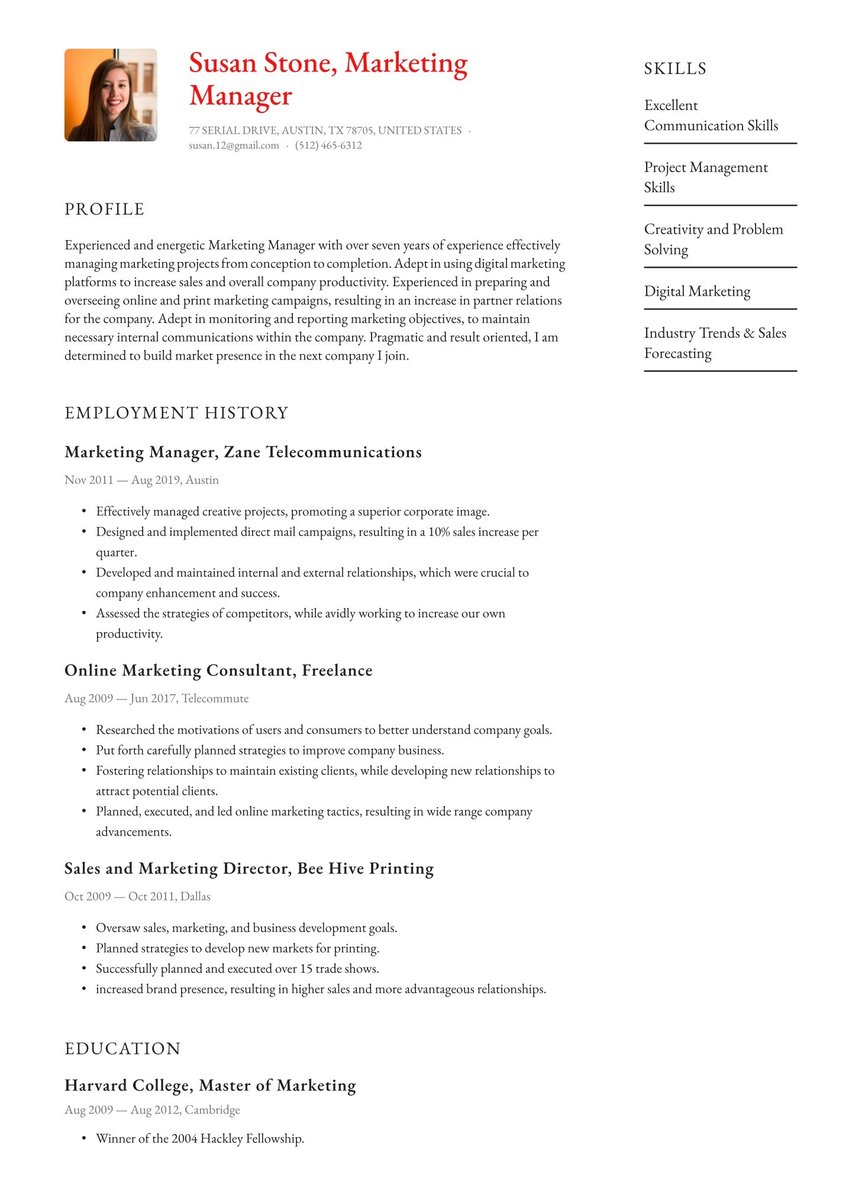
Bookkeeper resume example

Created for detail-oriented professionals, this clean, organized layout highlights your precision and reliability as a Bookkeeper. Its structured sections and subtle design emphasize financial expertise, ensuring your skills resonate with employers seeking trustworthiness and accuracy.
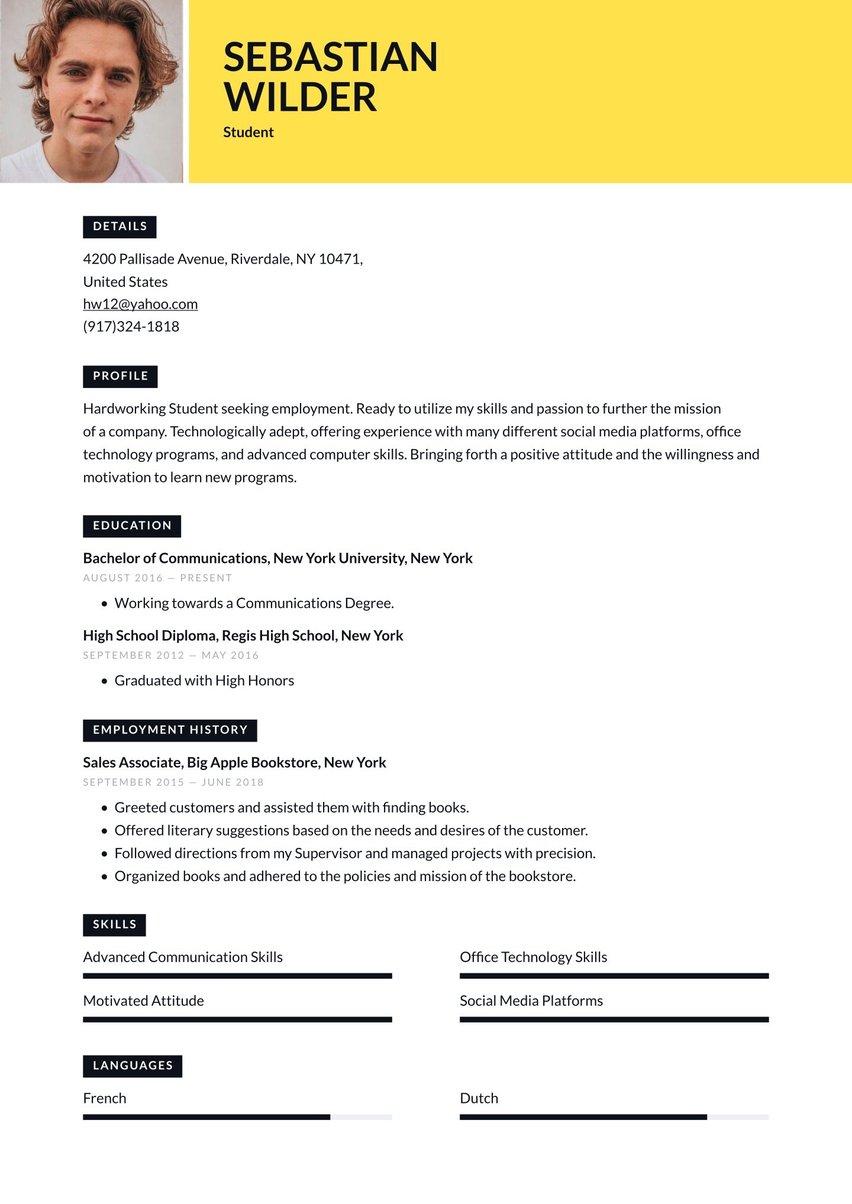
Auditing Clerk resume example

Primed for precision, this clean, symmetrical layout highlights your analytical expertise and attention to detail as an Auditing Clerk. Its structured sections and subtle color accents showcase your skills and compliance-driven mindset to employers seeking accuracy and reliability.
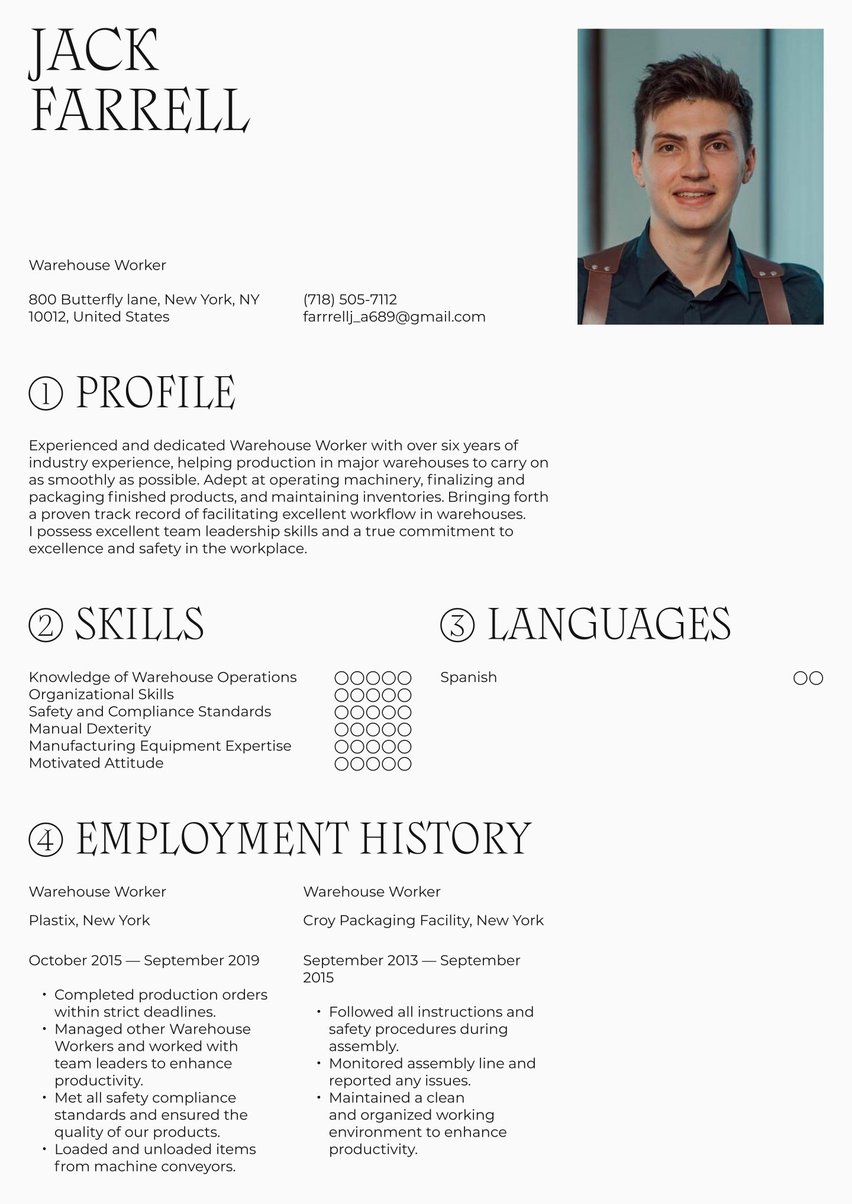
Senior Accountant resume example

Structured for precision and professionalism, this clean, symmetrical layout highlights the analytical expertise and compliance focus essential for Senior Accountants. Its organized sections showcase your financial acumen, building trust with employers and clients alike.
Accounts Payable resume example

Structured for precision and clarity, this template highlights your detail-oriented expertise as an Accounts Payable Specialist. Its clean layout and professional formatting showcase your technical skills and achievements, impressing finance teams and hiring managers alike.
Internal auditor resume example

Made to match the precision and professionalism of an Internal Auditor, this template’s clean layout and structured sections spotlight your expertise in risk management, compliance, and financial governance. Its balanced design ensures clarity for decision-makers.
Accounts Receivable resume example

Structured for precision and clarity, this template highlights your analytical skills and financial expertise as an Accounts Receivable Clerk. Its clean layout and organized sections showcase your achievements, making a strong impression on finance-focused employers.
CPA resume example

Formatted for precision-driven professionals, this clean, structured layout highlights your analytical expertise and organizational skills as a Certified Public Accountant. Its balanced design emphasizes your financial acumen, building trust with clients and employers alike.
Staff Accountant resume example

Perfectly suited to detail-oriented professionals, this clean, structured layout highlights your precision and analytical skills as a Staff Accountant. Its balanced design emphasizes financial expertise and compliance knowledge, impressing both corporate clients and hiring managers.
Tax Preparer resume example

Shaped for precision and professionalism, this clean, structured layout highlights your expertise in tax preparation. Its organized sections and subtle design elements showcase your attention to detail and compliance skills, impressing clients and employers alike.
How do you write an accountant resume?
To write an effective accountant resume, focus on clear structure, relevant technical skills, and measurable financial results.
Start with a tailored summary, highlight key accounting skills and certifications, and describe your experience using numbers and outcomes.
Always align your resume with the job description to pass ATS screening and show real business value.
1. Write a summary that positions you as a specialist, not a generalist
Your summary should immediately show what type of accountant you are and the value you bring.
Avoid vague statements and instead mention your area of focus, years of experience, and key strengths.
Include:
- Specialization (tax, audit, financial reporting, management accounting)
- Certifications (CPA, CMA, ACCA)
- 1-2 core strengths (e.g., compliance, forecasting, cost control)
Example improvement:
- Weak: “Detail-oriented accountant with strong skills”
- Strong: “CPA-certified accountant with 5+ years of experience in financial reporting, audit preparation, and GAAP compliance”
2. Choose and prioritize the right accounting skills
Your skills section should reflect both technical expertise and the tools used in modern accounting roles.
Recruiters and ATS systems look for specific accounting terms, not generic skills.
Include a mix of:
- Core accounting skills: GAAP, financial reporting, general ledger, reconciliations, tax preparation
- Software: Excel (pivot tables, VLOOKUP), QuickBooks, SAP, Oracle
- Supporting skills: data analysis, attention to detail, communication
Tip: Mirror the wording in the job description so your resume matches screening criteria.
3. Turn job responsibilities into measurable financial impact
Employers are not just looking for what you were responsible for.
They want to see how your work improved financial accuracy, efficiency, or decision-making.
Instead of listing duties, focus on:
- Cost savings or revenue impact
- Process improvements (e.g., faster month-end close)
- Accuracy and compliance (audit readiness, reduced errors)
Example:
- Weak: “Managed accounts payable and receivable”
- Strong: “Managed AP/AR processes, reducing invoice errors by 18% and improving payment cycle time by 10%”
4. Optimize your resume for ATS and accounting job requirements
Most accounting resumes are filtered before a recruiter sees them.
To pass this stage, your resume needs to match the structure and keywords employers expect.
Make sure you:
- Use standard section headings (Summary, Experience, Skills, Education)
- Include required certifications and credentials clearly
- Add keywords like “financial reporting,” “audit,” “GAAP,” or “tax compliance”
- Avoid overly complex formatting that ATS cannot read
This ensures your resume is both searchable and easy for recruiters to review quickly.
What should you include in an accountant resume?
An accountant resume should include clear contact details, a targeted summary, relevant accounting experience, key technical skills, education, and professional certifications.
Each section should demonstrate your ability to manage financial data, ensure compliance, and support business decisions, using specific examples and keywords that match the job description.
Core sections to include:
| Section | What to include | Why it matters |
|---|---|---|
| Contact info | Name, phone, email, LinkedIn | Lets employers contact you quickly |
| Summary | Experience, specialization, certifications | Shows your value immediately |
| Experience | Achievements with metrics | Proves real impact |
| Skills | Accounting tools + technical skills | Matches ATS and job requirements |
| Education | Degree in accounting or finance | Confirms qualifications |
| Certifications | CPA, CMA, ACCA | Signals expertise and credibility |
What are the key skills to highlight on an accountant resume?
The most important skills and abilities to highlight on an accountant resume include core accounting competencies, financial software proficiency, and analytical thinking.
Employers expect candidates to demonstrate accuracy, compliance knowledge, and the ability to interpret financial data.
A strong skills section combines technical expertise with tools and a few essential soft skills that support business communication.
| Skill type | Examples | Why it matters |
|---|---|---|
| Core accounting | GAAP, AP/AR, reconciliation | Shows technical capability |
| Software | Excel, SAP, QuickBooks | Matches modern job requirements |
| Analytical | Forecasting, risk analysis | Demonstrates business impact |
| Soft skills | Communication, attention to detail | Supports team and stakeholder work |
Core accounting skills (must-have)
These are the technical foundations recruiters and ATS systems prioritize:
- Financial reporting
- General ledger management
- Accounts payable and receivable (AP/AR)
- Account reconciliation
- Tax preparation and compliance
- Audit support and internal controls
- Budgeting and forecasting
These should appear in both your skills section and work experience.
Accounting software and tools
Modern accounting roles require strong system knowledge.
List tools you actually use:
- Microsoft Excel (pivot tables, VLOOKUPs)
- QuickBooks
- SAP
- Oracle
- NetSuite
- Sage
Tip: Match the exact software listed in the job description where possible.
Analytical and business skills
These show you can interpret data, not just produce it:
- Financial analysis
- Risk assessment
- Cost control and optimization
- Data interpretation
- Problem-solving
Essential soft skills
Often overlooked, but important for hiring decisions:
- Attention to detail
- Communication (explaining financial data to non-finance teams)
- Integrity and confidentiality
- Time management
- Team collaboration
How to elevate these skills on your resume
Instead of listing skills in isolation, reinforce them in context:
- Weak: “Financial reporting”
- Strong: “Prepared monthly financial reports to support executive decision-making”
How should I describe my accountant job responsibilities in a resume?
To describe accountant job responsibilities effectively, focus on measurable outcomes rather than listing routine tasks.
Show how your work improved financial accuracy, supported reporting, reduced costs, or ensured compliance with regulations.
Use strong action verbs and include metrics where possible to demonstrate impact.
Tailor each bullet point to the job description so it reflects the specific accounting work the employer is hiring for.
How can I make my accountant CV stand out to recruiters?
To make your accountant CV stand out, focus on clear results, relevant specialization, and strong alignment with the job description.
Recruiters look for candidates who show measurable financial impact, not just technical knowledge.
Highlight certifications, key achievements, and systems you’ve worked with to demonstrate credibility.
A clean format and targeted content help your CV pass ATS screening and hold attention during quick reviews.
1. Focus on results, not responsibilities
Employers expect accountants to improve accuracy, efficiency, or compliance.
Make sure your experience shows outcomes, not just tasks.
2. Show your specialization
Clarify whether you focus on areas like tax, audit, financial reporting, or management accounting.
This helps recruiters quickly match you to the role.
3. Highlight certifications early
Credentials like CPA, CMA, or ACCA can be deciding factors.
Place them prominently in your summary or a dedicated section.
4. Use tools and systems as proof of experience
Mention platforms like Excel, SAP, or QuickBooks to reinforce your hands-on expertise.
What should you include in an accountant resume summary?
An accountant resume summary should briefly highlight your specialization, years of experience, key technical skills, and any relevant certifications.
It should give employers a quick understanding of the type of accounting work you do and the value you bring.
Focus on areas like financial reporting, compliance, or tax depending on your background.
Keep it concise, specific, and tailored to the job you’re applying for.
What to include in your summary
A strong accountant summary typically includes:
- Your role and experience level (e.g., junior accountant, CPA with 5+ years)
- Area of expertise (audit, tax, financial reporting, management accounting)
- Key technical strengths (GAAP, forecasting, reconciliations)
- Certifications (CPA, CMA, ACCA if applicable)
What makes a strong vs weak summary
- Weak: “Motivated accountant with strong skills and attention to detail”
- Strong: “CPA-certified accountant with 6 years of experience in financial reporting, audit preparation, and GAAP compliance, improving reporting accuracy and supporting executive decision-making”
When to use a summary vs objective
- Use a summary if you have relevant accounting experience
- Use an objective if you are entry-level, changing careers, or lack direct experience
What is the difference between a junior and senior accountant resume?
The main difference between a junior and senior accountant resume is the level of responsibility, complexity, and measurable impact shown in the experience section.
Junior resumes focus more on foundational tasks and education, while senior resumes emphasize leadership, strategic input, and financial decision-making.
Senior candidates are also expected to show results and process improvements.
The structure is similar, but the depth of content changes significantly.
| Level | Focus | What to highlight | Example |
|---|---|---|---|
| Junior accountant | Learning and support tasks | Education, internships, basic accounting tasks, software use | “Assisted with reconciliations and prepared financial reports” |
| Senior accountant | Ownership and impact | Leadership, audits, forecasting, process improvements, results | “Led month-end close process and reduced reporting errors by 20%” |
Action words to include in an accountant resume
Use action words that highlight financial accuracy, analysis, and measurable business impact.
Focus on verbs that show what you achieved, not just what you were responsible for, using terms that reflect real accounting work like reporting, auditing, and forecasting.
Financial management and reporting
- Prepared
- Analyzed
- Reported
- Reconciled
- Documented
Compliance and auditing
- Audited
- Ensured
- Verified
- Reviewed
- Monitored
Process improvement and impact
- Reduced
- Improved
- Streamlined
- Optimized
- Implemented
Quick example
- Weak: “Responsible for financial reports”
- Strong: “Prepared and analyzed monthly financial reports, improving reporting accuracy and decision-making”
Watch our video to building an accountant resume, too, for even more tips and tricks.
What are some accountant resume tips?
Strong accountant resumes are clear, results-driven, and tailored to the job description.
Recruiters look for candidates who show financial impact, accuracy, and relevant technical expertise.
Small improvements in wording, structure, and formatting can make a significant difference in how your resume is evaluated.
- Prioritize measurable results: Include metrics like cost savings, error reduction, or process improvements to show real impact.
- Match keywords from the job description: Use the same terminology for skills, tools, and responsibilities to improve ATS performance.
- Keep formatting clean and consistent: Use standard headings and avoid complex layouts so your resume is easy to scan and ATS-friendly.
- Highlight certifications early: Place credentials like CPA or CMA near the top to immediately signal credibility.
- Focus on relevant experience only: Remove outdated or unrelated roles that do not support your accounting expertise.
If you want the perfect tool to save yourself time and win your ideal accounting position, use our resume builder with field-tested templates and resume examples!

FAQs for an accountant resume
Here are quick answers to common questions about writing an effective accountant resume, from format and length to objectives and certifications.
What resume format works best for an accountant position?
The reverse-chronological format works best for accountant resumes because it clearly shows your work history and career progression.
Recruiters use this format to quickly assess your experience with financial reporting, audits, and compliance.
Functional or hybrid formats may be used by entry-level candidates or career changers.
What should be in a resume objective for an accountant?
A resume objective should state your career goals and how your skills align with the accounting role.
It is most useful for entry-level candidates or those changing careers.
Focus on relevant skills, education, and your ability to support financial accuracy and reporting.
How long should an accountant resume be?
An accountant resume should be one page for candidates with less than 10 years of experience and up to two pages for senior roles.
Recruiters scan resumes quickly, so content should be concise and relevant.
Only include experience and skills that directly support the job you are applying for.
Should you include certifications on an accountant resume?
Certifications such as CPA, CMA, or ACCA should be included because they demonstrate professional expertise and credibility.
Many employers require or strongly prefer these qualifications.
List certifications clearly near the top of your resume or in a dedicated section.