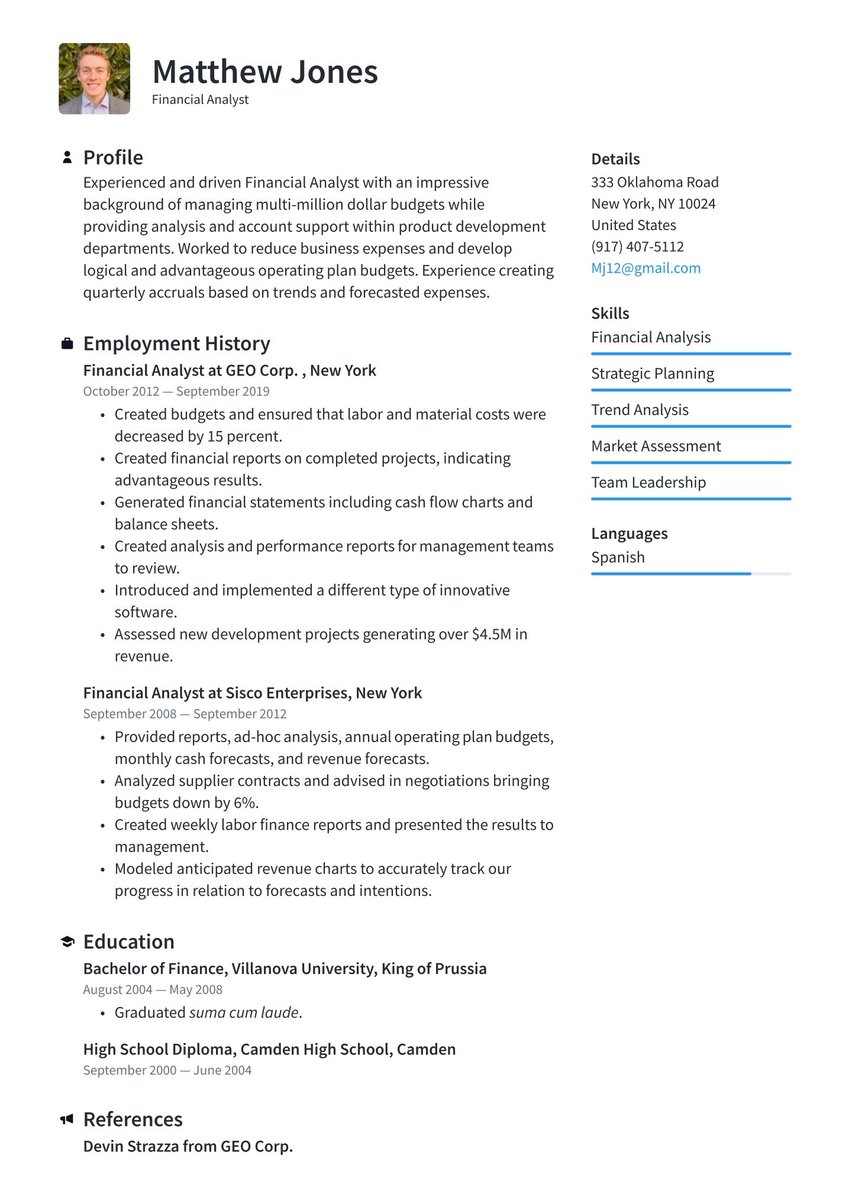
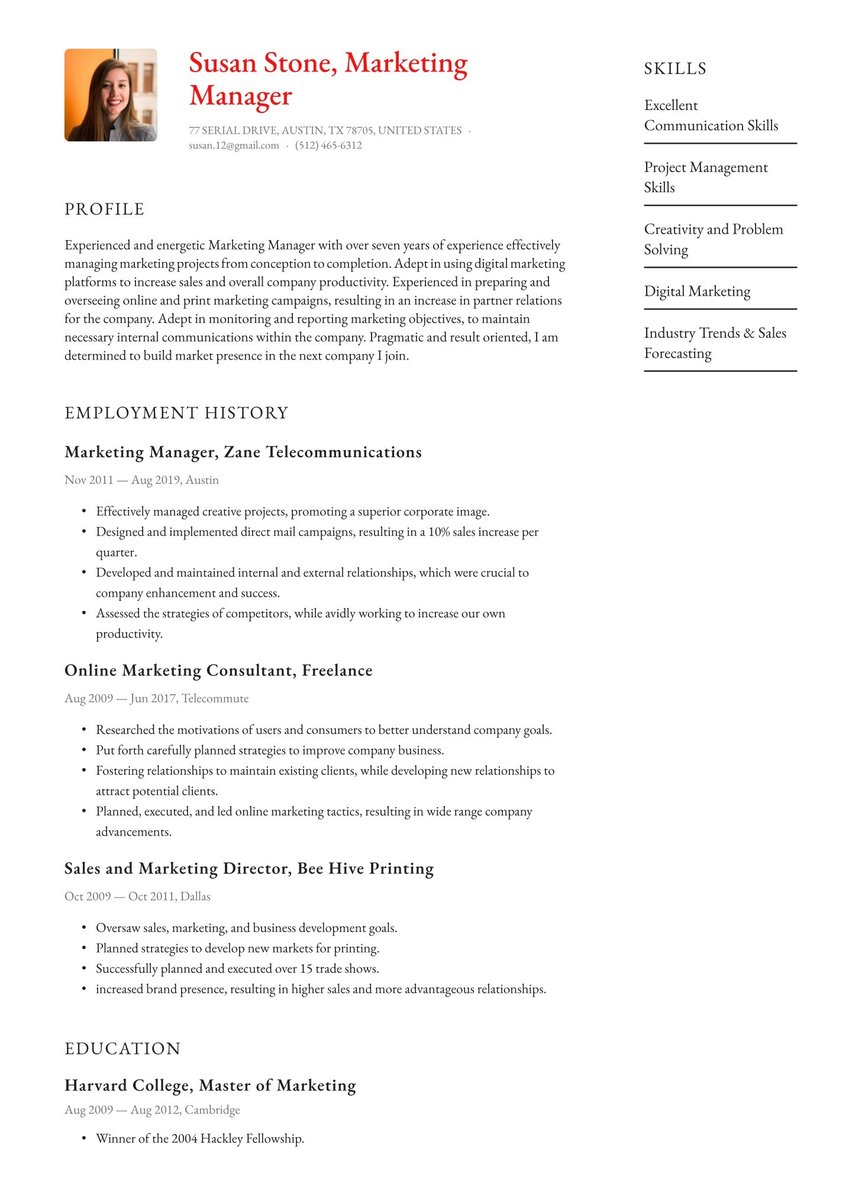
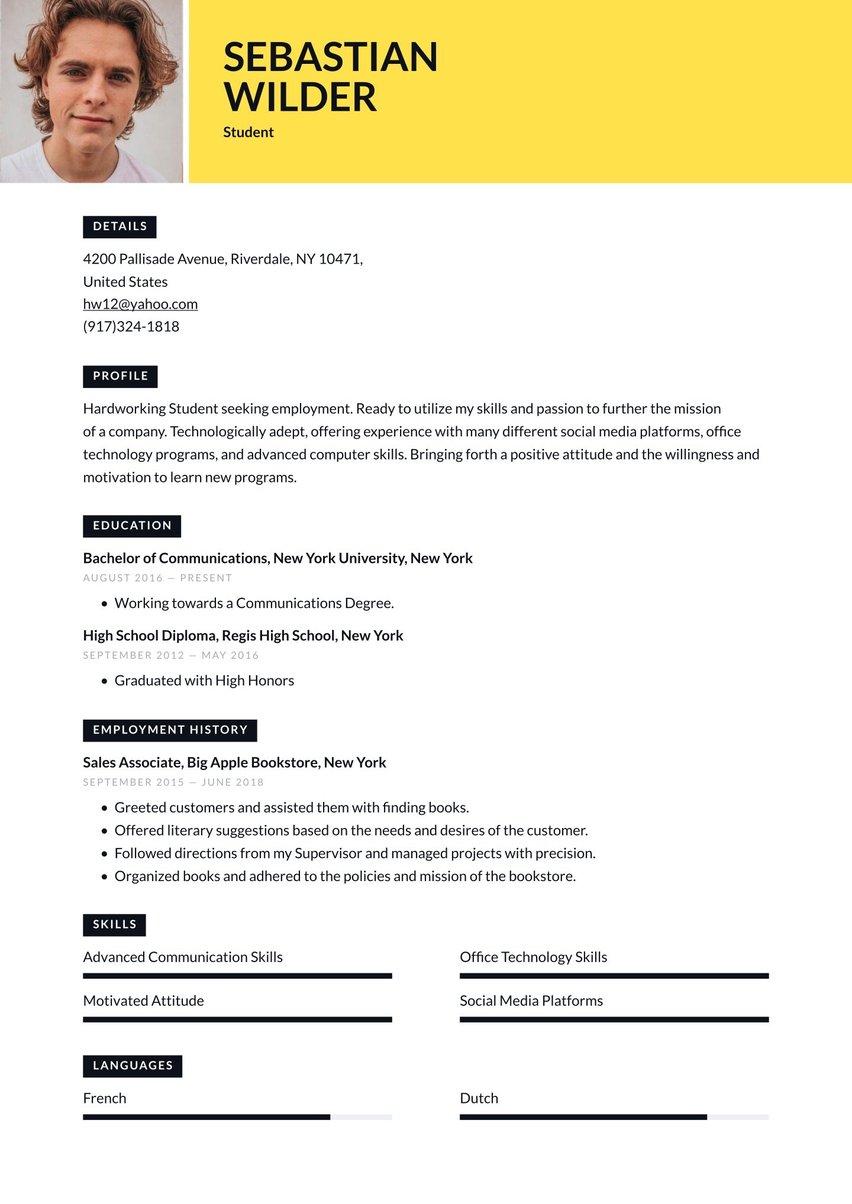
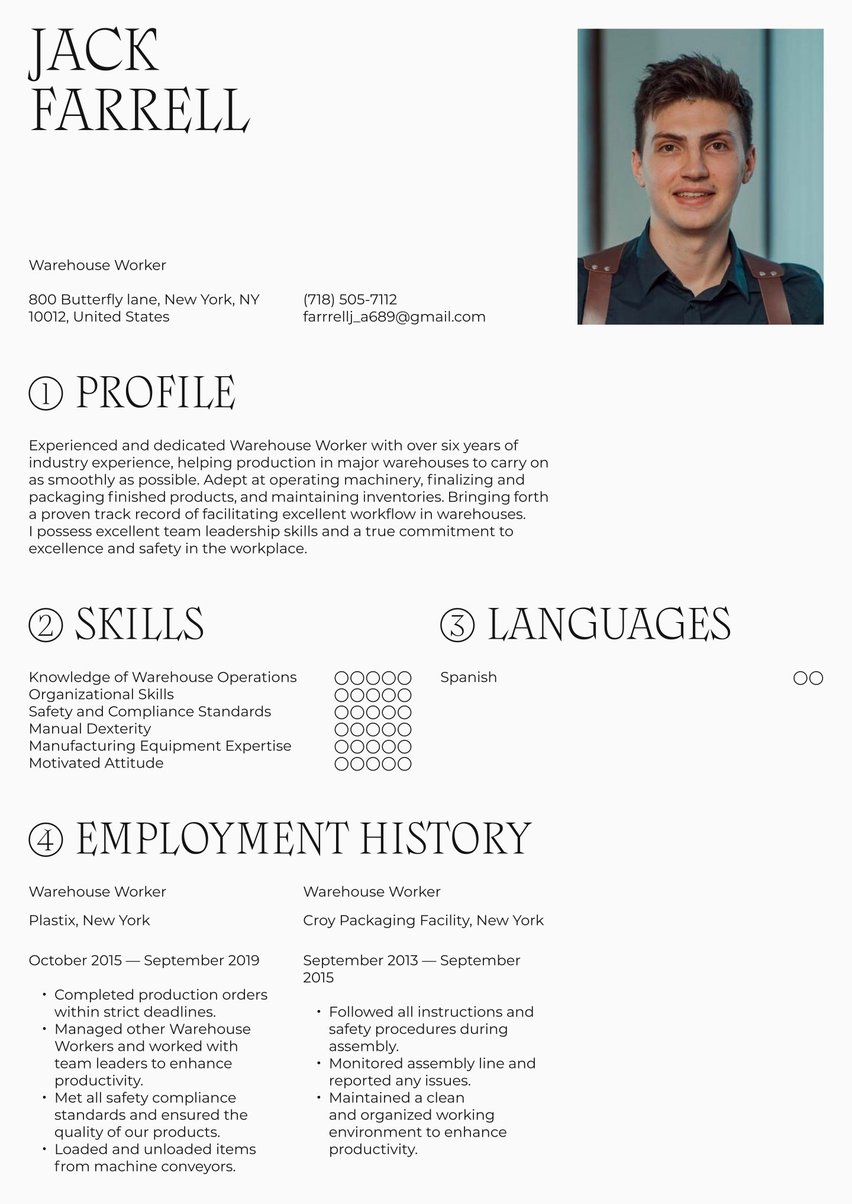
Hardworking student seeking employment. Ready to utilize my skills and passion to further the mission of a company. Technologically adept, offering experience with many different social media platforms, office technology programs, and advanced computer skills. Bringing forth a positive attitude and the willingness and motivation to learn new programs.
06/2018 - 06/2021, Medior Sales Associate, Big Apple Bookstore, New York
- Trained 3 new team members on sales techniques and product knowledge.
- Participated in a team that achieved top regional sales ranking for the quarter.
- Maintained a 95% customer satisfaction rating, measured via post-purchase surveys.
- Handled an average of 40+ customers per shift, ensuring a high-quality experience.
09/2015 - 06/2018, Junior Sales Associate, Big Apple Bookstore, New York
- Greeted customers and assisted them with finding books.
- Offered literary suggestions based on the needs and desires of the customer.
- Followed directions from my Supervisor and managed projects with precision.
- Organized books and adhered to the policies and mission of the bookstore.
08/2016 - 08/2021, Bachelor of Communications, New York University, New York
- Working towards a Communications Degree.
09/2012 - 05/2016, High School Diploma, Regis High School, New York
- Graduated with High Honors
- French
- Dutch
- Advanced Communication Skills
- Office Technology Skills
- Motivated Attitude
- Social Media Platforms
08/2015 - 05/2016, Advanced Communication Practices, New York University
A strong student resume shows what you can offer an employer even when your work history is short or just starting. This guide walks you through how to build one section by section, with adaptable examples for high school, college, and no-experience applicants. Use them as a starting point, then shape each one around the job you actually want.


Related Resume Examples
College Student resume example

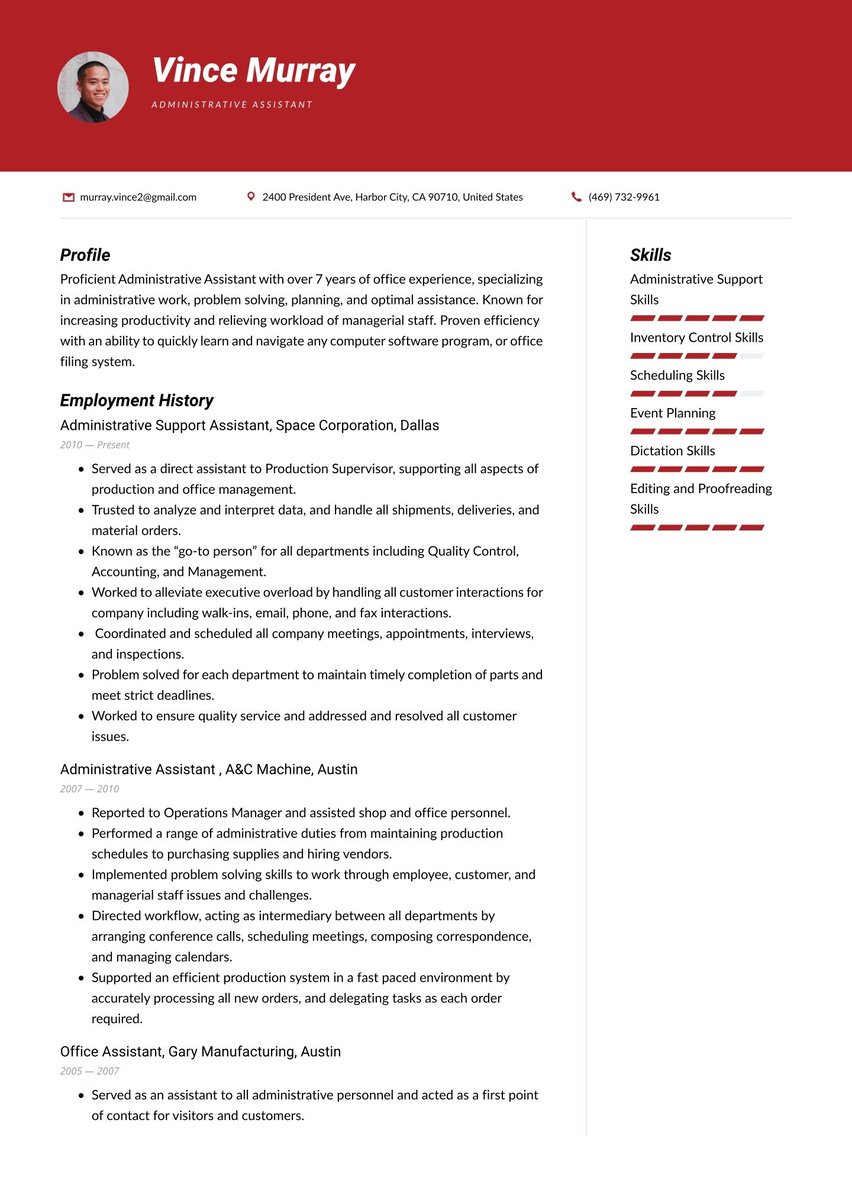
Specialized for college students, this clean, modern layout highlights your adaptability and tech-savvy skills. Its balanced structure and subtle design elements showcase your education, work experience, and digital expertise, impressing potential employers in dynamic industries.
Nursing Student resume example

Structured for aspiring healthcare professionals, this clean, organized layout highlights your patient-care expertise and teamwork skills. Its calming design and clear sections showcase your clinical experience, making it perfect for nursing student roles.
Internship resume example

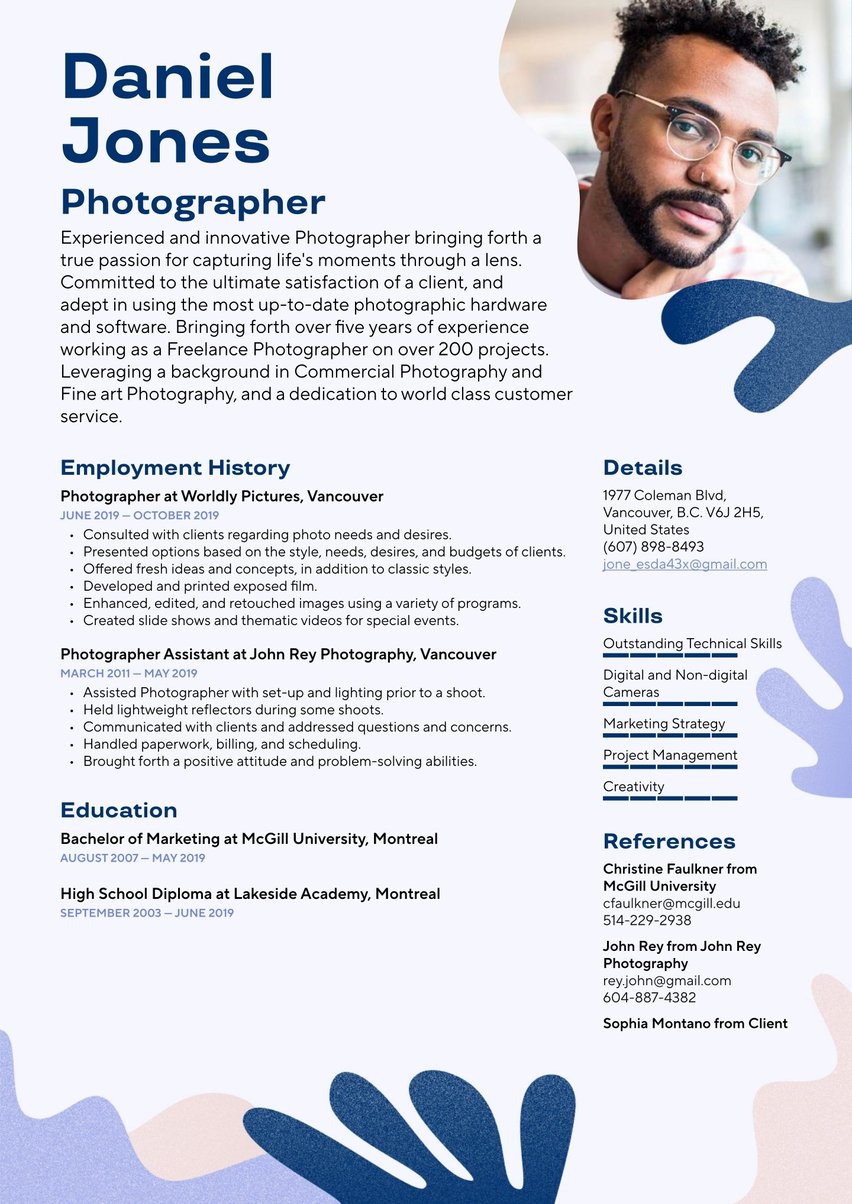
Primed for aspiring Marketing Interns, this clean, modern layout highlights your creativity and communication skills with subtle pops of color and organized sections. Its streamlined structure showcases your expertise, leaving a lasting impression on hiring managers.
Academic Tutor resume example

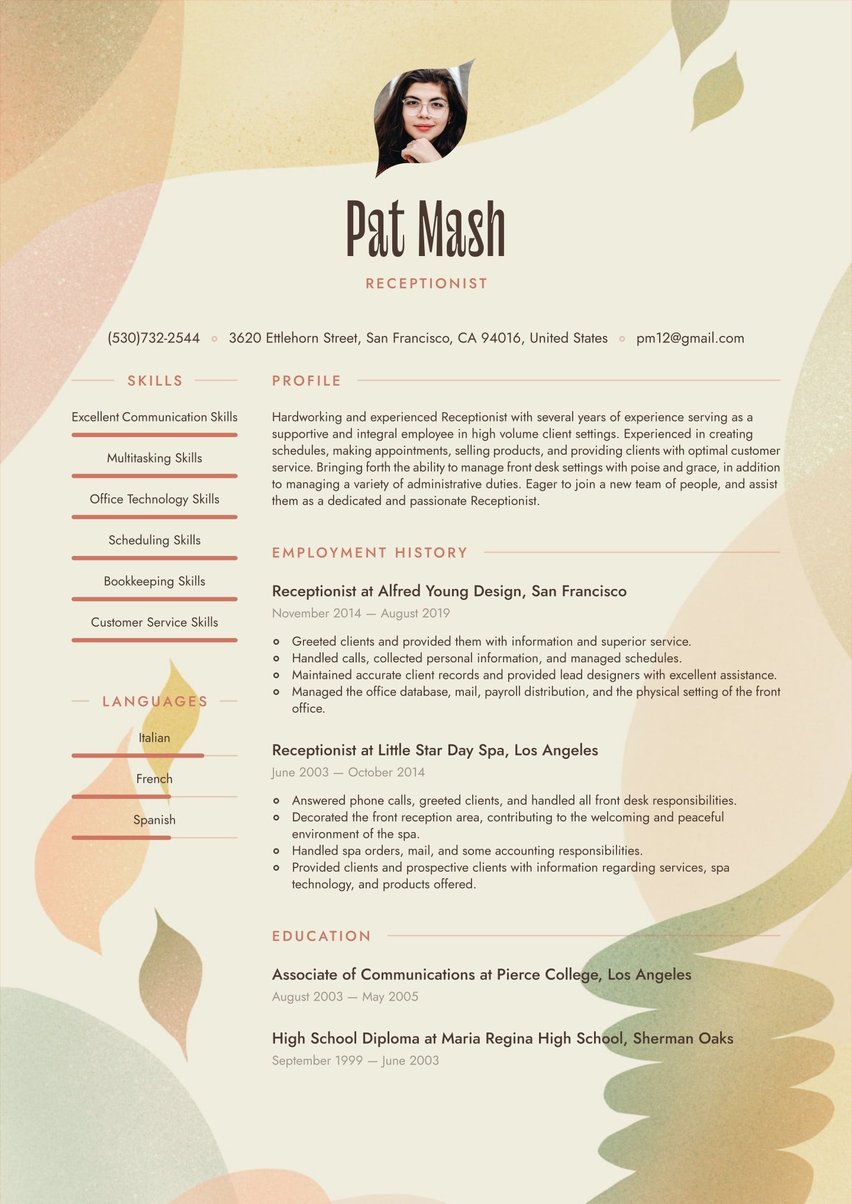
Ideal for showcasing your expertise as an Academic Tutor, this clean, structured layout highlights your teaching experience and curriculum development skills. Its balanced design ensures your passion for student success shines through to academic institutions.
College Admissions resume example

Created for aspiring college applicants, this clean, modern layout highlights your academic achievements and extracurriculars with precision. Its structured sections and subtle design elements showcase your passion, skills, and drive to admissions officers effortlessly.
Graduate School resume example

Made to match the academic rigor and professionalism of graduate school applications, this template highlights your research expertise and analytical skills. Its clean layout and structured sections showcase your academic achievements with clarity and confidence for admissions committees.
Medical Student resume example

Perfectly suited to aspiring medical professionals, this clean, organized layout highlights your clinical experience and evidence-based skills. Its structured sections and subtle design emphasize your expertise, building trust with residency directors and healthcare teams.
College Graduate resume example

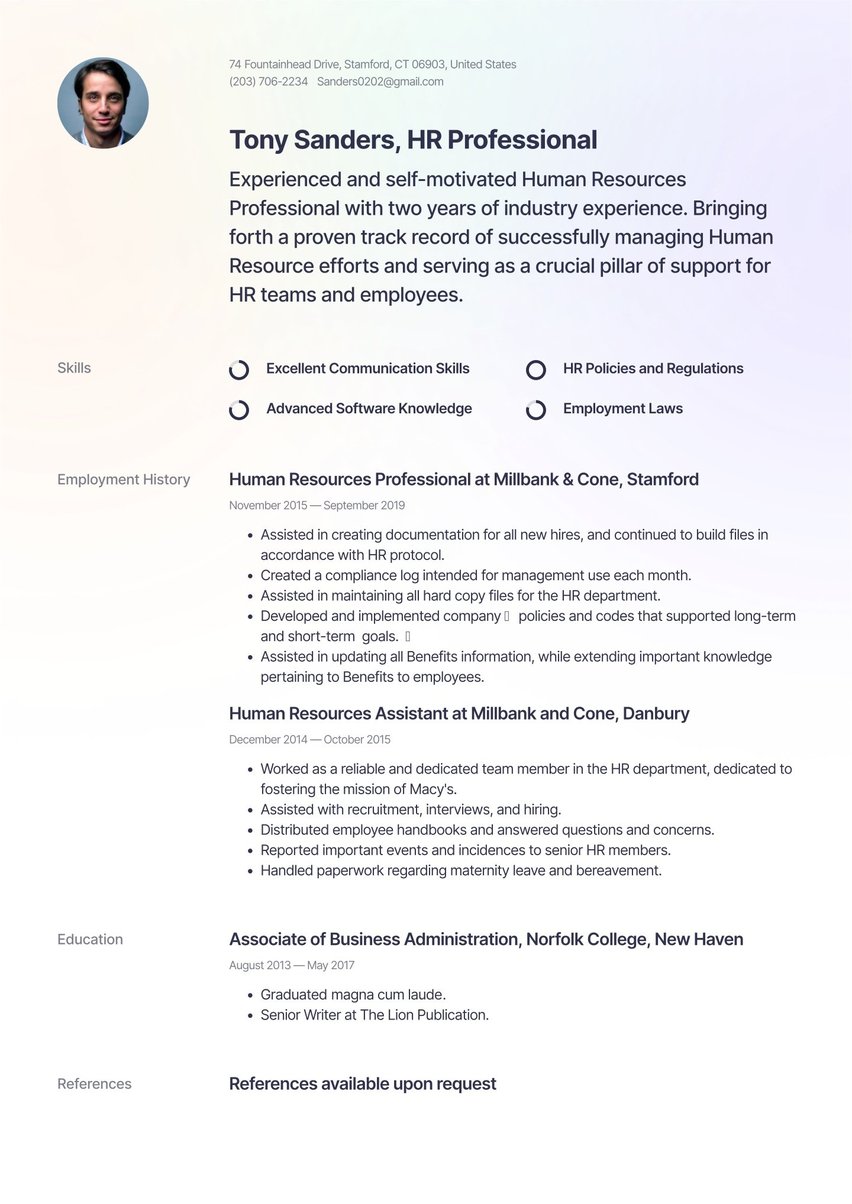
Structured for recent college graduates, this clean, modern layout highlights your adaptability and transferable skills. Its balanced design and clear sections showcase your education, internships, and achievements, helping you impress hiring managers in any industry.
Scholarship resume example

Structured for aspiring scholars, this clean, modern layout spotlights academic achievements and extracurriculars with precision. Its balanced formatting highlights your skills and experiences, helping you shine in competitive scholarship applications.
These examples show what effective student resumes look like at high school, college, and transfer levels, so you can see the structure before you start writing.
How to write a student resume
Writing a student resume comes down to four clear steps that work whether you are applying for your first part-time job or a competitive internship.
Follow them in order and you will have a focused, one-page resume that hiring managers and screening software can both read.
1. Open with a short, specific summary
Your summary is two or three sentences at the top of the page that tell an employer who you are, what you are working toward, and what you bring.
For students, this section replaces the outdated objective and does the heavy lifting that a work history normally would.
Name the role or field, then lead with a skill or achievement that proves you can do it.
- Example: "Business administration sophomore with hands-on experience running social media for two campus clubs, seeking a summer marketing internship."
2. Lead with education and relevant coursework
As a student, your education is your strongest evidence, so it sits near the top of the page, directly under the summary.
List your school, expected graduation month and year, and your GPA if it is 3.5 or higher.
Add three or four items of relevant coursework or a capstone project when they connect to the job, since these often stand in for professional experience.
- Example: "Bachelor of Science in Computer Science, State University, expected May 2027. GPA 3.7. Relevant coursework: Data Structures, Web Development, Statistics."
3. Turn activities and projects into real experience
Even without a formal job, you have more to show than you think.
Part-time work, volunteering, class projects, clubs, and leadership roles all belong on a resume when you describe them as accomplishments rather than duties.
The trick is to lead each line with an action verb and name a concrete result.
- Example: "Organized a campus food drive that collected 600 items and involved 25 volunteers."
4. Choose a clean, screening-friendly format
A student resume should be one page in a single-column, reverse-chronological layout, because that is the format applicant tracking systems (ATS), the software many employers use to scan resumes, read most reliably.
Avoid multi-column designs, graphics, and photos, which often scramble when a resume is processed.
Save the final file as a PDF unless the employer asks otherwise.
- Example: A one-page layout ordered Header, Summary, Education, Experience, Skills.
What are some effective ways to format a student resume?
The reverse-chronological format works for most students because it puts your latest education and experience first, and it is the layout screening software parses most accurately.
A functional, or skills-based, format can help if you have almost no experience and want skills to lead, though some recruiters treat it with caution.
The table below compares the three common options.
| Format | Suited to | Watch out for |
|---|---|---|
| Reverse chronological | Students with some jobs, internships, or strong activities | Can expose gaps if experience is very thin |
| Functional (skills-based) | First-time applicants with no work history | Some recruiters see it as hiding a lack of experience |
| Combination | Students with a few skills and one or two roles | Runs long, so keep it to one page |
For most students, reverse chronological with education on top is the safest starting point.
How can I make my student resume stand out to employers?
You stand out by showing measurable impact and tailoring the resume to one specific role, not by adding more content.
Students compete in a crowded field.
In October 2024, 62.8% of that year's high school graduates ages 16 to 24 were enrolled in college (US Bureau of Labor Statistics, 2024), which means employers see many similar-looking resumes for entry-level and campus roles.
The ones that get read tend to do three things well:
- Show results, not tasks: "Raised $600 for a local shelter" reads better than "helped with fundraising."
- Match one role at a time: A resume aimed at a single job always reads stronger than a general one.
- Prove soft skills with evidence: Instead of claiming you are organized, show the project you planned end to end.
The real differentiator for students is specificity.
A hiring manager cannot picture "good communication skills," but they can picture "tutored five classmates in algebra and helped raise their grades."
What skills should I highlight in a student resume?
Highlight a focused mix of hard and soft skills that match the job description, with the hard skills a role names first and the soft skills your activities can prove.
Skills matter more for students than for almost any other group, because they stand in for a track record.
In fact, 72% of candidates believe skills matter more than education (Resume.io, Resume Statistics, 2024), and for entry-level roles many recruiters agree.
Choose skills you can back up, then group them clearly:
- Hard skills: Microsoft Excel, Google Workspace, Canva, Python, data entry, a second language, social media management.
- Soft skills: Time management, teamwork, written communication, problem solving, customer service, reliability.
A useful habit is to keep a master list of every skill you have picked up in school, jobs, and projects, then pull only the relevant ones onto each resume.
Service and retail roles tend to reward soft skills, while lab, tech, and finance roles want specific tools named.
If you are unsure where something belongs, our guide to hard and soft skills breaks down the difference, but avoid listing anything you cannot demonstrate in an interview.
Are there specific keywords that hiring managers look for in student resumes?
Yes. The keywords that matter most come straight from the job description, because employers and their software look for the same terms they used to advertise the role.
The same applicant tracking system then ranks each resume against those terms, and the filter is strict: only 25% of resumes clear ATS screening (Resume.io, Resume Statistics, 2024), so the exact wording you choose carries real weight.
Read the posting closely and note the repeated nouns, tools, and phrases, then mirror that language honestly where it applies to you.
For a student, that might mean writing "customer service" rather than "helped customers," or naming "Microsoft Excel" instead of "spreadsheets" if the listing does.
Matching the employer's exact keywords is often the difference between a resume that reaches a person and one that stalls in the software.
How can I optimize my student resume with the right keywords?
Start with the job description and treat it as your keyword source.
Underline the skills, tools, and qualifications that appear more than once, then place the ones that genuinely fit you into your summary and skills section first, where software and recruiters look earliest.
Keep the phrasing natural and truthful, since keyword stuffing is easy to spot and does more harm than good.
Done well, this is one of the simplest ways to help your resume pass ATS filters and reach a human reader.
How can I highlight my experience effectively in a student resume?
Order your experience so the most relevant items sit at the top, and give the strongest role the most detail.
When your work history is short, internships, volunteering, part-time jobs, tutoring, and significant class projects all belong here.
Internships are worth chasing in particular, because 57.6% of interns convert to full-time employment after their internship (Resume.io, Intership Statistics, 2023).
The difference between a forgettable bullet and a convincing one is almost always the result you attach to it:
- Weak: "Responsible for social media."
- Strong: "Grew a club Instagram account from 200 to 550 followers in one semester."
If you have no paid experience at all, lead with projects and activities and give them that same weight.
A group research project, a fundraiser you ran, or a team you captained shows initiative, and initiative is exactly what employers hire students for.
How should I tailor my student resume for different job applications?
Tailor your resume by adjusting three things for each application: the summary, the skills you list first, and the order of your bullet points.
You do not need to rewrite the whole document every time.
Keep one master version with everything on it, then create a focused copy for each role.
- Reread the job description and note its main skills and keywords.
- Rewrite your summary to name that role and its top requirement.
- Move the most relevant skills and bullets to the top of each section.
A student applying for a retail job should lead with customer service and reliability, while the same student applying for a lab assistant role should promote coursework, attention to detail, and any technical tools.
The content is largely the same, but the emphasis changes to fit what each employer is scanning for.
What are common mistakes to avoid when writing a student resume?
Common mistakes come from padding a resume to fill space rather than sharpening what is already there.
Students often keep high school details long after starting college, list hobbies with no relevance, or describe duties instead of outcomes.
Another frequent miss is leaving out numbers: only 26% of candidates include measurable data on their resumes (Resume.io, Cover Letter Statistics, 2025), yet a single figure can make an ordinary bullet convincing.
- Do quantify results, remove high school once you are a year into college, and keep the resume to one page.
- Do not stretch to two pages, invent experience, use an unprofessional email address, or submit without proofreading.
Typos are the quiet resume killer, so proofread the final version, read it aloud, and ideally have someone else check it too.
Cutting weak material almost always helps more than adding filler.
Key tips for writing a compelling student resume
These points gather the advice above into a quick checklist you can work from.
- Place education near the top, and add your GPA only when it strengthens your case.
- Rewrite activities, volunteering, and projects as achievements with a clear result attached.
- Match each resume to one job by mirroring the keywords in its description.
- Keep the design simple enough for screening software to read, and stay on a single page.
- Proofread carefully, since a clean, error-free resume signals the reliability employers look for in students.

Frequently asked questions
A few questions come up again and again when students write their first resume.
Do classes and coursework count as experience?
Yes, up to a point. You cannot list classes under work experience, but you can expand your education section with relevant coursework, academic projects, and results that relate to the job.
This is one of the most effective ways to fill a resume when your work history is short.
Should transfer students list both schools on a resume?
Yes. List your current, degree-granting school first, then the previous college underneath, including dates and any credits or degree earned.
Hiding the earlier school tends to raise more questions than it answers, and showing both gives a clear, honest picture of your path.
Should I put my GPA or high school on my student resume?
Include your GPA only if it is 3.5 or above, since a lower figure can work against you.
Keep high school details while you are still in high school or in your first year of college, then remove them once you have college experience or coursework to show instead.