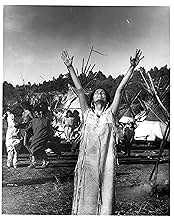
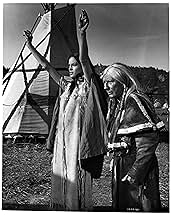
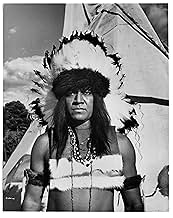
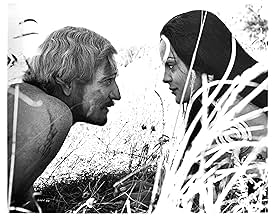
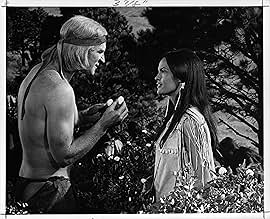
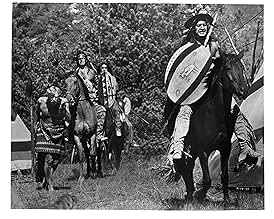
In 1825, an English aristocrat is captured by Native Americans. He lives with them and begins to understand their way of life. Eventually, he is accepted as part of the tribe and aspires to ... Read allIn 1825, an English aristocrat is captured by Native Americans. He lives with them and begins to understand their way of life. Eventually, he is accepted as part of the tribe and aspires to become their leader.In 1825, an English aristocrat is captured by Native Americans. He lives with them and begins to understand their way of life. Eventually, he is accepted as part of the tribe and aspires to become their leader.
- Director
- Writers
- Stars
- Awards
- 1 win & 2 nominations total
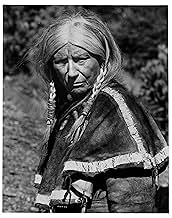
Judith Anderson
- Buffalo Cow Head
- (as Dame Judith Anderson)
Lina Marín
- Thorn Rose
- (as Lina Marin)
- Director
- Writers
- All cast & crew
- Production, box office & more at IMDbPro
6.810K
1
2
3
4
5
6
7
8
9
10
Featured reviews
2nd Time Around
Although this film appeared to be a western for the 1970's, the story was not new. The writer, Dorothy M. Johnson, originally wrote it for the T.V. series Wagon Train (1957-65). Ralph Meeker was cast then in the Richard Harris role, and an excellent job he made of it, in his quiet way. A good story will always stand the test of time, as this proves.
Good the 2nd time around
I first saw this film in the theatre when it came out in 1970. It was a welcome departure from earlier films about pioneers sitting among their circled wagons shooting whooping Indians like ducks in an arcade.
I saw it last weekend for the first time since, and I think that it holds up well. Whatever the flaws, it is a reasonably good depiction of Dakota Sioux going about their business in the 1820s.
This movie demonstrates that a story can be told with very little dialog and a lot of non-verbal expression. Harris might be the most prominent character but, cumulatively, the cast of small characters weighs in just as heavy.
I saw it last weekend for the first time since, and I think that it holds up well. Whatever the flaws, it is a reasonably good depiction of Dakota Sioux going about their business in the 1820s.
This movie demonstrates that a story can be told with very little dialog and a lot of non-verbal expression. Harris might be the most prominent character but, cumulatively, the cast of small characters weighs in just as heavy.
Among the Sioux
One of the first films to ever deal with the relationship between white men and Native Americans that wasn't slanted towards the white man, A MAN CALLED HORSE was released during the same year as the excellent Arthur Penn film LITTLE BIG MAN and the ultra-violent SOLDIER BLUE, which also dealt with the white man/Indian conflict. Richard Harris gives a great performance as an Englishman who loses his wagon team to, and is captured by, a group of Sioux Indians in the Dakota territory of the mid-1800s. He soon learns their ways of living, which primitive as they might be to us and to him are very traditional. Though the film is rated 'PG', be forewarned that there are scenes of violence and bloodshed (particularly the Sun Vow sequence) that could have gotten this film an 'R' (or a 'PG-13'), so the film is not exactly for kids. Nevertheless, it is worth seeing.
authentic portrayal of the Sioux Indians of the time
at the beginning of this movie,there is a blurb about how the events portrayed are taken directly from historical documents of the period.the South Dakota Sioux Indians also had a lot of input into the movie.so,we can assume it is fairly accurate.one thing it does is show the Native American Indians as being just like any other people.this movie took awhile to get going,in my mind,but once it does,it's action packed,and it's very well acted.Richard Harris is the title character.he is a British Lord who is captured by the Sioux in the mid 1800's.first he is treated with disdain,as nothing more than a servant to the aging mother of the chief.gradually,though,things change,though,and he becomes much more.this is a very touching and heart breaking movie.it's also very thought provoking.overall,i give A Man Called Horse a 6/10
A very unusual film about the Sioux
"A Man Called Horse" is a very unusual film about the west for many reasons. It's NOT set during the usual 'glory days' when most films of the type were set (1866-1880). It had no cowboys. And, it had very little dialog in English.
The film begins with a rich Englishman, John Morgan (Richard Harris), on a hunting expedition in the American West in the 1830s. He and his party are attacked by Sioux warriors and Morgan is taken prisoner by the natives. At first, he's treated like a slave and his life truly sucks. It didn't help that the only one who spoke any English in the tribe was another slave who was French...and the guy was a little nuts! Through the course of the film, however, Morgan learns to respect and even enjoy life with the Sioux and becomes an important member of the tribe. There is naturally much more to it than that but it's best you just see it for yourself.
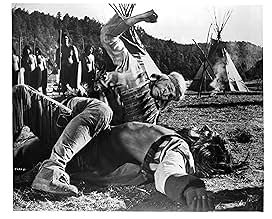
This movie is almost like an ethnographic portrait of the Sioux and the times instead of a typical western film. The usual sorts of clichés and expectations are mostly missing. Some will hate this--some will no doubt be relieved. All I know is that I enjoyed it and liked the more intimate and native-centered approach of the film. Well made all around...though the sun ceremony is NOT for the squeamish.
The film begins with a rich Englishman, John Morgan (Richard Harris), on a hunting expedition in the American West in the 1830s. He and his party are attacked by Sioux warriors and Morgan is taken prisoner by the natives. At first, he's treated like a slave and his life truly sucks. It didn't help that the only one who spoke any English in the tribe was another slave who was French...and the guy was a little nuts! Through the course of the film, however, Morgan learns to respect and even enjoy life with the Sioux and becomes an important member of the tribe. There is naturally much more to it than that but it's best you just see it for yourself.
This movie is almost like an ethnographic portrait of the Sioux and the times instead of a typical western film. The usual sorts of clichés and expectations are mostly missing. Some will hate this--some will no doubt be relieved. All I know is that I enjoyed it and liked the more intimate and native-centered approach of the film. Well made all around...though the sun ceremony is NOT for the squeamish.
Did you know
- TriviaThe story is based on the experience of Cabeza de Vaca, a Spanish soldier captured by indigenous Americans in 1528.
- GoofsThroughout the film the actress playing Running Deer can be seen with medium long, nicely manicured fingernails.
- Alternate versionsOld German VHS version includes many alternate/more violent takes that are not on the US DVD (whereas the version on the DVD is the same as in the US), especially the ending is almost completely recut. On the other hand the US version includes a few lines which are not in the German version.
- ConnectionsEdited into EBN: Commercial Entertainment Product (1992)
Details
- Release date
- Countries of origin
- Languages
- Also known as
- Un hombre llamado Caballo
- Filming locations
- Production companies
- See more company credits at IMDbPro
Box office
- Gross US & Canada
- $1,941,247
- Gross worldwide
- $44,000,000
- Runtime
- 1h 54m(114 min)
- Sound mix
- Aspect ratio
- 2.35 : 1
Contribute to this page
Suggest an edit or add missing content