IMDb RATING
7.1/10
5.5K
YOUR RATING
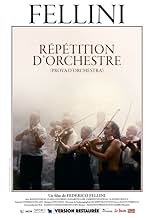
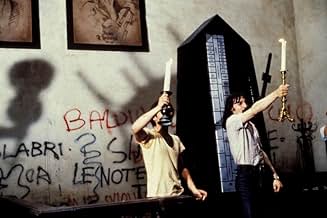
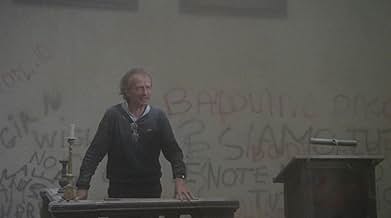
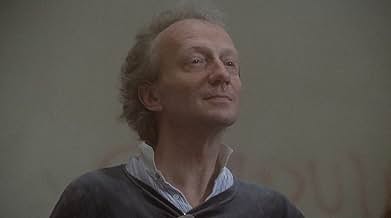
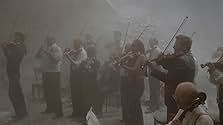
An orchestra assembles for a rehearsal in an ancient chapel under the inquisitive eyes of a TV documentary crew, but an uprising breaks out.An orchestra assembles for a rehearsal in an ancient chapel under the inquisitive eyes of a TV documentary crew, but an uprising breaks out.An orchestra assembles for a rehearsal in an ancient chapel under the inquisitive eyes of a TV documentary crew, but an uprising breaks out.
- Director
- Writers
- Stars
- Awards
- 1 win & 2 nominations total
Nando Villella
- Cello player
- (as Ferdinando Villella)
Franco Javarone
- Bass tuba player
- (as Giovanni Javarone)
Andrew Lord Miller
- Oboe player
- (as Andy MIller)
Cesare Martignoni
- Clarinet player
- (as Cesare Martignon)
Filippo Trincia
- Head of orchestra
- (as Filippo Trincaia)
- Director
- Writers
- All cast & crew
- Production, box office & more at IMDbPro
7.15.4K
1
2
3
4
5
6
7
8
9
10
Featured reviews
The anatomy of crisis
While the movie analyzes the roots and resolution of social revolt, what I like the most about it, is the personalized world-view of the musicians, as well as an exceptional music drive. My favorite Fellini and Rota. 10/10.
Disappointing, but worth a look
Fellini's "Prova d'orchestra" was originally made for television, and there it should have stayed. As a cinematic event, it does not deliver. Yes, it's well directed and nicely acted, it has an interesting idea in it, but it's not enough for me to enjoy it. Eventually it looks like an exercise by some cinema student and not like a piece by Fellini, one of a few cinema genius of our time. I was disappointed, even though I enjoyed parts of it. My Grade: *** (out of *****)
Great depiction of power struggle with excellent music
This movie is one of my all-time favourites: through the "metaphor" of music, a universal picture of a power struggle is shown. Although this may appear 'thin', many layers of this struggle are peeled off. The German (looking) conductor appears to portray an easy comparison to Adolf Hitler, but another could be to Herbert von Karajan, the dictatorial conductor of the Berliner Philharmoniker. And then there is the great music score, that still lingers in my head, although I have not been able to find a recording of it (CD/LP?)(after almost 30 years!). I saw this movie again some years ago and it does not look dated. While I am not a Fellini adept and this movie was seen as one of his minor ones, this is a real classic to me.
appears to be a parable
This miniature movie's tempo builds, stops and starts in that comical, jerky way characteristic of Fellini. It's one of the things I like.
The interviews are a riot!
It appears to be a parable of the last few hundred years of European history.
The interviews are a riot!
It appears to be a parable of the last few hundred years of European history.
Unique, hyper-significant, Fellini over himself
Some fully creditable critics deemed "Prova d'orchestra" as being Fellini's main masterpiece. Although recognizing their slight exaggeration, I still can fully empathize with their point. The movie is one of the most intelligent, stylish and personal instances of the much used (and abused) recipe of the "social microcosm". Of course, Fellini's trick to build up a parable of society by using the orchestra parallel is not only original, but also very efficient: the metaphors and symbols resulting from this are both powerful and humorous, in an atrociously satyric vein.
Also, it's very interesting to note the gradual glissando from realism to hyperbole, and from cold detachment to paranoid hysteria; as such, what started as a pseudo-documentary, impartial and technical, gradually turns into a major pandemonium, to culminate with the hallucinatory profiling of the demolition iron ball, as an omen of doom - that being the point where the artist really meets the divine, both as meaning, and as means.
One should also notice the masterfully style of shooting the orchestra, the people and the instruments, to build up the cinematographic symphony layered over the musical one, and to create that irresistibly fast-paced narrative in images, that makes the movie so exciting and captivating - it's literally to be watched on the edge on your seat, although nothing more spectacular happens than an orchestra rehearsing in a disaffected church... all being the result of Fellini's skillful cinematography.
At last, one couldn't depart any reference to this masterpiece without mentioning at least in passing the haunting finale. Although I always regarded with political objectivity and historical honesty the national-socialist ideology, goals and means, I must confess that I fully assimilate Fellini's powerful warning about any dictatorial excesses. Balduin Bass' voice rising in a Hitlerian monologue is an efficient and pointed mean of expression and style - and his last line after fade out, "Signori... Da capo!", indeed MAKES A POINT!
Also, it's very interesting to note the gradual glissando from realism to hyperbole, and from cold detachment to paranoid hysteria; as such, what started as a pseudo-documentary, impartial and technical, gradually turns into a major pandemonium, to culminate with the hallucinatory profiling of the demolition iron ball, as an omen of doom - that being the point where the artist really meets the divine, both as meaning, and as means.
One should also notice the masterfully style of shooting the orchestra, the people and the instruments, to build up the cinematographic symphony layered over the musical one, and to create that irresistibly fast-paced narrative in images, that makes the movie so exciting and captivating - it's literally to be watched on the edge on your seat, although nothing more spectacular happens than an orchestra rehearsing in a disaffected church... all being the result of Fellini's skillful cinematography.
At last, one couldn't depart any reference to this masterpiece without mentioning at least in passing the haunting finale. Although I always regarded with political objectivity and historical honesty the national-socialist ideology, goals and means, I must confess that I fully assimilate Fellini's powerful warning about any dictatorial excesses. Balduin Bass' voice rising in a Hitlerian monologue is an efficient and pointed mean of expression and style - and his last line after fade out, "Signori... Da capo!", indeed MAKES A POINT!
Did you know
- GoofsWhen they are interviewing the first violinists, the harpist in the background is clearly not playing but harp music is audible.
- ConnectionsFeatured in In Search of Fellini (2017)
- How long is Orchestra Rehearsal?Powered by Alexa
Details
- Release date
- Countries of origin
- Languages
- Also known as
- Federico Fellini's Orchestra Rehearsal
- Filming locations
- Production companies
- See more company credits at IMDbPro
- Runtime
- 1h 12m(72 min)
- Sound mix
- Aspect ratio
- 1.37 : 1
Contribute to this page
Suggest an edit or add missing content