IMDb RATING
7.7/10
9.8K
YOUR RATING


A wealthy composer rescues unemployed Broadway performers with a new play, but insists on remaining anonymous.A wealthy composer rescues unemployed Broadway performers with a new play, but insists on remaining anonymous.A wealthy composer rescues unemployed Broadway performers with a new play, but insists on remaining anonymous.
- Nominated for 1 Oscar
- 4 wins & 1 nomination total



Robert Agnew
- Dance Director
- (uncredited)

Loretta Andrews
- Gold Digger
- (uncredited)

Monica Bannister
- Gold Digger
- (uncredited)

Bonnie Bannon
- Gold Digger
- (uncredited)

Joan Barclay
- Gold Digger
- (uncredited)
Anita Barnes
- Gold Digger
- (uncredited)

Billy Barty
- Baby in 'Pettin' in the Park' Number
- (uncredited)

Busby Berkeley
- Call Boy
- (uncredited)

Bonnie Blackwood
- Chorus girl
- (uncredited)

Eric Blore
- Clubman
- (uncredited)
7.79.7K
1
2
3
4
5
6
7
8
9
10
Featured reviews
Forgotten Musical Gem
Mervyn LeRoy directs this irresistible and touching depression-era musical. Busby Berkeley's choreography is as breath-taking as ever, as are the bevy of beautiful women in the elaborate productions. Many great musical numbers highlight this film including "We're in the Money" in which a then unknown, Ginger Rogers sings in Pig Latin. A host of other oddities can be found as always when Mr. Berkeley is involved. Ruby Keeler and Dick Powell are sensational as dancing and singing lovebirds and all works out well in the end. The show does close on a noticeably strange note with the very powerful protest number regarding the depression called "Forgotten Man" masterfully delivered by bombshell, Joan Blondell. A truly original and memorable musical.
Great Pre-Code Stuff
This is the most perfect example of "history on the silver screen" that I can think of. When Ginger Rogers says, "It's the Depression, dearie" at the beginning to explain the chorus girls' bad luck, it's the key to the whole film. While the "Shadow Waltz" number was being filmed during an actual 1933 earthquake in L.A. a number of the girls toppled off the Art Deco "overpass" where they were swaying with their filmy hoop skirts and their neon violins short-circuited. The electrical hook-ups were also rather dangerous, especially if the neon bows came in contact with the girls' metallic wigs in that number. The culminating production number, "Remember My Forgotten Man," is the most significant historically and illustrates Warner Bros.' "New Deal" sensibilities. Warner Bros. was the only studio that "bought" the whole Roosevelt approach to economic recovery. The year before, under Hoover, WWI vets were not only neglected in terms of benefits but were run out of their shanty town near the Capitol building. Starving guys were camping on the edges of most communities who'd served in the Great War fifteen years before. Of course, why or how this number fits into such a '30s girlie-type musical revue is anyone's guess. Berkeley never looked for reality, just eye-popping surrealistic effects.
About ten years ago I found myself sitting next to Etta Moten Barnett at a Chicago NAACP banquet. I was flabbergasted. She was in her 90s yet still looked lovely. She's the singer who sang "Forgotten Man" in the window. She also sang "The Carioca" in Astaire and Rogers' first pairing, "Flying Down to Rio." She was quite gracious, though she did not have wonderful things to say about Hollywood of that era. The African Americans in both pictures were fed in a tent away from the general commissary area.
Ruby Keeler has a certain odd-ball appeal, like a homely puppy. She can't sing, she watches her leaden feet while she dances, and almost all her lines are read badly. Yes, she was married to Al Jolson, but that may have HURT her career more than anything. He was not exactly always likable. He was much older than Ruby and so full of himself.
This film is also a classic example of the PRE-CODE stuff that was slipping by---the leering "midget baby" (Billy Barty), the naked girls in silhouette changing into their "armor," the non-stop flashing of underwear or lack of underwear, Ginger Rogers having her large coin torn off by the sheriff's office mug so she's essentially standing there in panties, and so forth.
A good comparison of before and after the code would be to examine this picture and "Gold Diggers of 1935." The latter is so much more chaste, discreet, and less fascinating except for the numbers. There's not the lurid, horny aura of the Pre-Code pictures. And it's not quite as much naughty fun, either.
About ten years ago I found myself sitting next to Etta Moten Barnett at a Chicago NAACP banquet. I was flabbergasted. She was in her 90s yet still looked lovely. She's the singer who sang "Forgotten Man" in the window. She also sang "The Carioca" in Astaire and Rogers' first pairing, "Flying Down to Rio." She was quite gracious, though she did not have wonderful things to say about Hollywood of that era. The African Americans in both pictures were fed in a tent away from the general commissary area.
Ruby Keeler has a certain odd-ball appeal, like a homely puppy. She can't sing, she watches her leaden feet while she dances, and almost all her lines are read badly. Yes, she was married to Al Jolson, but that may have HURT her career more than anything. He was not exactly always likable. He was much older than Ruby and so full of himself.
This film is also a classic example of the PRE-CODE stuff that was slipping by---the leering "midget baby" (Billy Barty), the naked girls in silhouette changing into their "armor," the non-stop flashing of underwear or lack of underwear, Ginger Rogers having her large coin torn off by the sheriff's office mug so she's essentially standing there in panties, and so forth.
A good comparison of before and after the code would be to examine this picture and "Gold Diggers of 1935." The latter is so much more chaste, discreet, and less fascinating except for the numbers. There's not the lurid, horny aura of the Pre-Code pictures. And it's not quite as much naughty fun, either.
ereway inay the oneymay!!
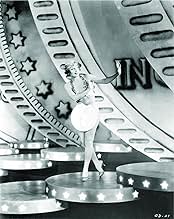
I've heard of this movie for years, but didn't actually see it until last week when Turner Classic Movies ran it. And it is positively stunning!! On the surface, it moves almost like a carbon copy of 42ND STREET- right up to the last-minute switch in players before the curtain goes up (although in this film, it's Dick Powell instead of Ruby Keeler). But its astringent look at trying to play Tin Pan Alley smack in the middle of the Depression gives it a very adult and tragic significance. It still has the Berkley dazzle- from the "Shadow Waltz" chorus girls (and electric violins) to the now-legendary "We're In The Money" dress rehearsal fronted by a pre-Astaire Ginger Rogers. (I was a teenager when my mother mentioned that one verse of this song was actually sung in Pig Latin- and I swore for twenty-five years that she was pulling my chain. It is one of the cleverest vocal interludes I've ever seen and heard.) But the three girls implied in the film's title- Ruby Keeler, Aline McMahon, and especially the sharp, smart, and gorgeous Joan Blondell- are the best things in the movie. And Blondell fronts the sublime finale number "Forgotten Man-" which pays tribute to the men (and women) of WWI and the ironies which followed. The staging of it- the marching which goes from triumphant to tragic, the torchy, gospel-like vocal of Etta Moten (the black woman sitting in the window), and the pullback shot of everyone coming downstage at the fadeout- is truly spectacular.
10jotix100
Marvyn Leroy and Busby Berkeley, what a combination!
"Golddiggers of 1933" is a fun movie to watch because all the right elements that went into the making of this motion picture. Mervyn Leroy was truly inspired, and his direction clearly shows he was in total command. The contribution made by the incomparable Busby Berkeley is one of the best things in the film. His choreography for the big production numbers is one of the most impressive thing he did for the movies.
The film is a sweet story about young hopefuls in New York trying to make it in the musical theater. Thus, we find the impoverished room mates, Carol, Trixie and Polly, who are so poor they have to steal their neighbor's milk! These young women are at the end of their rope when Barney, the Broadway impresario comes by to tell them about the new show he is working on. The only trouble, he has no money for it.
How naive and wonderful those movies that came during the great depression were! Everything was possible, in spite of what was happening in the country at the time. In fact, this film, as well as others of that era, served as an excuse for people that were facing a hard time making ends meet for escaping it all when watching a movie like this one.
The cast is excellent. Warren William, Joan Blondell, Aline McMahon, Dick Powell, Ruby Keeler, Ned Sparks, Ginger Rogers, and Guy Kibbee giving performances that endeared them to the American public of the time.
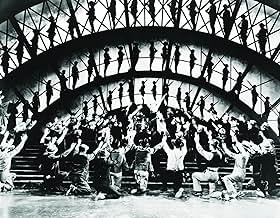
The production number of "Shadow Waltz" has to be one of the best ones in this musical genre ever produced. The number is an amazing one and a tribute to the man who staged it, Busby Berkley. It also help the chorus girls were dressed by Orry-Kelly and the music was by Harry Warren and Al Dubin.
"Golddiggers of 1933" is one of the best movies to come out of the Hollywood of those years.
The film is a sweet story about young hopefuls in New York trying to make it in the musical theater. Thus, we find the impoverished room mates, Carol, Trixie and Polly, who are so poor they have to steal their neighbor's milk! These young women are at the end of their rope when Barney, the Broadway impresario comes by to tell them about the new show he is working on. The only trouble, he has no money for it.
How naive and wonderful those movies that came during the great depression were! Everything was possible, in spite of what was happening in the country at the time. In fact, this film, as well as others of that era, served as an excuse for people that were facing a hard time making ends meet for escaping it all when watching a movie like this one.
The cast is excellent. Warren William, Joan Blondell, Aline McMahon, Dick Powell, Ruby Keeler, Ned Sparks, Ginger Rogers, and Guy Kibbee giving performances that endeared them to the American public of the time.
The production number of "Shadow Waltz" has to be one of the best ones in this musical genre ever produced. The number is an amazing one and a tribute to the man who staged it, Busby Berkley. It also help the chorus girls were dressed by Orry-Kelly and the music was by Harry Warren and Al Dubin.
"Golddiggers of 1933" is one of the best movies to come out of the Hollywood of those years.
Interesting Depression musical starring some of the usual suspects
With the success of "42nd Street," Warner Brothers wasted no time adding Busby Berkeley musical numbers to "Gold Diggers of 1933."
Starring Dick Powell and Ruby Keeler, this musical also has some of the same Depression darkness that permeated "42nd Street." "It's the Depression, dearie," Ginger Rogers says as the show she and her fellow chorines are laboring in closes in rehearsal due to lack of funding.
However, Brad (Powell), a composer in a nearby apartment who's sweet on Polly (Keeler), offers to give Ned Sparks the money he needs to produce his new show. His only condition is that Polly be featured.
Everyone wonders where he got the money, and a news item plus the fact that he refuses to appear in the show make the girls suspicious that he's a bank robber. In fact, he's the scion of a wealthy man (Warren William), who soon appears on the scene with his attorney (Guy Kibbee) when Brad steps in for the lumbago-ridden juvenile lead.
Polly's roommates Trixie and Carol (Joan Blondell and Aline MacMahon) go to work on the two immediately.
Though the film has some fantastic numbers - "We're in the Money," "The Shadow Waltz," "Pettin' in the Park," and great Busby Berkeley choreography, the middle section has no music and drags on as the gals meet the men, get them to pay for expensive hats, etc. This is probably because the film was completed when the musical numbers were added.
But the final number is worth the whole film. "Remember Your Forgotten Man" is a tribute to the World War I soldiers now out of work in the Depression, and not only are the production effects and choreography fantastic, but the singing as well, particularly the solo work by Etta Morton. Blondell, who from the sound of it in Dames was completely tone deaf, is beautifully dubbed here.
Ginger Rogers shines in a supporting role especially with her pig Latin lyrics to "We're in the Money" which were added after she was heard fooling around in a rehearsal. Powell is in gorgeous voice in all the numbers, but "I've Got to Sing a Torch Song" is a high point.
It's easy to watch the dancing, the beautiful women in their costumes, and listen to the singing and forget what in fact was going on in the '30s - after all, that's why these films were made.
But the "Forgotten Man" number serves as a reminder then and today that for the people sitting in the theaters, their troubles were right outside the door.
Starring Dick Powell and Ruby Keeler, this musical also has some of the same Depression darkness that permeated "42nd Street." "It's the Depression, dearie," Ginger Rogers says as the show she and her fellow chorines are laboring in closes in rehearsal due to lack of funding.
However, Brad (Powell), a composer in a nearby apartment who's sweet on Polly (Keeler), offers to give Ned Sparks the money he needs to produce his new show. His only condition is that Polly be featured.
Everyone wonders where he got the money, and a news item plus the fact that he refuses to appear in the show make the girls suspicious that he's a bank robber. In fact, he's the scion of a wealthy man (Warren William), who soon appears on the scene with his attorney (Guy Kibbee) when Brad steps in for the lumbago-ridden juvenile lead.
Polly's roommates Trixie and Carol (Joan Blondell and Aline MacMahon) go to work on the two immediately.
Though the film has some fantastic numbers - "We're in the Money," "The Shadow Waltz," "Pettin' in the Park," and great Busby Berkeley choreography, the middle section has no music and drags on as the gals meet the men, get them to pay for expensive hats, etc. This is probably because the film was completed when the musical numbers were added.
But the final number is worth the whole film. "Remember Your Forgotten Man" is a tribute to the World War I soldiers now out of work in the Depression, and not only are the production effects and choreography fantastic, but the singing as well, particularly the solo work by Etta Morton. Blondell, who from the sound of it in Dames was completely tone deaf, is beautifully dubbed here.
Ginger Rogers shines in a supporting role especially with her pig Latin lyrics to "We're in the Money" which were added after she was heard fooling around in a rehearsal. Powell is in gorgeous voice in all the numbers, but "I've Got to Sing a Torch Song" is a high point.
It's easy to watch the dancing, the beautiful women in their costumes, and listen to the singing and forget what in fact was going on in the '30s - after all, that's why these films were made.
But the "Forgotten Man" number serves as a reminder then and today that for the people sitting in the theaters, their troubles were right outside the door.


Did you know
- TriviaDuring rehearsals of "We're in the Money", Ginger Rogers began goofing off and singing in pig Latin. Studio executive Darryl F. Zanuck overheard her, and suggested she do it for real in the movie.
- GoofsWhen Brad plays piano for Mr. Hopkins, his fingers don't match the sound of the piano.
- Quotes
Trixie Lorraine: "Fanny" is Faneul H. Peabody, just the kind of man I've been looking for, lots of money and no resistance.
- ConnectionsEdited into Busby Berkeley and the Gold Diggers (1969)
- SoundtracksThe Gold Diggers' Song (We're in the Money)
(uncredited)
Music by Harry Warren
Lyrics by Al Dubin
Played during the opening credits and often in the score
Performed by Ginger Rogers (in English and Pig-Latin) and chorus
Played also as dance music by a band
- How long is Gold Diggers of 1933?Powered by Alexa
Details
- Release date
- Country of origin
- Official site
- Language
- Also known as
- Las insaciables
- Filming locations
- Production company
- See more company credits at IMDbPro
Box office
- Budget
- $433,000 (estimated)
- Gross worldwide
- $105
- Runtime
- 1h 37m(97 min)
- Color
- Sound mix
- Aspect ratio
- 1.33 : 1
Contribute to this page
Suggest an edit or add missing content