
Only a year after the intermittently thrilling Squirrel and G-Man, Happy Mondays snapped into focus on its sophomore album, 1988's Bummed. "Focus" is an odd word for the persistently addled, violently hedonistic Mondays, yet Bummed has its own peculiar drug logic, loping into view with the two-stepping "Country Song," a cut so twisted it goes far beyond irony, then settling into the dense groove of "Moving In With," its hook buzzing and circling, causing a cacophony. Such vivid, concrete textures are a hallmark of producer Martin Hannett, the Mancunian legend who has been brought on board to give the Happy Mondays direction by doing the opposite of what he did with Joy Division. His production for Unknown Pleasures was stark, austere, but Bummed is all smeared colors and harsh edges, a fistful of razors and menace cutting viciously into the subconscious. This is nasty, nightmarish music delivered with a lascivious leer by Shaun Ryder, a hallucinatory accidental poet portrayed on the album's garish cover as some kind of harlot put out to pasture. Decadence has rarely sounded as dangerous as it did in the hands of the Mondays and this is where they reveled in that debauchery, pumping out stiff psychedelic funk as Ryder spat out rhymes of luck, lazyitis and fat lady wrestlers. Hannett's bright, brittle production amplifies everything, creating a swirling hyper-reality that's almost a sonic black hole sucking everything into its vortex -- slide guitars, sound clips from "Performance," maniacally looped drum machines, Beatles melodies, drums that are pushed to the front of the mix so it all is a relentless assault, from the ears down to the loins. As jagged and lacerating as all this is, there's a sense of evil glee, that the Mondays want to drag you down to their level, but there's no sense of seduction here; you're either with them or not, as Bummed is music for after you've already succumbed to the dark side.
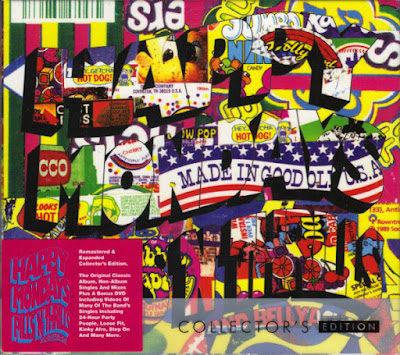
Transforming from awkward underdogs to the biggest indie band in the country in the space of just two years, Happy Mondays’ third LP Pills ‘n’ Thrills and Bellyaches encapsulates the short-lived media obsession with ‘Madchester’ at the start of the ‘90s more than any other album. While it brought the shenanigans of their colourful lead singer Shaun Ryder and maracas player / backup dancer / lucky mascot Bez to the attention of tabloids, its unexpected commercial success cannot be explained without its producer Paul Oakenfold. While he became a global superstar DJ and remixer by the end of the ‘90s, at end of the previous decade Oakenfold was a rising star, making his name through regular sets at clubs up and down Britain as the rave scene was booming.
His production softened their jagged, sloppy funk rhythms and sharpened up the sound quality, making it sound much more expansive than anything they had done before. 1988’s Bummed, produced by Factory Records’ legendary in-house producer Martin Hannett, was well-received but sounds so much more claustrophobic and scratchy by comparison. However, while Hannett’s production had only hinted at the Mondays’ knack for spectacular rhythms, Oakenfold and his engineer Steve Osborne (who would go on to produce Doves, Elbow, Starsailor and many other indie acts at the start of the ‘00s) made it prominent, making it the primary building block of the music. They married the group’s shabby industrial funk with subtle, up-to-the-minute dance beats, and both aspects complimented and reinforced each other.
Oakenfold was one of two people that had been commissioned in 1989 to remix Bummed highlight ‘Wrote For Luck’: Erasure’s Vince Clarke had made one, which was good, but Oakenfold’s was spectacular. Retitled ‘W.F.L. (Think About The Future mix)’, it was interspersed with elements of N.W.A.’s cleaned-up ‘Express Yourself’ remix and took things to another level. Ryder himself was most impressed, saying that Oakenfold “brought that sort of trance to it… all the right ingredients.” The iconic Madchester Rave On EP followed later in ‘89, and a creative partnership was forged for the Mondays’ upcoming third album.
Kicking off with single ‘Kinky Afro’, one of the more rock-orientated moments on the album, the difference in atmosphere is palpable from its predecessor. A mellow, radio-friendly vibe, it showcases Ryder’s unusual lyrical style, a kind of deliberately absurd working-class poetry in the style of Mark E Smith – “Son, I’m thirty / I only went with your mother ‘cause she’s dirty” is an inspired opening line, mischievous and down-to-earth. It was also the first time that backup singer Rowetta had featured on a Mondays album, and her soulful vocals gave the package a wider appeal.
The exceptional ‘God’s Cop’ follows it (for some reason, never released as a single despite its very obvious chart appeal), the first real display of virtuosity from Oakenfold. Featuring an irresistibly bendy and funky guitar riff welded to the producer’s jackhammering drum breaks, the title was a reference to the chief of police in Manchester, James Anderton, who was hellbent on smashing the city’s rave scene in the late ‘80s and who once claimed that he had a ‘hotline to God’. The album’s third single ‘Loose Fit’ was rather moodier, featuring a chiming guitar riff that glistens over a dark dub texture, it features some rather ambiguous lyrics from Ryder as he declares there “won’t be no misfit in my household today” – which could either be taken as a declaration of defiance from his own generation or an impersonation of the condemnation of that of his parents’. It’s probably the latter, as the chorus’s lyrics have Rowetta singing “go where you’re going / say what you’re saying / sounds good to me”.
The sense that Ryder, deliberately or otherwise, is speaking on behalf of a new generation of ravers seeking to separate themselves from their parents’ music and values is a subtle undercurrent amid the psychedelic, sunshine-infused revelry of Pills ‘n’ Thrills, and demonstrates how underrated he was as a lyricist. It takes a slightly uglier form on ‘Grandbag’s Funeral’, a rather sneering piece of generational rebellion, but comes forward more entertainingly on the album’s singles and tracks like ‘Holiday’ and ‘Dennis And Lois’. The breezy, summery feel of the latter track is juxtaposed with the sinister ‘Bob’s Yer Uncle’, and that the Mondays could change moods so quickly without upsetting the pace of the album shows their versatility.
The second half of Pills ‘n’ Thrills is kind of overshadowed by the presence of ‘Step On’, certainly the Mondays’ best-known hit and released in the summer before the album’s release. To all intents and purposes a remix of John Kongos’ ‘He’s Gonna Step On You Again’, it featuring a maddeningly addictive, immediately recognisable piano hook that provokes a kind of Pavlovian reaction in a generation of club-goers that were around to hear it at the time. The ludicrously happy riff of ‘Holiday’ is followed by the weird fugue of organs and distorted guitar of ‘Harmony’, a kind of psychedelic chillout that reflects the record’s artwork, a collage of sweet wrappers, logos and cultural detritus.
Musically and rhythmically, Pills ‘n’ Thrills was dancefloor-bound, but Ryder’s personality and performance frames it as a recognisably rock experience, uniting the two genres and tribes of fans in the same way that The Stone Roses had done the previous year and Screamadelica would do the following year. It was an album of sheer, unadulterated hedonism that perfectly captured its time and place, the kind of which comes around once in a generation, for both artists and fans. A 2007 reissue courtesy of Rhino Records is a great introduction to the band in general, as it included all the accompanying B-sides, music videos and remixes.
However, this kind of lightning rarely strikes in the same place twice, and the commercial success and national attention that Pills ‘n’ Thrills brought to its creators went to their heads, with the non-stop partying and industrial quantities of drugs they consumed draining their creativity and inspiration. With Shaun Ryder and his bassist brother Paul in the grip of heroin addiction, the choice was made to decamp to Barbados, at ruinous expense to Factory’s finances, to record their next album at Eddy Grant’s studio with Talking Heads’ Chris Frantz and Tina Weymouth. The Caribbean island had no heroin, but plenty of crack cocaine, and the band ended up selling the studio’s furniture. Yes Please! took over two years to arrive and, when it did, it was a complete turkey, full of lumpen arrangements and flat song ideas.
The band disintegrated slowly throughout 1993, with members departing in quick succession, and Happy Mondays was no more. Shaun Ryder formed the funk-influenced Black Grape in the mid ‘90s, enjoying a Mercury nomination for their 1995 debut It’s Great When You’re Straight… Yeah, before a brief Mondays reunion was attempted and abandoned in 2000. A new line-up did, however, come together to record Unkle Dysfunktional in 2007, and in 2012 the full original line-up reunited to announce some new material, and has been playing Pills ‘n’ Thrills and Bellyaches on tour throughout 2015 in celebration of its 25th anniversary.