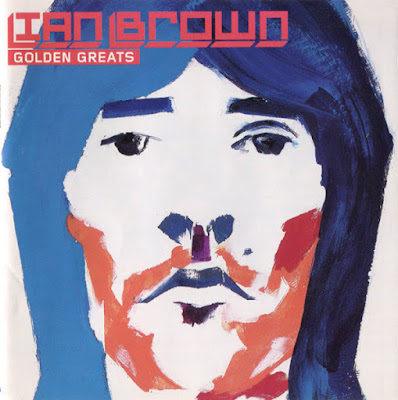
Whatever its flaws, Ian Brown's debut album, Unfinished Monkey Business, suggested that he was the true visionary behind the Stone Roses, providing the wild mercurial ideas that were grounded by John Squire's classicist song structures. Its sequel, Golden Greats, confirms that notion. Less song-oriented than its predecessor and overflowing with neo-psychedelic sonic textures and dance beats, Golden Greats floats between dazzling peaks and unformed, unrealized ideas that are nonetheless quite intriguing. Some may miss the clear hooks that characterized the Stone Roses (and even parts of Unfinished Monkey Business), but Brown sounds revitalized here and the result is a fresh, frequently exciting record. True, it can get a little indulgent and it's not quite cutting edge (no matter how much he wishes it were), but that doesn't distract from its very real virtues. At its best, the album boasts wonderfully, subtly crafted productions brimming with neat textures (the organ riff, Mellotron, and sampled strings on "Set My Baby Free" are a perfect example) that are intriguing on first listen and grow richer with repeated listens. Like its predecessor, Golden Greats meanders a bit too much and it places a little too much emphasis on surface, but when the surface sparkles like this, it's hard to complain too loudly.
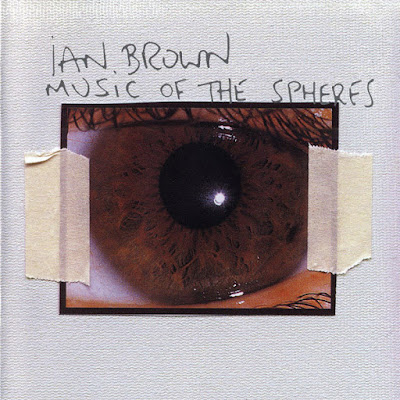
Before Music of the Spheres was released, Ian Brown touted it as a return for him to the peak form of his former band, the Stone Roses. As things go in the U.K., many members of the British music press jumped on the comments and appropriated Brown's views as their own. Realistically, Music of the Spheres is a strong, mature album, befitted with lush, exhilarating production that easily fits alongside Unfinished Monkey Business and Golden Greats, but it doesn't introduce anything revolutionary or match the excellence of The Stone Roses. The only thing that seems new for Brown on Music of the Spheres is that a number of the songs sound like minimalist tone poem explorations and that he sings in Spanish on "El Mundo Pequeno." One example of the minimalism is "Hear No See No," where Brown accompanies spare electronic notes with whispers of the title lyrics. But the album is at its strongest when he reaches for the inspired hooks and choruses that are his bread and butter. "F.E.A.R." is particularly compelling, with its lush string sounds and Brown's insanely catchy repetition of the letters that make up the song's title. "Stardust" and "Shadow of a Saint" are the album's other standouts, where Brown concocts frazzled poetry like, "I'm made from stardust/The same DNA as stardust," and intones about the "wings of an angel." Less bombastic than Golden Greats and more focused than Unfinished Monkey Business, Music of the Spheres is brimming with charm and accomplished, polished songcraft. There's no reason for Brown to abandon this style of music, and there's also no reason that he should feel the need to match the glories of The Stone Roses. Ian Brown's solo discography includes nothing but vibrant, organic albums. Each is worth exploring nearly as much as those of his former band. Considering the undeniably genius of the Stone Roses, that's extremely high praise.
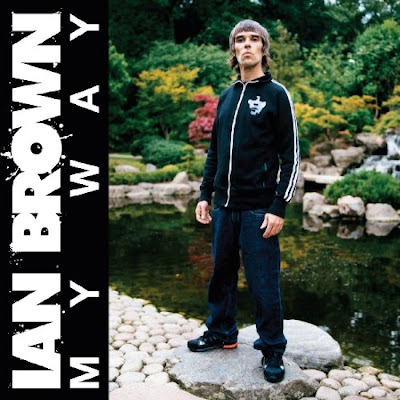
After the Stone Roses' shambolic demise, few would have predicted that frontman Ian Brown would go on to achieve both a prolific solo career that would far outlast the band's, and sustain a loyal following that worships him as though he was the personification of the Roses' difficult sophomore album, Second Coming. But 12 years after his debut, the man who's influenced pretty much every lad-rock band of the '90s and 2000sis back with his sixth studio album, My Way. Produced by longtime collaborator Dave McCracken, it may be named after Sid Vicious' anarchic cover of the Sinatra standard, but it's the only trace of Brown's early punk leanings on an album which is perhaps his most punchy, hook-laden, and immediate to date. Indeed, eschewing the politically charged dub-reggae/hip-hop of its predecessor, The World Is Yours, Brown has gone straight for the jugular on 12 tracks which are said to have been inspired by Michael Jackson's seminal opus Thriller. A rather tenuous link with monkeys aside (Brown's first album was titled Unfinished Monkey Business, a play on his "King Monkey" nickname), at first glance, there appears to be very little in common between the King of Pop and the King of Madchester. And while it's ludicrous to suggest that there's anything on My Way that sounds even remotely similar to Jackson's groundbreaking epic, it does appear to have at least attempted to adhere to its "all killer, no filler" policy. Opening track "Stellify" doesn't quite stand up to his claim that it was originally intended for Rihanna, but its jaunty piano stabs, pounding military beats, and triumphant horn section provide his most infectious single since 2001's "F.E.A.R." His newfound chart-bound stance continues by teaming up with esteemed songwriter-for-hire Amanda Ghost (James Blunt, Beyoncé) on "For the Glory," a vitriolic attack on former Roses' guitarist John Squire and the doom-laden electronica of "Vanity Kills." But My Way is much more interesting when Brown is left to his own devices. "Crowning of the Poor" is a working-class call to arms set against a backdrop of menacing synth stabs and the kind of underground grime beats you'd find on the first Dizzee Rascal album; "Always Remember Me" is a blissed-out shoegazing ballad full of rousing strings and My Bloody Valentine-esque distorted guitars; while the anagram-titled "Own Brain," is a groove-laden blend of Timbaland-style R&B and '80s synth pop .My Way may not live up to Brown's rather bombastic praise, but it's an inventive and consistently strong collection of songs which sounds more like a debut from someone in the prime of their youth than a middle-aged Mancunian 20 years into his career.
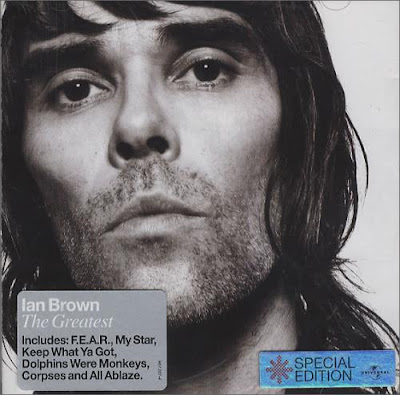
As Ian Brown is not exactly renowned for his lack of self-belief, The Greatest is an appropriately egotistical title for the first compilation from the Madchester scene's golden boy. Brown is always more consistent as a singles artist, and so this 2005 collection, which gathers 15 tracks from his first four albums, is perhaps the ideal showcase for the former Stone Roses frontman's talents. Kicking off with three tracks from 1998's Unfinished Monkey Business, debut single "My Star" set the blueprint for his solo career, combining cod-mysticism, Middle Eastern instrumentation, and psychedelic indie rock with his trademark languid vocal delivery, a formula Brown clearly adheres to on the likes of the space rock of "Longsight M13" and the sole new composition, "All Ablaze." However, the Morricone-inspired Spaghetti western vibes of "Time Is My Everything," the authentic brass-fused reggae of "Lovebug" (previously only available on the U.S./Japan edition of 2004's Solarized), and the jangly Americana of "Corpses in Their Mouths," a bitter diatribe against former bandmate John Squire, proved that the self-described "monkey man" was no one-trick pony. All the singles are here (bar his lowest-charting release, "Whispers"), including the two Noel Gallagher collaborations ("Can't See Me," "Keep What Ya Got", unexpected Top Five hit "Dolphins Were Monkeys," and his two guest spots with UNKLE ("Be There," "Reign"), but it's 2001's "F.E.A.R.," a haunting string-soaked slice of baggy hip-hop cleverly creating a series of acronyms from the title, that remains his defining moment. this comprehensive retrospective finally puts his money where his mouth is.