Showing posts with label slant rhyme. Show all posts

Saturday, April 16, 2022

Day 16 ... NaPoWriMo / Poem-a-Day 2022


Maureen Thorson’s NaPoWriMo prompt: “Today, I’d like to challenge you to write a curtal sonnet. This is a variation on the classic 14-line sonnet. The curtal sonnet form was developed by Gerard Manley Hopkins, and he used it for what is probably his most famous poem, “Pied Beauty.” A curtal sonnet has eleven lines, instead of the usual fourteen, and the last line is shorter than the ten that precede it. Here are two other examples of Hopkins’ curtal sonnets: “Ash Boughs,” and “Peace.””

Robert Lee Brewer’s Poem-a-Day challenge: “For today's prompt, write a touch poem.”

Today, I offer you a meta-poem: a curtal sonnet that explains how to write a curtal sonnet in the form of a curtal sonnet, using ten-syllable lines (decasyllabics) and slant rhyme. The poem satisfies both prompts (the Brewer one just barely).

The Curtal Sonnet

Three-quarters of a Petrarchan sonnet.
Rather than eight lines at the top, there are
six. Then, instead of six lines at the end,
there are four and a half lines. Check the math.
The opening sestet’s rhyme patterns are
abc abc . . . then the closing

quatrain-plus brings in a new rhyme sound—d
trailed by bc or cb, then d. For
the ultimate touch, c ends the half line.
Invented by Father Gerard Manley
                                    Hopkins. Amen.

—Draft by Vince Gotera    [Do not copy or quote . . . thanks.]

Gerard Manley Hopkins (Wikipedia)

Incidentally, this will be my 5th curtal sonnet this NaPoWriMo. The others are on days 3, 10, and 15 (two curtal sonnets on the 15th). The curtal sonnet is one of my favorite forms to write; it may be my go-to. In the eleven years I have done NaPoWriMo consistently, I have written around 25 curtal sonnets.


Friends, won’t you comment, please? Love to know what you’re thinking. Thanks!

Ingat, everyone.   


NaPoWriMo / PAD 2022 • Pick a day:
1 2 3 4 5 6 7 8 9 10 11 12 13 14 15 16 17
18 19 20 21 22 23 24 25 26 27 28 29 30


Monday, February 9, 2015

Recalling "The Spine" by Michael Spence


This evening, my Poetry Workshop at the University of Northern Iowa had the pleasure of Skyping with the poet Michael Spence, whose 2014 collection The Bus Driver’s Threnody we are reading for class. In the course of that insightful and invaluable conversation, I brought up Mike’s poem “The Spine,” from his first poetry collection The Spine. When I looked for this poem online to show it to the students, I discovered it’s not available in cyberspace. So, with Mike’s permission, I proudly present that poem to the blogosphere.

The Spine
“The fossilised vertebrae of a large dolphin-like
  reptile dating from 150 million years ago were
  recently discovered in this mining town.”
                                    —Australian travel brochure
The icthyosaur,
Like ancient water

It flashed through,
Dried to dust. A few

Pieces of spine
Dug from a mine

At Coober Pedy
Are the only

Remains. They glint
Iridescent

Blue, purple;
Bits of gold fill

Every crack.
The Jurassic

Faded: the reptile
Changed to opals.

Thirty-three
Vertebrae

Like those here—
One for each year

I’ve lived—link
What I think

To how I move.
The chord in their groove

Sends what lightning
I have forking

Through my hands
Into the land.

If my traces reach
The distant beach

Of the future,
The bones I stare

At hold my wish:
To start as flesh

And end as jewel.
The line of fossils

Burns—each gem
A star in the stem

Of the Southern Cross.
We gain by loss.

— Michael Spence, from The Spine (1987).


I have a personal relationship with this particular poem because it was, for me, life-changing with regard to my writing of verse. I was an MFA student at Indiana University in 1987 when I found The Spine on a new-book rack in the IU library. I distinctly recall how this poem stunned me, with its bravura off-rhymes—icthyosaur/water, reptile/opals—and its off-kilter dimeter. This poem opened up a new vista for me. I had a moment akin to Elizabeth Bishop’s “In the Waiting Room,” the library stacks spinning a bit as I stood, leaning on a shelf, reading “The Spine.”

This was during the “poetry wars” of the ’80s, when the New Formalists were bucking the Free Verse establishment and being called Reaganites. I was personally beleaguered, as an emerging neoformalist myself, in a workshop with classmates who reviled work in rhyme and meter. And it was Mike, on paper, who taught me how to write a poem that was tightly formalist but read like free verse to those who expected free verse. I learned from Mike's poems how to be a tightrope walker—and he’s a master, a damn good one. He can slant rhyme and craft meter like a tenor-sax jazz artist, syncopating silence and staccato sequences.

I hope you’ll check out Michael Spence’s work. The Spine, published by Purdue University Press almost 30 years ago, is still in print. His new collection,  The Bus Driver’s Threnody, is a tour-de-force collection of poems about driving a city bus in Seattle. Other books include Crush Depth, a father-son book that includes poems on life in the US Navy, and Adam Chooses, about which Mark Jarman wrote, these “poems, often cunning experiments in traditional form, dramatize the way experience leads to knowledge.”

Michael Spence is the real deal, friends. You’ll enjoy his poetry, I guarantee.


Won’t you comment, please? To comment, look for a blue link below that says Post a comment and click it once. If you don’t see that, look for a red line that starts Posted by Vince, then click once on the word comments in that line.

Ingat, everyone.  


Friday, May 18, 2012

Dragonfly (page 23)


The next poem in Dragonfly is another rock 'n' roll poem, featuring guitar god Carlos Santana. 'Nuff said.


Carlos Santana in Concert: Berkeley, 1983


The note you hold, pungent and sustaining, novas
into aquamarine. In the car, my cousin Pete was saying,
"What a time, the 60s! Patchouli, flowers, fine ladies
begging spare change, joints, acid, anything."

Now, with eyes turned in like collapsars, you avatar
our childhood, your fingers steeled in rigid abandon,
your leonine head laid back. Play that guitar!
Pete who strums a mean axe himself says, "Schon

and Van Halen — them boys are typewriters, machine
guns! Santana puts more soul in a single note."
Carlos, your lone note spatters from the Mission,
San Francisco's soul kitchen. Stir up your bitches'

brew, your black-magic stew on Latin fire.
Oye, Santana, al ritmo — bueno para gozar!


Page 23


I wonder if I ought to have an epigraph that says "after Philip Larkin" because the poem plays off Larkin's well-known poem "For Sidney Bechet." Larkin's opening line in that poem is "That note you hold, narrowing and rising, shakes." And later, Larkin writes, "Oh, play that thing!" When I was putting together I eventually decided against the epigraph because the borrowing seemed so obvious that anyone who knows Larkin's poem would immediately see the connection. I'd really like to hear what you think about this.

As with the previous poem ("After the Gig") I changed a semicolon in the title to a colon. As I said with the last poem, the semicolon just seems wrong to me now. What else? The word "60s" should have an apostrophe in front. Decided to leave that one alone. If this poem were to appear in a future "selected" or "collected" volume, I would probably then add that apostrophe.

The character Pete is my cousin Peter Padua. It occurs to me now that I should call him "Peter" in this poem because in our family "Pete" always referred to his dad. I had changed it in this poem to "Pete" for the sake of better rhythm in the lines. I put words into Peter's mouth here, specifically the first quotation. But Peter did say that "machine gun" part in reference to Neal Schon and Eddie Van Halen . . . stole that from ya, old buddy. Thanks for that great bit, cousin Peter!
To pay my cousin back, let me give him a plug. Here's a video of his band, Peter Padua and Friends, performing his song "Jammin' Free." They are playing next Thursday, May 24, from 5:00 to 9:00 p.m. on the Main Stage at the Sunset Market, Oceanside, California. If you live in or near Oceanside, go check out their music. I guarantee, you'll love it.
In terms of form and poetics, did you notice this is a Shakespearean sonnet? Slant rhymes and roughed-up meter. I'm particularly fond of the rhyme between "machine" and "Mission": gotta love that rich consonance.

Music references include the already mentioned ones to Schon and Van Halen. I also allude to Jim Morrison and Miles Davis. As well as to Santana's own discography: "black magic." The ending line in Spanish means "Listen, Santana, to the rhythm, good to enjoy." That's pretty literal. In a looser sense, something like beautiful/marvelous/splendid/superb to appreciate/relish/savor/treasure/dig. Any Spanish speakers out there who could help me sharpen that translation?

Copacetic, friends. I'd love to hear what you think of this poem or anything else here (maybe whether it needs that epigraph attribution, say); please comment below. Thanks. Ingat.

The photo of Carlos Santana was taken by Flickr user Stoned59 in 1984
(from Wikipedia Commons, under the Creative Commons Attribution
2.0 Generic license.)

DRAGONFLYFIRSTCONTENTSPREVIOUSNEXTLAST


Saturday, March 19, 2011

I'm back ... and born from bamboo!


Well, friends, today is the one-year anniversary of the last time I posted in the blog. Since last March 19, like any slacker, I often thought of themes and subjects I could blog about but just couldn't free up the time . . . and then worried incessantly about the whole situation. But now, here I am, here we are, and let's just get right back into it, shall we? Thanks for your patience with my slackerly ways. I'm back, I'm reformed, and I'm ready to blog. Hasta blogeesta, baby.

During my slackerozo non-bloggo year, I had the good fortune of publishing my poem "Born from Bamboo" in an anthology titled Reeds and Rushes: Pitch, Buzz, and Hum, thanks to the good graces of editor Kathleen Burgess as well as Pudding House Publications. Here's the poem:

Born from Bamboo
In remembrance of my paternal grandmother,
whom we called Nanay (Tagalog for
mother)

"Gray-haired man with three summer-blue eyes,"
said Nanay. Fructuosa Gotera, her name: fruitful,
fertile.
"That was Bathala, god of the skies."

My father, just four, looked up at his mother's smile.
Slim as bamboo, she went on: "Aman Sinaya,
goddess of the sea, had green eyes, like emerald.

Both gods tried to outdo each other every day.
Thunder and lightning. Tidal waves and typhoons.
Aman Sinaya's monsoons raked the sky.

Bathala hurled boulders —" "No, whole mountains!"
said my father, eyes glimmering. "Yes, Martin . . .
mountains! into the sea, creating our islands,

all seven thousand. Meanwhile, caught between
the two realms of heaven and ocean, the northeast
wind Amihan had had enough. She took on

the shape of a bird, with indigo feathers and feet.
She shuttled back and forth, with dainty alimasag
crabs, tiger prawns in tamarind, starfish,

anemone flowers, from the wavelets up to Bathala,
then down with shooting stars, planets' rings, moons
for Aman Sinaya to braid in her jade-tinged hair.

With gifts and sweets, letters bathed in perfume,
the bird enticed Aman Sinaya and Bathala
to be friends —" "No," said Martin, "wife and husband!"

"Maybe, my son," Nanay laughed. "In his joy, Bathala
flew over the sea and cast not rocks but his seed
into the Mindanao Deep. From Aman Sinaya's

seabed sprang a gigantic bamboo reed,
swaying between sky and water." Nanay's hand,
upheld in front of my father, danced a sweet

fandango in the air. "One day, Amihan,
now a huge hawk, soared in circles
round the sky-high bamboo, spiraling down

until she stopped, hovered. Did she hear calls
from within the reed? Help us, Princess of the Air!
Small kulintang gongs. Voices in madrigal.

Amihan pecked the bamboo, laying bare
a tiny space, a womb in the reed. Inside,
the first humans: brown eyes and skin, black hair.

Amihan named the woman Maganda —
beautiful. The man she called Malakas —
strong. Inviting them onto her back, the bird

ferried the two humans through glorious clouds
to the northernmost island created by Bathala,
our lovely Luzon, just north of the River Pasig."

My father whispered, "You mean . . . our own river?"
"Yes, and their children and grandchildren became
we Filipinos. You and I, my son, are

descended from that divine, royal line:
Aman Sinaya, Bathala, Malakas, Maganda,
the bamboo reed split open by Amihan."

As Nanay finished the tale, Martin, my Papa,
kissed her then went to play. My grandmother,
before she once again became Fructuosa

the Fish-Seller off to work at the market,
reveled in the thought that she herself
was the bamboo reed, the mother of mothers.

Such dreaming helped her through birth upon birth,
the death of her oldest daughter, a world war,
husband and son in the Bataan death march.

Fructuosa . . . shower of golden mangoes, windfall.
Rich brown called kayumanggi, she passed on to us.
Wife, mother, grandmother: life source, the well.

Vince Gotera, in Reeds and Rushes: Pitch, Buzz, and Hum,
edited by Kathleen Burgess, Pudding House Press, 2010.


The writing of this poem was an interesting case because it was composed specifically for this book. The bamboo is after all, a reed, and it's used to make musical instruments . . . the application of reeds in music is one of the themes of the anthology. Go buy Reeds and Rushes; it's a marvelous anthology.

This poem also afforded me the opportunity to explore how myth and family can interweave; in the poem's frame scene, my lola tells my father, still a child, one of the central Philippine creation stories: how people came to be. For years, I have toyed with the idea of a collection of poems based on myth, and this is a good start for this project, though there are other earlier poems which will probably be included, such as the poem "Aswang."

In terms of craft, this poem uses terza rima — interwoven triple rhyme (aba bcb cdc etc.); as you may know from other poems of mine, I more often use distant slant rhyme rather than straight rhyme. For example, northeast / feet / starfish . . . where the long e and the t in the first word rhyme pretty straightforwardly with the second word while the f in feet and the s in northeast rhyme with the f and sh (sorta) in starfish. I suspect that some readers will not agree that my rhymes work . . . and that's just fine with me.

As with other poems already discussed in the blog, I am using here a "roughed-up" pentameter (see my discussion of the poem "Guard Duty," for example). Once again, some readers will probably disagree that the meter works (certainly someone like Spenser or Percy Shelley would probably find my poems terribly sloppy) . . . and again, that's just fine too. If people read this poem as some sort of tight free verse, more power to them.

Above I coined the sentence "Hasta blogeesta, baby" as some sort of tribute to the second (good) Terminator — not to Schwarzenegger the Governator but to the character — however I think I used it wrong. It probably ought to go at the end of the blog post, as a kind of send-off. So, friends . . .
HASTA BLOGEESTA, BABY!

P.S. Do get yourself a copy of Reeds and Rushes; you'll love it!


Saturday, February 14, 2009

Have a Heart!


Happy Valentine's Day, O my readers!

Today, a poem I wrote for Mary Ann some Valentines back to celebrate the holiday and my love for her in a much different fashion from tradition's red roses and frilly paper hearts.

Valentine Day's Poem


As we watched a laparoscopic gall-bladder surgery
on TLC last night, I was amazed how the body
seemed so much like a landscape. The gall bladder
resembling Half-Dome Rock in Yosemite,

abutting the burnt-sienna mountain range
of the liver, and the rich apricot-yellow forests
of fatty tissue. The heart was distant and strange,
the horizon pulsing, the sky of skin in chorus

with crimson land. Is this heart our symbol of love?
Like red-lace hearts and heart-shaped boxes of candy?
No, this is the real thing. That's how I love
you, Mary Ann, as much as any landscape

of flesh can love you: blood, muscle, my hands
washing your hair, bones like trees in a wind.


— Vince Gotera, first appeared in the Asian Pacific American Journal (Spring/Summer 1996).


I trust the poem speaks for itself about love and Valentine hearts.

Since some of you, O gentle readers, follow the blog to focus on poetic technique, let me tell you this is a Shakespearean (or English) sonnet, as perhaps you've surmised from the poem's structure and shape: three quatrains and a couplet. In typical Shakespearean-sonnet fashion, the quatrains alternate their rhyme — abab.

Now I sense some scratching of heads at how "body" and "Yosemite" could possibly rhyme. As well as "candy" and "landscape." The key words: slant rhyme. For those who may not know, Yosemite is pronounced yoe-SEH-mitt-ee; the rhyme then is between the two syllables of body and the final two syllables of Yosemite. With the rhyme pair candy and landscape, the rhyme happens with the first syllable of both words; also the consonance repetition of the /k/ sound at the beginning of candy and in the center of landscape contributes to the soundplay. In addition, the first rhyme word in the couplet, "hands," rhymes similarly with "candy and "landscape." And, again, a slant rhyme with "wind."

Okay, enough enough enough. Go out and enjoy Valentine's Day. And do the "red-roses and frilly hearts" thing; it's often practical and judicious not to follow, in everyday life, what poems tell us. Again, Happy Valentine's Day!

Note from 17 Feb 2009: I've just gotten permission from Jessica Wheat to use her wonderful medical illustration of the heart. Hurray! As you can see above, Jessica's heart image is now next to the poem. Click on it to see a larger version. The previous graphic I used is now to the right of this note; it came from www.medical-look.com.

Vanessa Ruiz, creator of Street Anatomy, a website that explores human anatomy in medicine, art, and design, said this about Jessica Wheat's work:
"Jessica has a very nice loose painterly style present in all of her work. It makes the anatomy seem more organic and fluid. It’s a nice change from some of the highly stylized and ridged anatomical illustrations we see at times." I couldn't agree more. Her color images are simply lovely, with a gentle application of color and shading that rivals the best fine art. To see more, check out Wheat's online porfolio; look particularly for her "Leather Sea Star" and "Moon Jelly."     — VG

Monday, November 24, 2008

Autobiography (1.0)


From time to time, I am contacted by students or researchers who are studying my poetry or fiction, and they often ask questions about my life. So I am going to give a brief bio here for those students and others who may be interested.


On June 20, 1952, I was born Vicente Ferrer Gotera in the NCO Club at the Presidio of San Francisco. Well, that's not exactly true. That date is right but the building was the Obstetrics Clinic of Letterman Army Hospital . . . only years later would it become the NCO club, a bar and restaurant for non-commissioned officers, sergeants and so on.

My parents were both Filipino American immigrants to the US: Martin Avila Gotera and Candida Fajardo Gotera. My father would eventually become a lawyer and my mother was already an MD when I was born (I believe).

I was born in a US Army hospital because my father was a retired Army officer, a second lieutenant who received a battlefield commission, meaning he had performed some feat of extraordinary leadership while in combat . . . what that feat was, I don't know. Martin was a naturalized American citizen because of his service in the US Army during WWII, a member of the elite Philippine Scouts, survivor of the Bataan Death March and a Japanese prisoner-of-war camp.

After receiving medical care in the US for combat fatigue in 1946, Martin went back to the Philippines but had to return periodically to the US to re-establish residency in order not to forfeit his naturalized US citzenship. When he met Candida he was in San Francisco on one of those residency trips.

My mother was in the US because she had gone to Stanford University for her medical training (all or part, I’m not certain about). Dr. Fajardo's specialty was pediatrics, and she practiced medicine in the Philippines some time later . . . more on that below.

In 1951, Martin met Candida Fajardo in the basement of a downtown San Francisco bank. He had heard women's voices speaking Tagalog and followed their refreshing lilts until he saw Candida (nicknamed Dading) with her sister Clara. They were immediately attracted to one another, though Clara said, "Watch out for that one — he’s trouble."

Well, I guess he was trouble . . . Martin was already married. His wife Carolina Matsumura Gotera had stayed behind in Manila with their two sons Gabriel (nicknamed Angel) and Jose (nicknamed Pepito). Martin obtained a Mexican divorce from Carolina in order to court and marry Candida. After their marriage in October 1951, Martin and Candida lived in San Francisco, where I spent my early life.

I'm not sure what year my parents moved to the Philippines, I think for my father to study for his law degree, which he earned from the University of the Philippines, I believe. My mother practiced medicine during this period. And to some degree, they had to "lay low" because divorce was not legal in the Philippines and so my father was technically in violation of the law for having married my mom. In the eyes of the law, he would have been considered a bigamist.

In Manila, I went to St. Theresa's School for kindergarten and then to San Sebastian College for first through third grade. It was during first (or maybe second) grade that I wrote my first poem. My father and I were on a ferry boat crossing Manila Bay (I believe); it was early morning, and I distinctly remember noticing the sun, how bright it was and round. The poem was written in quatrains, I recall, rhyming abcb . . . it might have been 12 lines, or 16. I don't have a copy of this poem, alas, but I do recall that it was published in some kind of school newsletter. If anyone reading this is willing to do the detective work to find the appropriate San Sebastian newsletter from probably 1959 or 1960, I would be forever beholden.

In the meantime, my father was having professional trouble; the Philippines had enacted a law preventing American citizens from practicing law there, presumably because American lawyers who had trouble passing the bar in the US would go to the Philippines to practice. This left my father in a lurch because he didn't want to give up his American citizenship.

We moved to San Francisco in May 1962. I was nine years old. And I went to St. Agnes School for fourth through eighth grade. It was during this time that I started to go by the name "Vince"; I found that so many people had trouble with my given name "Vicente," wanting to put an "n" between the "i" and the "c." I later went to St. Ignatius High School, which became St. Ignatius College Preparatory while I was a student there.

My mother did not practice medicine after we moved back to the US. And neither did my father practice law . . . he didn’t want to go back to law school to study American law. He would say, "I'm already a lawyer!" And he didn’t allow my mother to practice as a doctor either, because he couldn't practice his profession. I remember my mother occasionally suggesting, because of our ongoing financial difficulties, "Well, then, I'll work as a medical technician." And my father would say, "You can’t do that; you're a doctor!" Several catch-22's there.

In late 1970 or early 1971, I had some early literary successes. I won a city-wide essay contest for high-school students, though I can't recall now what that prize was called. That essay was published in the Philippine News, an expatriate (anti-Marcos) newspaper based in San Francisco, along with four or five poems. I was fortunate to have really excellent English teachers at Saint Ignatius . . . "S. I." we called the school, for example, in the football stadium: "WE ARE  . . .  S. I.  . . .  WE ARE  . . .  S. I."

I particularly thank Mr. Bob Grady (now Fr. Grady) for his creative writing assignments in junior and senior English. Write a story like Sherwood Anderson in Winesburg, Ohio. Imitate an e. e. cummings poem. And just straight-out creative writing prompts. I remember in particular one classmate who turned in the lyrics to "Cloud Nine" by the Temptations and got an A. For the most part, though, most of us wrote those poems and stories and plays in serious fashion for Mr. Grady, and I learned a tremendous amount in his classes.

During my high school years, also, I played lead guitar in several rock bands that gigged at teen club and high school dances across San Francisco. I remember a couple of band names: Doomsday Refreshment Committee, Change of Heart, and Peace of Mind come immediately to mind. My guitar god was Carlos Santana, and I remember playing the solos on his records over and over, working them out note by note, riff by riff, chord by chord.

When I became of draft age, my number in the draft lottery was 30. This meant that we men born on June 20 would be drafted 30th during the year to come. Really, 30 was a terrible number if you didn’t want to be drafted; consider that there were 336 birthdays that got lower priority.

I entered Stanford University in 1971 with that 30 hanging over my head. And that was also the year that student deferments were abolished. So . . . double whammy.

And there was another factor involved. My girlfriend, Ivania Velez, was pregnant. We married in January 1972. I needed a job to support the two of us and the baby that was on the way. I left college in March 1972 and enlisted in the Army in April 1972.

In June 1972, just a few days before I turned 20, my first child was born: Martin Adan Gotera. I was in Basic Training at the time at Fort Ord, not far away from San Francisco, and so fortunately I was able to be present for Ivon’s labor and Marty’s birth. I remember that was a gala occasion. My father, who wrote a column titled "Of This and Such" for the Philippine News, really outdid himself with a very joyful and enthusiastic announcement of Marty’s birth.

My Army service was fairly uneventful. It was wartime . . . the Vietnam war was still going on, but I was luckily never sent to Vietnam. My job in the service was Military Pay Clerk, and I was stationed at Fort Ord again. After Basic Training, I was sent to Indiana for advanced training and then assigned back to Fort Ord. For the second half of my three-year hitch, I was stationed at the Presidio of San Francisco; my mother had developed cancer of the bone marrow, and the Army gave me a compassionate reassignment to the Presidio. I eventually achieved a rank of Specialist Fifth Class, equivalent to a buck sergeant.

When I was discharged from the service in April 1975, I took a job as a civilian employee at the Presidio’s Finance and Accounting Office, where I had worked as a soldier. After a couple of years, I became the Supervisor of the Reserve and National Guard pay division; I remember my own incredulity as I, not even 25, would authorize and sign payrolls worth millions of dollars. It still seems surreal to me now.

In the meantime, on the family front, my mother had grown steadily more ill. Ivon and Marty and I lived with my parents at that time so that Mama could spend as much time as possible with us (especially Marty). In 1976, Mama passed away, having outlived the doctors' estimates of how long she had left to live.


I'm going to stop there for now, and continue the bio in a later post. At this moment I want to share the elegy I wrote for my mother about a decade or more after she died.

Hospital Thoughts, Last Year and Today


Last Christmas Eve, I woke to see Mama, dead
twelve years, bending over me in that strange bed,

but no, it was just those pale hospital green
walls, the yellow daze of fever. I'm seeing

things, I thought. But it must have been like that
for my father, a woman with blue-black hair in whites

bending over him during morning rounds,
like the Tenente and Cathy in A Farewell to Arms.

Around them—like a 1940s black-
and-white flick—the war. Sirens and ack-ack

guns, Manila covered with a shroud of smoke
again. General MacArthur returning like

an iron bloodhound, the Japanese kneeling by the sea.
When I was nine, that's how I'd wanted it to be.

I didn't want my parents to meet in a bank
in San Francisco, Tagalog words like magnets

drawing them together. But that Florence
Nightingale bedside scene never took place.

Those knotted hospital sheets tight around my chest,
I recalled Mama's cancer. How doctors christened

her a "model" patient. Once a pediatrician,
she had already fingered all their talismans:

chemotherapy, radiation treatment,
her hair falling out, her body shucking off weight.

At Carew and English, Papa and I found
she'd already ordered a shiny cedar coffin.

Now my father lies in a VA ward in
California—when I visit, he is skinny
as a nine-year-old boy, legs like useless sticks.
He speaks of the war, the Bataan death march,

how thin he'd gotten in the concentration camp.
He tells me how he misses Mama sometimes.

More desperately than his hand on my hair, I want
to see my mother in white, next to the window,

the stethoscope gleaming round her neck.
The sun glints in her hair, full and black.

Vince Gotera, first appeared in the Seattle Review.
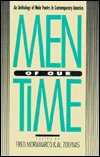
Reprinted in Men of Our Time: Male Poetry in
Contemporary America
(1992).

With regard to my poetics, I would probably highlight my employment of slant rhyme here. First, clearly there are full rhymes: "dead" and "bed," "black" and "ack." There is one instance of pararhyme (or consonantal rhyme, a là Wilfred Owen): "want" and "window." There are also quite acceptable slant rhymes, such as "that" and "whites," or "neck" and "black." But then I also use some very distant rhymes: "rounds" and "arms," "bank" and "magnets," for example. I really wanted quite a bit of diversity in the rhyming. And also my trademark "roughed-up" pentameter.

Basically, I wanted couplets that any formalist could recognize as rhymed couplets but which proponents of free verse would think was free verse. I wanted the best of both worlds in what was at that time, in the 1980s, an armed-camp atmosphere between the free-verse poets and the so-called neoformalists. As in so many contexts, I played at being the joker, the wild card.


13th floor elevators (1) 3d (1) 9/11 (3) a schneider (1) abecedarian (14) aboriginal art (1) acrostic (7) adelaide crapsey (1) african american (1) aids (1) aisling (1) al robles (2) alberta turner (1) alex esclamado (1) alexander chen (1) alexander pushkin (1) alexandra bissell (1) alexandrines (4) alien (1) alliteration (3) alphabet (1) alphabet poem (2) altered books (1) altered pages (2) altered reality magazine (2) amanda blue gotera (7) amelia blue gotera (6) american gothic (1) american sonnet (1) amok (1) amy lowell (1) anacreon (1) anacreontics (1) anaphora (4) andre norton (1) andrea boltwood (19) andrew davidson (1) andrew marvell (1) andrew oldham (1) andy warhol (1) angelina jolie (1) angels (1) animation (1) anna montgomery (3) anne reynolds (1) annie e. existence (1) annie finch (2) anny ballardini (1) anti- (1) antonio taguba (2) apophis (1) aprille (1) art (7) artemis ii (1) arturo islas (1) asefru (1) ash wednesday (1) asian american (4) assonance (3) astronomy (2) aswang (13) aswang wars (1) atlanta rhythm section (1) axolotl (1) bakunawa (1) balato (1) ballad (4) barack obama (7) barbara jane reyes (1) barry a. morris (1) bass (3) bataan (5) becca andrea (1) beetle (2) belinda subraman (2) benjamin ball (1) beowulf (2) best american poetry (1) beverly cassidy (1) bible (1) bill clinton (1) billy collins (2) blackout poetry (1) blank verse (12) bob boynton (1) body farm (1) bolo (1) bongbong marcos (3) bop (1) brandt cotherman (1) brian brodeur (2) brian garrison (1) bruce johnson (1) bruce niedt (6) buddah moskowitz (2) buddy holly (1) burns stanza (1) caleb rainey (1) callaloo (1) candida fajardo gotera (5) cardinal sin (1) carlos bulosan (1) carlos santana (2) carmina figurata (4) carolina matsumura gotera (1) caroline klocksiem (1) carrie arizona (3) carrieola (3) carriezona (1) catherine childress pritchard (1) catherine pritchard childress (37) catullus (1) cebu (1) cecilia manguerra brainard (1) cedar falls (6) cedar falls public library (1) cento (1) charles a hogan (2) ChatGPT (1) cherita (1) chess (2) childhood (1) children's poetry (1) China (1) chorus of glories (1) chris durietz (1) christmas (2) christopher smart (1) chuck pahlaniuk (1) cinquain (1) civil rights (1) clarean sonnet (2) clarice (1) classics iv (1) cleave hay(na)ku (2) clerihews (3) cliché (1) common meter (1) computers (1) concrete poem (2) concreteness (1) consonance (6) coolest month (1) cory aquino (2) couplet (6) couplet quatrains (2) crab (1) craft (5) creative nonfiction (1) crewrt-l (1) crucifixion (1) curtal sonnet (89) dactyls (2) daily palette (1) damián ortega (1) dan hartman (1) danielle filas (1) dante (5) dashiki (1) david foster wallace (1) david hoffman (1) david kopaska-merkel (1) david shaw (1) david wojahn (1) de jackson (2) decasyllabics (4) denise duhamel (1) deviantART (3) dick powell (1) diction (1) didactic cinquain (1) dinosaur (2) disaster relief (1) divine comedy (1) django reinhardt (1) dodecasyllables (1) doggerel (2) doggie diner (1) doidotsu (1) don johnson (1) donald justice (1) donald trump (8) double acrostic (1) dr who (3) dr. seuss (1) draft (2) dragon (1) dragonfly (17) dreams & nightmares (1) drug addiction (1) drums (1) duplex (1) dusty springfield (1) dylan thomas (1) e e cummings (1) e-book (1) earth day (1) ebay (2) eclipse (5) ecopoetry (1) ed hill (1) edgar allan poe (2) edgar lee masters (1) edgar rice burroughs (1) editing (1) eeyore (1) eileen tabios (9) ekphrasis (3) ekphrastic poem (19) ekphrastic review (1) election (2) elegy (4) elevenie (1) elizabeth alexander (2) elizabeth bishop (4) elvis presley (1) emily dickinson (9) emma trelles (1) end-stop (3) english sonnet (1) englyn milwer (1) enita meadows (1) enjambed rhyme (1) enjambment (5) enola gay (1) envelope quatrain (2) environment (1) epulaerya (1) erasure poetry (10) erin mcreynolds (4) ernest lawrence thayer (1) exxon valdez oil spill (1) f. j. bergman (1) f. scott fitzgerald (1) facebook (3) family (4) fanny (1) fantasy (1) fashion (1) ferdinand magellan (2) ferdinand marcos (5) fib (3) fiction (3) fiera lingue (1) fighting kite (4) filipino (language) (1) filipino americans (6) filipino poetry (1) filipino veterans equity (3) filipinos (5) film (3) final thursday press (1) final thursday reading series (2) flannery o'connor (3) florence & the machine (1) flute (1) fortune cookie (1) found poem (1) found poetry (6) found poetry review (2) fourteeners (1) fox news (1) frank frazetta (1) frankenstein (1) franny choi (1) fred unwin (1) freddie mercury (1) free verse (13) fructuosa gotera (1) fyodor dostoevsky (1) gabriel garcía márquez (1) gambling (1) garrett hongo (1) gary kelley (1) gaston nogues (1) gawain (2) genre (1) george w. bush (1) gerard manley hopkins (13) ghazal (3) ghost wars (6) ghosts of a low moon (1) glossalalia (1) gogol bordello (1) golden shovel (5) goodreads (1) google (1) gotera (1) grace kelly (1) grant tracey (1) grant wood (11) grateful dead (1) greek mythology (1) gregory k pincus (1) grendel (1) griffin lit (1) grimm (1) grinnell college (2) growing up (1) growing up filipino (2) guest blogger (1) guillaume appolinaire (1) guitar (9) gulf war (1) gustave doré (3) guy de maupassant (1) gwendolyn brooks (4) gypsy art show (1) gypsy punk (1) hades (1) haggard hawks (1) haibun (5) haiga (1) haiku (34) haiku sonnet (3) hank williams jr. (1) hart crane (1) hawak kamay (1) hay(na)ku (24) hay(na)ku sonnet (16) header (1) hearst center for the arts (2) heirloom (1) herman melville (1) hey joe (1) hieronymus bosch (1) hiroshima (1) hiv here & now (1) homer (1) honky tanka (1) how a poem happens (2) humboldt state university (1) humor (1) hybrid sonnet (4) hymnal stanza (1) iain m. banks (1) iamb (1) iambic pentameter (1) ian parks (1) ibanez (1) icarus (1) imagery (1) imelda marcos (4) immigrants (1) imogen heap (1) indiana university (1) inigo online magazine (1) ink! (1) insect (2) insects (1) international hotel (1) international space station (1) interview (4) introduction (2) iowa (2) iowa poet laureate (11) iran (1) iran-iraq war (1) irving levinson (1) italian bicycle (1) italian sonnet (2) ivania velez (2) j. d. schraffenberger (4) j. i. kleinberg (3) j. k. rowling (1) jack horner (2) jack kerouac (1) jack p nantell (1) jackson pollock (1) james autry (1) james brown (1) james galvin (1) james gorman (2) james joyce (1) jan d. hodge (2) janis joplin (1) japan (1) jasmine dreame wagner (1) jeanette winterson (1) jedediah dougherty (1) jedediah kurth (31) jennifer bullis (1) jesse graves (1) jessica hagedorn (1) jessica mchugh (2) jim daniels (1) jim hall (1) jim hiduke (1) jim o'loughlin (2) jim simmerman (3) jimi hendrix (3) jimmy fallon (1) joan osborne (1) joe mcnally (1) john barth (1) john charles lawrence (2) john clare (1) john donne (1) john gardner (1) john mccain (1) john prine (1) john welsh iii (2) johnny cash (1) joseph solo (1) josh hamzehee (1) joyce kilmer (1) justine wagner (1) kampilan (1) kate greenaway (1) kathleen ann lawrence (1) kathy reichs (1) kay ryan (2) keith welsh (1) kelly cherry (1) kelly christiansen (1) kenning (1) kennings poem (3) killjoy (1) kim groninga (1) kimo (6) king arthur (1) king tut (1) knight fight (1) kumadre (1) kumpadre (1) kurt vonnegut (1) kyell gold (1) landays (1) lapu-lapu (2) lapwing publications (1) laurie kolp (2) leigh hunt (1) leonardo da vinci (2) les paul (1) leslie kebschull (1) lester smith (1) library (1) library of congress (2) limerick (3) linda parsons marion (1) linda sue grimes (2) lineation (6) linked haiku (9) linked tanka (3) list poem (5) little brown brother (1) little free libraries (3) lorette c. luzajic (1) lost (tv) (1) louise glück (1) luis buñuel (1) lune (2) lydia lunch (1) lynyrd skynyrd (1) machismo (1) magazines (1) magnetic poetry (1) mah jong (1) man ray (1) manananggal (2) manong (3) margaret atwood (2) maria fleuette deguzman (1) marianne moore (1) marilyn cavicchia (1) marilyn hacker (1) mark jarman (1) marriage (1) martin avila gotera (18) martin klein (1) martin luther king jr. (1) marty gotera (5) marty mcgoey (1) mary ann blue gotera (9) mary biddinger (1) mary roberts rinehart award (1) mary shelley (1) matchbook (1) maura stanton (1) maureen thorson (446) maurice manning (2) meena rose (3) megan hippler (1) melanie villines (1) melanie wolfe (1) melina blue gotera (3) mental illness (1) metapoem (1) meter (7) mfa (2) michael heffernan (3) michael martone (2) michael ondaatje (1) michael shermer (2) michael spence (1) michelle obama (1) mickey mouse (1) micropoem (1) middle witch (1) minotaur (1) mirror northwest (1) misky (1) molossus (1) monkey (1) monorhyme (4) monostich (1) monotetra (3) morel mushrooms (2) mueller report (1) muhammad ali (1) multiverse (1) murder ballad (1) mushroom hunting (1) music (3) muslim (1) my custom writer blog (1) myth (1) mythology (3) nagasaki (1) naked blonde writer (1) naked girls reading (1) naked novelist (1) napowrimo (453) narrative (2) nasa (1) natalya st. clair (1) nathan dahlhauser (1) nathaniel hawthorne (1) national geographic (3) national poetry month (451) native american (1) neil gaiman (2) neoformalism (1) New Formalists (1) New York School (1) nick carbó (5) ninang (1) nonet (1) north american review (7) north american review blog (2) ode (1) of books and such (1) of this and such (1) onegin stanza (2) ottava rima (2) oulipo (1) oumumua (1) ovillejo (2) pablo picasso (2) pacific crossing (1) padre timoteo gotera (1) painting (1) palestinian american (1) palindrome (1) palinode (1) palmer hall (2) pantoum (3) paradelle (2) paranormal (1) parkersburg iowa (1) parody (7) parody poetry journal (1) parol (1) pastoral poetry (1) pat bertram (2) pat martin (1) paul brooke (1) paul maccready (1) paula berinstein (1) pause for the cause (2) pca/aca (1) peace (2) peace of mind band (1) pecan grove press (2) pentameter (1) pepito gotera (1) percy bysshe shelley (2) performance poetry (1) persephone (1) persona poem (3) peter padua (1) petrarch (1) petrarchan sonnet (27) phil memmer (1) philip larkin (1) philippine news (1) philippine scouts (6) philippine-american war (1) philippines (8) phish (1) pinoy (1) pinoy poetics (1) pixie lott (1) podcast (1) podcasts (3) poem-a-day challenge (451) poetics (6) poetry (5) poetry imitation (1) poetry international (1) poetry palooza (4) poetry reading (4) poets against (the) war (2) pop culture (2) popcorn press (1) prejudice (1) presidio of san francisco (1) prime numbers (1) prime-sentence poem (1) prince (3) princess grace foundation (1) promotion (1) prose poem (7) proverbs (1) pterosaur (1) ptsd (2) puppini sisters (1) puptent poets (2) pushkin sonnet (3) pyrrhic (1) quadrille (1) quadrille quaiku (1) quatrain (4) quatrains (1) r.e.m. (1) rachel morgan (3) racism (1) rainer maria rilke (1) rap (2) rattle (1) ray fajardo (1) ray harryhausen (1) reggie lee (1) rembrandt (1) ren powell (1) renee lukehart wilkie (1) reverse golden shovel (1) reviews (1) revision (1) rhyme (8) rhysling awards (5) rhythm (1) richard fay (1) richard hugo (1) rick griffin (1) rime (1) rime couee (1) rippled mirror hay(na)ku (1) robert bly (1) robert frost (3) robert fulghum (1) robert j christenson (1) robert lee brewer (454) robert mezey (1) robert neville (1) robert zemeckis (1) rock and roll (2) rod con (1) roger zelazny (1) rolling stones (1) romanian (1) ron kowit (1) ronald wallace (2) rondeau (1) ross gay (1) roundelay (1) rubaiyat (1) rubaiyat sonnet (1) run-d.m.c. (1) saade mustafa (1) sally ann kueker (2) salt publishing (1) salvador dali (4) san francisco (8) sandra cisneros (1) santa claus (1) santana (1) sapphics (1) sarah deppe (1) sarah palin (1) sarah smith (26) sascha feinstein (1) satan (1) sayaka alessandra (1) schizophrenia (1) science fiction (2) science fiction poetry association (1) science friction (1) scifaiku (2) scott walker (1) screaming monkeys (1) scripture (1) sculpture (1) sea chantey (1) seamus heaney (1) sena jeter naslund (1) senryu (5) sestet (1) sestina (13) sevenling (1) shadorma (10) shaindel beers (2) shakespeare (1) shakespearean sonnet (10) shakespearen sonnet (1) sharon olds (2) shawn wong (1) shiites or shia (1) shoreline of infinity (1) sidney bechet (1) sijo (2) skateboard (1) skeltonics (2) skylaar amann (1) slant rhyme (6) slide shows (1) small fires press (1) smashing pumpkins (1) sniper (1) somersault abecedarian (1) somonka (1) sonnet (50) sonnetina (4) soul (1) southeast asian american (1) spanish (1) specificity (1) speculative poetry (1) spenserian stanza (1) spiraling abecedarian (1) spondee (1) spooky (1) sprung rhythm (1) st. patrick's day (2) stafford challenge (99) stanford university (1) stanley meltzoff (1) stanza (1) star wars (3) stars and stripes (2) stereogram (1) steve hazlewood (1) steve mcqueen (1) stevie nicks (1) stone canoe (2) sue boynton (1) suite101 (2) sunflowers (1) supremes (1) surges (1) susan l. chast (1) syllabics (1) sylvia plath (2) synesthesia (1) syzygy poetry journal (2) t. m. sandrock (1) t. s. eliot (2) tail rhyme (1) tamandua (1) tanaga (1) tanka (38) tanka prose (4) tanka sequence (6) tanya tucker (1) tarzan (1) taylor swift (1) teaching creative writing (2) ted kooser (1) tercet (1) term paper mill (1) terrance hayes (2) terza rima (10) terza rima haiku sonnet (8) terzaiku sonnet (4) terzanelle (1) tetrameter (1) the byrds (1) the coolest month (1) the language of flowers (1) the warning (1) the who (1) theodore roethke (1) thomas alan holmes (276) thomas crofts (4) thomas faivre-duboz (1) thomas hart benton (1) thunderstorm (1) thurifer (1) tiger (1) tilly the laughing housewife (1) time travel (1) tokyo groove kyoshi (1) tom perrotta (1) tom petty (1) tom phillips (1) tone hønebø (1) toni morrison (2) tornado (1) total eclipse (4) tower of power (2) translation (2) translitic (4) tribute in light (1) trickster (1) tricube (1) triolet (8) triskaidekaphobia (1) tritina (1) trochee (1) trope (1) tucson (1) typhoon haiyan (1) typhoon yolanda (1) university of northern iowa (6) unrhymed sonnet (2) us army (8) uvalde sonnet (1) valentine's day (1) vampire (2) ven batista (29) verses typhoon yolanda (1) veterans' day (2) via dolorosa (1) video poetry (6) vietnam era vet (1) vietnam war (8) viktor vasnetsov (1) villanelle (6) vince del monte (1) vincent van gogh (1) virgil wren (1) virtual blog tour (1) visual poetry (3) vladimir putin (1) volkswagen (1) w. somerset maugham (1) walking dead (1) wallace stevens (3) walt mcdonald (1) walt whitman (4) war (7) war in afghanistan (2) war in iraq (2) wartburg college (1) waterloo (1) whypoetrymatters (1) wile e. coyote (1) wilfred owen (2) william blake (1) william carlos williams (1) william f tout (1) william gibson (1) william morris (1) william oandasan (1) william shakespeare (3) william stafford (4) willie nelson (1) wind (1) winslow homer (1) winter (1) women's art (1) wooster review (1) wordy 30 (1) writing (1) writing away retreats (1) writing show (1) wwii (6) young adult (1) yusef komunyakaa (7) zipode (1) zone 3 (1)