Showing posts with label us army. Show all posts

Tuesday, March 4, 2025

Dragonfly (pages 40-41)


The next poem in Dragonfly is the last Vietnam-war-focused one. It's a sestina with a lot of alterations in the cycling end-words. This poem has its own separate blog post here where the specifics of the sestina-making are discussed.

By the way, this poem needs a trigger warning: a derogatory word for Asian appears in it, a word that is here because this is soldier talk from the '70s. I have not changed this word because it is true to the voice of this character (and it is a character, not myself). More on that below.


Vietnam Era Vet


A fragrance remembered is Vietnam—
the acrid odor of gunpowder and tracer fire,
smudgy cooking fires in every hooch, the pungent scent
of nước mắm and water buffalo shit, a father's
acid sweat as he searches for his lost son
in some ville, smoking from an H&I strike—all this was my wish.

I'd look at my class A's in their plastic bag in the closet and wish
sometimes I too had been to the 'Nam.
I remembered basic training at Fort Ord, double timing in the sun
to the range. "Ready on the left! Ready on the right! Fire
at will!" Late nights in the latrine, I wrote my father
long letters about being afraid I'd be sent

over there. Everyone in the platoon was afraid of being sent,
but not one of us admitted it. "Sure wish
they'd ship me over to that motherfucker,"
we said to each other in the noonday light, "Vietnam—
can't wait. Shoot me a fucking gook or two, fire
mortars all goddamn night." Papa'd write back, "Son,

let God's will be done. Just be a good son.
Just do your job. If they send you, then they send
you. That's all." And I'd lie on my dark bunk and smoke—the fiery
tip of the cigarette curling like a tracer ricochet—wishing
I loved it all. C-rations, the firing range, the memorized Vietnamese
phrases, my leaky shelter half on bivouac. All for Papa.

That was as close as I would get to my father's
war. I'm sure my grandfather called him a good son,
both in the U.S. Army, the Philippine Scouts. Their Vietnam
had been Bataan. When the sergeant would send
my father out on point, did he wish
even for a moment that he hadn't joined up? Did artillery fire


Page 40


make him cringe in his foxhole? That time he was caught in crossfire,
did he try to will himself into a tree, a rock, a bird? Papa,
I knew only the mortar's crump and whoosh,
the parabolic path reaching up to California sun.
I never knew the shrapnel's white-hot whistle at arc's end.
Two nights ago, I dreamt I was in Vietnam:

a farmer runs for the tree line—I fire a crisp M-60 burst—Vietcong,
for sure, for sure. The LT sends me up to verify. In shimmering sun,
Charlie's face is the one I wash in my helmet. No. It's your face, Papa.


Page 41


Going back to my previous blog post on this poem in 2009, I wrote this:

Many readers misinterpret this poem as being spoken by a grunt in Vietnam, a combat veteran. The central conflict of the poem orbits around the speaker not having gone to Vietnam. In fact the title of the poem is US governmentalese for someone who served in the US armed forces during the war but was not sent to Vietnam. Although this poem uses many autobiographical details from my own life, this speaker is a persona, not me at all. I personally don't feel this way about not having been sent to Vietnam; in real life, my father, even though he was quite the proponent for Army and veteran service, did not want me to fight in that war because he felt the war in Vietnam was wrong.

So why did I write the poem? I had read and was wowed by a story titled "The Persistence of Memory" by Walter Howerton, Jr. (from an anthology called The Perimeter of Light). Howerton's excellent story focused on a Vietnam-vet wannabe driven by a deep need to connect with his WWII-vet father, now dead, who had condemned him for being an anti-war activist during the Vietnam war. After reading this bravura story, I wondered if I could write something similar using elements from my own life. So essentially "Vietnam Era Vet" is an imitation that ultimately transcends imitation. At least I hope so.

Okay, despite the poem not being fully autobiographical, I am indeed a Vietnam era veteran, and here's a picture from my US Army service in the 1970s, when I was stationed at the Presidio of San Francisco.

Receiving the Soldier of the Month award, Presidio of San Francisco, 1974


As always, I'd love to get some feedback or discuss anything with all y'all. Comment, okay? Thanks. Ingat.


DRAGONFLYFIRSTCONTENTSPREVIOUSNEXTLAST


Wednesday, November 11, 2009

Veterans Day ... Papa, Tatay, and the Library of Congress


As I mentioned in my previous blog post, two weeks ago I had the pleasure and honor of reading my poems at the Library of Congress in a symposium honoring "Unsung Heroes: Asian Pacific American Heroism in WWII." This kind of recognition in Washington, DC, has been long needed and comes at an opportune historical moment, with Congress's recent passage of reparation one-time payments to the Filipino soldiers of WWII who were stripped, immediately after the war, of the veterans' benefits FDR promised them.


At that event, I had the honor of meeting retired General Antonio Taguba as well as the Honorable Tammy Duckworth (Assistant Secretary at the VA [Veterans Affairs], a decorated Army veteran from our war in Iraq — where she lost both legs and the partial use of an arm — and still a Major in the Illinois National Guard). I also had the genuine pleasure of meeting Dr. Valentin Ildefonso, US Army Philippine Scout in WWII, and a retired Lieutenant Colonel from the US Air Force, where he served as a medical doctor. Dr. Ildefonso also volunteered later as a doctor during the Vietnam war. (By the way, Dr. Ildefonso was featured in an online news article today for Veterans Day.)


Dr. Valentin Ildefonso and Vince Gotera

As you may already know from other posts in this blog, my father Martin Gotera and my grandfather Felix Gotera also served in the Philippine Scouts in WWII, where they both were in the Bataan Death March. So it was particularly touching and moving for me to meet these three Army vets, whose courage and service are so allied to the esprit de corps that was the spine of the Gotera family's contributions to the US Army, not just my father and grandfather, but also my brother Pepito's US Army service and mine during the Vietnam war.

As part of my poetry reading at the symposium, I read the following poem, which describes my father's relationship with my grandfather, my Lolo whom all of us grandchildren and great-grandchildren called simply Tatay, the Filipino word for "father," because he was so much the patriarch for us all. He was a gentle, soft-spoken old man when I knew him, so unlike the chilling stories Papa told me of Tatay's brutal discipline towards him as a child. The poem, one of three I read at the Library of Congress, describes two sides of that relationship: first, how Tatay whipped my father cruelly and routinely, and second, how Papa found Tatay in the Japanese concentration camp and cared for him as he would have his own child.

Tatay


My grandfather in a faded photograph is
          a centurion blowing a Christmas party horn,
                    on his head my foil Roman legionnaire helmet.

I remember him smiling like a boddhisatva
          as he pulled on scuffed brogans to bail out
                    my uncle in the drunk tank — Tito Augusto

had been brawling again. But in 1933,
          Tatay seemed another man. My father
                    at twelve was circumcised with a couple

of buddies. The ring of boys.
          The penknife. Blood dwindling.
                    When Tatay heard, he bent my father

over the Army trunk again. Set up
          the pitcher and glass. He made his
                    two-inch-wide leather belt lick the boy's

naked back. Resting, he sipped water, then
          got up, belt in hand. My father glanced over
                    at the pitcher to see how much was left.

There were other stories. How after
          the Bataan death march, they met, father
                    and son, in the concentration camp near Capas.

Tatay shivered at noon, muttering of
          bodies mantled with wings, ashimmer.
                    My father could see two compounds away,

they were burning wood — bark the Igorots
          use to cure malaria. My father crept
                    under the wire. A butterfly's

lazy tango in the glare. That itch
          between his shoulderblades. A bead
                    of sweat. The imperial guard's boots

a yard to the left. The Philippine Army
          regulars who were burning the wood smirked
                    when they caught him, gathering branches

in his arms. With fists and bare feet
          pounding his head and back, did he recall
                    those rituals of trunk and pitcher?

Cradling a bundle of sticks, my father
          crawled back. I can see the bark dancing
                    now in water, next to the cot where

Tatay moans in his sleep. I hear my father
          singing softly. I can almost make it out, but
                    I can't quite place the tune, a Tagalog lullaby.

— Vince Gotera, first appeared in The Madison Review (1989).

In the poem, I highlight an ironic and iconic difference between Filipinos: the Philippine Army soldiers beat my father because he was a Philippine Scout, that is, a member of the US Army. In this context, because the US Army can no longer protect my father, they see him as too big for his britches because he is a Filipino in the US Army — uppity, someone whom they would see as having previously lorded over them. The irony is that Papa is beaten in order to save the life of the man who used to beat him.

The other two poems I read at the symposium have been featured in the blog already: "Honor, 1946" and "Refusal to Write an Elegy." In the first, we see another side of my father being caught between different racial forces: instead of being attacked by Filipinos, he is attacked by white Americans. In the second, we see the war demons he faces, not from external attack but rather from within.

Besides my own small part in the symposium, I was truly moved at the scope and span of the subjects covered, the articulate speakers who gave presentations not only about Filipino Americans in the war but also about the original Flying Tigers, Chinese American fighter pilots who volunteered to fly for the Chinese Air Force against the Japanese even before 1941; the Japanese American soldiers of the most highly decorated American military unit, the 442nd Regimental Combat Team; the Asian American women who served in various military capacities during the war; and so on. I learned quite a lot, and the symposium was indeed a joyous occasion celebrating the tremendous contributions Asian Pacific Americans made to the American war effort.

As General Taguba said in his keynote address, "The Asian Pacific American families who join us today have marked a lasting legacy in our history not to be forgotten. . . . Our unsung heroes have many untold stories yet to be shared. It is their time. It will always be their time." Amen to that, kapatid, kababayan.

Today is Veterans Day. Today is also my father's birthday. If he were living today, Papa would be 88 years young. In the '60s, he was a pioneer in the fight to restore the veterans' rights of the Filipino WWII veterans. In San Francisco, he founded an organization, the Filipino American Veterans and Dependents Association, which worked on this problem, setting out what was probably the first class action suit in the struggle. About the recent legislation of one-time payments ($15,000 to Filipino American veterans in the US, $9,000 to Filipino veterans in the Philippines), I'm certain my father would say, if he were here, "Although this payment is, in many eyes, too little too late, it is a significant gesture nonetheless; we in the Filipino American community, however, should still push for the full restoration of these veterans' benefits."

You rock, Papa. Happy birthday! Veterans Day will always be your signature holiday.


P.S. Many thanks to Reme Grefalda, librarian extraordinaire at the Library of Congress's Asian Division, for inviting me to be a participant in this historic symposium. Maraming salamat, thanks so much, for your hospitality, Reme. I hope I can return the favor sometime if you ever visit Iowa.

Now, just a couple more pictures (click on any of the pictures above or below to see larger versions). The Library of Congress is made up of incredibly beautiful buildings. If you are ever in Washington, DC, you should definitely check out the Library. Many visitors go to the Capitol, the Smithsonian, the various memorials. Go also to the Library; it is the living monument to our country's intellectual aspirations and achievements.


Kluge Room, where the symposium was held


Hallway in the Jefferson Building


Lobby of the Jefferson Building

Friends, please write a comment below. I'd really love to hear your responses. If you have visited the Library of Congress, tell us all about it. Thanks for visiting the blog! Come back often.


Tuesday, March 31, 2009

Keeping Six Words Tumbling in Air


Okay, one more of my poems from Asian American Literature, the textbook edited by Shawn Wong, for the benefit of the UGA students with whom I've been interacting (see the last two posts) and now my own students in our Asian American Literature course (at the University of Northern Iowa) who are about to start discussing my poems in that same textbook.

Vietnam Era Vet


A fragrance remembered is Vietnam —
the acrid odor of gunpowder and tracer fire,
smudgy cooking fires in every hooch, the pungent scent
of nước mắm and water buffalo shit, a father's
acid sweat as he searches for his lost son
in some ville, smoking from an H&I strike — all this was my wish.

I'd look at my class A's in their plastic bag in the closet and wish
sometimes I too had been to the 'Nam.
I remembered basic training at Fort Ord, double timing in the sun
to the range. "Ready on the left! Ready on the right! Fire
at will!" Late nights in the latrine, I wrote my father
long letters about being afraid I'd be sent

over there. Everyone in the platoon was afraid of being sent,
but not one of us admitted it. "Sure wish
they'd ship me over to that motherfucker,"
we said to each other in the noonday light, "Vietnam —
can't wait. Shoot me a fucking gook or two, fire
mortars all goddamn night." Papa'd write back, "Son,

let God's will be done. Just be a good son.
Just do your job. If they send you, then they send
you. That's all." And I'd lie on my dark bunk and smoke — the fiery
tip of the cigarette curling like a tracer ricochet — wishing
I loved it all. C-rations, the firing range, the memorized Vietnamese
phrases, my leaky shelter half on bivouac. All for Papa.

That was as close as I would get to my father's
war. I'm sure my grandfather called him a good son,
both in the U.S. Army, the Philippine Scouts. Their Vietnam
had been Bataan. When the sergeant would send
my father out on point, did he wish
even for a moment that he hadn't joined up? Did artillery fire

make him cringe in his foxhole? That time he was caught in crossfire,
did he try to will himself into a tree, a rock, a bird? Papa,
I knew only the mortar's crump and whoosh,
the parabolic path reaching up to California sun.
I never knew the shrapnel's white-hot whistle at arc's end.
Two nights ago, I dreamt I was in Vietnam:

a farmer runs for the tree line — I fire a crisp M-60 burst — Vietcong,
for sure, for sure. The LT sends me up to verify. In shimmering sun,
Charlie's face is the one I wash in my helmet. No. It's your face, Papa.

— Vince Gotera, first appeared in The Journal of American
Culture
(1993). Reprinted in Asian American Literature:
A Brief Introduction and Anthology
(1996). Appeared
also in Fighting Kite (2007).

Some brief footnotes. In line 6, "H&I" stands for Harrassment and Interdiction: indiscriminate artillery fire at the enemy to break their morale; of course, this procedure caused a great deal of so-called "collateral damage," i.e., injury and death among civilians and noncombatants. Ain't military terminology as fun as a barrel of junkies? In line 7, "class A's" are semi-formal Army uniforms, similar to a suit and tie. A "shelter half" refers to half of a pup tent (line 24); two soldiers would team up to make up a single tent for bivouac or encampment. The Philippine Scouts (line 27) were an elite US Army unit before and during WWII; the Philippine Army was a separate force from the Philippine Scouts. In line 37, an M-60 is a heavy, belt-fed machine gun. Finally, "LT" stands for lieutenant and is pronounced ell-TEE (line 38). With regard to the Wong textbook in particular, there are two errors. The word "is" in the first line was typeset as "in" in the textbook. Also, "nước mắm" is misspelled in the textbook as "nuoe mam," without the diacritics essential in printed Vietnamese.

Let's focus on craft and technique first. The salient point here is that this poem is a sestina. If you don't know this poetic form, the sestina repeats the ending words of each line in the sestets (six-line stanzas) so that they eventually appear at the end of every possible location (the first line of the sestet, the second line, etc.). Then the repeating words (called repetons [REHP-uh-tawns) appear in a three-line stanza (known as an envoi [own-VWAH]), two words per line, one at the end of the line and the other in the middle.

The repetons are re-used in the stanzas in a preset pattern. The matrix below shows the cycling of this particular sestina's repetons — Vietnam, fire, scent, father, son, and wish. I've color-coded the words so you can follow their movement through the stanzas easily.

 Stanza 1........

Vietnam 
fire 
scent 
father’s 
son 
wish 
Stanza 2........

wish 
'Nam 
sun 
Fire 
father 
sent 
Stanza 3........

sent 
wish 
motherfucker 
Vietnam 
fire 
son 
Stanza 4........

son 
send 
fiery 
wishing 
Vietnamese 
Papa 
Stanza 5........

father’s 
son 
Vietnam 
send 
wish 
fire 
Stanza 6........

crossfire 
Papa 
whoosh 
sun 
arc’s end 
Vietnam 
Envoi

fire Vietcong 
sends sun 
wash Papa 

As you can see, I "cheat" by altering the repetons occasionally (this is pretty common practice among contemporary writers of the sestina). For example, "Vietnam" becomes "'Nam" in stanza 2, "Vietnamese" in stanza 4, and finally "Vietcong" in the envoi. Almost always sestina alterations are done through consonance ("wish" ——> "whoosh" ——> "wash"). I'm pretty proud of how, in stanza 6, the "sent"/"send" sound is rendered by "arc's end" — cool, eh? I'm even more proud (perversely so) of "father" becoming "motherfucker" . . . a kind of literalist double entendre. And there is even a basis here (admittedly distant) in rich consonance: /f/ and /r/ in father and motherfucker, not to mention that the /th/ sound appears in both words. Poetry . . . no, poetics . . . is fun, kids!

Okay, on to content. Many readers misinterpret this poem as being spoken by a grunt in Vietnam, a combat veteran. The central conflict of the poem orbits around the speaker not having gone to Vietnam. In fact the title of the poem is US governmentalese for someone who served in the US armed forces during the war but was not sent to Vietnam. Although this poem uses many autobiographical details from my own life, this speaker is a persona, not me at all. I personally don't feel this way about not having been sent to Vietnam; in real life, my father, even though he was quite the proponent for Army and veteran service, did not want me to fight in that war because he felt the war in Vietnam was wrong.

So why did I write the poem? I had read and was wowed by a story titled "The Persistence of Memory" by Walter Howerton, Jr. (from an anthology called The Perimeter of Light). Howerton's excellent story focused on a Vietnam-vet wannabe driven by a deep need to connect with his WWII-vet father, now dead, who had condemned him for being an anti-war activist during the Vietnam war. After reading this bravura story, I wondered if I could write something similar using elements from my own life. So essentially "Vietnam Era Vet" is an imitation that ultimately transcends imitation. At least I hope so.

There is one final concern to air. In my last post I talked about my decision to revise "Alan Valeriano Sees a Lynch Mob" by replacing the n-word with two other alternatives. The same issue surfaces here. What about the word "gook" in the third stanza? I would assert that the "g-word" is necessary here to convey the devil-may-care language and 'tude put on by young soldiers; at the same time, in terms of poetics, "gook" carries the /oo/ assonance in "shoot" and "two" . . . as well as the /k/ consonance in "can't" and "fucking." I suppose you might say I'm contradicting myself. Well, I would have to stand with Whitman then: "Do I contradict myself? Very well, then I contradict myself, I am large, I contain multitudes." Amen.

NOTE: I have intentionally not included any visual images in this blog post. We get too many images of war as it is. Blank space, in writing (and in life), has many virtues.

I would also like to offer my apologies to color-blind people who probably had a hard time with the color-coded matrix above. I wish there was another way to do that kind of diagramming without leaving you out.

Monday, November 24, 2008

Autobiography (1.0)


From time to time, I am contacted by students or researchers who are studying my poetry or fiction, and they often ask questions about my life. So I am going to give a brief bio here for those students and others who may be interested.


On June 20, 1952, I was born Vicente Ferrer Gotera in the NCO Club at the Presidio of San Francisco. Well, that's not exactly true. That date is right but the building was the Obstetrics Clinic of Letterman Army Hospital . . . only years later would it become the NCO club, a bar and restaurant for non-commissioned officers, sergeants and so on.

My parents were both Filipino American immigrants to the US: Martin Avila Gotera and Candida Fajardo Gotera. My father would eventually become a lawyer and my mother was already an MD when I was born (I believe).

I was born in a US Army hospital because my father was a retired Army officer, a second lieutenant who received a battlefield commission, meaning he had performed some feat of extraordinary leadership while in combat . . . what that feat was, I don't know. Martin was a naturalized American citizen because of his service in the US Army during WWII, a member of the elite Philippine Scouts, survivor of the Bataan Death March and a Japanese prisoner-of-war camp.

After receiving medical care in the US for combat fatigue in 1946, Martin went back to the Philippines but had to return periodically to the US to re-establish residency in order not to forfeit his naturalized US citzenship. When he met Candida he was in San Francisco on one of those residency trips.

My mother was in the US because she had gone to Stanford University for her medical training (all or part, I’m not certain about). Dr. Fajardo's specialty was pediatrics, and she practiced medicine in the Philippines some time later . . . more on that below.

In 1951, Martin met Candida Fajardo in the basement of a downtown San Francisco bank. He had heard women's voices speaking Tagalog and followed their refreshing lilts until he saw Candida (nicknamed Dading) with her sister Clara. They were immediately attracted to one another, though Clara said, "Watch out for that one — he’s trouble."

Well, I guess he was trouble . . . Martin was already married. His wife Carolina Matsumura Gotera had stayed behind in Manila with their two sons Gabriel (nicknamed Angel) and Jose (nicknamed Pepito). Martin obtained a Mexican divorce from Carolina in order to court and marry Candida. After their marriage in October 1951, Martin and Candida lived in San Francisco, where I spent my early life.

I'm not sure what year my parents moved to the Philippines, I think for my father to study for his law degree, which he earned from the University of the Philippines, I believe. My mother practiced medicine during this period. And to some degree, they had to "lay low" because divorce was not legal in the Philippines and so my father was technically in violation of the law for having married my mom. In the eyes of the law, he would have been considered a bigamist.

In Manila, I went to St. Theresa's School for kindergarten and then to San Sebastian College for first through third grade. It was during first (or maybe second) grade that I wrote my first poem. My father and I were on a ferry boat crossing Manila Bay (I believe); it was early morning, and I distinctly remember noticing the sun, how bright it was and round. The poem was written in quatrains, I recall, rhyming abcb . . . it might have been 12 lines, or 16. I don't have a copy of this poem, alas, but I do recall that it was published in some kind of school newsletter. If anyone reading this is willing to do the detective work to find the appropriate San Sebastian newsletter from probably 1959 or 1960, I would be forever beholden.

In the meantime, my father was having professional trouble; the Philippines had enacted a law preventing American citizens from practicing law there, presumably because American lawyers who had trouble passing the bar in the US would go to the Philippines to practice. This left my father in a lurch because he didn't want to give up his American citizenship.

We moved to San Francisco in May 1962. I was nine years old. And I went to St. Agnes School for fourth through eighth grade. It was during this time that I started to go by the name "Vince"; I found that so many people had trouble with my given name "Vicente," wanting to put an "n" between the "i" and the "c." I later went to St. Ignatius High School, which became St. Ignatius College Preparatory while I was a student there.

My mother did not practice medicine after we moved back to the US. And neither did my father practice law . . . he didn’t want to go back to law school to study American law. He would say, "I'm already a lawyer!" And he didn’t allow my mother to practice as a doctor either, because he couldn't practice his profession. I remember my mother occasionally suggesting, because of our ongoing financial difficulties, "Well, then, I'll work as a medical technician." And my father would say, "You can’t do that; you're a doctor!" Several catch-22's there.

In late 1970 or early 1971, I had some early literary successes. I won a city-wide essay contest for high-school students, though I can't recall now what that prize was called. That essay was published in the Philippine News, an expatriate (anti-Marcos) newspaper based in San Francisco, along with four or five poems. I was fortunate to have really excellent English teachers at Saint Ignatius . . . "S. I." we called the school, for example, in the football stadium: "WE ARE  . . .  S. I.  . . .  WE ARE  . . .  S. I."

I particularly thank Mr. Bob Grady (now Fr. Grady) for his creative writing assignments in junior and senior English. Write a story like Sherwood Anderson in Winesburg, Ohio. Imitate an e. e. cummings poem. And just straight-out creative writing prompts. I remember in particular one classmate who turned in the lyrics to "Cloud Nine" by the Temptations and got an A. For the most part, though, most of us wrote those poems and stories and plays in serious fashion for Mr. Grady, and I learned a tremendous amount in his classes.

During my high school years, also, I played lead guitar in several rock bands that gigged at teen club and high school dances across San Francisco. I remember a couple of band names: Doomsday Refreshment Committee, Change of Heart, and Peace of Mind come immediately to mind. My guitar god was Carlos Santana, and I remember playing the solos on his records over and over, working them out note by note, riff by riff, chord by chord.

When I became of draft age, my number in the draft lottery was 30. This meant that we men born on June 20 would be drafted 30th during the year to come. Really, 30 was a terrible number if you didn’t want to be drafted; consider that there were 336 birthdays that got lower priority.

I entered Stanford University in 1971 with that 30 hanging over my head. And that was also the year that student deferments were abolished. So . . . double whammy.

And there was another factor involved. My girlfriend, Ivania Velez, was pregnant. We married in January 1972. I needed a job to support the two of us and the baby that was on the way. I left college in March 1972 and enlisted in the Army in April 1972.

In June 1972, just a few days before I turned 20, my first child was born: Martin Adan Gotera. I was in Basic Training at the time at Fort Ord, not far away from San Francisco, and so fortunately I was able to be present for Ivon’s labor and Marty’s birth. I remember that was a gala occasion. My father, who wrote a column titled "Of This and Such" for the Philippine News, really outdid himself with a very joyful and enthusiastic announcement of Marty’s birth.

My Army service was fairly uneventful. It was wartime . . . the Vietnam war was still going on, but I was luckily never sent to Vietnam. My job in the service was Military Pay Clerk, and I was stationed at Fort Ord again. After Basic Training, I was sent to Indiana for advanced training and then assigned back to Fort Ord. For the second half of my three-year hitch, I was stationed at the Presidio of San Francisco; my mother had developed cancer of the bone marrow, and the Army gave me a compassionate reassignment to the Presidio. I eventually achieved a rank of Specialist Fifth Class, equivalent to a buck sergeant.

When I was discharged from the service in April 1975, I took a job as a civilian employee at the Presidio’s Finance and Accounting Office, where I had worked as a soldier. After a couple of years, I became the Supervisor of the Reserve and National Guard pay division; I remember my own incredulity as I, not even 25, would authorize and sign payrolls worth millions of dollars. It still seems surreal to me now.

In the meantime, on the family front, my mother had grown steadily more ill. Ivon and Marty and I lived with my parents at that time so that Mama could spend as much time as possible with us (especially Marty). In 1976, Mama passed away, having outlived the doctors' estimates of how long she had left to live.


I'm going to stop there for now, and continue the bio in a later post. At this moment I want to share the elegy I wrote for my mother about a decade or more after she died.

Hospital Thoughts, Last Year and Today


Last Christmas Eve, I woke to see Mama, dead
twelve years, bending over me in that strange bed,

but no, it was just those pale hospital green
walls, the yellow daze of fever. I'm seeing

things, I thought. But it must have been like that
for my father, a woman with blue-black hair in whites

bending over him during morning rounds,
like the Tenente and Cathy in A Farewell to Arms.

Around them—like a 1940s black-
and-white flick—the war. Sirens and ack-ack

guns, Manila covered with a shroud of smoke
again. General MacArthur returning like

an iron bloodhound, the Japanese kneeling by the sea.
When I was nine, that's how I'd wanted it to be.

I didn't want my parents to meet in a bank
in San Francisco, Tagalog words like magnets

drawing them together. But that Florence
Nightingale bedside scene never took place.

Those knotted hospital sheets tight around my chest,
I recalled Mama's cancer. How doctors christened

her a "model" patient. Once a pediatrician,
she had already fingered all their talismans:

chemotherapy, radiation treatment,
her hair falling out, her body shucking off weight.

At Carew and English, Papa and I found
she'd already ordered a shiny cedar coffin.

Now my father lies in a VA ward in
California—when I visit, he is skinny
as a nine-year-old boy, legs like useless sticks.
He speaks of the war, the Bataan death march,

how thin he'd gotten in the concentration camp.
He tells me how he misses Mama sometimes.

More desperately than his hand on my hair, I want
to see my mother in white, next to the window,

the stethoscope gleaming round her neck.
The sun glints in her hair, full and black.

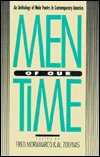
Vince Gotera, first appeared in the Seattle Review.
Reprinted in Men of Our Time: Male Poetry in
Contemporary America
(1992).

With regard to my poetics, I would probably highlight my employment of slant rhyme here. First, clearly there are full rhymes: "dead" and "bed," "black" and "ack." There is one instance of pararhyme (or consonantal rhyme, a là Wilfred Owen): "want" and "window." There are also quite acceptable slant rhymes, such as "that" and "whites," or "neck" and "black." But then I also use some very distant rhymes: "rounds" and "arms," "bank" and "magnets," for example. I really wanted quite a bit of diversity in the rhyming. And also my trademark "roughed-up" pentameter.

Basically, I wanted couplets that any formalist could recognize as rhymed couplets but which proponents of free verse would think was free verse. I wanted the best of both worlds in what was at that time, in the 1980s, an armed-camp atmosphere between the free-verse poets and the so-called neoformalists. As in so many contexts, I played at being the joker, the wild card.

Friday, November 21, 2008

O Brother, Where Art Thou?


My father was a laconic man. I don't mean to say that he didn't talk much . . . he didn't give off an air of rudeness or mystery, as Webster's defines "laconic." He talked plenty; he held his own in conversations. What I mean to say is that my father didn't tell something unless he saw a need for it to be told.

Here's a classic example: one time when I was a teenager, a young man knocked on our door and asked to see my dad. I showed him into the living room and went to get Papa. Who then peeked into the living room and hustled me into the dining room, where he whispered in my ear, "That's your brother." I had no inkling that I had a brother.

It turns out my father had been married to another woman before Mama and had two sons from that marriage . . . our visitor was the younger of these two, Pepito. The older was Angel, a name that requires a story I'll tell another time. Hmmm. I guess I can be a little laconic too.

Here's a poem about my brother Pepito, another Gotera who was a soldier in the US Army.

A Soldier’s Letter


To my brother: 
 When I was fifteen, you surfaced
out of the San Francisco night, a stranger
knocking on our door. Your family
a mystery kept from me, a wife and kids
from another face in my father's secret mirror.

You stayed with us for two or three nights, a dark
and glum presence, brooding at the dinner table.
Mama didn't seem shocked at all. Those nights
we lay in my room, listening to the Sopwith Camel
and the Stones on KFRC, and you softly crooned

the melody. Once you asked who Jesus
was — why did we light candles to him?
At the end of the week, Papa drove you to
the Army Recruiting Station. And Vietnam
swallowed you whole. No news for six months, and then

your letter came. The one in which you threatened
 to disembowel Papa with your bayonet,
 to blow him away with steel shot from a Claymore,
 to lock and load your M-16, then shoot him
dead. 
 Dead for leaving you and your Mom

alone in Manila. Where she took you and your brother
down to the bay and hugged you tearfully
until she saw St. Jude floating over
the water. A miracle. Your lives saved.
And now, in the 'Nam, your life had again been spared

by the vision in air of a woman in a white ao dai.
You jerked your head back in surprise, and the sniper's
bullet lopped off a leaf where your face had been.
And so you believed your hophead's life was sacred.
No rocket, no mortar round could pierce the armor

of revenge, the righteous shield of vengeance.
I vowed to make myself strong, to take
taekwon-do lessons, to save my father's life
when you rotated home. But moments pass
like buckshot, and when you finally landed at Oakland,

you went on back to LA, without stopping again
at our door. The letter — a reefer fantasy.
Today, the letter forgotten, you live in our father's
house, alternating between gay bars
on Castro and the VA hospital psych ward.

Rather than bullets or a C-4 explosion,
you pay our father rent from your disability
check — the proceeds of your post-traumatic
stress disorder syndrome. The last time
we saw each other, you showed Mary Ann your saints,

like a pack of cards. "This picture is St. Blaise &mdash
he saves you from choking on chicken bones. And here's
St. Anthony. I use him to find lost things."
You called the pictures your "directory to heaven."
Nights, I see you in my mind, bowing

before a small Buddhist altar, lighting
sticks of incense, chanting with your eyes closed.
You're thinking back to velvet times in Manila,
when you were a teenage singer on TV,
crooning love songs under a blue spot.

— Vince Gotera, from Premonitions: The Kaya
Anthology of New Asian North American Poetry

(1995). Also appeared in Ghost Wars (2003).

I don't know what to add to this story. Pepito had indeed been a teenage singer in Manila . . . and I don't know much more than that. He was quite a colorful fellow, very eccentric in weird ways. A gay man who sometimes pretended not to be though he made it eminently clear at other times. One day he would be a drag queen, a Diana Ross knock-off, and the next day he would say, "You should find me a wife, a nice Midwestern girl." He was sometimes a recovering drug addict, and at other times just a straight-out drug addict. I think he was a small-time drug pusher as well. He is no longer with us . . . he died violently, stabbed on some San Francisco street. The police never uncovered who done it.

About the poem as a poem: I worked pretty hard on lineation. A mix of end-stops and enjambment . . . creating (I hope) a meld of both hurry as well as suspense at different points. In the fourth stanza, I use indentation and a reverse drop line to set off and emphasize the word "dead." Which is then repeated immediately after. I'm giving you precious little here . . . basically I guess I just don't know much about this poem. Sorry.

I would appreciate some feedback about what you think is going on here. If you feel like it, leave me a comment, please. Not a remark for potential revision, because as far as I'm concerned the poem is done and I'm not interested in reworking it. I'm just curious about how people read it &mdash how you read it. And how you make sense of the poetics of this particular poem.

When I wrote "A Soldier's Letter," probably almost two decades ago, Pepito was still alive though we were hardly ever in touch. And now, after he has died, I realize that this poem was, in many ways, already my elegy for him. Rest in peace, Jose Pater Gotera. Rest in peace, my brother.

Tuesday, November 11, 2008

One Veteran's Day


Today, November 11, is my father's birthday. Martin Avila Gotera would have been 87 today, and he has been gone for almost twenty years.

Today is also Veterans' Day. It has always seemed fitting to me that Papa's birthday is the same day as Veterans' Day. Formerly called "Armistice Day" . . . in other words, a day of peace, of cessation of war.

From the day he was born, soldiering was Papa's life. His father, my Lolo Felix, a "lifer" in the US Army, Philippine Scouts. The beginning of a kind of dynasty . . . Felix, a brigade master sergeant; Martin, a second lieutenant; and then two out of Papa's three sons also in the US Army, Pepito and Vince, one a Vietnam vet, a combat grunt, and the other a Vietnam era vet.

When I was a child, my father worked in the Veterans Administration as an adviser and contact rep for vets. So just about each of his twenty-four hours was spent with former soldiers, sailors, and Marines, making sure they got their veteran's pensions by day, and then at night he would suffer through combat flashbacks and nightmares.

During that same time, my father also gave community service for vets; he started a grassroots organization, FAVADA . . . the Filipino American Veterans and Dependents Association. This organization, as far as I know, was the first to work on what is now called the Filipino Veterans Equity issue. My father and his organization worked on the first class-action suit against the US government to reclaim the rights and privileges stolen from Filipino vets in the 1946 Rescission Act.

I wrote the following poem as a response to the National WWII Memorial, in particular from hearing that Filipino American writer Bino Realuyo was condemning the memorial because of his father being denied burial at Arlington Cemetery . . . again because of that damned Rescission Act.

Looking for Double Victory

Written in response to the dedication of the
National World War II Memorial, 29 May 2004


“The V for victory sign is being displayed prominently in all so-called
democratic countries which are fighting for victory over aggression,
slavery, and tyranny. If the V sign means that to those now engaged
in this great conflict, then let we colored Americans adopt the
double VV for a double victory. The first V for victory over enemies
from without, the second V for victory over our enemies from within.”

    James G. Thompson, letter to the Pittsburgh Courier,
31 January 1942 (quoted by Ronald Takaki in
Double Victory:
A Multicultural History of America in World War II)

Around and through these fifty-six pillars
of white stone hung with wreaths of bronze,
drift and dive four hundred thousand ghosts —
keening, unheard, indignant desert birds.

The war to uphold FDR’s Four Freedoms,
fought by Americans who never in their lives
tasted freedom of speech, freedom of worship,
freedom from want, freedom from fear. Never.

Dorie Miller, black Navy messman
at Pearl Harbor, firing an ack-ack gun,
a weapon he was forbidden to touch, downed
four Japanese bombers . . . strange fruit.

Ernest Childers, Muscogee infantryman
With the “Thunderbird,” single-handedly
cleared two German machine-gun nests . . .
first Indian to win the Medal of Honor.

Guy Louis Gabaldon, Chicano
Marine from East LA, fluent speaker
of Japanese, captured eight hundred
prisoners on his own without a shot.

Susan Ahn, daughter of Ahn Chang Ho,
renowned Korean freedom fighter . . . first
Asian American in the US Navy, first
woman gunnery officer in 1944.

My Papa, my Lolo — Martin and Felix Gotera —
trudge through a fog of kayumanggi dust
lit by sword blade’s sinister flash. Bataan!
Bloody but unbowed. Survive. Mabuhay.

My friend Bino curses these pillars, calls
them “horns.” His father, death-march survivor, denied
burial at Arlington. “No Filipinos Allowed.”
The Rescission Act. Give then take away.

Friends, although eight eagles lift here two
laurel wreaths for victory, the “Double VV”
has yet to be fully won. The demon vanquished
abroad still lives, here, at home. Flourishing.

We still recall with anguish Truman’s bombs,
two hundred thousand victims, mostly women
and children, black rain, skin burning. Legacy
of dishonor. Not a military necessity.

Today, let us remember these honored dead.
Let us remember the civilians — many women —
who riveted planes, who lived behind barbed wire.
Live up to the vision of all these heroes . . . all.

Let us win the second victory, at last.
Make the Four Freedoms real for each and all.
Then let these four hundred thousand ghosts, angels,
Rest their fiery wings in God’s breast, and sleep.


— Vince Gotera, from Mirror Northwest (2006)

Papa, with your interest in and passion for civil rights, you would be amazed to know that now we have an African American president-elect. So that in some measure, the "double VV" is becoming real. Rev. Jesse Jackson was interviewed on TV at Grant Park in Chicago, where Obama's election was being celebrated on the night of Election Day, and he talked about the double VV . . . the "enemies from within" not yet vanquished but certainly defeated that night.

As a birthday and veterans' day present to you, Papa, I want to highlight this stanza from the poem above, because it highlights the spirit in which you held your Bataan death march and prisoner-of-war camp experiences:
My Papa, my Lolo — Martin and Felix Gotera —
trudge through a fog of kayumanggi dust
lit by sword blade’s sinister flash. Bataan!
Bloody but unbowed. Survive. Mabuhay.
Happy birthday, Papa. I love you. And I miss you. Rest your fiery wings in God's breast and sleep. This is YOUR veteran's day . . . the celebration of one veteran.

NOTE: For those interested in Filipino veterans equity, check out this background info from the PBS
American Experience series.

For those of you whose main interests in reading my blog are poetry and poetics, this poem appeared in the Contemporary Poetry section of the Mirror Northwest online journal. This anthology is collected for students of poetry to use, especially the creative writing students of Wenatchee Valley College. With that pedagogical purpose in mind, I appended the following note to that publication:
To mimic the pillars of the National WWII Memorial, I end-stopped each of the quatrains so that they are all freestanding. Also, to retain the memorial’s spirit of honoring the combatants, I wrote the poem in pentameter — admittedly, loose and rough — to allude to the tradition of the iambic pentameter heroic couplet.
Go check out Contemporary Poetry / Mirror Northwest.

Sunday, November 9, 2008

War Stories

Refusal to Write an Elegy


Papa, lately at night when the phone rings
raveling midnight into tatters, I freeze.
Just two days ago, once more your wife's
voice described the extension cord

tied to a joist in the basement, the round
loop hanging: "I'm making a rope." And there
were other times. The razor blade.
The ritalins, sixty-four white pills,

each a period for every year-long
sentence of your life. Your screams
punctuated my childhood nights;
your nightmares melded into fairy tales,

mga kuwento ng duwende. For others: the Grimm
Brothers. For me: Bataan, Corregidor, jungles
and nipa huts, a handsome soldier named Martin.
No dragons, no cinder-faced damsels,

only the night, pulsing with tracer fire.
Or maybe a samurai blade's insistent sheen.
One night, nearly stepping on an enemy soldier,
you poised on that teeter-totter, oblivion,

then all of you softly backed into still virgin
tracks and ran. Jungle gloom raveled by carbine
fire before and behind. You never knew if American
or Japanese bullets ripped your friend Pabling

apart, a sucking chest wound in his side.
And once, hemmed in by tanks, rifles, a ravine,
and a blazing cane brake, each of you slid
beneath the flames. Most escaped. But one

or two, were left behind, screaming.
Another time, a corporal hit by a shell
ran from you — headless and faltering.
His arms flailed like a windmill.

Papa, when you watch TV,
you hammer your fist into your thigh.
Nailing yourself to the morning. To the yellow
heart of an egg, sunny side up.

I see you. Your back is jammed up against
the bole of a tree. Brown skin, your brown
uniform chameleoning the rough bark.
The Japanese plane, a hot red sun,

spits chunks of metal strung
on wires. Beads of spouting earth
converge. At the focus,
you've clawed bark under your fingernails.

Papa. Papa. Remember, they missed you that time.

— Vince Gotera, first appeared in Zone 3 (1989).

My father, Martin Avila Gotera, served in the US Army's Philippine Scouts during WWII; he was a corporal in the 14th Engineers and he specialized in blowing up bridges. He was given a battlefield promotion to 2nd lieutenant for meritorious service. At the right is the young soldier in his US Army officer's uniform, taken in downtown San Francisco, probably in 1946.

When I was growing up, my father often told me war stories . . . I remember him doing that when I was no older than five or six, I'm guessing. These stories were very vivid to me; as I write this I can bring back visual memories that were either dreams I had from his stories or perhaps what I saw in my mind's eye as Papa would tell me those stories, again and again. Perhaps I asked to hear them as bedtime stories . . . who knows?

My father suffered from schizophrenia, surely brought on by such horrific combat experiences as those he told me about and which appear in this poem. Though he also describes schizophrenic incidents that he remembered from his earlier teenage years, so the disease had probably already manifested before his US Army service.

In any case, during the war (or immediately afterwards), Papa was diagnosed with combat fatigue (WWII lingo for what we now call posttraumatic stress disorder, PTSD). All my life, Papa suffered from those symptoms now so familiar to us from Hollywood Vietnam-vet movies: frequent nightmares of war, flashbacks, paranoia, extreme depression, thoughts of suicide, etc., etc.

The poem itself goes back to my first MFA poetry workshop with David Wojahn at Indiana University in the fall of 1986. I remember that it was the second poem I submitted to the class. And it didn't fare well in workshop. But I worked on it and worked on it . . . really as a gift to Papa. In a similar vein to Dylan Thomas's "Do Not Go Gentle into that Good Night," my entreaty to my father not to succumb to death, to awful memory, to the demons of schizophrenia.

And I'm happy to say that now, almost twenty years after Papa died of illness, not of suicide, the poem still holds up. I put it in my 2003 chapbook Ghost Wars as well as in Fighting Kite (2007). This recent title is my elegy for Papa, for Martin Avila Gotera . . . a book-length elegy that completes the cycle begun by my earlier "Refusal to Write an Elegy." Good night, sweet prince, / And flights of angels sing thee to thy rest! Amen.

Monday, November 3, 2008

On the Eve of the Presidential Election


It's after midnight and I wonder what thoughts flit through the minds of Barack Obama and John McCain as they slide into sleep, as they spiral down the hypnagogic well.

Although much of the election talk these latter days focuses on the ailing US economic system, I trust thoughts of war are not far from the consciousness and conscience of both McCain and Obama . . . thoughts, that is, of American men and women in the war zone at this exact moment.

In the spirit of such necessary remembrance, I offer this poem:

Guard Duty


A young soldier squints into thick black night
hoping no hostile sapper is cutting through
barbed wire, a bayonet and grenades tied
to his waist . . . invisible. This mute scenario

lies at the heart of three generations' bedtime
stories: my Lolo and my Papa in the US
Army, Philippine Scouts, death march in Bataan,
my brother Pepito in the 'Nam, nightmares

of Agent Orange. That young soldier could have been
any one of them . . . or me, on guard mount at Fort Ord
during Vietnam. Almost dreaming machine gun
recoil in our hands. Screaming, an oncoming horde.

Never again . . . young women and men should dream
of breezes in trees, soft rain, sunshine. Never again.

— Vince Gotera, from Poets Against the War (2003).

This poem is inextricably connected to President Bush's policies . . . my own protest against what has come to be called "The Bush Doctrine." I wrote this sonnet as part of the Poets Against the War movement and website . . . you may remember Sam Hamill's outraged response to Laura Bush's suggestion of a poetry symposium at the White House in early 2003. Having just heard of the president's proposal to use "shock and awe" saturation bombing against Iraq, Hamill organized a poets' protest and within weeks, thousands of poets took part.

The First Lady cancelled her planned symposium, but by mid-February, when she had hoped the symposium would take place, over 5000 poets from around the world had contributed some 9000 poems. I am proud that "Guard Duty" was one of those poems and that it was eventually selected for Sam Hamill's Poets Against the War print anthology.

"Guard Duty" is rooted as well in the history of Gotera men serving in the US Army. My father and grandfather were in the elite Philippine Scouts of the US Army . . . both of them fought in WWII, both in the infamous Bataan death march, both POWs. My half-brother Pepito and I both served in the US Army during the Vietnam war; he was sent to "the 'Nam" and I was not, making me a Vietnam Era vet. (All of this is described in more detail in my essay "Love and War, Contrapuntal: A Self-Interview," from Pinoy Poetics, edited by Nick Carbó.)

On a related front, there is no good news for the movement to restore US veteran status to Filipino American and Filipino soldiers of WWII. A little background: a quarter million Filipino men were recruited to fight in WWII, and FDR promised them the same status and treatment as American war veterans. After WWII ended, the US rescinded this status . . . an appalling injustice that now spans six decades.

Earlier this year, the Senate passed a bill to restore veterans' rights and benefits to Filipino WWII vets. Unfortunately, time has run out for the parallel bill in the House, though many complained that the House bill had become too watered down, calling for a relatively small lump-sum payment rather than restoration of full veteran status. As Tuesday's election nears, it's worth noting that Senator Obama was a co-sponsor of the Filipino Veterans Equity Act.

Some background links on the Filipino Veterans Equity issue: (1) a recent call to action from the National Federation of Filipino American Associations; (2) an AP news release on the Congressional Asian Pacific American Caucus and its support for Filipino veterans; and a Pacific Citizen article on the recent failure of the House bill.

In any case, back to poetry and war: although the end of my poem "Guard Duty" could seem overly romanticized to some readers, let us hope nonetheless that poetry can, in the long run, stand up to violence. That words really can end wars, that a true and long-lasting peace is indeed possible.

GO OBAMA!


13th floor elevators (1) 3d (1) 9/11 (3) a schneider (1) abecedarian (14) aboriginal art (1) acrostic (7) adelaide crapsey (1) african american (1) aids (1) aisling (1) al robles (2) alberta turner (1) alex esclamado (1) alexander chen (1) alexander pushkin (1) alexandra bissell (1) alexandrines (4) alien (1) alliteration (3) alphabet (1) alphabet poem (2) altered books (1) altered pages (2) altered reality magazine (2) amanda blue gotera (7) amelia blue gotera (6) american gothic (1) american sonnet (1) amok (1) amy lowell (1) anacreon (1) anacreontics (1) anaphora (4) andre norton (1) andrea boltwood (19) andrew davidson (1) andrew marvell (1) andrew oldham (1) andy warhol (1) angelina jolie (1) angels (1) animation (1) anna montgomery (3) anne reynolds (1) annie e. existence (1) annie finch (2) anny ballardini (1) anti- (1) antonio taguba (2) apophis (1) aprille (1) art (7) artemis ii (1) arturo islas (1) asefru (1) ash wednesday (1) asian american (4) assonance (3) astronomy (2) aswang (13) aswang wars (1) atlanta rhythm section (1) axolotl (1) bakunawa (1) balato (1) ballad (4) barack obama (7) barbara jane reyes (1) barry a. morris (1) bass (3) bataan (5) becca andrea (1) beetle (2) belinda subraman (2) benjamin ball (1) beowulf (2) best american poetry (1) beverly cassidy (1) bible (1) bill clinton (1) billy collins (2) blackout poetry (1) blank verse (12) bob boynton (1) body farm (1) bolo (1) bongbong marcos (3) bop (1) brandt cotherman (1) brian brodeur (2) brian garrison (1) bruce johnson (1) bruce niedt (6) buddah moskowitz (2) buddy holly (1) burns stanza (1) caleb rainey (1) callaloo (1) candida fajardo gotera (5) cardinal sin (1) carlos bulosan (1) carlos santana (2) carmina figurata (4) carolina matsumura gotera (1) caroline klocksiem (1) carrie arizona (3) carrieola (3) carriezona (1) catherine childress pritchard (1) catherine pritchard childress (37) catullus (1) cebu (1) cecilia manguerra brainard (1) cedar falls (6) cedar falls public library (1) cento (1) charles a hogan (2) ChatGPT (1) cherita (1) chess (2) childhood (1) children's poetry (1) China (1) chorus of glories (1) chris durietz (1) christmas (2) christopher smart (1) chuck pahlaniuk (1) cinquain (1) civil rights (1) clarean sonnet (2) clarice (1) classics iv (1) cleave hay(na)ku (2) clerihews (3) cliché (1) common meter (1) computers (1) concrete poem (2) concreteness (1) consonance (6) coolest month (1) cory aquino (2) couplet (6) couplet quatrains (2) crab (1) craft (5) creative nonfiction (1) crewrt-l (1) crucifixion (1) curtal sonnet (89) dactyls (2) daily palette (1) damián ortega (1) dan hartman (1) danielle filas (1) dante (5) dashiki (1) david foster wallace (1) david hoffman (1) david kopaska-merkel (1) david shaw (1) david wojahn (1) de jackson (2) decasyllabics (4) denise duhamel (1) deviantART (3) dick powell (1) diction (1) didactic cinquain (1) dinosaur (2) disaster relief (1) divine comedy (1) django reinhardt (1) dodecasyllables (1) doggerel (2) doggie diner (1) doidotsu (1) don johnson (1) donald justice (1) donald trump (8) double acrostic (1) dr who (3) dr. seuss (1) draft (2) dragon (1) dragonfly (17) dreams & nightmares (1) drug addiction (1) drums (1) duplex (1) dusty springfield (1) dylan thomas (1) e e cummings (1) e-book (1) earth day (1) ebay (2) eclipse (5) ecopoetry (1) ed hill (1) edgar allan poe (2) edgar lee masters (1) edgar rice burroughs (1) editing (1) eeyore (1) eileen tabios (9) ekphrasis (3) ekphrastic poem (19) ekphrastic review (1) election (2) elegy (4) elevenie (1) elizabeth alexander (2) elizabeth bishop (4) elvis presley (1) emily dickinson (9) emma trelles (1) end-stop (3) english sonnet (1) englyn milwer (1) enita meadows (1) enjambed rhyme (1) enjambment (5) enola gay (1) envelope quatrain (2) environment (1) epulaerya (1) erasure poetry (10) erin mcreynolds (4) ernest lawrence thayer (1) exxon valdez oil spill (1) f. j. bergman (1) f. scott fitzgerald (1) facebook (3) family (4) fanny (1) fantasy (1) fashion (1) ferdinand magellan (2) ferdinand marcos (5) fib (3) fiction (3) fiera lingue (1) fighting kite (4) filipino (language) (1) filipino americans (6) filipino poetry (1) filipino veterans equity (3) filipinos (5) film (3) final thursday press (1) final thursday reading series (2) flannery o'connor (3) florence & the machine (1) flute (1) fortune cookie (1) found poem (1) found poetry (6) found poetry review (2) fourteeners (1) fox news (1) frank frazetta (1) frankenstein (1) franny choi (1) fred unwin (1) freddie mercury (1) free verse (13) fructuosa gotera (1) fyodor dostoevsky (1) gabriel garcía márquez (1) gambling (1) garrett hongo (1) gary kelley (1) gaston nogues (1) gawain (2) genre (1) george w. bush (1) gerard manley hopkins (13) ghazal (3) ghost wars (6) ghosts of a low moon (1) glossalalia (1) gogol bordello (1) golden shovel (5) goodreads (1) google (1) gotera (1) grace kelly (1) grant tracey (1) grant wood (11) grateful dead (1) greek mythology (1) gregory k pincus (1) grendel (1) griffin lit (1) grimm (1) grinnell college (2) growing up (1) growing up filipino (2) guest blogger (1) guillaume appolinaire (1) guitar (9) gulf war (1) gustave doré (3) guy de maupassant (1) gwendolyn brooks (4) gypsy art show (1) gypsy punk (1) hades (1) haggard hawks (1) haibun (5) haiga (1) haiku (34) haiku sonnet (3) hank williams jr. (1) hart crane (1) hawak kamay (1) hay(na)ku (24) hay(na)ku sonnet (16) header (1) hearst center for the arts (2) heirloom (1) herman melville (1) hey joe (1) hieronymus bosch (1) hiroshima (1) hiv here & now (1) homer (1) honky tanka (1) how a poem happens (2) humboldt state university (1) humor (1) hybrid sonnet (4) hymnal stanza (1) iain m. banks (1) iamb (1) iambic pentameter (1) ian parks (1) ibanez (1) icarus (1) imagery (1) imelda marcos (4) immigrants (1) imogen heap (1) indiana university (1) inigo online magazine (1) ink! (1) insect (2) insects (1) international hotel (1) international space station (1) interview (4) introduction (2) iowa (2) iowa poet laureate (11) iran (1) iran-iraq war (1) irving levinson (1) italian bicycle (1) italian sonnet (2) ivania velez (2) j. d. schraffenberger (4) j. i. kleinberg (3) j. k. rowling (1) jack horner (2) jack kerouac (1) jack p nantell (1) jackson pollock (1) james autry (1) james brown (1) james galvin (1) james gorman (2) james joyce (1) jan d. hodge (2) janis joplin (1) japan (1) jasmine dreame wagner (1) jeanette winterson (1) jedediah dougherty (1) jedediah kurth (31) jennifer bullis (1) jesse graves (1) jessica hagedorn (1) jessica mchugh (2) jim daniels (1) jim hall (1) jim hiduke (1) jim o'loughlin (2) jim simmerman (3) jimi hendrix (3) jimmy fallon (1) joan osborne (1) joe mcnally (1) john barth (1) john charles lawrence (2) john clare (1) john donne (1) john gardner (1) john mccain (1) john prine (1) john welsh iii (2) johnny cash (1) joseph solo (1) josh hamzehee (1) joyce kilmer (1) justine wagner (1) kampilan (1) kate greenaway (1) kathleen ann lawrence (1) kathy reichs (1) kay ryan (2) keith welsh (1) kelly cherry (1) kelly christiansen (1) kenning (1) kennings poem (3) killjoy (1) kim groninga (1) kimo (6) king arthur (1) king tut (1) knight fight (1) kumadre (1) kumpadre (1) kurt vonnegut (1) kyell gold (1) landays (1) lapu-lapu (2) lapwing publications (1) laurie kolp (2) leigh hunt (1) leonardo da vinci (2) les paul (1) leslie kebschull (1) lester smith (1) library (1) library of congress (2) limerick (3) linda parsons marion (1) linda sue grimes (2) lineation (6) linked haiku (9) linked tanka (3) list poem (5) little brown brother (1) little free libraries (3) lorette c. luzajic (1) lost (tv) (1) louise glück (1) luis buñuel (1) lune (2) lydia lunch (1) lynyrd skynyrd (1) machismo (1) magazines (1) magnetic poetry (1) mah jong (1) man ray (1) manananggal (2) manong (3) margaret atwood (2) maria fleuette deguzman (1) marianne moore (1) marilyn cavicchia (1) marilyn hacker (1) mark jarman (1) marriage (1) martin avila gotera (18) martin klein (1) martin luther king jr. (1) marty gotera (5) marty mcgoey (1) mary ann blue gotera (9) mary biddinger (1) mary roberts rinehart award (1) mary shelley (1) matchbook (1) maura stanton (1) maureen thorson (446) maurice manning (2) meena rose (3) megan hippler (1) melanie villines (1) melanie wolfe (1) melina blue gotera (3) mental illness (1) metapoem (1) meter (7) mfa (2) michael heffernan (3) michael martone (2) michael ondaatje (1) michael shermer (2) michael spence (1) michelle obama (1) mickey mouse (1) micropoem (1) middle witch (1) minotaur (1) mirror northwest (1) misky (1) molossus (1) monkey (1) monorhyme (4) monostich (1) monotetra (3) morel mushrooms (2) mueller report (1) muhammad ali (1) multiverse (1) murder ballad (1) mushroom hunting (1) music (3) muslim (1) my custom writer blog (1) myth (1) mythology (3) nagasaki (1) naked blonde writer (1) naked girls reading (1) naked novelist (1) napowrimo (453) narrative (2) nasa (1) natalya st. clair (1) nathan dahlhauser (1) nathaniel hawthorne (1) national geographic (3) national poetry month (451) native american (1) neil gaiman (2) neoformalism (1) New Formalists (1) New York School (1) nick carbó (5) ninang (1) nonet (1) north american review (7) north american review blog (2) ode (1) of books and such (1) of this and such (1) onegin stanza (2) ottava rima (2) oulipo (1) oumumua (1) ovillejo (2) pablo picasso (2) pacific crossing (1) padre timoteo gotera (1) painting (1) palestinian american (1) palindrome (1) palinode (1) palmer hall (2) pantoum (3) paradelle (2) paranormal (1) parkersburg iowa (1) parody (7) parody poetry journal (1) parol (1) pastoral poetry (1) pat bertram (2) pat martin (1) paul brooke (1) paul maccready (1) paula berinstein (1) pause for the cause (2) pca/aca (1) peace (2) peace of mind band (1) pecan grove press (2) pentameter (1) pepito gotera (1) percy bysshe shelley (2) performance poetry (1) persephone (1) persona poem (3) peter padua (1) petrarch (1) petrarchan sonnet (27) phil memmer (1) philip larkin (1) philippine news (1) philippine scouts (6) philippine-american war (1) philippines (8) phish (1) pinoy (1) pinoy poetics (1) pixie lott (1) podcast (1) podcasts (3) poem-a-day challenge (451) poetics (6) poetry (5) poetry imitation (1) poetry international (1) poetry palooza (4) poetry reading (4) poets against (the) war (2) pop culture (2) popcorn press (1) prejudice (1) presidio of san francisco (1) prime numbers (1) prime-sentence poem (1) prince (3) princess grace foundation (1) promotion (1) prose poem (7) proverbs (1) pterosaur (1) ptsd (2) puppini sisters (1) puptent poets (2) pushkin sonnet (3) pyrrhic (1) quadrille (1) quadrille quaiku (1) quatrain (4) quatrains (1) r.e.m. (1) rachel morgan (3) racism (1) rainer maria rilke (1) rap (2) rattle (1) ray fajardo (1) ray harryhausen (1) reggie lee (1) rembrandt (1) ren powell (1) renee lukehart wilkie (1) reverse golden shovel (1) reviews (1) revision (1) rhyme (8) rhysling awards (5) rhythm (1) richard fay (1) richard hugo (1) rick griffin (1) rime (1) rime couee (1) rippled mirror hay(na)ku (1) robert bly (1) robert frost (3) robert fulghum (1) robert j christenson (1) robert lee brewer (454) robert mezey (1) robert neville (1) robert zemeckis (1) rock and roll (2) rod con (1) roger zelazny (1) rolling stones (1) romanian (1) ron kowit (1) ronald wallace (2) rondeau (1) ross gay (1) roundelay (1) rubaiyat (1) rubaiyat sonnet (1) run-d.m.c. (1) saade mustafa (1) sally ann kueker (2) salt publishing (1) salvador dali (4) san francisco (8) sandra cisneros (1) santa claus (1) santana (1) sapphics (1) sarah deppe (1) sarah palin (1) sarah smith (26) sascha feinstein (1) satan (1) sayaka alessandra (1) schizophrenia (1) science fiction (2) science fiction poetry association (1) science friction (1) scifaiku (2) scott walker (1) screaming monkeys (1) scripture (1) sculpture (1) sea chantey (1) seamus heaney (1) sena jeter naslund (1) senryu (5) sestet (1) sestina (13) sevenling (1) shadorma (10) shaindel beers (2) shakespeare (1) shakespearean sonnet (10) shakespearen sonnet (1) sharon olds (2) shawn wong (1) shiites or shia (1) shoreline of infinity (1) sidney bechet (1) sijo (2) skateboard (1) skeltonics (2) skylaar amann (1) slant rhyme (6) slide shows (1) small fires press (1) smashing pumpkins (1) sniper (1) somersault abecedarian (1) somonka (1) sonnet (50) sonnetina (4) soul (1) southeast asian american (1) spanish (1) specificity (1) speculative poetry (1) spenserian stanza (1) spiraling abecedarian (1) spondee (1) spooky (1) sprung rhythm (1) st. patrick's day (2) stafford challenge (99) stanford university (1) stanley meltzoff (1) stanza (1) star wars (3) stars and stripes (2) stereogram (1) steve hazlewood (1) steve mcqueen (1) stevie nicks (1) stone canoe (2) sue boynton (1) suite101 (2) sunflowers (1) supremes (1) surges (1) susan l. chast (1) syllabics (1) sylvia plath (2) synesthesia (1) syzygy poetry journal (2) t. m. sandrock (1) t. s. eliot (2) tail rhyme (1) tamandua (1) tanaga (1) tanka (38) tanka prose (4) tanka sequence (6) tanya tucker (1) tarzan (1) taylor swift (1) teaching creative writing (2) ted kooser (1) tercet (1) term paper mill (1) terrance hayes (2) terza rima (10) terza rima haiku sonnet (8) terzaiku sonnet (4) terzanelle (1) tetrameter (1) the byrds (1) the coolest month (1) the language of flowers (1) the warning (1) the who (1) theodore roethke (1) thomas alan holmes (276) thomas crofts (4) thomas faivre-duboz (1) thomas hart benton (1) thunderstorm (1) thurifer (1) tiger (1) tilly the laughing housewife (1) time travel (1) tokyo groove kyoshi (1) tom perrotta (1) tom petty (1) tom phillips (1) tone hønebø (1) toni morrison (2) tornado (1) total eclipse (4) tower of power (2) translation (2) translitic (4) tribute in light (1) trickster (1) tricube (1) triolet (8) triskaidekaphobia (1) tritina (1) trochee (1) trope (1) tucson (1) typhoon haiyan (1) typhoon yolanda (1) university of northern iowa (6) unrhymed sonnet (2) us army (8) uvalde sonnet (1) valentine's day (1) vampire (2) ven batista (29) verses typhoon yolanda (1) veterans' day (2) via dolorosa (1) video poetry (6) vietnam era vet (1) vietnam war (8) viktor vasnetsov (1) villanelle (6) vince del monte (1) vincent van gogh (1) virgil wren (1) virtual blog tour (1) visual poetry (3) vladimir putin (1) volkswagen (1) w. somerset maugham (1) walking dead (1) wallace stevens (3) walt mcdonald (1) walt whitman (4) war (7) war in afghanistan (2) war in iraq (2) wartburg college (1) waterloo (1) whypoetrymatters (1) wile e. coyote (1) wilfred owen (2) william blake (1) william carlos williams (1) william f tout (1) william gibson (1) william morris (1) william oandasan (1) william shakespeare (3) william stafford (4) willie nelson (1) wind (1) winslow homer (1) winter (1) women's art (1) wooster review (1) wordy 30 (1) writing (1) writing away retreats (1) writing show (1) wwii (6) young adult (1) yusef komunyakaa (7) zipode (1) zone 3 (1)