Showing posts with label the dons. Show all posts

Thursday, October 18, 2012

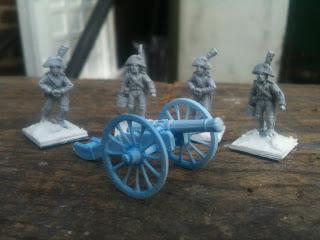
Spanish Infantry from Falcata & HAT

 I'm having difficulty telling the metals and plastics apart, these I think are all from HATs Spanish Infantry set which will be available soon. 

I am at heart, a very shallow man.  I had a particularly vexing day today on a variety of scores and to be honest, I wasn't fit to be around I was in such a fury. However, being a very shallow man, I was immediately cheered up when these arrived in my inbox. These are a mix of Spanish infantry from Falcata and HAT painted as the Regiment Zaragoza and the Regiment Princessa by Krisztian Takacs.

If these can't bring a smile to a wargamers face, I don't know what will.


There's bags of character in the figures and Krisztian has done a wonderful job bringing it out. Look at those moustaches!


I know that at least some of the above are metal, but damned if I could tell you which is which. 


 A command group from Falcata. These are all metal and are some particularly dapper looking fellows. I love the Don officer on the left. 


HAT plastic on the left, Falcata metal on the right. 


 Feugo!


I shall have to concentrate on getting the battle of Bailen to the table. It would be poor form indeed not to start these fellows with a victory. 

Krisztian is taking commissions and as you can see, his work is very fine. If you'd be interested in getting some figures painted, leave your email address in the comments and I'll delete it after passing it on. 

Saturday, October 13, 2012

Spanish Grenadiers - New HAT material


#

These arrived today from those nice chaps at HAT miniatures. These are Spanish Grenadiers in 1/72 and very nice they are too. The sculpting is good, with all the figures being quite slim and anatomically correct. They fit well with their brothers in the line infantry and will consequently match Falcata figures rather well. 


Based on the look of them I reckon you'll get about six frames in a box, like the Austrian Landwehr.


I am very, very happy with the marching poses. They look sharp, I wouldn't mess with those moustaches. These are made in the same soft plastic that has made up most of HAT's output of late. It does take paint and glue well though. 


So there you have it, another box of figures to add to the pile. The HAT site has been fairly quiet recently, but E22 will be along shortly (it's being shipped from the factory at present) and the lineup for E23 has not been announced yet, so I hope the Dons will be making an appearance there.

Saturday, October 6, 2012

Falcata Spanish Grenadiers


A unit of the Princessa Grenadiers 

My Spanish army is growing slowly, to the extent that we should be able to play some of the more British heavy scenarios in the Spanish expansion relatively shortly. So far we've played Vittoria and Albeura, though thus far I've either been too busy or not happy enough with the physical setup to photography it for battle reports. But now that the Peninsular battles page has been completed and it looks like the Hundred Days page will be following suit shortly, expect to see some battles shortly where the Dons will be playing the starring role.


A sapper, drummer and officer of the Princessa Grenadiers

These are Falcata grenadiers that I got my greasy paws on through the good offices of Foy over at Prometheus in Aspic. Over there, it is eternally 1811, which I think you'll agree is a fairly grubby time - the Spaniards looked far snappier in their 1806 rig.  These were painted by Mr E with his customary skill. I know that the white uniform presented him some problems, but even the most skilled painters can grind their teeth at that. 

They had their first outing a few days ago when Donogh led them to victory at Albeura. I didn't have time to take pictures and I hadn't finished basing them, however defying the usual lot of newly painted figures they did well and saw off a French cavalry charge with nothing more than the curl of a moustache.


Pablo! A fallen grenadier

I choose the Princessa regiment as they got about abit and they feature in one of Hornblowers adventures. I quite like the look of differant coloured facings over white and though they may be as mechanically effective as French troops, they sure are colourful.

Viva Espagne!

Sunday, July 1, 2012

HAT Spanish Infantry


Infantry sprue
For ease of reference each ruled square is 5/8 of an inch (click to embiggen)

I was very lucky to get my paws on some early released sprues of HAT Industries rather handsome new Spanish infantry. These will be of no real interest to those for whom it is eternally 1810 (I'm looking at you Foy), but for those of use who would like to play Bailen and the Sieges of Saragossa, these figures offer the first opportunity to do so in platic.

The figures themselves are made in the soft plastic familiar from most of HAT recent releases. It glues and takes paint well. The numbers of poses feature a pleasently large number of marching men, which will make it a great deal easier to make up whole units. 

Marching poses           6
At Attention                2
Advancing                   2
Firing                           1
Loading                        1


Command sprue (click to embiggen)

The command sprue is a mixture of figures. There is a Infantry Line officer, two ensigns (one of whom is a grenadier), two sergeants (one of whom from his belly bullet box* and poncho, I believe is a light infantryman), a pioneer (with seperate arm bearing a spade), a light infantry hornist, a grenadier drummer and another officer with a sash. The final figure (bottom right hand corner) is a drummer or perhaps a flautist, he's carrying something that looks awfully like drumsticks, but there is only one drum.

Perhaps prospective buyers will have to choose between wanting a grenadier drummer or one from the line.


Some HAT marching infantry lined up with advancing Falcata chaps

I spared no time and set to with stanley blade and superglue and put a unit together with the figures from the sprues and some Falcata spares that I had lying around. I shall have to consult my sources, as I'm not sure what Spanish infantry regiments I'm short, but I think you'll agree they look well.


A close up of three of the command figures, officer, pioneer, sergeant

The command figures are nice, I particularly like casual air of officer, marching into battles while tapping the palm of his hand with his sword - a pose reminiscent of a particularly repellant Irish teacher I had in primary school. Our Spanish friend is better dressed though.


Falcata and HAT side by side

I think the Falcata are slightly heftier, which is understandable given that they are metal, however I think they are a good match for the HAT figures and I expect to use them to supplement the plastic set in my growing Spanish army. This is a set I'm looking forward to seeing more of.

Viva Espagne!

*And if that isn't a phrase that gives pleasure for simple alliteration, I don't know what is. I shall say it again - belly bullet box.

Thursday, May 24, 2012

General Romana


I'm not as well up on the Spanish struggle against Napoleon in the Peninsula as I should be. However, one chap you may be familiar with from your Patrick O'Brian is General Romana. I'm not giving away any state secrets when I say that the fictional Stephen Maturin steals another real man's glory.

Romana was born in the Spanish colonies and originally joined the navy. He was educated in France and studied at the university of Salamanca, which goes to show that he was quite a cosmopolitan chap. He served in the American war against the British and finished his service on the blockade of Gibraltar. He then left the service to travel Europe.


Rejoining the colours, though on land this time, he fought against the French revolutionary government in the war of the First Coalition.  He remained in uniform, achieving general rank, and later being assigned to lead "The Division of the North". This ill fated formation was sent to Germany where it served as part of the French occupation forces, garrisoning Hamburg and later Denmark in the period 1807-1808.


The Napoleon Series has a rather fetching set of uniform plates depicting the Division of the North.


With the outbreak of hostilities in Spain, Romana communicated with the British and managed to get a substantial number of his men back to Spain on British ships. On arrival back in Spain, he took part in several rearguard actions assisting Moore's retreat to Corunna. In 1809, he led several limited attacks against French forces with rather more success than the more grandiose schemes of his Spanish colleagues.


Romana was later appointed to the Central Junta and fought under Wellington until his death in 1811 of dyspnoea, shortness of breath. Romana was unusual amongst Spanish generals of the time, for his willingness to work under Wellington and to set aside his amour propre in order to kick Frenchy in the pants. His death was considered a great loss.


A longer, much more scholarly article by Jose Manuel Rodrigeuz, from which the above was culled is available on The Napoleon Series.


This is a Falcata Spanish Officer from a set of Spanish infantry that I got from John Cunningham. The arm holding the hat is a seperate piece and was the very devil to get a good join on. Kristzian despite all his protestations that he is not really a painter of Napoleonics, has done an astonishingly good job on this fellow. I had told him that a generic Spanish uniform would do, but he got in touch with Uwe and produced this wonderful piece of work, which is quite literally a portrait of Romana (and his horse).

History does not record the name of his horse.


This chap will be doing duty as Spanish general for my Command & Colours Napoleonics Spanish in the very near future. I took delivery of some Spaniards from Mark a few days ago, so expect to see some Spanish battles relatively soon.


Really wonderful work. Very, very happy. I hope to see General Romana back on the field of Mars before too soon.


- Posted using BlogPress from my iPhone

Sunday, May 13, 2012

Pushing on with Dragoons


While as usual, the dashing light cavalry are hogging the limelight, I've been pushing on with my Spanish (actually Prussian) dragoons. This is one of the few cavalry sets produced by HAT that I actually like. It's made in that somewhat rubbery soft plastic, but it can be glued and I now have 16 dragoons staring at me from my odd jobs box.

I will need to add an officer and a second figure to each set of eight, as well as doing a third set of eight. The question is now, whether that should be a standard bearer or a bugler?

And fundamentally that's what this blog is all about, wrestling with these deep questions. 


- Posted using BlogPress from my iPhone

Wednesday, May 9, 2012

Spanish Dragoons


Hat 1806 Prussian Dragoons

I took delivery of some boxes of figures from Models2U yesterday - which was good news as it marked the end of the first phase of mustering for my Spanish army. The Light cavalry, Light Infantry and Guns are with Mark and I have sufficient infantry to be going on with.


In the plastic, so to speak.

I had been in two minds about what figures to use for my spanish dragoons, as General Du Gormand suggested Italeri Prussian Garde Du Corps, but I didn't care much for the figures. The HAT cavalry are no great shakes either, but they have a sort of Quixote-esque awakwardness to my eye that makes them a perfect fit.


 This post was originally going to be called "We'll hang out the washing on the lines of Torres Vedras", but it just doesn't scan. 

I might try to get a unit based tomorrow morning when I get in from work as these boxes should provide me with sufficient chaps to put together three units at current establishment. Once these are ready to go, I should be able to play most of the scenarios set out in the Spanish expansion.  There is one scenario that is very cavalry heavy, but I'm not sure I'll muster that many horsemen just to play one game. Three however should be an elegant sufficiency.


 It takes a chap who is very sure of himself to wear yellow...

 I've been thinking also about the Spanish light infantry. The Spanish light infantry figures are that are available are rather specialised, representing a few particularly colourful units. Now that Falcata is back in action, I was thinking that I might raise a unit or two of infantry in campaign dress and use those chaps as light infantry; the idea being that Spanish lights are effectively elite infantry - so these fellas could just be veterans.


- Posted using BlogPress from my iPhone

Sunday, March 18, 2012

Spanish Infantry by SHQ


The Regiment Del Rey

I was only able to take two pictures before the battery in my camera made its excuses, but I think you'll agree the fellows above look very well indeed. These are SHQ casting, formerly Kennington, and painted by Mrs Kinch's cousin, Casey Minor. I think he's done a cracking job and I'm afraid you lot will have to endure at least one more post on the subject as these chaps deserve a great deal more than two photographs.

He has painted them as the regiment Del Rey. They were the senior unit in the Spanish army and still are, though they necessarily somewhat changed. Sebastian Foy writing of the Spanish army said "...the oldest of them all bore the name of Immerorial Del Rey, and the date of its creation is beyond memory". They have some claim to being the oldest formed unit still in existence in the world, at least according to Wikipedia*.

"The King's Own Immemorial 1st Infantry Regiment of the Spanish Army is considered to be the oldest armed unit in the world. There is certain proof of this and according to what the chronicles mention, King Ferdinand III, "The Saint," in 1248, during the conquest of Seville, with some of his men-at-arms, assaulted and took a tower. Seemingly, with such boldness and bravery they gained the admiration of the King. The campaign finished and with the consequent disbandment of troops, King Ferdinand decided to permanently keep with him said force, giving origin to the permanence of the Armies, that is to say, the origin of itself."

Officer, Drummer and Ensign
(click to embiggen)

The flag is a new one for me, as I rarely field units with them and when I do, they are invariably painted rather than printed. The flag is a Rofur flag which I got from Simon over at Painted Napoleonic Armies, and rather sharp it looks too. I based this fellows up a few days ago, but haven't gotten around to varnishing them yet, though they did good service in their first battle, Barrossa.

And sadly, the story of that battle will have to wait for another time.


*Though there is some truth in the words of Doctor Johnson who said, "Madam, he who quotes Wikipedia is a guttersnipe and certainly no better than a Scotsman, as confirming the quotation is difficult as every silly person will have repeated it and the labour of doing so is wearisome."

Saturday, March 10, 2012

Spanish Light Infantry


Edit: It would appear posting from my phone is not as easy as I thought.

#

Hat Valencian Light Infantry

There's a wargaming stereotype that all Napoleonic collections include several regiments of Old Guard Grenadiers, the Black Watch and a six battalions of the 95th Rifles. I suppose the Second World War equivalent is the chap whose German army fields nothing but Tigers and Konigstigers. I'm not sure 60 Spaniards wearing kilts is quite in the same league, but we shall see.

Which brings me to the matter at hand, I have sufficient HAT plastics to make three full units of Spanish light infantry so long as they are all Valencian Volunteers. As it happens I know very little about the regiment, but I'm relatively sure they were not so prevalent as to make up 100% of the Spanish Light infantry force. When other fellows have this dilemma I usually comment something terribly helpful like "Please yourself," but as usual doing is harder than saying. It seems silly to ignore the fact that I have all these figures - but at the same time, those new Falcatas are very tempting.

Not a decision I'll be making before Easter as I'm off sugar in coffee and tea, buying figures and buying books for Lent. Mrs Kinch thinks I'm mad and doesn't think I can stick to it. It hasn't been easy, but we're getting there.

Light Infantry - the supernumeraries

There is apparently only one officer figure available for the Valencians, a Minifig who is rather on the chubby side. At Foys suggestion I decided that my volunteers are led by a regular officer who wears his old uniform. The camp follower is an Uwe of History in 1/72 original. I normally wouldn't include camp followers in the supernumery rank, but light infantry are a five strength unit in Command & Colour Napoleonics and with the distinctive uniform, coming up with another figure would have been difficult.

The two chaps to the right are a marching figure who will be doing duty as an NCO and advancing figure that I've hacked about a bit and added a Dutch drum to.


The War Room - pre-cleanup

After the chaos that was Leprecon, I manage to knuckle down and clear up the War Room, a bit. The place wouldn't pass inspection, but the floor is clear and most of the rubbish is gone. Games can be played there - which is the main thing. I also started coming across a few things that I thought I'd lost or had just forgotten about.


Suspect is ginger, repeat ginger

As it happens we're entertaining a house guest at present. He's grown on my somewhat as his behaviour has improved since our last meeting. However, he is a suspect for a number of petty thefts that have occurred in the home over the last few days.

Enquiries are ongoing - a full statement will be issued in due course.

- Posted using BlogPress from my iPhone

Tuesday, January 24, 2012

From the work bench


Spanish Hussars in the works

One of the great advantages of our hobby is that it offers continuous occupation. There is no point in a wargamers life when there isn't something that wants doing. The trick is of course, to make sure you have the right job for the moment. I had a long old day yesterday and needed to turn my hand with something relatively undemanding.

Sticking together three units of HAT Prussian hussars was just the ticket. These chaps are wearing mirlitons and while the horse furniture isn't an exact match for Spanish hussars, it's close enough. I'm not normally a fan of HATs mounted offerings, but because these chaps are slightly smaller than my usual Zvesda/Revell/Italeri cavalry - I think they will look the part.

They will form the nucleus of my Spanish light cavalry. Next step a coat of PVA and spray and off to Mark.

- Posted using BlogPress from my iPhone

Thursday, January 19, 2012

Spanish Guns & Gunners

SHQ Spanish Gunners with an ESCI gun

When I worked in the book trade I dealt with an elderly man who had served on Monty's staff during the Normandy campaign. I never met him in person as he was too frail to travel, but we spoke several times over the phone. I recall two very particular things.

1) The abuse that he heaped on me for sending him "The Full Monty" by Nigel Hamilton. I never knew elderly men knew such words. He had ordered it I hasten to add.

2) He always maintained that Eisenhower could have ended the war in six months if he hadn't tried to maintain a broad front.

I feel that in some ways I'm emulating Eisenhower's mistake as at present, I'm attempting to complete an order of battle for the Spanish army, while finishing off my Waterloo armies and struggling though my Indian and Cold War projects. It may take a while, but I have no doubt that we'll finish in Berlin.

SHQ Spanish Gunners

These are lovely little figures. They're very simple with clean lines and with very little flash. A few seconds trimming with a craft knife was all that was required to get them ready to go. I'll be packing them off to Mark shortly, but there was one problem, I had no guns. Fortunately, my researches indicated that the Spanish used Gribeauval system artillery, so I could use my surplus French guns. The first one picture above, shows an ESCI Guard Artillery gun.


This chap here required a little bit more thought. Despite being under the impression that I had many guns tucked away somewhere, I could only put my hand to one. However, there was a carriage spare from my ESCI box and I was able to wed that to a spare barrel from a Zvesda set.

It has come to my attention that regular readers of this blog have laboured under the misapprehension that General Du Gorman is a drunken, treacherous, cheese eating sybarite, whose moral turpitude is only matched by his devilish good luck.

I was shocked to learn that certain people could get such a wrong impression and wish to issue a full retraction on behalf of this blog and on behalf of the Internet in general; to anyone who may have read this blog and mistakenly assumed that General Du Gorman was a gin sodden, right wing oaf, whose professional life is devoted to the pursuit of a fraud so transparent as to make the Hitler diaries look like a piece of innocent fun and whose many tabletop victories are the result merely of treachery, underhandedness and happenstance.

An artists impression of General Du Gorman,
a mere scribble that cannot possibly hope to do justice to
the radiant inner light of man himself

What makes this misunderstanding all the more shocking is that General Du Gorman is in fact an angel who walks among us, whose sweetness and generosity makes a dark world light and shines as a beacon of hope to all his people, everywhere. A simple abstemious man who might have a glass of sherry at Christmas on returning home after entertaining the children at the orphanage with a puppet show, pausing only to mend a broken doves wing on his way.

A HAT gun from their French Horse Artillery set

I should also mention that General Du Gorman came across a HAT horse artillery gun that he had forgotten about and brought it over at last nights game. This meant that I won't have to buy another box to get that final gun. It also means that my Spanish artillery will have a suitably hodge podge appearance. On the whole I think I can write this one as a victory.

So with the Spanish artillery cobbled together and ready to go off to the painter, it looks like cavalry is the next thing on the agenda.

Sunday, January 15, 2012

Review: Command & Colours Napoleonics: The Spanish Army - Part One

The 1808 Spring Season Look - We're calling it straw for socks


I must say I was very happy to finally get my copy after what felt like a very long wait. My credit card was charged in early December, but a call to GMT confirmed that it was unlikely to arrive in time for the big day.

It was around that time that Gorman started referring to the designer as "The Borg that stole Christmas."


This may not be a portrait of Richard Borg


But it turns out it was worth waiting for.

What you get in the box is a bag of blocks familiar to owners of the basic game. These are unstickered and I remember the purgatory of having to sticker the chaps from the first game. I think I might ask cousin Basil and Mrs Kinch to lend a hand on this one. One change that has been made regarding the stickers is that additional markings have been put there to help distinguish between troop types, light infantry units are marked with a hunting horn for example. It is unlikely that I'll be using the blocks very much, but they are perfectly serviceable if you like that sort of thing.

The terrain tiles are flimsy enough, though this is not a major concern for me as I will not be using them. In a normal board game they wouldn't be an issue, because most boardgames only
see a dozen plays or so. However, Command & Colours games see a lot of use, the number of Memoir 44 games I've played certainly numbers in the thousands. I think the poor quality of the hex counters will be an issue for players who use the game out of the box.

The guts of the game is the rulebook and scenarios, but first of all the Spanish army.

Manuel was considered one of the better dragoons in the Spanish service

The Spanish army as depicted in Command & Colours Napoleonics are a pretty rum lot. They are equal to British troops in melee, but their shooting is poorer than the Portuguese, which is saying something. Also when are forced to retreat they have to retreat twice as far. This can have devastating consequences as it makes it easier to break formations of Spanish troops apart and means that when they are unable to retreat they will take casualties.

There isn't much good to be said about the Spanish army, except that there are a lot of them.

So, poor infantry, skittish cavalry and so so guns. What do the Spanish have going for them?

Leave my country. I'm axing you nicely.

Well, the Spanish Guerrilla rule for one thing.

The Spanish Guerrilla rule revolves around Guerrilla Action tokens. The Spanish player begins with a number depending on the scenario and will most likely pick up another one or two during play. The Spanish player may spend one of these token to negate one card played by the French player. There is a one in six chance that this will fail, but if it does not the French player discards the card that he just played and draws a new one, which ends his turn.

This may not sound like much, but bear in mind that only nineteen cards are played in the average Command & Colours Napoleonics game. With such a low number of card plays, a single card be jolly important. Not only that but the Spanish player is allowed to cull that card from his opponents and then immediately take another turn of his own, effectively two turns in a row.

And as any Command & Colours Napoleonics player can tell you, two turns can be a long time to stand in front of even poor musketry or guns. In addition players frequently build plans around certain powerful cards, the Spanish player can monkey wrench that very effectively.

It is also important to note that in certain of the scenarios, the Spanish players has access to more effective Swiss or British infantry. God have mercy on any French infantry that are held immobile in front of them.

Spanish Generals will have to learn
to pick their moment and their opponents well

In conclusion, I would argue that the addition of the Spanish Geurilla rule makes the Spanish army an extremely interesting one to play. The player is going to be able to count on frustrating one and possibly more of his opponents moves, ideally at a key point in the game. This advantage is significant, but fleeting and a skillful player will have to pick his moment well because his unreliable army will have only a very short time to make use of it. It will also make playing the Spanish a death or glory matter, suited to gamblers or the opportunist.

Will you be able to pick the right moment to paralyse your opponent and will you have the right cards in hand to make best use of that paralysis?

Intriguing stuff. I look forward to playing it.

The second half of this review will cover the scenarios included in the expansion.


Intriguing stuff.

Wednesday, January 11, 2012

It's here!

My new toy just out of the box

In what was without doubt, the greatest relief since Mafeking, my copy of Command & Colour Napoleonics: The Spanish Army arrived today. I haven't had a chance to do much more other than look at the rulebook and the scenarios.

On first impressions, things are looking good. The Spanish Geurrilla Command rule makes the fragile Spanish army playable against the all conquering French. There are some interesting scenarios, particularly some very cavalry heavy engagements. I'm in two minds whether I will collect all the figures required for these, but that's a matter for another day.

I will definately be taking another unit of Swiss in French service as I already have three and it would be churlish to deny the Spanish their most untypical, but glorious victory at Bailen. I shall also have to invest in two units of Swiss in Spanish service for Bailen as well.

But what I'm really looking forward to is Albeura, what a scenario!

I can still remember reading Richard Holmes and John Keegan's "Soldiers" as an eleven year old. Imagining the powder smoke and the dense fog rolling over the battlefield while Colonel Inglis, his shirt front spattered with blood, lies beneath the colours, his voice ringing across the battlefield.

"Die hard 57th, die hard!"

Friday, October 7, 2011

Command & Colours Napoleonics: Spanish Expansion News


The Second of May 1808 or The Charge of the Mamelukes
by Franciso Goya

This painting commemorates the Spanish people's rising against the invading French army. I think it points to the grimness of the situation and the bleakness of Goya's outlook that this swirling, stabbing, stamping melee is the most presentable of his war pictures. Any one wishing to fully understand what a jolly chap he was should investigate here.

As any regular reader of this blog well knows, I've been on tenterhooks awaiting the new Spanish expansion for Command & Colours Napoleonics. While hither to fore I've always held that the Peninsular War was a purely Franco-British affair, I have come around to the understanding that Johnny Spaniard may have taken a hand now and then.

I've already begun mustering forces for my Spanish armies, but I was handicapped somewhat by the fact that while I have a rough idea of what the Spanish army presented in the scenarios will look like, I had no exact information. But thanks to Tony Curtis at GMT games, I now have an exact block count, which will make the job of raising the appropriate units all the easier.


Spanish Units

Line Infantry - 12 units (48 blocks)

These should present no problem, I'll use my HAT Guerrillas for the time being supplemented by Falcata chaps in bicornes. Anyone short of Spanish infantry can look forward to what looks like a real treat; HAT have a line infantry set that looks splendid indeed.

Light Infantry - 3 units (15 blocks)

I shall have to go scurrying to my Osprey to find out what Spanish light infantry look like, but I should knock at least one unit out the Valencian kilt wearing light bobs in the HAT Spanish Guerilla set. Dressing all one's light infantry in skirts might excite some comment.

Grenadier Infantry - 2 units (8 blocks)

Clive is sorting me out with some Falcata Spanish Grenadiers. Great big hats with massive bags on them and mustaches that would make Tom Selleck feel inadequate. Capital fellows, the grenadiers.

Militia Infantry - 3 units (12 blocks)

I have a motley assortment of HAT Spanish Geurillas, they'll cut a dash before they cut and run.

Leaders (4 blocks)

I have two mounted Spanish officers from Falcata sets, so that's a start.

Light Cavalry - 7 units (21 blocks)

So far as I can make out, the Spanish fielded a variety of hussar units. I think I shall have to look at the Zvesda Prussian hussars as a possible match, this will require further study.

Heavy Cavalry - 5 units (15 blocks)

I'll use dragoons for these, probably HAT Prussian 1806 dragoons with bicorne.

Cuirassier Heavy Cavalry - 1 unit (3 blocks)

I know that there was a squadron of Spanish guerilla cavalry that used captured French cuirrassier kit. Depending on what scenario they appear in, I'll have to look into this further.

Foot Artillery - 3 units (9 blocks)

I have no clue what I shall use for these fellows.


French Units

Line Infantry - 4 units (16 blocks)

I have more French infantry than I could shake a very large stick at, so I can't think I'll need some more. Unless these fellows are German allies or something.

Grenadier Infantry - 2 units (8 blocks)

Uwe had some lovely French grenadiers on his blog recently. They were Guard Grenadiers, but a fancy hat is a fancy hat.

Light Cavalry - 2 units (8 blocks)

I don't have any proper French hussars, which is a problem - though it would be fitting to have the two regiments from Conrad's "The Point of Honour" on the strength.

Light Lancer Cavalry - 1 unit (4 blocks)

At last, I get to use my Zvezda Poles. It seems a shame that there is only one unit.

Heavy Cavalry - 4 units (16 blocks)

Dragoons, dragoons and then more dragoons. It seems only fair as they did the bulk of the French horse work in Spain. The Italeri set has yet to be bested.

Guard Light Cavalry - 2 units (8 blocks)

I have no idea what to use for these chaps as I am always clueless about the Guard. Off to check the Osprey I think.

I really am greatly pleased by this information. I think the Spanish cavalry are the most pressing concern, but I should be in good shape by the time the expansion comes out.

Three cheers for Tony and GMT games!

Thursday, September 29, 2011

Spanish/Portuguese Infantry

Hat Spanish Geurrillas, painted by Boomer

I've been building up my Spanish forces for a while now while we've been waiting for the Command & Colours: Napoleonics Spanish expansion, which apparently will be with us in late November. Even after pre-ordering I very much thought that I'll get my copy before Christmas, which curiously enough will mean that I'll get it at around the same time as I got Napoleonics last year.

These are all HAT chaps from their Spanish Guerrillas set. They are all in round hats and a variety of differant uniforms. I took the decision to paint them up in red and brown as it leaves them relatively flexible.

The chaps advancing through the garden, officer and musician from Kennington

If my Ospreys are correct, the Almeria Regiment wore this uniform from 1808 to 1811, while Mina's first regiment of Alva wore something very similar with white gaiters. The homespun brown and black round hat combination was also worn by Portuguese militia units towards the end of the Peninsula war. Consequently, they'll be doing duty as Spanish and Portuguese line infantry for a while. Eventually of course, I'll need to organise proper Portuguese line infantry, but these will do for the time being.

An American officer from Kennington's 1812 range,
he seems a reasonable match to some of the Portuguese uniforms I've seen

The Almeria Regiment was a two battalion regiment organised in 1808 from the third battalion of the Zaragoza regiment and the Volunteers of Granada. They took part in the defence of Barcelona in1808 and were heavily in Catalonia and Aragon.

They were wiped out by the French in fighting Taragona in 1811.


An American bugler from Kennington's 1812 range,
painted up as a gallant Spanish/Portuguese

Don Francisco Espoz y Mina had three battalions of uniformed guerrillas in his band, all of whom wore the black round hat and brown coats, but with gaiters and a colour coded facings red for the first battalion, green and yellow for the second and third.

The Ordenanza chaps were probably happy enough to have any uniform at all, but Rene Chartrand states that their uniform jackets were brown faced in a uniform colour.

This approach probably doesn't do much for the purist, but it allows me to bulk up my forces quickly and get games on the table.

Attribution: Most of the above was cribbed from the relevant Osprey's, both of which were written by Rene Chartrand.